electrocd
  • This website is also available in English.

Blog

2899 results
  • 57
  • 58
  • 59
  • 60
  • 61
  • 62
  • 63
  • 64
  • 65
  • Troubles in Vital

    “Review”, Frans de Waard, Vital, no. 1153, October 15, 2018
    Monday, October 15, 2018 Press

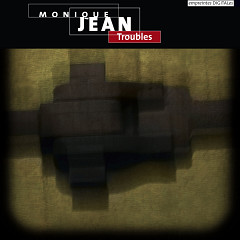
    Since more than twenty-five years Empreintes Digitales is probably the leading label when it comes to computer based electroacoustic music, mostly composed and performed by conservatorium skilled composers. Oddly enough I don’t see a reference to those in the short biography that is printed on the cover of the album by Monique Jean. She was selected by several competitions (which I think is THE thing in this musical area) and played international concerts and festivals. She has here two pieces of which the first, T.A.G., which stands for ‘trottoir, asphalte, goudron’ (sidewalk, asphalt and tar) is inspired by “crowds of demonstration” and she says that sounds are “mainly synthesized”, which I found hard to believe. I was more thinking about heavily processed field recordings, certainly in the opening section of the piece that sounded like car tyres screeching. I might be wrong of course. As the piece evolved it became more obvious that there are indeed synthesized sounds used and even some more orchestral ones towards the end. It’s a massive piece, crowded with many sounds, as crowded as the pavement of the inner city perhaps. This is quite a powerful piece of music. The other piece here is Out Of Joint, and it is a “sound hybridization on Shakespeare’s Macbeth and the various silver screen adaptations, stagings and rewrites it inspired through time” — whatever that means but “what I am trying to do instead is to develop a form that operates through grafts of time, interpretations, meanings and references”. Which I guess wasn’t helpful either. Here the piece is also computer based I would think as well as dense, slightly distorted from time to time, a massive narrative perhaps; again I could have been fooled it included field recordings as I distinctly heard some birds. Both pieces are quite good and seemed removed from the more usual glissandi approach that was common with releases on this label some years ago. Either the composers have moved on, or the label did. […]

    This is quite a powerful piece of music.

    Mistpouffers in Toneshift

    “Review”, TJ Norris, Toneshift, October 6, 2018
    Saturday, October 6, 2018 Press

    Mistpouffers is a selection of three compositions completed between 2014-16, composed by French artist and improviser eRikm. Each piece runs approximately 17-18 minutes in length with two based on 8-channel fixed medium and one in stereo. Opening with Draugalimur where, poof like smoke, the setting is a quiet distant storm, some electronic squiggles and free-floating static. This is eRikm working in an atmosphere where a pin could be heard dropping, that is until a narrator like a public radio host, in French, reads from a text. The wind howls and electro-waves are emitted. While listening I gaze upon the cover image of a cliffside that starts to resemble a human skull. No you are not seeing things, like a mirage — it’s an in-situ illusion, only emphasized by a military jet flying past, from ear to ear as someone gasps for air. This dichotomy between air space and breathlessness is likely key to the narrative. The eerie unexpectedness here is quite palpable.

    Sonic boom? By occupying the space with layered field recordings, simple thing like chewing, and rummaging — with a silky drone and changing percussive parameters eRikm has developed a psycho-social space that is as inventive as it is cinematic. The whispers, the hive drone, the bouncing punctuation, all make his acoustic theatrics rife for live presentation, and perfect for visual listeners. Moving on to Poudre, which opens in darkness to creaking of chairs, or perhaps thunderclap or is it fireworks, or gunfire? The question mark here is the tension. With even the slight laughter heard int he mostly engaged crowd scene it would be menacing one way, and exhilarating another. But it seems to walk that fine line. The title translates to powder (and in gun powder) and this work does seem to float on air with the spirit of a nighttime curfew. It’s singular shots are disarming so to speak — “the bombs bursting in air” and so on. In wartime these echoes have a cerebral resonance that is unmistakable.

    Just after midpoint this layered field recording sounds like either a grande finale or a full-on battle. It’s actually quite disturbing, it’s chaotic imprint, relentless. At one point it’s literally just a wash of savage white noise. But the reverie switches up its candor on L’aire de la Moure 2. There are shadows of a dark kingdom interrupted by a happily chirping winged beast. The intermittent grey drone casts and draws as these treated bird samples are deployed like abstract illusions. eRikm has concocted a blend of granular electronics, a female narrator and low flying planes that zoom from air shot. The tingling microsound invades as though it’s evaporating over the spoken word.

    It’s an atonal radio play that seems to be collecting data in a laboratory. Small actions like pulling a topper from a cask, as well as elongated high tones create a focused format for deep listening — all ears on the speaker, and though I do not speak much français my ears can translate this as a scanner of the mind. Static like fire, and a series of slingshot thwapping are a peculiar combination alongside a deep bird caw. With so many constant variables you’d think this recording would be a schizo delusion but it’s not at all, it keeps your minds ear constantly pricked within this composer’s cosmic adventure.

    The tingling microsound invades as though it’s evaporating over the spoken word.

    Grains in Badd Press

    “Review”, Kevin Press, Badd Press, October 5, 2018
    Friday, October 5, 2018 Press

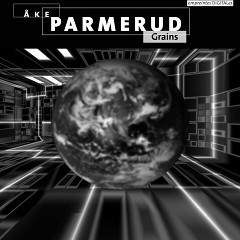
    Sweden’s Åke Parmerud has assembled four acousmatic works dating between 1990 and 1995 on a must-have collection of out-of-print recordings. (Acousmatic is an electroacoustic subgenre composed for presentation with speakers rather than live instruments.)

    These powerful, sometimes disturbing recordings all date back to the mid-1990s. Thematically and artistically, each has maintained extraordinary relevance.

    Grains of Voices came out of an invitation to produce a piece of music drama for Swedish Radio. “I decided to make a composition concerning the human voice, its symbolic implications and its musical applications,” writes Parmerud in the album’s notes. “The sound of the voice is a striking symbol of the unity of mankind.”

    He recorded the voices in-person, inviting speakers and singers to share anything they wished. “This way I did not (with a few exceptions) control what went into the composition, only what came out.” Parmerud describes the 31-minute work as “a multilayered, cross-cultural hybrid piece of sonic art.”

    Jeux imaginaires (or Imaginary Games) was inspired by the 1992 World Chess Championship match between Anatoli Karpov and Garry Kasparov. Aside from a middle section that sounds like a frenetic game of park chess, the work is a study of the parallels between the game and composing music.

    “Every night after ending my composing session in the studio I played the game (or maybe only a few moves) on my portable chessboard. Apart from it being a nice way to turn my attention away from pure musical problems for a while, I found that playing the game made me more and more aware of the likeness between chess playing and composing. … [P]laying the game as a small ritual every night released new musical ideas and composing energy without necessarily creating detectable parallels between the music and the game itself.”

    Les objets obscurs (Hidden Objects) is a musique concrète piece in four parts. Or more precisely, a meta-musique concrète piece.

    We’re presented with riddles (in French) having to do with the source of the sounds used. The answers are offered musically. “In the end of the last movement the ‘solution’ of all the riddles is presented. These answers, however, set up a new ‘inner’ riddle, to which no answer is given.”

    Finally, Alias explores “the duality of outer and inner existence, here interpreted through the life, music and destiny of the Renaissance composer Carlo Gesualdo da Venosa (1560-1613).”

    Gesualdo is a controversial 16th/17th century figure. As a composer, he’s considered to have been hundreds of years ahead of his time. As a human being on the other hand, he’s remembered for the gruesome double murder of his wife and her lover.

    Alias is not, however, an attempt to illustrate the shifting identities of Gesualdo,” writes Parmerud, “but is rather, in a wider sense, inspired by thoughts on the relationship between the artist and the work of art.”

    That being said, it’s difficult not to let the mind wander over the course of these two dramatic movements. Like the others on this important new compilation, it is a powerful work.

    … it is a powerful work.

    Petites étincelles in The Sound Projector

    “Tampura Timbres”, Ed Pinsent, The Sound Projector, July 29, 2018
    Sunday, July 29, 2018 Press

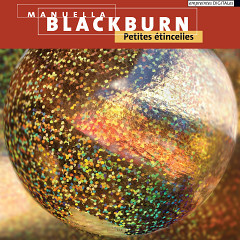
    Last heard from English composer Manuella Blackburn with 2012’s Formes audibles, apparently her debut release, where Stuart Marshall was very taken with her “fresh and authentic… manner of articulation.” Today’s excellent release on the same label is Petites étincelles (empreintes DIGITALes, IMED 17147), and surveys five works dated from 2012 to 2017, each one evidence of a very sensitive and intelligent approach to sound manipulation and highly respectful of the source objects she’s captured them from.

    Take Javaari, based on samples from sitar playing. She’s homing in on particular details of the physical instrument (the bridge, the buzzing sound of the strings), and creating a kaleidoscopic arrangement to highlight these aspects that interest her. This is based on her understanding of the culture of the instruments and the musicians that play it, even if the results are so heavily re-ordered to sound like no sitar music ever heard before. It’s a bold coup to create such a radical reinvention of Indian music, yet without once departing from its core truths.

    Ice breaker, derived from the sound of ice cubes dropping into water, is likewise founded on a firm understanding of physics and what actually happens, scientifically speaking, for the ice to create that cracking and popping effect. Starting from these basic facts, Blackburn is very clear about what sound she wants to capture, what phenomenon she wishes to demonstrate. The overlays of bubbling and fizzy liquids are used to underscore this fact, and are not simply there for decoration. Net result, one of the most “realistic” sound-portraits of ice and water yet to be heard; which takes some doing, given how over-used this trope has been in the field of electroacoustic composition.

    Then there’s Snap happy, the most recent piece on this set, created from the sounds of cameras. One of Blackburn’s interests is in “the miniature”, by which she means small sounds and events which are barely perceptible; she doesn’t boast about the power of her microphones or the technology needed to capture such things, but she does discourse like an expert about different makes of vintage cameras, in one compacted paragraph of notes. The old Kodak Brownie from the 1940s had “much heavier clicks and clunks” than more recent cameras, and she seems to be very conversant with these internal mechanisms. You get the feeling she could understand any given device by opening it up and examining it, probing with inquisitive fingers. She likes the way old cameras used mechanics to wind on the film, and these sounds feature heavily here. This piece also muses on the way that modern digital cameras use sound effects to mimic these old sounds, even though there’s no need for them to do so (Come to that, why don’t word-processors imitate the sounds of a typewriter?).

    Also here, Time will tell, derived from clocks and continuing the theme of miniatures, Newtonian mechanics, and interest in common domestic objects; and New Shruti, another composition starting from knowledge of classical Indian music and this time exploring the shruti box / tampura. Here, as throughout the entire album, Manuella Blackburn’s skills in assembling microscopic fragments of sound into a coherent whole are evidence of her genius; there’s craft and skill in her mosaics, but also much instinct, and the aim is to create beautiful music rather than simply demonstrate digital techniques. Blackburn seems to have a profound understanding of things, of objects; is able to apprehend their inner workings with precision and accuracy; and this skill may in turn help her to decode other signs, to understand something about the workings of the world. A truly excellent set which I recommend.

    Manuella Blackburn’s skills in assembling microscopic fragments of sound into a coherent whole are evidence of her genius…

    Nano-Cosmos in Ondarock

    “Recensione”, Michele Saran, Ondarock, July 20, 2018
    Friday, July 20, 2018 Press

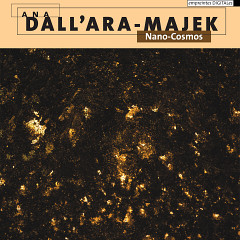
    Ricercatrice e nuovo talento della musica acusmatica, parigina ma d’adozione canadese, Ana Dall’Ara-Majek si fa notare per i suoi accompagnamenti a spettacoli multimediali, oltre a studi ed eventi per strumento ed elettronica, testimoniati in un primo Air (2014). I suoi primi poemi interamente elettroacustici sono invece raccolti su Nano-Cosmos, pubblicato dalla storica Empreintes Digitales.

    Akheta’s Blues (2012-13) è uno studio sulla densità e la multidimensionalità del suono, ottenuto attraverso l’interazione di tre sorgenti, una di pulviscoli elettronici casuali e due concrete, relativamente regolari, un fruscio in bassa definizione e un bordone austero (la componente “blues” del titolo): alla fine i tre danno magicamente origine a una particellare forma di vita.

    Diaphanous Acarina (2015), più quieta e misteriosa, ma puntellata di conglomerati di registrazioni a scatti e fitte violente, è l’abbozzo per la mesmerica, sottile trascendenza di Pixel Springtail Promenade (2014-15), un susseguirsi di rumori, conversazioni, vita di strada, tutto sopra un bordone oscillante che poi diventa solenne drone sinfonico, mentre lo scenario muta in naturalismo pluviale, e infine in definitiva quinta aliena. Xylocopa Ransbecka (2017) è una piccola maratona di calligrafie automatiche (bolle elettroniche, sciacquii, tremori e clangori), che prende un curioso aspetto unitario — una serie di variazioni timbriche sul ronzio — fino a un potente sfiato di chiusa.

    Antologia ispirata volta per volta da un tipo d’insetto, sia tramite ricerche in loco, a guisa d’entomologa, sia per vie fortunose, come in Xylocopa Ransbecka, quando è proprio capitato nel bel mezzo della registrazione, fino a modificarla in corso d’opera. Un caso non certo frequente di naturalismo sovrannaturale. Così come non sono molti gli eguali in unità d’intenti, precisi e scientifici, mezzi, sfruttati quasi sempre per tessere legami dimensionali e tener alta l’attenzione, e riferimenti, da Stockhausen a Parmegiani, oltre ovviamente alla mitica Ecole.

    … magically give rise to a particulate form of life.
    7

    Petites étincelles in RNE3: Atmósfera

    “Crítica”, Elena Gómez, RNE3: Atmósfera, July 15, 2018
    Sunday, July 15, 2018 Press

    Manuella Blackburn es una compositora de música electroacústica especializada la creación de música acusmática. Sin embargo, también ha compuesto para instrumentos y electrónica, improvisaciones para orquestas de laptops y música para danza.

    Manuella estudió música en la Universidad de Manchester y cuando terminó cursó un Master en Composición Electroacústica con David Berezan. Más tarde se convirtió en miembro del Manchester Theater in Sound (MANTIS) en 2006 y completó un doctorado en la Universidad de Manchester con Ricardo Climent en 2010.

    Esta noche abrimos sus Pequeños destellos Petites étincelles su última creación discográfica, escuchando este Javaari.

    Javaari es el término dado a ese puente del sitar donde las cuerdas melódicas y comprensivas corren y crean el sonido. El término también se refiere al tono único producido por el sitar. Esta pieza explora los fascinantes timbres que se originan en este instrumento y presta especial atención a las hermosas curvas de tono que se arquean más y más como si de finas vocales se tratase. El trabajo está estructurado en cuatro episodios, cada uno explorando una intensidad diferente de uso de sonido cultural explícito: a menudo el material de sitar está en primer plano y, a veces, retrocede o se filtra intermitentemente.

    Esta pieza, Javaari se realizó en el Centro Internacional de Compositores Visby de Suecia y en el Liverpool Hope University del Reino Unido).

    Este trabajo acusmático de Manuella Blackburn es el primero de una serie de piezas compuestas en colaboración con Milapfest con sede en la Liverpool Hope University. El de duración por un año, tiene como objetivo examinar la traducción y la transferencia de la música cultural a la música electroacústica y está financiado por el Arts and Humanities Research Council (AHRC).

    Esta pieza [Javaari] explora los fascinantes timbres que se originan en este instrumento [sitar] y presta especial atención a las hermosas curvas de tono que se arquean más y más como si de finas vocales se tratase.
  • 57
  • 58
  • 59
  • 60
  • 61
  • 62
  • 63
  • 64
  • 65