Sauter au contenu principal
electrocd

Aussi dans le blogue

23 résultats
  • 1
  • 2
  • 3
  • 4
  • Clair de terre dans Revue & Corrigée

    «Critique», Pierre Durr, Revue & Corrigée, no 51, 1 mars 2002
    vendredi 1 mars 2002 Presse

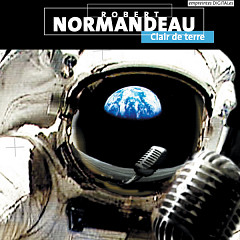
    Il y a quelque chose de paradoxal dans cet enregistrement de Robert Normandeau. Les techniques mises en œuvre dans cet enregistrement s’apparentent a des études à partir d’un son bien définit retravaillé par les techniques des studios électroacoustiques: le shakuhachi (flûte japonaise), la voix, divers instruments subissent ainsi divers traitements sonores. Dans la musique dite «contemporaine», cela aboutit trop souvent à des musiques froides et sans âme. Et pourtant il s’agit là de véritables séquences narratives, à l’image des titres — celui de l’album, par ailleurs pièce principale du recueil, précédé par Malina et Erinyes, respectivement titre d’un roman autrichien et nom des «gardiennes de la vie humaine» selon la mythologie grecque. La pièce la plus prenante des deux pour l’auditeur est certainement la seconde, avec parfois cette mise en abîme de la voix, proprement surprenante voire inquiétante et certaines sonorités ne sont pas sans rappeler les «oiseaux» de Hitchcock. La longue suite Clair de terre, apparaît plus conceptuelle dans son propos: se servant d’une des images les plus marquantes de la seconde moitié du siècle écoulé, Robert Normandeau construit une douzaine de séquences évoquant par leur intitulé des techniques cinématographiques mais destinées à relativiser ou — c’est selon — à revaloriser des sons plus ou moins communs perçus avec le même regard distancié que celui du voyageur de l’espace. Mais l’utilisation qu’il fait des sons issus de divers instruments, objets ou situations, a le mérite d’être des plus concrets, laissant là aussi libre cours à l’imaginaire de l’auditeur, qui peut tisser sa propre trame narrative, avec quelques points d’appui plus ou moins imposés par l’identification du son traité.

    Clair de terre dans wReck thiS MeSS

    «Review», Bart Plantenga, wReck thiS MeSS, 25 février 2002
    lundi 25 février 2002 Presse

    Clair de terre on empreintes DIGITALes is a fairly new CD from one of the champions of breath-taking chance-taking electroacoustic music. And WHY is it that Canada is such a breeding place for incredible e-a music? Is it the wide-open spaces, the cold air, its strange relationship to the US? empreintes DIGITALes records all seem to have an incredible sense of acoustical gymnastics; the sound is very dynamic and creates a very physical atmosphere for the compositions.

    … one of the champions of breath-taking chance-taking electroacoustic music.

    Clair de terre dans Incursion Music Review

    «Review», Tobias c van Veen, Incursion Music Review, no 046, 18 février 2002
    lundi 18 février 2002 Presse

    This review was not meant to become so thoroughly academic: but the music in question is thoroughly academic, from start to finish, from its origin to its reflection in our ears. Electroacoustic music is a startling mixture of playing with theoretical models in a geography of organic instrumentation and digital manipulation — to explore their soundness, their structure, their resonance and dissonance — and a love of sonic experimentalism, of the perverse pleasures of the ear, that has propelled musicians since the birth of Art on January 17th, about 2 million years ago (according to Fluxus).

    Robert Normandeau works in a genre of electroacoustic called acousmatic sound. Acousmatic sound, according to Michel Chion, is a sound “one hears without seeing [its] originating cause — an invisible sound source.” Born in Québec in 1955, and currently a Professor of Composition at the Université de Montréal, Normandeau explores the outer ranges of the acousmatic in Clair de terre through three separate works: Malina, Erinyes, and the title track, Clair de terre. Or at least the liner notes claim that he is exploring the acousmatic, that which seems devoid of origin; for paradoxically, the first two movements are purely concentrated upon issues of origin and centricity. “At the origin of the work is a play,” begin the liner notes to Malina, which is the score to a theatrical adaptation of Ingeborg Bachmann’s 1971 novel of the same name. Likewise, Erinyes begins with: “At the centre of this work is the voice.” The attempt, according to Normandeau, is to “bring out the primitive nature of the voice.” The paradox inherent in the definition of the theoretical project — acousmatics — and the stated intent of the individual works is fully realized in the last piece, Clair de terre, which focuses upon humankind’s newfound ability to see Earth from space. Clair de terre is a French play on words: “claire de lune” is a Québécois expression — of the moon at night, its clarity and cold purity — which grounds many Québécois folksongs. The reversal of this — to see the Earth in a pure state, from the moon — illustrates the paradox: for we cannot actually see the Earth, we only see it in a reflection, in pictures or representations of the Earth, taken from the Moon. What has traditionally grounded French folksongs such as “Au clair de la lune” is now displaced: the origin itself is decentred through its reflection. According to Normandeau, the result is a realization that “Earth is not at the center of the universe,” leading to a “state of unbalance that is reflected in the way we see the world.” This very reflection — a mirror image of balance interpreted as imbalance, an interpretation that can never be sure of a true balance beneath its simulacra of instability — is the stuff of Normandeau’s “acousmatic” explorations, for even his definition of acousmatic differs from that of Chion’s. For Normandeau, “‘meaning’ contributes to the development of the work as much as does ‘sound,’” whereas Chion understands the term as devoid of referential meaning. The paradox lies within our consideration of the works in question: is it necessary to critique the stated origins to grasp the paradoxes inherent in Normandeau’s acoustic logocentrism? Or can it be heard within the “sound” of the work itself—devoid of meaning, at a loss for representation?

    Malina strikes directly into my memory, deep at a Western Orientalism: I “hear” the sounds of the East… and for good reason, as the principle source of sound is the ghostly playing of the Japanese flute called the shakuhachi, processed with spatialization and delay to add a spectral quality. And perhaps it is a sense of the unheimlich (uncanny) that directly confronts us in the rawness, the startling orgasmic quality, of the human voice. Drawn from onomatopoeia, sampled from a production of Sophocles’ Elektra, and at times processed to trill like flocks of birds, the treatment of the voice is akin to sonically imagining the deconstructive critique of the voice Derrida offers Rousseau in Of Grammatology. Voice — is it the raw primitivism, similar to the birdsong, poetic at its core, as Rousseau claims? Or is voice mixed with writing — that corrupt, perverse, guilty pleasure — from its incestous origins? Writing: the Meaning that centres voice. And it is the third piece, Clair de terre, that explicitly reveals the violence of this conflict, of the paradox. A countdown at the beginning of the piece leads to industrial sounds — hammering, doors, squeaking, distorted fuzz — clashing with fat sighs from the human voice. The palette shifts and we are led once again into a sonic memory that can only be described as uncanny: off-key pitches, high drones, rubbings and metal taps, metallic squeaks and echoes. We are in the wasted trainyard of the mind at the very indeterminate juncture where we cannot determine conscious/unconscious, mind/body, voice/writing, meaning/sound. It is perhaps fitting, then, that after a burst of bagpipes, the last sounds heard are the squeaky hinges of a closing door — or perhaps, a crypt.

    eD: Un Clair de terre vu par Robert Normandeau

    mercredi 16 janvier 2002 Nouveautés

    «Un assemblage sonore limpide qui oscille avec vivacité entre séquences stridentes et plages d’accalmie…» (Jade, France) Peu de temps après la parution d’une compilation de ses œuvres majeures sur l’étiquette Rephlex (Royaume-Uni), Robert Normandeau présente son quatrième album, un hommage au vingtième siècle et les deux arts frères qui y sont nés, le cinéma et l’acousmatique. Œuvre intimiste, illustrant ses préoccupations acoustiques depuis la fin des annnées 80, Clair de terre transpose les techniques cinématographiques en mouvements acousmatiques et puise ses sources dans la banque sonore toute personnelle que s’est constitué le compositeur au cours des ans. Les deux autres compositions, réalisées pour le théâtre, proposent un nouvel angle sur le travail de Normandeau; en effet, malgré de nombreuses productions, ce sont les premières œuvres destinées à la scène à paraître sur un de ses albums.

    Clair de terre dans Splendid E-Zine

    «Review», Luke Martin, Splendid E-Zine, 10 décembre 2001
    lundi 10 décembre 2001 Presse

    Robert Normandeau is primarily an acousmatic composer, and his latest disc is broken into three chunks: two smaller pieces culled from Normandeau’s work in the theatre, and a larger piece from whence the album’s title comes. Malina is an eerily effective piece for effected and looped shakuhachi, full of menacing sibilants and pressurised blasts. It’s probably also the album’s most effective composition, being one of the few to encourage a visceral reaction. Erinyes, on the other hand, is like a hyperactive version of Ligeti’s Aventures, and part of the composer’s Onomatopoeia cycle — pieces of dialog from Sophocles’ Electra are sampled and rejigged so that only the sounds of letters, not complete words, are heard. It’s startling, and often sounds like cries for help in a swarm of bees — but is undermined by its 20-minute length.

    The larger, titular piece is much loftier in intent, aiming to be a meditation on elements of cinematography, by way of a photograph of the Earth from the Moon. It’s hit-and-miss, but in places (Couleurs ternaires) it’s also where everything seems to click for Normandeau, and the idea of «cinema for the ear» really does start to work.

    Phillipe Henry’s work influences this disc in many ways — in fact, the track Micro-Montage is, as the name suggests, a brief selection of construction sounds, jets, thumpings and other eyebrow-raising found-sounds. However, it’s not used in the same way one finds samples in Matmos’ or Einstürzende Neubauten’s recordings: this is the sound of a train going by, a brief reminder of Earth and its kerfuffle, designed to lend more weight to the disconnection one would feel in space. This unexpected approach is one of the reasons that, despite its flaws, Clair de terre is a disc worth investigating.

    As a work that says something about cinematography, I don’t think this disc cuts the mustard. As a collection of sonically-interesting pieces, it’s great. Normandeau’s tendency to either cut fantastic tracks too short, or to allow his ideas to dribble on a little too long notwithstanding, it’s a swag of wonderful electroacoustic pieces.

    … it’s a swag of wonderful electroacoustic pieces.
  • 1
  • 2
  • 3
  • 4