Sauter au contenu principal
electrocd
  • This website is also available in English.

Francis Dhomont

190 résultats
  • 5
  • 6
  • 7
  • 8
  • 9
  • 10
  • 11
  • 12
  • 13
  • eD: Nouveautés de Francis Dhomont et Dominique Bassal; 10$ de rabais

    vendredi 4 décembre 2009 Nouveautés

    empreintes DIGITALes dévoile aujourd’hui deux nouveaux disques.

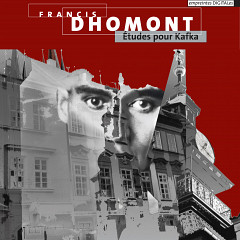
    • Francis Dhomont, compositeur au premier rang des praticiens de l’acousmatique, nous livre trois nouvelles œuvres inspirées des thématiques kafkaïennes: Études pour Kafka.
    • Dominique Bassal, aussi connu pour la masterisation d’œuvres électroacoustiques, présente Ubiquité en son très haute définition (96 KHz 24 bits) en stéréo et en «Surround 5.1».

    Un rabais de 10$ est offert pour un temps limité à l’achat des deux disques! [Terminée le 1er mars 2010.]

    eD: trans_canada est le 100e

    mercredi 25 novembre 2009 Nouveautés

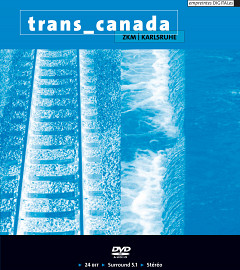
    empreintes DIGITALes n’aura 20 ans qu’en janvier prochain. Cela ne nous empêche pas de commencer les célébrations dès aujourd’hui avec notre… 100e disque! Le festival trans_canada au ZKM en 2005 s’articulait autour de huit nouvelles œuvres d’autant de compositeurs canadiens: Nicolas Bernier, Darren Copeland, Francis Dhomont, Louis Dufort, Gilles Gobeil, Robert Normandeau, Barry Truax et Hildegard Westerkamp. Le DVD-Audio trans_canada regroupe enfin ces huit pièces audio haute définition 24 bits en versions stéréo et Surround 5.1.

    13 – 14 novembre 2009: Dhomont, Mimaroglu, Éloy… à Paris

    jeudi 5 novembre 2009 En concert

    Les 13 et 14 novembre 2009 au Lavoir moderne parisien, le festival Licences célèbre ses 10 ans et la musique de plusieurs compositeurs dont Ilhan Mimaroglu, Luigi Nono, Jean-Claude Éloy et Francis Dhomont. Consultez la programmation complète (seulement en pdf) en ligne. En plus des concerts, Licences lance un coffret contenant un disque de sept œuvres musicales accompagné des 10 programmes du festival.

    Francis Dhomont dans Tuning is a Function of Time

    «ISSUE Project Room», Andrew Christopher Smith, Tuning is a Function of Time, 1 novembre 2009
    dimanche 1 novembre 2009 Presse

    Francis Dhomont arranges natural recorded sounds onto stereo tape (now CD), and plays them back through eight speakers, mixing the two channels live throughout the room. This creation of fixed-media art came to be called musique concrète, a term which began in France with Pierre Schaeffer.

    There are things we (an educated classical music audience) come to expect and recognize in music: the “arc,” harmonic movement (or stasis), the grammar of an ending. The natural sounds strip away any harmony, any recognizable form, and timbre — or “sonority,” why a trumpet and a saxophone can play the same note and sound different — is the only thing left. At one point in time, primarily with the Romantics beginning around Beethoven, this was achieved through orchestration, or the differentiation of instruments. Whereas Bach’s Die Kunst Der Fuge was completely devoid of instrumental markings (it has since been played by string trios, pianists, the organ, and many others), Mahler rides on the powerful sonority of the brass, and Grieg’s “Spring” from Peer Gynt is unimaginable on anything but the pure flute. Timbre serves as a support to harmony, such that we know that the blaring brass signify a climax. We realize discrepancies within the instruments as well, as a flute can be soft and pure (Grieg’s Peer Gynt) or the voice of a flaming bird (Stravinsky’s Firebird Suite).

    If timbre can support and even eclipse harmony, then can harmony be removed completely? Dhomont’s music is pure sonority, without harmony or signposts given to traditional (harmony-based) musical analysis. Instead, it creates much the same form using nothing but the sounds themselves. And this is the key: the form is recognizable. Dhomont (at age 84 — Friday was his birthday) seems to be a product of that late modernist generation, schooled before the formlessness (and silence) of John Cage. The endings were endings, the grammar still underlying every musical movement, even if the sounds themselves were entirely foreign. It was Modern music in the capital sense, the sense that can be better read as post Modern because of its extension of the methods, rather than questioning of the motives. It was still the work of an artist, as sounds are still given voice by the man at the mixer; there were no dice rolled.

    This begs the question of writing, possibly the greatest leap that musique concrète made. In the French school (meaning not Stockhausen), there was no score for these tape works (feel free to correct this statement — I’m curious to hear if examples exist). The expectation exists that the audience is hearing the voice of the artist (composer) directly, without any interference from a conductor or performer. It would seem to be a war waged against the precariousness of writing, if not for one thing: the sounds’ origins. These “natural” sounds, not sprung fully-formed from the artist and his tools but rather shaped on the chopping block (although now shaped on the MacBook Pro digital audio workstation) are appropriation itself. Like a poet’s appropriation of words, the composer creating musique concrète shapes sounds by their contexts — by what other sounds appear near them, and how those sounds may carry multiple meanings. Dhomont’s music, then, becomes even closer to writing than ever before, not because it is seemingly fixed but because it is appropriated.

    … the audience is hearing the voice of the artist (composer) directly, without any interference from a conductor or performer.

    eD: trans_canada est le 100e; obtenez un Cache 2008 gratuitement

    vendredi 30 octobre 2009 Nouveautés

    empreintes DIGITALes n’aura 20 ans qu’en janvier prochain. Cela ne nous empêche pas de commencer les célébrations dès aujourd’hui avec notre… 100e disque!

    Le festival trans_canada au ZKM en 2005 s’articulait autour de huit nouvelles œuvres d’autant de compositeurs canadiens: Nicolas Bernier, Darren Copeland, Francis Dhomont, Louis Dufort, Gilles Gobeil, Robert Normandeau, Barry Truax et Hildegard Westerkamp. Le DVD-Audio trans_canada regroupe enfin ces huit pièces audio haute définition 24 bits en versions stéréo et Surround 5.1.

    La CÉC et PeP participent à cette 100e bonne nouvelle en offrant gracieusement un exemplaire du nouveau CD Cache 2008 à l’achat de notre 100e disque (mais seulement pour une période de temps très limitée). L’article est automatiquement ajouté à votre panier. [Terminée le 22 novembre 2009.]

  • 5
  • 6
  • 7
  • 8
  • 9
  • 10
  • 11
  • 12
  • 13