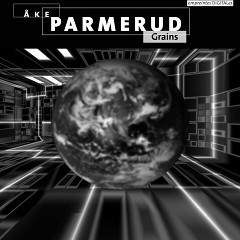
Grains dans The Moderns
Sweden’s
These powerful, sometimes disturbing recordings all date back to the mid-1990s. Thematically and artistically, each has maintained extraordinary relevance.
He recorded the voices in-person, inviting speakers and singers to share anything they wished. “This way I did not (with a few exceptions) control what went into the composition, only what came out.” Parmerud describes the 31-minute work as “a multilayered, cross-cultural hybrid piece of sonic art.”
“Every night after ending my composing session in the studio I played the game (or maybe only a few moves) on my portable chessboard. Apart from it being a nice way to turn my attention away from pure musical problems for a while, I found that playing the game made me more and more aware of the likeness between chess playing and composing. … [P]laying the game as a small ritual every night released new musical ideas and composing energy without necessarily creating detectable parallels between the music and the game itself.”
We’re presented with riddles (in French) having to do with the source of the sounds used. The answers are offered musically. “In the end of the last movement the ‘solution’ of all the riddles is presented. These answers, however, set up a new ‘inner’ riddle, to which no answer is given.”
Finally,
Gesualdo is a controversial 16th/17th century figure. As a composer, he’s considered to have been hundreds of years ahead of his time. As a human being on the other hand, he’s remembered for the gruesome double murder of his wife and her lover.
“
That being said, it’s difficult not to let the mind wander over the course of these two dramatic movements. Like the others on this important new compilation, it is a powerful work.