Sauter au contenu principal
electrocd

Blogue

93 résultats
  • 8
  • 9
  • 10
  • 11
  • 12
  • 13
  • 14
  • 15
  • 16
  • Transformations, Hildegard Westerkamp dans Vital

    «Review», MP, Vital, no 67, 1 février 1997
    samedi 1 février 1997 Presse

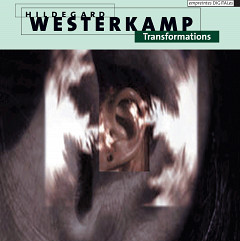
    Well, I’ve been waiting years for this one… ever since I heard the unbelievable Cricket Voice on the first Aerial compilation released on Nonsequitur ages ago. Hildegard is, as it pointed out by Pauline Oliveros in her brief introduction, sensitive to soundscape. She calls herself a sound ecologist and handles her subject with a great deal of care. She’s included a bunch of technical notes which explain some of her procedures. The CD starts with A Walk Through The City, which in addition to natural and processed sounds also includes a bit of spoken voice. Not my favourite thing in this kind of music, but after a few listenings I discovered that it fitted perfectly. The idea behind the inclusion of a voice being that it symbolizes the human presence in the urban soundscape. There’s carhorns, brakes, sirens, aircraft, pinball machines, construction and a couple of hoboes, one of whom insists on not knowing why he can’t stop drinking.

    This is followed by Fantasie for Horns II, for French Horn and tape. Sound sources on the tape are trainhorns, foghorns, boathorns, factory horns and even alphorn! Loadsa horns, in fact, which remain intact with their natural modifications as modulated by their surrounding landscapes. It beautiful—a trip, quite reminiscent of the stuff by Pauline Oliveros in the Cistern Chapel (which far exceeds anything I have yet heard by Stuart Dempster and his trombone ensemble recorded in the same place).

    Next up is Kits Beach Soundwalk, an extension of Hildegard’s radio plays called ‘Soundwalking’. Fortunately this track is just less than 10’00 long… I say fortunately with some reluctance as I did try my best to assimilate Hildegard’s voice which accompanies this soundtrack. She explains in mildly poetic terms what is going on and then displays some technical tricks which come across as a sort of lesson at the School of Audio Engineering. I found this piece most annoying, but all is not lost because she saved the best till last. Cricket Voice is included here too—it is a brilliant shimmering exploration of minuscule sounds recorded in the silent desolation of a Mexican desert region. The cricket’s chirp, slowed down, becomes the “heartbeat of the desert, at its original speed it sings of the stars.”

    And finally, Beneath the Forest Floor, which is composed from sounds recorded in old-growth forests on British Columbia’s westcoast. It includes the sounds of small songbirds, ravens, squirrels and flies which move in and out of the forest silence like the small creek that meanders through it. This piece creates a wonderful sense of peace in the listener, which is the intention. It glides slowly into a world of processed sound which is as close to the sound of a tree growing as I have ever heard. Never mind track 3, just get this thing!

    … a brilliant shimmering exploration of minuscule sounds…

    L’ivresse de la vitesse, L’ivresse de la vitesse 1, L’ivresse de la vitesse 2 dans The Sun-News

    «Gravikords, Whirlies & Pyrophones», Dwight Loop, The Sun-News, no 9:3, 1 février 1997
    samedi 1 février 1997 Presse

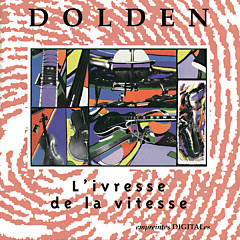
    “What is the speed of music?” says Arthur Kroker in the liner notes of L’ivresse de la vitesse (empreintes DIGITALes, IMED 9417/18) from [Ottawa-born, long time Vancouver-based; now Montréal-based] electronic, guitar, cello and violin performer Paul Dolden. “At what point does music red shift to ultrasonic velocity like all those spectral objects before it, break the sound barrier and then follow an immense curvature towards that point of incredible sound density, where music can finally move at such violent speeds that it can no longer be heard, even by mutant membranes The final pooint, that is, where music breaks beyond the speed of light, falling onto a deep and immense silence.” Yes!

    Kaleidos dans The Sun-News

    «Gravikords, Whirlies & Pyrophones», Dwight Loop, The Sun-News, no 9:3, 1 février 1997
    samedi 1 février 1997 Presse

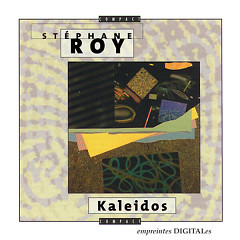
    Stéphane Roy’s Kaleidos (empreintes DIGITALes, IMED 9630) is the work by the composer whose earlier artistic life straddled fine art and literature. This is theatrical music where the tonalities are treated as different characters in the sound-play.

    … theatrical music…

    Articles indéfinis dans The Sun-News

    «Gravikords, Whirlies & Pyrophones», Dwight Loop, The Sun-News, no 9:3, 1 février 1997
    samedi 1 février 1997 Presse

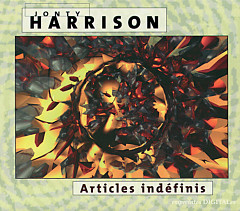
    The definition of “objet sonore” or as French composer’s definition of a ‘sound object’ was that through the process of “écoute réduite” (or ‘reduced listening’) is that one hear sound material purely as sound, divorced from any association with its physical origins-in other words, what is significant about a violin is that particular sound and not its “violin-ness.” English composer Jonty Harrison’s Articles indéfinis (empreintes DIGITALes, IMED 9627) will take you to a sound design that finds its home in many traditional experimental styles. This is unusually crafted sound for the discriminating ear.

    Délirantes dans The Sun-News

    «Gravikords, Whirlies & Pyrophones», Dwight Loop, The Sun-News, no 9:3, 1 février 1997
    samedi 1 février 1997 Presse

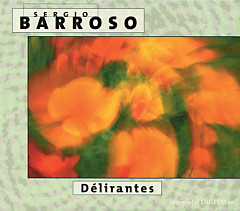
    Havana, Cuba-born [Toronto-based] composer Sergio Barroso’s recording Délirantes (empreintes DIGITALes, IMED 9628/29) is an outstanding assemblage of electroacoustic music with the flavor of his homeland a major influence. This music proves that new technology and old world sounds do mix.

    … outstanding assemblage…

    Zoo dans The Sun-News

    «Gravikords, Whirlies & Pyrophones», Dwight Loop, The Sun-News, no 9:3, 1 février 1997
    samedi 1 février 1997 Presse

    Canadian-based DIFFUSION i MéDIA has released a batch of interesting new experimental electronic and new music releases. The label is the world’s leader in experimental electronic and electroacoustic music or in other words, altered acoustic sounds.

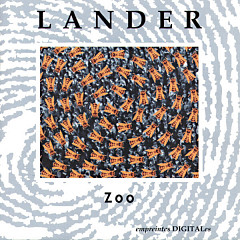
    Radio art has been discussed here in previous columns and Zoo (empreintes DIGITALes, IMED 9526) from Dan Lander, features one of the most interesting treatments ever heard on the cut Talking to a Loudspeaker with its “variations on broadcast quality and the snicker at our phobia with dead air.” This recording is a fascinating technical achievement as Lander also makes interesting soundscapes from disembodied voices, nature and animal sounds.

    Zoo
    … fascinating technical achievement…
  • 8
  • 9
  • 10
  • 11
  • 12
  • 13
  • 14
  • 15
  • 16