Sauter au contenu principal
electrocd

Blogue

87 résultats
  • 5
  • 6
  • 7
  • 8
  • 9
  • 10
  • 11
  • 12
  • 13
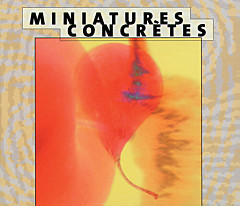
  • Miniatures concrètes dans Musicworks

    «Review», Bruce Russell, Musicworks, no 71, 1 juin 1998
    lundi 1 juin 1998 Presse

    1998 marks the 50th anniversary of musique concrète. I was able to see a few Paris concerts celebrating this in the winter, and was in awe at the audience turnouts for electroacoustic and experimental music. One great thing about such music here in Canada is the empreintes DIGITALes label. If you want to know what’s going on in the scene, check out their releases. Their 1990 Électro clips disc was groundbreaking in its use of 25 exactly three minute tracks by 25 composers with a photo backing each loose page of liner notes (too bulky for the jewel case). As a document of electroacoustic music, it is invaluable.

    Now it has a sequel, this time with only 24 new composers, but from all around the globe. Again, the music is telling. There seems to be less variation in style than with the earlier CD, perhaps because the label has cultivated a more well-defined aesthetic since then. With most of the pieces, the scale is reduced to the level of microscopic detail, appropriate to their three-minute length. Most gestures are brief. sound sources are disguised (whereas musique concrète composers only thought they disguised them, right?); the upper frequency range tends to predominate; many relate a small history. And what’s the fascination with little bird sounds present on one too many tracks? Was this a soundbyte given in advance to all the participants?

    My favourite piece, Pufferfish by Mark Wingate, pulsates with moving water, and fully uses both the frequency spectrum and pan potential. Monique Jean’s Lacrimous is a darkly hued descent to the underworld. Roger Doyle’s The First Spirit Level is a closet door-opening sonic entities pouring out. With a self explanatory title, Katharine Norman’s Squeaky Reel, provides some tongue-in-cheek content. Mass, by Richard Karpen presents nicely contrasting ethereal and visceral materials. In Bad Room, Sylvia Eckermann and Mathias Fuchs work with refreshingly unprocessed sounds which evoke a strong, if squeamish response. The packaging is inventive, with only one quirk: the loose flap of cardboard which cradles the disc. Overall, a very cohesive CD experience with many levels and layers for ambient / not-so-ambient listening. Kudos to empreintes DIGITALes, but I could do without the damn squeaky birds, or whatever they are!

    One great thing about such music here in Canada is the empreintes DIGITALes label.

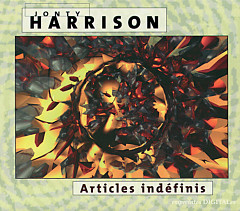
    Articles indéfinis, Jonty Harrison dans Musicworks

    «Review», André Mayer, Musicworks, no 71, 1 juin 1998
    lundi 1 juin 1998 Presse

    Articles indéfinis is not as varied a collection as Contes de la memoire, but it still amply displays Harrison’s importance. The disc begins with Pair / Impair, recorded in 1978, a manic depressive composition in which Harrison sought to reconcile dynamics and stasis. The electronic and acoustic tones on Pair / Impair still seem otherwordly over twenty years later.

    The centrepiece of Articles indéfinis is … et ainsi de suite… (1992), an eleven-part suite of musique concrète. Harrison utilized wine glasses as his raw texture, then time-stretched and digitally manipulated the sounds to create a mesmerizing sonic canvas. The final piece, Hot Air (1995), is notable because it is a study of air — children’s balloons were merely a starting point for a complex exploration of the dynamics of breath and the energy needed to achieve it. The result essentially offers a wordless philosophical discussion on the concepts of air and heat.

    Appleton and Harrison’s work can be truly held up as visionary; their influence can be heard in modern electronic bands such as Germany’s Mouse on Mars and Britain’s Autechre, which have taken raw, sometimes unpalatable sound experiments and forged engaging and more commercially viable equivalents.

    Appleton and Harrison’s work can be truly held up as visionary…

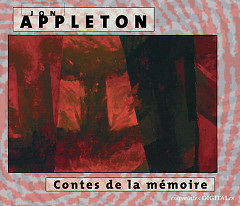
    Contes de la mémoire, Jon Appleton dans Musicworks

    «Review», André Mayer, Musicworks, no 71, 1 juin 1998
    lundi 1 juin 1998 Presse

    American Jon Appleton and Brit Jonty Harrison are pioneers of electroacoustic music, and the pivotal moments of their enterprising work are marvellously captured on these two retrospectives issued by the empreintes DIGITALes label.

    Both artists are preoccupied with texture, and as such, few traces of melody or even conventional structure are to be found in their compositions. As with most experimental music, the focus is on the listener’s reaction to the sounds as opposed to the composer’s delight in making them.

    The most illuminating composition on Contes de la mémoire is Newark Airport Rock written in 1969, for which Appleton approached unsuspecting travellers and asked them “What do you think about the new electronic music?” Their responses ranged from unbridled enthusiasm to outright repulsion. (Someone even asked Appleton whether he meant “elevator music”) Out of these sondry reactions Appleton created a dynamic collage of voices that he set to spiky jazz — the effect is fascinating. The first track on Contes de la mémoire, San Francisco Airport Rock, reprises this experiment twenty-seven years later (this time set to a canvas of ambient music). Whether or not it was the desired result, the only difference in these compositions is the vernacular of the interviewees — the lesson here seems to be that the acceptance of electronic music is still far from complete. (One chap emphatically said “I like real music by real musicians,” as sly an indictment of electronic music as has ever been uttered.) Appleton certainly had a stake in the matter, having helped design the Synclavier, the first digital synthesizer.

    Contes de la mémoire also includes Dima Dobralsa Domoy (1993), which tells, through a variety of both organic and electronic tones, the tale of one Russian’s search for home. Appleton expands on a pet theme namely, the political oppression of artists — on the track CCCP (In Memoriam: Anatoly Kuznetsov), which is a memorial to Russian writer Anatoly Kuznetsov, who defected to the West. The track deftly combines Kuznetsov’s voice with soundbites of Stalin, Tolstoy, Radio Moscow, and Russian folk music to create an intensely emotional environment. But the most subversive track on this compilation is probably the last one. Chef d’œuvre, written in 1967, takes a jingle for Chef-Boy-Ar-Dee performed by the Andrews Sisters, and distorts it with vocoders and various other effects, resulting in a wildly delusional aural document that at once celebrates and lampoons classic Americana.

    Appleton and Harrison’s work can be truly held up as visionary…

    Miniatures concrètes dans Ici Montréal

    «Critique», Michael D Hogan, Ici Montréal, 21 mai 1998
    jeudi 21 mai 1998 Presse

    Sept ans après l’excellent Électro clips, LA maison de diffusion de la musique électroacoustique à Montréal renoue avec l’idée de faire une compilation de courtes pièces créées par de jeunes compositeurs de partout en Occident. Moins heureuse que la précédente, on y fait toutefois quelques belles trouvailles. Pour souligner les 50 ans de la musique concrète.

    Miniatures concrètes dans Splendid E-Zine

    «Review», Noah Wane, Splendid E-Zine, 11 mai 1998
    lundi 11 mai 1998 Presse

    Miniatures concrètes celebrates the advent of musique concrète 50 years ago. It contains 3-minute pieces from 24 different composers. Each composition is constructed from three provided sound sources — yet the results are truly diverse.

    Jocelyn Robert’s Prélude à «des dieux en conserves» is fraught with a sort of intrinsic conflict created by the cunning juxtaposition of sounds from the world of human-kind (riots, bombs, etc) and sounds from nature (birds, water, wind, etc). It is a truly stunning example of the way sounds have the power to stir emotion.

    Another highlight of the disc is Randall Smith’s Collision. This work has a linear/narrative aspect to it in the sense that the body of the piece is the logical extrapolation of the big sonic gesture that happens at the beginning (like a collision and its aftermath). In terms of nuts and bolts, I find Smith’s skill in the subtle manipulation of his sound sources to be praiseworthy.

    Ned Bouhalassa’s Éclipse is wonderfully programmatic as well. His aural painting allows the listener to hear the moon as it moves across the face of the sun. The sonics in this track are outstanding — crisp and clear and capable of cutting to the bone.

    empreintes DIGITALes is one of the premier propagators of serious, late 20th-century electronic music and CDs like Miniatures concrètes are the reason why.

  • 5
  • 6
  • 7
  • 8
  • 9
  • 10
  • 11
  • 12
  • 13