Sauter au contenu principal
electrocd

Blogue

87 résultats
  • 1
  • 2
  • 3
  • 4
  • 5
  • 6
  • 7
  • 8
  • 9
  • Les corps éblouis dans Alternate Music Press

    «Review», Canary Burton, Alternate Music Press, 31 décembre 1998
    jeudi 31 décembre 1998 Presse

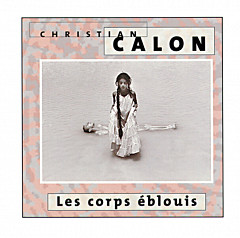
    This album has one cut… the whole album. Starting with silence… then gradually letting the listener in on what is happening… Calon DOES explore space. Les corps éblouis was commisssioned by the Ina-GRM and the French state. On a formal level,Les corps éblouis is a work in which, through the development of the principle of metamorphosis, the result is that the Form is only legible superficially, and that it grows on the listener according to an irrational process.

    And music itself is heard using an “irrational process.” Oh yes, composers and other music professionals can use their “rational mind”… to take things apart, and sometimes to enjoy, but basically music is visceral. You either like it, it touches you somewhere… or it doesn’t. Lots of times one can hear a piece for the first, second or third times and dislike or be indifferent to it. And then the fourth time, love it! I have found that I didn’t like certain music in a period of my life and then heard it again years later and either understood or enjoyed it.

    This “underwater” … uh… “outer space” … “inner space?” … oh, whatever! IS enjoyable to me on the first hearing, but then, I LIKE space music. I like the listening rather than knowing the HOW of creation.

    Les corps éblouis is sanity making for me. It almost sounds like what I imagine my blood coursing through my veins would sound like it if I was in one of those “no reflection” sound chambers. Especially part way in to the “music”… a rushing sound like blood in the ears. We ALL like to “hear” ourselves… this is sorta like that.

    Now I hear the ocean, a tinkle of glass wind chimes, a glitter of bugs. Of course that’s what I hear… you may hear other things in it. A towing of whales… a metallic sound next. since I hear ocean, I hear the rigging of sailboats. But maybe tomorrow I will hear it different. There is alot here to hear! And it grows and grows!

    The now familier “computer” sounds… things played backwards… maybe. Eeks and Awks, but all in soft, interesting combinations… nothing to upset the listener from reverie. You must be able to tell by now that I hope you will support this artist and buy his album!

    I hope you will support this artist and buy his album!

    Autour dans Alternate Music Press

    «Review», Canary Burton, Alternate Music Press, 31 décembre 1998
    jeudi 31 décembre 1998 Presse

    Now this space music album (or ambient if you wish) is more like the old musique concrète but more understandable. Schryer uses real sounds, on cut one, which is short, this time the ocean, a train and a voice calling. Cut two, called Cloches which means [bells] in French, he’s got church bells, distorted car horns, metal sounds… Envol, which is a plane taking off over the surf… up to 7 short pieces.

    These are part of Musique de l’Odyssée sonore Then we’re onto El medio ambiente acústico de México. Very obviously “things” Schryer picked up on a trip to Mexico. Ocean, voices, a little this a little that. More ocean on Vancouver Soundscape Revisited boat horns, some Spanish, birds, far away music… industrial sounds. This is totally a collection of the odd and mundane. Laughter, drunken singing. What do I say?? this section seems to build into something. I really don’t know what to say about this. It is not confusing, the sounds are in good order… they make sense. But I still don’t know what to say. I like it better than early 20th century “musique concrète.” But then, I only liked that for its ground breaking ideas. This is ok. I guess it’s places that picture themselves in bits of sound. Sound Paintings.

    Sound Paintings.

    Lieux inouïs dans Voir

    «Notes magiques», Dominique Olivier, Voir, 3 décembre 1998
    jeudi 3 décembre 1998 Presse

    L’art acousmatique trouve en Robert Normandeau, l’un de ses représentants les plus admirables. La perfection technique et la «musicalité» intrinsèque de ses œuvres le placent d’emblée parmi les plus grands, ce qui n’a cessé de se confirmer ces dernières années. Les plus grands prix internationaux couronnent son travail minutieux, presque maniaque. À preuve, cette version «remixée» de Lieux inouïs, un disque paru en 1990. L’art de Normandeau y est accompli, nous ouvrant la porte sur des mondes inconnus, entièrement issus de l’imaginaire du compositeur. Un voyage.

    AVIS: Le texte reproduit ici est extrait du site de Voir et est protégé par la Loi sur le droit d’auteur du Canada. © Communications Voir Inc, 1998

    La perfection technique et la «musicalité» intrinsèque de ses œuvres le placent d’emblée parmi les plus grands…

    Contes de la mémoire dans Artefakt

    «Kritik», Erik Benndorf, Artefakt, no 5, 1 décembre 1998
    mardi 1 décembre 1998 Presse

    Jon Appletons Lebenslauf wirkt mächtig. Er wird als Mitglied einer Gruppe Forscher, die das Synclavier hervorbrachten und aufgrund seines weltweiten Engagements um die Elektroakustik gewürdigt. Sein Essay im umfangreichen Booklet ist offen und ehrlich: “I had no idea what I was doing”, “The music shouid stand for itself”, “we should feel elation at the approach of a new order of civilisation” und der Paradesatz des selbstbewußten Künstlers: “Today, when I start a new piece, is a fear that I can do nothing truly new.” Die Contes de la mémoire des Herrn Appleton sind selbstverständlich allesamt neu, werden es auch hartnäckig bleiben und jede weitere Reproduktion gleichgültig hinnehmen. Das macht sie jedoch keineswegs gut. Außer der Beharrlichkeit des Musikers in den Anfangstagen der erschöpften Kunst, fremdartigste Geräusche zu sammeln und zu produzieren, und der Tatsache, daß Herr Appleton der treibenden Individualisie rung des Komponierens mittels Schere und Kleber weitreichende Schübe gab, kann ich nichts würdigen. Das ist nicht wenig, aber seinen Geschichten mangelt es an deutlich an Leidenschaft, an Hingebung für Schokotorten und den Stiefel in der Fresse. Die Contes de la mémoire ruhen bereits stolz, aber fernab, im Archiv. Abschließend meinte Jon Appleton: stop reading here.

    Articles indéfinis dans Computer Music Journal

    «Review: Another British Invasion!?», Laurie Radford, Computer Music Journal, no 22:4, 1 décembre 1998
    mardi 1 décembre 1998 Presse

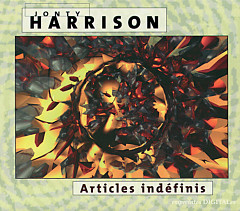
    Another British invasion!? UK electroacoustic composers over the past several decades have been actively focused on fortifying the compositional and theoretical foundations and potential for acousmatic art music through high standards of teaching, production and performance. The works of Wishart, Emmerson, Lewis, Barrett, Stollery and Smalley are heard worldwide on concert programs and their ideas and writings have appeared in scholarly publications with increasing frequency. Jonty Harrison, based in Birmingham [UK], is among these talented and dedicated individuals who have taken up the cause of musique concrète, écoute réduite (reduced listening), and objet sonore (sound object) along with other aspects of the work pioneered by Pierre Schaeffer and the Groupe de recherches musicales (GRM) in the 50’s and 60’s. They appear to have set themselves the task of profoundly expanding the limits of this art as well as establishing and re-evaluating the means of discussion and analysis for an art form which often suffers from a lack of shared terminology and theoretical principles.

    The sound world of Jonty Harrison is that of rich source materials scrutinized for all perceptible attributes and subsequently submitted to an array of transformations. These transformations push the materials further and further from their source while at the same time imbuing the new compositional context with timbral and gestural cohesion. In fact, it is remarkable to listen to the selections on this 1996 release, Articles indéfinis, which span seventeen years and hear such coherence and consistency of purpose, style and technique. In the words of his colleague, Denis Smalley, Jonty Harrison’s music is “volatile in its agitation, its wayward energies, the restlessness of its short-breathed phrases, the unpredictable pushing and shoving of its gestures, its punchy presence, its elegantly controlled aggressiveness.” As Smalley also points out in the introduction of the accompanying booklet, the fact the Harrison is the Director of, and a frequent performer with the Birmingham ElectroAcoustic Sound Theatre (BEAST), the multichannel acousmatic potential of his materials is always a primary consideration in their choice and compositional placement. This is a music of careful craftsmanship, an etching and molding of objects and textures, a control of motion, speed, direction and distance, a “listening inside sounds… which can give rise to new external(ized) musical forms.”

    Pair / Impair (1978) is the oldest work presented on the disc and offers an appropriate introduction to Harrison’s origins. In the form of an extended study in electroacoustic transformational techniques, in a similar vein as Parmegiani’s De Natura Sonorum (1975), Pair / Impair is a search for balance and equilibrium between opposites. There is a supple elasticity to Harrison’s approach to time in this as in all of his work: one moment his objects flutter and rebound, are dashed against one another, explode and recombine; a suddenly, they halt and hover, frozen in textural and timbral configurations, only to give way in due time to further perturbations.

    … et ainsi de suite… (1992) is a substantial, ultra-refined study in creating a lot from a little. Here the source material originates with soundsd elicited from some rough-textured wine glasses which are subsequently submitted to a gamut of extreme transformations and re-transformations, producing in the end a work of vast gestural and timbral diversity. Yet once again, a sense of unified character and direction is achieved via the frequent dialogue between original source material and the many levels of mutation and recombination Harrison employs. Eleven movements of varying duration present elements of exposition, parenthesis, commentary and recapitulation as we follow the attacks and resonance of the glass sounds through time-stretching, pitch shifting, truncation, and a myriad of textural constructions. Unsound Objects (1995) continues this compositional path while increasing the element of ambiguity “evoked when recognition and contextualization of sound material rub shoulders with more abstracted (and abstract) musical structures.” Swirling flashes of highly processed sound frequently lead the listener to the initial sounds sources such as walking on granular materials, falling rain, and the electroacoustic archetypal opening of a creaky door. The pendulum-like alternation sets up a sense of global rhythm within which “interconnections and multiple levels of meaning proliferate.”

    The final two works on Articles indéfinis arise from the gestural properties of air. In Aria (1988), subtle connections between the frequency and velocity trajectories of gusts of air and the inner workings of the human vocal mechanism are explored. Ascending and descending flourishes, which constantly increase or decrease in speed, are anchored by slowly evolving spectral complexes. One has the impression of the simultaneous presentation of several temporal levels which control and guide the listener in appreciating the unfolding of rich and evocative timbral transformations. Hot Air (1995) is concerned on one level with further implications of the concept of air (balloons, breath, heat). But it goes further in its conceptual base in drawing upon the idea of air as the propagator of sound itself and the resulting association of linkage from one sound to another. The most extreme examples of combinating unprocessed environmental recordings with radically transformed sound materials (often of these same original field recordings) to be found on the disc are at work in Hot Air. The iterative cracklings of a roaring fire, the explosive imagery of claps of thunder, the squeaking of rubber balloons, and the overhead squawking of geese, to name just a few natural sound phenomena which are used, are combined, alternated and linked with sinuous, angular and often granular-like transformed materials in an interplay of timbral and metaphorical exchanges.

    Harrison’s music is a feast for the ear. It is decisively concerned with timbre, or to use Smalley’s term, spectromorphological design. Its premise and source is the rich inherent spectral and gestural character of natural sound from which models for exploration and extension arise. The works on this disc were produced at the studios of the GRM, GMEB, and the Universities of Birmingham and East Anglia and have garnered Jonty Harrison awards from Ars Electronica, Musica Nova and the ICMA.

    Harrison’s music is a feast for the ear.
  • 1
  • 2
  • 3
  • 4
  • 5
  • 6
  • 7
  • 8
  • 9