Sauter au contenu principal
electrocd

Blogue

268 résultats
  • 5
  • 6
  • 7
  • 8
  • 9
  • 10
  • 11
  • 12
  • 13
  • Télépathie, May ’68, Hey Typical!, All Your Dreams Are Meaningless, We Remain Faded, Podweek dans Rif Raf

    «Kritiek», SVS, Rif Raf, 14 octobre 2003
    mardi 14 octobre 2003 Presse

    Vers vocht uit de druipende uiers van het Canadese No Type-label. Het duo Coin Gutter maakt niets ontziende, hard industriële en dan weer sacrale elektronische ambient en noise, vaak doorspekt met moderne compositie. Denk aan Yannis Kyriakides in een remix door Merzbow.

    Oeuf Korreckt is, ondanks zijn lullige groepsnaam, een bijzonder groovy elektronicacollectief dat met scherpe, licht industriële ritmes erg doeltreffend uit de hoek komt. Alleen jammer van die introverte, weinig verheffende productie.

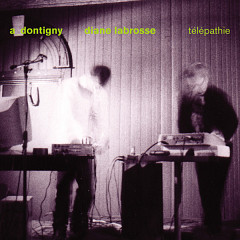
    De sampling-artieste Diane Labrosse werkte de voorbije tien jaar met klinkende namen zoals Ikue Mori, Martin Tétreault en Zeena Parkins. Elektronicafreak A_Dontigny was dan weer lid van het beruchte collectief Napalm Jazz. Tesamen brengen Labrosse en Dontigny spannende, verrassende en verontrustende elektronica -en ambientpassages die je het best beluistert met de deur op slot en het huisalarm op extra sensitive.

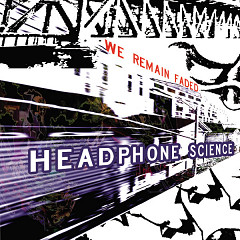
    We Remain Faded van Headphone Science is de meest beklijvende release bij No Type. Met zijn mix van stuiterende hiphop en aan flarden gesneden raps leunt dit project van Dustin Craig nog het meest aan bij Prefuse 73. Maar de epische soundtrackmuziek die Craig in zijn composities verstopt, sleept deze plaat weg uit het avanthophoekje.

    Twee erg leuke 10inch-vinylletjes zijn die van de Zweedse Claudia Bonarelli en de Amerikaan Todd Brooks a.k.a. Books on Tape. Met respectievelijk wollige clickhouse en punky elektrobeats zetten zij de street credibility van No Type extra in de verf.

    We Remain Faded dans Nightlife

    «Critique», DC, Nightlife, 14 octobre 2003
    mardi 14 octobre 2003 Presse

    EP regroupant des pièces précédemment impossibles à trouver, ce We Remain Faded regorge de petites surprises. C’est que l’Américain Dustin Craig porte très bien son nom. Les pièces ici présentées n’ont rien à envier à celles des plus habiles manipulateurs de sonorités. Jouxtant la frontière particulière des Boards of Canada, Headphone Science déconstruit et ressert des rythmes hip-hop sur une trame atmosphérique planante. Un exercice complexe qui a comme intention de réjouir les oreilles de ceux qui s’y attarderont.

    Un exercice complexe qui a comme intention de réjouir les oreilles de ceux qui s’y attarderont.

    Bleak 1999 dans Earpollution

    «Review», Mark Teppo, Earpollution, 13 octobre 2003
    lundi 13 octobre 2003 Presse

    I first heard Tomas’ work back in 1999 when he released his first record for No Type, Immaterial, and I was one of the lucky ones who got an actual CD in the hand-made packaging. The material was all free from No Type’s site (as many of their releases are), but I wanted the real thing — to have and to hold. Since those days, Jirku has released a couple of records on different labels and participated in the first edition of the Montréal-based electronic music festival, Mutek, where he opened for Thomas Brinkmann and turned enough heads that German label Force Inc. signed him on the spot. People have been wise to the magic of Jirku’s hand in the mix and his (triumphant!) return to No Type is a nod to his roots — to the label which gave him his first break and to the minimal beat sculpture style which he started with. Bleak 1999 is a record of staggered beats, winsome ethereal melodies, and the seemingly casual interception of radio signals.

    It is far from bleak and yet, at the same time, it most certainly is. The arrangements are sparse, uncluttered excursions into minimal loop-based space. The tracks aren’t heavily processed or tweaked into realms of spasmodic beat witchery. They are gentle, flowing pieces which build and layer simply, leaving the listener feeling as if they were floating in a bleak landscape — yes — but a landscape which supports them and cradles them and carries them along invisible streams. Haloperidol is one such stream, the awkward scrambling of worn machinery in the beginning of the track gives way to an endlessly drifting motion which lifts you out of your chair and floats you along.

    Clindamycin is nothing more than a lost radio, drifting forgotten in a white mist, its dial tuned to the very bottom of the spectrum where only noise lives. While Clindamycin doesn’t normally give way to psychosis, in this case it does as the wash of white noise is leveraged out of the way by shards of glass beats. A lone cello weaves through the impromptu beats, the tinkling of the glass enough to make the teeth at the back of your throat hum. 3.24.93 shimmers with warm synth tones over a gentle and insistent minimal techno style beat. LiCO3 is a static interlude, a breath of wind caught in a speaker cone, while Glucose is a warm drone, a stuttering note which never quite gets moving. The note isn’t sluggish, rather it is caught like a fly in amber and all that is left is for us to watch it slowly die, the buzz of its wings circling in a slow decline.

    I’m spending a little time at webmd.com as I listen to this, plugging in track names as they come up. Clindamycin. Cefuroxime. Haloperidol. Lorazepam. Tranylcypromine. There are two commonalities in the results: the drug in question either “fights bacteria in the body” or it works by “increasing the levels of certain chemicals in the brain.” Even LiCO3 was once used as a “mood stabilizer.” Music, though, doesn’t require a prescription or a visit to the doctor’s office. It’s a modern aural medication. Jirku’s recommendation for what ails you? Take a course of Bleak 1999. It’ll flush the toxins right out of you.

    … a record of staggered beats, winsome ethereal melodies, and the seemingly casual interception of radio signals.

    Bleak 1999 dans Dusted Magazine

    «Review», Everett Jang Perdue, Dusted Magazine, 12 octobre 2003
    dimanche 12 octobre 2003 Presse

    As electronic music is a virtually faceless beast, it is noteworthy when a regional breakout of excessive talent occurs, as such is the case with the current influx of Canadian artists who are taking the global scene by storm. The likes of Akufen, Tim Hecker, Deadbeat and Tomas Jirku have been using Montréal’s Mutek festival as a springboard, employing a hometown advantage to work their sonic goods to the max; ensuring that at night’s end they are taken home by the most seductive of tourists. Case in point, after opening for Thomas Brinkmann at the first edition of Mutek, Jirku was signed to Germany’s Force Inc. label to produce his Sequins disc.

    Rather than sticking with an instantly recognizable regional sound and identity, each of these artists has developed their own unique voice and direction stretching out the confines of electronic music. Jirku’s 12” collaborations with Robin Judge, which were eventually compiled by Onitor as Plusism, set a precedent for the combination of abstract beats and convulsive motion. Together they produced the sounds you expected to become commonplace in your childhood Bradbury/Heinlein visions of the near future. His own work offers an entirely different perspective, leaning towards minimal techno, incorporating rhythmic glitch, ambient and even taking a potshot at cartoonish gangsta rap (as the GI Joe Killaz).

    Bleak 1999 is the fifth solo release from Jirku and a return to his Canadian label of origin, No Type. The disc revolves around a medical theme, with medications (though nothing so obvious as narcotic acronyms), vital sign readings, even what appears to be a couple of chest x-rays in place of the traditional song title. This is a fair representation of its sound as Jirku’s brand of minimalism in techno has much more in common with the sounds of hospital machinery than the dancefloor.

    Every track of Bleak 1999 segues together masterfully to produce a work of clinical starkness, perfectly suited for nightshift workers everywhere. The smooth static field of Glucose duplicates the hum of life support; until a distant viral code shuffles to the fore, breaking the stasis of the hum like a live wire loose in the gears. All ensuing ambience dissipates as the code is assaulted by the antibiotic Cefuroxime, cranking up the distortion with a pronounced dub-drenched beat, a la M4-M7 aka Maurizio. The onset of Haloperidol introduces a gentle off balanced scraping; not unlike a warped and dirty 78 rpm running quarter speed; smoothly building momentum till trifled upbeat Detroit synth touches break the bleak atmospherics. A respirator’s cyclic oxygen output invades the throbbing delay of Input fluid, furthering the incessant brooding aura, drawing strength from the sense of loss that permeates hospital corridors.

    Throughout Bleak 1999, Jirku uses a mix of analog inventiveness and concrete ambience to produce electronic music that squeezes out of its canned genre, demanding to be studied intently for clues to the unsolved riddles of machinery.

    Throughout Bleak 1999, Jirku uses a mix of analog inventiveness and concrete ambience to produce electronic music that squeezes out of its canned genre…

    Seuil de silences dans Le Devoir

    «Critique», François Tousignant, Le Devoir, 11 octobre 2003
    samedi 11 octobre 2003 Presse

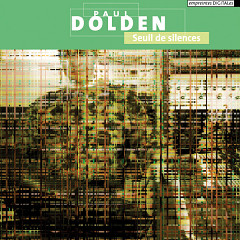
    Si bien de ces pièces ont déjà été portées au disque, nous ne sommes pas pour autant en présence d’une réédition. La musique «électronique» a en effet ceci de particulier que sa technologie change et que des idées parfois rendues un peu maladroitement à cause justement de limitations techniques peuvent, avec les avancées des ordinateurs, se refondre en une meilleure mouture. C’est le pari que tient ici Paul Dolden en offrant des ‘remix’ de pièces qui ont déjà fait sa gloire. Pari gagné, car tous les propos du compositeur pour justifier sa démarche s’avèrent nécessaires. Oui, on entend bien mieux — et bien plus — d’événements dans ces bandes chargées souvent au bord du supportable. L’approche de Dolden a ceci de paradoxal que, cherchant le «seuil du silence», il nous assomme de son(s); sans gratuité, ce canardage acoustique fait aspirer au silence. Avec la «nouvelle version» de Below the Walls of Jericho, tout devient effectivement plus clair, l’idée plus nette. Parfois, le retour sur de vieilles œuvres produit une forme d’académisme; ici, il n’en est rien. Dolden se montre un peu comme Léonard de Vinci qui, jusqu’à sa mort, a raffiné sa Joconde, qui reste comme le premier monument de cette incroyable saga des ‘works in progress’. Ceux qui connaissent ce répertoire seront ravis de retrouver un autre visage de cette musique. Les néophytes, eux, n’ont plus aucune raison de lui résister.

    … en offrant des ‘remix’ de pièces […] tout devient effectivement plus clair […] Dolden se montre un peu comme Léonard de Vinci…

    Sings the Blues dans Absorb

    «Review», Philip Raffaele, Absorb, 9 octobre 2003
    jeudi 9 octobre 2003 Presse

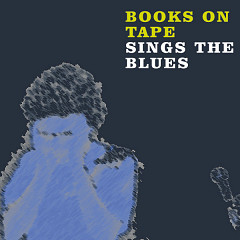
    After his debut album battle cry Throw Down Your Laptops on Deathbomb Arc, and critical acclaim on both sides of the atlantic, Todd Drootin brings his messy electric-noise-analogue sound back to the forefront with sixteen tracks of old fashioned sonic construction. the styles and genres that weave in and out of this record are pretty amazing, in the way that they continually sound fresh and not as repetitive as a project like this could be. Republic Of ends up as a successful downtempo number, with a simple break-beat sound moving back and forth. See You In Tokyo picks up the tempo a bit, but not succumbing to any kind of conventional electronic track archetype. the notes throb like a bad ekg reading.

    Structure is the most important element to Drootin’s work. He never seems to take the easy way out, (which apparently is what laptop music programming is to him), and continually loop samples and sections; each song is strategically arranged, and the sounds all take on a life of their own, all orchestrated rather amazingly.

    Healthy and lively, this is an excellent argument to all of those people sick of how easy electronic music has become to both create and consume. By combining an amalgam of musical styles, all under one basic pretense, of making music in a somewhat organized fashion, in order to reach an end result of it sounding enjoyable, Books on Tape does so in a way that sounds unbelievably brand new and non-recycled. Quite a breath of fresh air in a stifled genre.

    Quite a breath of fresh air in a stifled genre.
  • 5
  • 6
  • 7
  • 8
  • 9
  • 10
  • 11
  • 12
  • 13