Sauter au contenu principal
electrocd

Blogue

52 résultats
  • 1
  • 2
  • 3
  • 4
  • 5
  • 6
  • 7
  • 8
  • 9
  • Mondes inconnus, Un son peut en cacher un autre dans Vital

    «Review», Dolf Mulder, Vital, no 550, 31 octobre 2006
    mardi 31 octobre 2006 Presse

    The Canadian label empreintes DIGITALes releases two CDs with compositions from english composers and performers of electroacoustic music. Mondes inconnus brings together 8 works that were composed between 1995 and 2004. The composer is Adkins. He started in 1993 as a member of BEAST (Birmingham Electro Acoustic Sound Theatre). He received many international prizes for his electroacoustic compositions. So he is someone with a reputation in the circles of electroacoustic music. This is also the case for Pete Stollery who, just like Adkins, studied composition with Jonty Harrison in Birmingham. Also Stollery has his work — mostly electroacoustic music — performed all over Europe and America. On his new cd Un son peut en cacher un autre seven works composed between 1993 and 2003 are presented. Since 1996 both gentlemen established with some others the group invisiblEARts whose aim it is to perform and promote acousmatic music. All this may sound as if we are in highly academic and elitist environment with these two composers. But let me assure you these two composers are absolutely no boring company. In their own way both offer some very exciting and satisfying electroacoustic music. A music that still is very much alife since it was initiated by Pierre Schaeffer.

    Especially in the works of Stollery a diversity of concrete sounds can be traced and identified. From this Stollery builts abstract and surrealistic soundscapes. He succeeds in preserving the ‘purity’ of the original sounds, which makes his work very colorful. With a great sense for detail, he composes dynamic and intriguing structures that kept my attention from beginning to the end. I’m not familiar enough with this kind of music in order to discover whether these electroacoustic compositions carry a personal signature. Listening to both CDs I found myself unable in identifying the hand of Adkins or Stollery. In general the works of Adkins are more ambient-like and synthetic, and less whimsical then the works of Stollery.

    Recommended

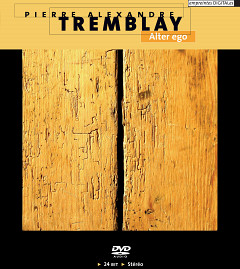
    Alter ego dans Sonoloco Record Reviews

    «Review», Ingvar Loco Nordin, Sonoloco Record Reviews, 29 octobre 2006
    dimanche 29 octobre 2006 Presse

    31 in 2006, Pierre Alexandre Tremblay belongs to a new and to me unknown and untried cadre of composers in the electroacoustic discipline; a generation that has grown up with weird sounds and a massive availability of hard- and software. In my generation, looking towards 60 or beyond, we saw the coming of the roads, the emergence of studios and gear, analog and much later digital, and we always marveled and rejoiced at each new means of making sounds, compositions of electric impulses or concrete sounds. Maybe a greater respect for the sound as such was instilled in us because of the almost mystical unavailability of means to begin with; the studios that were fortresses for a very few initiated sages, and later the costly – and therefore unavailable – equipment that slowly filtered into the consumer market – but I just speculate. Perhaps the younger composers’ hands-on and disrespectful attitude towards the wonders of computers is healthy, making the creative process less tense and more relaxed, more natural, and… more focused on results.

    Reading through his credentials, I find that also this Canadian musician and composer (who has arrived out of a mix of classical guitar, bass guitar and composition in Montréal) has been molded in the UK sonic workshop of The University of Birmingham, receiving tuition from none other than… Jonty Harrison! This has been the case as well with the other two composers with new DVD-Audio’s on the empreintes DIGITALes label: Pete Stollery and Mathew Adkins. I see a whole tradition expanding out of Birmingham! Tremblay teaches composition at The University of Huddersfield, UK, and he also runs a contemporary jazz ensemble – iks – which has released six albums so far and toured the globe.

    autoportrait (2001)

    I don’t know quite how to relate to autoportrait. I have to free myself and my listening a bit, I think; not to demand something, but just to take in what comes. Tremblay says that he’s “rummaging through familiar images”, and calls the self-portrait as a genre “an act of introspection for renewed consciousness” – but there is a generation gap here, that I have to try to close or bridge, because I have a problem with the beginning of the piece; these very sprawling and stretching incompatibilities – but that’s not Tremblay’s problem. That’s my problem! Besides, I lose this feeling of incompatibility further into the piece, where – to my ears and my frame of references – many very exciting events start happening.

    The piece starts with a resounding bang and some wobbly, watery, weary statements. Things are cut short but then allowed to soar a while. Hectic, cut-up soundings appear, half whistling or chirping, half munching and chopping, and a plastic piano tinkles, at regular speed and also at Nancarrow speed squared, until the piano layer is kind of folded back like a table-cloth. Aggressive, frantic synthesizer sounds are layered as well as spatially spread and panned, exploring a space of moving objects at all kinds of levels, confusing but quite interesting, perception-wise, like watching those computer animations of future urban civilizations with vehicles moving at different levels and in various directions! Deep, dark sub-rumbling events echo out of ships’ hulls at the dark end of time, all human aspects deported deep into an unforgiving oblivion. The world is loud, but nobody is there to listen.

    About midway resemblances of voices of wrath echo out of the anonymous sounds, like remaining imprints of people lost in time, as the whole nature of the music turns towards a deepening drone situation, winding down and disappearing in an extended and manipulated factory whistle likeness. At this point, suddenly, a beautifully spun oboe winds and sways, completely unexpected, forcing the thought in an unforeseen direction of orchestras of the Romanticism; large halls with lots of heavy textiles and brown hardwood.

    Deep tones keep grounding the music in clay, while soaring, sliding moments high above the heavier time begin glowing and breathing like minds lost in dreams, bringing you farther out on a planetary plane of painless bliss. The music gathers coherence as it lines up its many layers of fundamentals and overtones in a vibrating plane of trembling colors, the Al Margolis way. Sincerely beautiful!

    Heavy sonic weights are being shifted. They appear like dark shadows in the foreground, pushed inch by inch over a marble floor, the friction oozing with acrid rock dust. The frictious sonorities begin to take on a radio interference guise; like jagged static on the shortwave band, not unlike what’s heard in Gilius van Bergeijk’s Over de Dood en de Tijd; a remarkable homage to Franz Schubert’s Der Tod und das Mädchen: a startling mix of the vulnerably beautiful and the violently harsh and crude.

    A kind of machine type chanting appears in the distance, in two separate pitches, very dry and toneless, while the ominous rumble continues like an ongoing quake or the base drone of consciousness connecting to the everlasting and unchangeable Rigpa at a crucial moment.

    au Croisé, le silence, seul, tient lieu de parole (2002)

    Consciousness is littered with rising and descending thoughts, with electric sparks of remains of former experiences and compromised with elusive hope and vain expectations – with clinging to the unreal and the unhealthy… in the long run… and with a desperate panning from the past tense to the future tense, and back, and again, and so forth. Here is a piece that has lowered its microphones into this unfocused mind of man, into the condition in which it usually exists, incoherent, disparate, pulling in all directions, ducking away, hiding – and boasting, rudely! In fact, Tremblay, involuntarily, perhaps, describes the chaotic state of mind of most of us with this music – and isn’t it a wonder that cities and motorways and nuclear plants still work pretty good most of the time, in spite of this… not to talk about jails and hotels and the forest industry…

    A short repetitious signature gradually increases in volume; a sound of an old-timer sharpening his scythe with a whetter… well, probably not, but letting my associations free, that’s what this beginning sounds like: I’m a country boy, with a country boy’s frames of reference! Electric music arriving in the shape of splintering rocks destroy my harvest picture, and soon we’re in that flock of roustabout voices mumbling unintelligibly; those different shades of the I inside me. Decipherable sentences in French do emerge, only to deviate into Tremblay’s permutations, some bleak sound-poetic offspring of sorts… Event change fast, a clockwork kind of percussion, systematically progressing, rhythmically hitting left right left right left right, then relieved by slower shortwave signals or their mimicries… but up close they sound like clarinet threads… falling trajectories of flying-by low-pitch sounds, dipping deeper into unknown space, slowed by opposite solar winds grinding the hull of the vehicle…

    As the piece almost reaches halftime, the audio gathers more coherence; a more defined minute compositional expression, with brittle glass flybys that curl up in the gravity of yourself and swirl around you in glistening spirals, encasing you in the manner of electron shells. The music catches up with the old man, who bows and expresses his gratitude. This is where this particular piece, in my ears, gets somewhere, inches across the threshold of fine arts and blooms in triumph! Many things happen on the way – much too many to mention, really – but towards the final few minutes a drone of might and sonic compassion grows on you like a Lakeland District wool sweater, and for the first time on this DVD-Audio I feel cozy and relaxed, riding this roaring density of beauty towards the end of the I and the Thou.

    Binary (Virtual Rapper Remix) (1998)

    Antonin Artaud? Sounds like his Pour en finir avec le jugement de Dieu (1947). Insanely shrieking voices… but also the talkative electronics of Paul Lansky’s SmalltalkTremblay reaches into a more vivid art of expression here, in a plunderphonic kind of way. Not that I think he stole any source sounds or anything, but the way he mixes this wildly disparate materials reminds me of John Oswald, and the fierce way he does it makes me think of John Oswald. Remember though, these are my immediate associations, which may not be fair to Pierre Alexandre Tremblay. I’m sure he’s done this funky mix on his very own accord: I’m only trying to make sense of this weird wilderness, by sort of thinking aloud, like someone talking to himself. Of course (see title) there is a rapper in here too, but he seems pretty real, not at all virtual… I think I’ll leave this track and move on to the next one…

    fugue; qui sent le temps? (1997)

    Tremblay starts his introduction with quotes from Virgil and Ovid: “Fugit irreparaible tempus” and “Tempus edax rerum” (“Irrecoverable time glides away” and “Time, the devourer of all things”). Tremblay – as a rule – doesn’t provide a logical or reasoning presentation of his works, but more poetic, elusive, haphazard. I like that. It’s more in line with this art as such, isn’t it? There is nothing sensible to say about electroacoustic music, really, unless you want to be super-grounded and state, matter-of-factly, what machines were used, how software was applied and so forth – and maybe a chosen few benefit from that, but most of the time those pieces of info are just provided to fill the space allotted… Then it’s better to be a little poetic, like Tremblay.

    The beginning of fugue; qui sent le temps? Sounds just like the current weather where I live, where s fall storm is brewing, gathering strength out there. I had to look out for falling branches when I biked home through the forest this afternoon. Here the sighing and soughing wind appears again, on Tremblay’s DVD-Audio, in a piece that starts off promising. It immediately strikes that note of desolation and huddling vulnerability; that sense of early dusk, flying leaves and hedgehogs creeping into the leaf-mounds in the corner of gardens to hibernate. The whining and wheezing gets ever stronger, powered with a wrath that could blow all things to kingdom come, but at this moment I get a feeling of the bardo of dying, i.e. one of the stages of dying that is described in the teachings of Tibetan Buddhism, for example in Sogyal Rinpoche’s celebrated book The Tibetan Book of Living and Dying, where it says on page 257 of the updated and revised 2002 printing (ISBN 0-7126-1569-5): “The internal experience for the dying individual is of a great wind sweeping away the whole world, including the dying person; an incredible maelstrom of wind, consuming the entire universe”. The music, the drone – spread out and wide at first – tightens and gathers more power, soaring relentlessly right through your skull, making impossible each and every thought about anything else. But… is it an angered bee swarm recorded from its midst? Wow, this is my cup of meat!

    Suddenly, like a wonder, this streaming, soaring, Beaufort force 12 wind is transformed, ever so slightly and gradually, into an orchestral tutti, shining with golden brass and the polished hardwood of celli and contrabasses! Again, my cup of meat!

    A quite sophisticated percussive element gets a growing attention in the sound, eventually taking up the rhythms of a samba on some southern beach, itching with testosterone and estrogen in a fertility rite under the stars. The tempo is increased considerably, and grainy, scratchy Bergeijk interference is added, like nails clawing the back of your hands bloody! The percussion, the interference and a layer of embellished metallic audio begin to boil like a hot well in Iceland, bubbly and steamy and nicely noisy! Lots of other things happen along the way, as we’ve grown accustomed to in Tremblay’s compositions. Towards the end, stretching, pulling bee swarm audio is delivered like racing cars speed-freaking by in hasty Doppler effects. A magnificent copper drone brings us to the conclusion, in carelessly sprinkled shreds of percussion. A mighty piece; in fact the one I like the best so far, satisfying even this old-timer who was electroacoustically raised on Parmegiani and Bayle!

    la cloche fêlée (2004)

    Tremblay applies a quote from Charles Baudelaire’s (1821-1867) Spleen et Idéal / Fleurs du Mal as a motto for his composition la cloche fêlée, and of course, the title is identical to one of Baudelaire’s poems, quoted below. In fact, the final version of Fleurs du Mal was published posthumously, in 1868.

    Charles Baudelaire, La cloche fêlée [The Flawed Bell]

    Il est amer et doux, pendant les nuits d’hiver,
    D’écouter, près du feu qui palpite et qui fume,
    Les souvenirs lointains lentement s’élever
    Au bruit des carillons qui chantent dans la brume.

    Bienheureuse la cloche au gosier vigoureux
    Qui, malgré sa vieillesse, alerte et bien portante,
    Jette fidèlement son cri religieux,
    Ainsi qu’un vieux soldat qui veille sous la tente!

    Moi, mon âme est fêlée, et lorsqu’en ses ennuis
    Elle veut de ses chants peupler l’air froid des nuits,
    Il arrive souvent que sa voix affaiblie

    Semble le râle épais d’un blessé qu’on oublie
    Au bord d’un lac de sang, sous un grand tas de morts,
    Et qui meurt, sans bouger, dans d’immenses efforts.

    It is bitter and sweet on winter nights
    To listen by the fire that smokes and palpitates,
    To distant souvenirs that rise up slowly
    At the sound of the chimes that sing in the fog.

    Happy is the bell which in spite of age
    Is vigilant and healthy, and with lusty throat
    Faithfully sounds its religious call,
    Like an old soldier watching from his tent!

    I, my soul is flawed, and when, a prey to ennui,
    She wishes to fill the cold night air with her songs,
    It often happens that her weakened voice

    Resembles the death rattle of a wounded man,
    Forgotten beneath a heap of dead, by a lake of blood,
    Who dies without moving, striving desperately.

    Church bells and a rustling, as from someone treading the dry grass of a forgotten garden… These bells are such strong cultural markers that you’re transformed instantly into memories and expostulations deep down the centuries of Western traditions and faiths. Jackdaws fly up and flutter around those barren maples as night falls; stirring crowds of the night; restless souls of sturdy confessions. As the bells keep ringing, a standing wave of overtones is created, while your attention shifts from the attacks of sound to the vibrant wave, just like it does when you listen to La Monte Young hammering away at his Bösendorfer Imperial in certain passages of The Well-Tuned Piano. The sound fulfils itself, somehow, resounding to its fullest measure; permeating the tiniest crack in the rock face façade of existence.

    Then, aha! Complete silence for a few breathtaking seconds, and then… a cat purring, closely miked! This is Pierre Alexandre Tremblay! He has no problems with shifts like that. To him, it seems, the traditional associations of sound mean nothing, since he appears to be able to use the sounds just as sounds, as a certain color or timbre or rhythm – but its harder for listeners to rid themselves of the learned significance of such very well-known entities of audio as church bells and cats purring! Then again, maybe he doesn’t play sounds for what they are. Maybe he still uses them this ruthless way, for the fun of it – and the surprise is fun! After these sections of bells and purring, the two join up and ascend to a higher quality, into another dimension, where some properties are retained, while others are left out, leaving us traveling a sphere of dreamy remains and perhaps essence of the merging sources. Beautiful! Everything changes, arch upon arch opens in the sound, and all that remains are whitewashed walls and red roses and a trickling precipitation of dainty thoughts… the landscape behind Mona Lisa.

    A single strong bell attack suddenly marks a brutal end to the aforementioned. The ringing of the attack is extended a long while, until it slowly, slowly dies away, replaced by another enormous attack, and a third – and after the third a pitched-down bell talks, after which it gradually starts to stoop in a downward glissando. More, sparse and strong downward bells occur, and Tremblay utilizes these ringing bells in many different electroacoustic ways, still retaining a basic bellish quality of sound and association as the faces of the known are distorted and blurred… like the well-known becomes strange and threatening and anonymous in an attack of anxiety…

    I had some problems with Tremblay at the very beginning of track 1, and I had some further objections at a few other places, when I though he was too unstructured, too uncomposed, too… random – but this hesitation was completely erased by other sections of the disc, and this final work — la cloche fêlée – as well as the preceding one — fugue; qui sent le temps? – persuaded me totally, and as I leave this text I bow and bid farewell with great gratitude to Pierre Alexandre Tremblay for an amazing sonic journey!

    … I bow and bid farewell with great gratitude to Pierre Alexandre Tremblay for an amazing sonic journey!

    Mondes inconnus dans Sonoloco Record Reviews

    «Review», Ingvar Loco Nordin, Sonoloco Record Reviews, 24 octobre 2006
    mardi 24 octobre 2006 Presse

    empreintes DIGITALes shines the torch the UK way sometimes, like they’ve done earlier with CDs devoted to Denis Smalley (well, ok, he’s originally from New Zealand… and that’s far, from a North European point of view, but you know, some say Sirius is home, some Betelgeuse), Jonty Harrison, Adrian Moore (soon here with another CD) and Natasha Barrett (who left the UK for Norway). Pete Stollery just released his first collection on an empreintes DIGITALes DVD-Audio. By the way, those great sounding DVDs also contain the whole set in mp3s, too, as well as in other formats, and you can listen in regular stereo or in surround. These are fantastic discs, and they sometimes contain more music than can be fitted onto a regular CD, which is the case with this disc.

    The British series continues here with Mathew Adkins’ DVD-Audio, called Mondes inconnus.

    Looking around at home I find a couple of Adkins pieces spread out on two Cultures électroniques CDs; No. 10 from 1997 (Pagan Circus) and on No. 15 from 2001 (Noumena). I also locate the Six Winners CD from The Stockholm Electronic Arts Award after a while, where Adkins participate with Melt from 1994, awarded in 1995.

    Adkins studied music at Pembroke College, Cambridge (UK), becoming a member of the BEAST (Birmingham Electroacoustic Sound Theatre) in 1993. Studies followed with Jonty Harrison and Simon Waters. Mathew Adkins has worked at EMS, Stockholm, Groupe de Recherches Musicales and Ircam in Paris, the Heinrich Strobel Studio in Freiburg and elsewhere. From having composed exclusively for the acousmatic concert media, Adkins has diversified his efforts to also include electronic music for modern dance and multimedia works.

    Mapping (1995-97)

    The composer defines this work as “the slow evolution of an imagined landscape”. That’s good. That sets the dreamy pace, decides the post-and-beyond consciousness of electroacoustic listening required here. It could be the programmatic note of much good electroacoustic music being recorded. Something comes out of nothing, passes into our perception and becomes something, later to leave this realm into… nothing. Beautiful! Just like everything! Impermanence. That which isn’t eternal isn’t very real (I said that!), and “nothing is real”. John Lennon said that, the lamas say that. Of course, they’re all right — and alright!

    Out of silence: a trace of light shimmering just above the horizon, growing in intensity, flowing out to the left and the right, closing in on you across these wastelands of human suffering, which is the content of, and reason for, this planet among the planets; a rest stop for coming to terms, for corrective measures. The music twists and tosses, like was it trying to get out of some kind of grip; perhaps illustrating the grip of matter on this consciousness that for all practical an impractical reasons is completely immaterial, completely elusive and imagined, just like this abstract music, which flows and slides and lights up in a million tossed cigarette butts in the wind on depressive Bogart October evenings after work with leaves glued to the asphalt and lonely bodies scurrying off in the darkness under their umbrellas, eager for their aimless and pointless little corners of cozy amnesia in front of flickering screens… “Let me forget about today until tomorrow…”

    Mathew Adkins’ music in Mapping is ghostly, windy, without any kind of mercy. It wrings you out of yourself in jingly incidents that yell out of the storm of sounds. Singular events come banging by in explosive closenesses, like closed-up fates too damned even for the most extended of salvations, unsaved even by a lethal dose… The soundscape edges over from the cruel to the beautiful. In the massive force of the audio I feel like I’m being hoisted up and away inside huge church bells, and I hear out-of-whack angelic voices ringing far, far inside my mind. Adkins’ soundworld grows immensely exciting and rewarding, calling for many run-throughs before I get a real grip on it. I like that. If it gets too easy to listen I get suspicious and start looking for the catch. There are no catches here; just cross-legged moments to travel, roaring situations to handle; coffee shop signs flickering by in up-tempo youths.

    I enjoy the way Mathew Adkins delivers drones in glaring beauty together with bumpy granite and drizzling gravel. His sounds are so rich, flowing off in massive sound-slides under tonal glaciers of might. Dry, crackling sounds that might be identified as real are shown on a backdrop of fairytale rings out of enchanted marsh mellow stories, observed through aquariums and heard under siege. It’s a matter of beauty and danger, small town realism and fantasy, all coming together in one brilliant electroacoustic composition: Mapping. I wouldn’t have it any other way!

    Aerial (2002)

    Adkins defines Aerial as landscape music: “… a sonic photograph of the hills and mountains […] where I currently live in the north of England.” I get the impression of a landslide at the outset; a side of a mountain eroding away in one last submission to planetary gravity. It’s a wave of grainy gray sounds in motion. Soon I determine large bodies of matter in dark, hot friction, like the mountains on either side of a valley having a geological quarrel. Out of this brute scenery beauty arises, you could say: glossy bands of audio, drone-like expressions in candybar colors slowly swelling, contracting, swelling, spiraling, as the duration of the piece expands down the time axis while visions expand up the consciousness axis. Prickly, black insect sounds are spread across this event like peppercorns, indicating miniature worlds all over the premises, the humans unawares. Adkins makes the most of this combination of large, swelling beautifications and tiny insect interferences.

    Some very deep, dark ambiences occur after a while, straining the limits of the sound bubble; the particular dimension of Aerial. As this is being introduced, Adkins gets ever more detailed and fine-tuned, microscoping through the planetary surface on spider leg outings in curious screwing and winding sonic ripples of semi-transparency. Right here I see that he’s creating sound worlds in the likeness of François Bayle and Bernard Parmegiani, and he’s definitely up to the task. It works. He brings us into those enchanted gardens that I’ve always enjoyed most in European — especially French — electroacoustic art. Here he lets the sound swivel around like a spinning top; the sound rotating at high speed right in front of you, center stage, the same way Terry Riley began his illusionist career with Untitled Organ in New York in 1966 with an Indian harmonium. Mathew Adkins achieves a similar sonic illusion here, with his electronic machinery and his sonic sensitivity.

    Events move rapidly now, and in a guttural accent Adkins brings us back into the brute, grainy mounds of black coal of Northern England. He swings his electroacoustic wand of environmental anxiety across these lands, in a gesture of good medicine, bringing an envisioned age of healing to the tormented territories. The force of the soundings is immense, brought on in divine wrath. The sonic vision is blurred in the process, due to the shaking and rumbling of focused good will. It’s like riding a shaking runaway train.

    Soothing, see-through moments are mixed-in with the tour-de-force of might, giving breathing space in views of soaring jet plane traces across the evening sky; arrows heading waywardly away, away. The ticking, tickling cricket audio reemerges towards the end, as spatiality of the sounds increases and the atmosphere cools off and night settles over these observed areas. Mighty!

    Deepfield (2002)

    Adkins says that Deepfield forms a pair with the former Aerial, “both exploring similar materials with differing sonic results”. For sure, he raises his gaze considerably, widening the material of observation from a landscape in Northern England to the intergalactic voids, talking about the Hubble telescope in his introduction, and about the images it has brought humanity of distant worlds; distant in space, distant in time. He explains that “Deepfield is a sonic exploration of these terrae incognitae”. As a structural model for the musical exploration he uses the most distant stars, the quasars, nucleuses of “primordial galaxies” at the rim of human perception.

    The piece opens in grand style, perhaps in the mimicry of flowing, bulging electromagnetic force fields, in refined and artistically molded versions that nonetheless have some traits in common with the force fields of, for instance, our system neighbor Uranus, which have been recorded by the Voyager II space probe on 24th January 1986 and played back in our atmospheric milieu as audible sound. A parenthetical observation is that those electromagnetic vibrations through space around Uranus — i.e. the ones the specially built instruments onboard Voyager recorded — all oscillate at frequencies ranging from 20 — 20000 cycles per second: within the range of human hearing (not at my age, but perhaps when you’re around 10 or something…). What I want to point out in relation to the Voyager II recordings in this lengthy parenthesis is that no other manipulation to the electromagnetic vibrations were applied than a simple translation at the retained frequencies to audible atmospheric compressions. Nowadays you can listen to all kinds of space “sounds” on the web, for example on this NASA site, and at the University of Iowa space sound site. Speaking about space sounds, I can’t refrain from mentioning a Terry Riley venture from a few years back, when he wrote music for The Kronos Quartet to be performed with sounds and images from space. The work is called Sun Rings and was commissioned, indeed, by NASA! When Riley visited Sweden in 2002 he brought with him CDs with space sounds that he played back to the attendants of a seminar he held in Stockholm.

    Returning to Mathew Adkins and Deepfield, I observe with a listener’s delight the bell-like qualities of the initial blooming sounds, and maybe the growing fields of stars that are passers-by on the speedy route of an imagined Deepfield traveler would appear like blooming lilies of the night… As I continue listening I feel the glare of overtones wash trough my perception like neutrinos through subterranean water tanks. I note that Adkins right here takes on the guise of a John Chowning in a sonorous conversation with Michael Obst: a Turenas exchanging views with a Crystal World! It’s wrangling, spiraling, turning and bending motion throughout, yes, in the general behavior of whales rising to the surface, blowing, turning over and diving, heavily but graciously, on the backdrop of snowcapped summits inland.

    Deepfield loans a lot of its sound imagery from the 1980s, but that isn’t said with any criticism at all. On the contrary, Adkins utilizes these electronic characteristics with bravura, and displays them in a rare light of sonic beauty. Midway, the sound ruptures, and ghostly whispers and sharp showers of gravel appear in the intervals between silences. Everything stops to think, before moving on again, in the looming shadows of distant thunder. A process at mineral levels continues, helplessly, moving as it must, in the direction of least resistance, filling out whatever cracks or crevasses there may be with rushing sounds of fluids and grains, like monstrous lahars after volcanic eruptions.

    More in line with the semi-programmatic intentions of the composer, these sounds of rushing and stirring may as well be the expressions of stellar flares and wavy magnetic fields in deep space — and as the sounds die down into a wondrous beauty of restful drones, I marvel at a ray of light that has traveled 13 billion years to reach my retina and light up the visual center in the back of my brain like a torch. All places are here! All times are now!

    Still Time (2001)

    A mixed-form piece makes its entry onto this hitherto very specialized acousmatic album. Mathew Adkins lets the tune begin on a Kathinka Pasveer nuance of Kathinkas Gesang; Stockhausen’s flute-and-electronic guidance of consciousness through the Bardo of after-life. The flute breathes and spits, cuts like a samurai sword through a veil of overtones, trills and sings; sings in the voice of female metal vocal chords modulated through the saliva-rich caves of oral cavities lining up at eyelevel all around the listening space.

    Toneless sounds serve to contour the tonal sounds, which echo and swirl between the walls of here and now in a thin cloud of Heisenberg uncertainty imperfections.

    The music is more lyrical than usual here — compared to the former Adkins pieces on the disc — displaying a vision in my mind of a boy god in golden locks walking a sunny Mediterranean beach under blue skies in a golden age of the past, when gods weren’t very unlike human beings.

    Melt (1994)

    Melt has a clear programmatic idea as its starting-point: a 30-kilometer train ride from Adkins’ (at that time) home in Warwick to the Birmingham studio. He says that the piece also draws on Joseph Mallord William Turner’s (1775-1851) painting Rain, Steam and Speed (1844), in the sense that Turner, in his later works, used to paint over more definable objects, dissolving the harder lines. Moreover, Adkins confesses to making references to Pierre Schaeffer’s early musique concrète piece Étude aux chemins de fer (which is part of Cinq études de bruits from 1948, released on [by the GRM])

    Wildly panning, the event kicks in, sounding a train horn right off, while pneumatic steering of train car doors mimicries the steam of both Turner and Schaeffer! The horn signal becomes an extended, slow, downward glissando in the hands of Mathew Adkins, also picking up other forms of sounds along the way, which also adhere to the droning glissandi behavior. Like spoils of reality to vainly hold on to, voices through train station speakers are thrown in the kettle, but you’re inescapably pulled down into the maelstrom of sonic illusions, where you soon discover that those spoken-word instances are just as unreal as the rest, just happening to sound like something you feel safe with, something so human on the face of the Earth…

    The music slowly bends forward like an old man in an armchair, moving in slow-motion near the outer limits of his life… and as the man falls to the floor, into the bardo of after-life as he reaches for his morning paper, the music swirls around him, around us, in a whirlwind of bending benevolence and half-healed scars of ill deeds that we’ve allowed to happen to us and to our kids. It all comes together, the squirting of water on a cat in heat and the lonely gaze out of a dog’s eyes in the late 1950s or a boy deeply disappointed in his father in the 1990s. It never goes away, and it always comes back — it all comes together… and this music sounds like that fact: karmic, final; sonic winds rushing in from all directions, filling up this here and now with core significance… while “boxcars boxcars boxcars [go] racketing through snow toward lonesome farms in grandfather night” — leaving echoes of the final stanzas of Ulf Lundell’s Rialto: “Kom och möt mig på Rialto, i ett ljummet regn; på Hotel Danieli har dom bäddat en säng. Håll det där leendet levande; det är det bästa du har. Möt mej på Rialto om du har din längtan kvar…”

    Symbiont (2002)

    Reading the composer’s introduction to Symbiont before actually listening makes me curious. He talks about a number of “hidden quotations”, from, among other works, Henry Purcell’s (1659–1695) Dido and Aeneas (1689). He also explains that the work is inspired by the writings of science fiction novelist William Gibson (born 1948 in the U.S., lives in Canada) and the artworks of surrealist HR Giger (Switzerland 1940). As an overarching characteristic of the piece, Adkins uses the expression “balancing opposites”.

    It soon appears that this is a daredevil, tour-de-force pop music electronica scene watched through a distorting mirror, which pulls the music brutally and grotesquely out of whack — but not without beauty, and certainly with ample finesse and style. Not even when the thumping all but tears the elastic audio behind and below it to shreds do you wake up from the dreamy property of the music. You simply integrate the unusual bumpiness with the general dream scope, and there you are, soaring off in a Harlequin outfit across candy bar cities of a world born out of the corner of a munching goblin. This is Mathew AdkinsSymbiont: cotton candy sci fi music with a latticework of semi-transparent tendons working the anatomies of cyborgs from the ugliest part of your mind…

    Silk to Steel (2005)

    Well, well, this also makes for interesting reading, i.e., the composer’s booklet intro to Silk to Steel. The work is a present for Mathew Adkins’ close friend, composer Christopher Fox, who turned 50 and entered the death half (as we like to say in Sweden: döhalvan!) in early 2005. Adkins uses fragments from Fox’s piano piece Prime Site (1997), weaving his electroacoustic variations around it, “making use of prime number sequences to order material as well as other structural parameters…”

    The fragility of the outset almost fools you; the brittle, sparse piano tones treading cautiously ahead, stopping to look, to listen, like a cat with one paw lifted, in complete attention. The real circumstances are soon revealed in thunderous blows of the electronic hammer, coming down hard in ebony and ivory, tearing strings and hammers out of the body of the instrument to wind them around the neck of the performer… or you may hear this as an erotic initiation rite at the mercy of a grand piano, roses spread all around, the body of the instrument taking you in, sensually soothing and exciting your senses, or vice versa, engulfing you in erotic pleasures of lacquered hardwood and tense strings, the vibrations of which tickle your senses, eventually letting your pleasure loose in a havoc of sexual eruptions, hammers and bolts and strings erupting in a pianistic intercourse that finally leaves you relaxed and soft as a summer’s breeze among Bronze Age burial mounds of Northern Scandinavia…

    Cortex (2004-05)

    Mathew Adkins’ piece Cortex is the beginning third of a prospected trilogy “that explores the notions of identity in digital space”. Furthermore, he explains that he is inspired in this by ideas of writers Isaac Asimov (1920–1992) and William Gibson.

    Cortex emerges more ominously than most other tracks on this disc, in an immediate middle register drone that harbors squirting sounds (as if from squeezed lemons) and vicious electronic laughter way inside the sound web; the laugh of a witch. The wonderful and the terrible merge in this witch, in this music, soaring this way and that in swinging pendulum motions. Crackling, creaking sounds investigate the strength of a rocking chair in a far-away hut in the forest. Other sounds, indicating electric discharges and sparks, leave a pungent smell of welding — so the situation is confused. Has the witch’s house in the tale of Hansel and Gretel turned into a repair shops for old Volkswagen buses?

    Adkins makes good use of spatiality, and his generous blending of crusting, individual sounds rolling and thudding down a slowly tilting plane of drones makes for excitement as you turn the volume up! Later you start to hear guttural goblin voices in a kind of funkhouse manner, as a higher pitched echo of said voices ring in bead progressions deeper inside the varied soundscape. There’s not much chance of registering all that happens in one take, so repeated listening is my recommendation for Cortex!

    The confusion of Cortex is inspiring, though, as if Adkins wanted to end this brilliant and relentlessly beautiful and venomous disc with a chaos that, as they say, is close to God; yes, as if he wanted to stir everything there is into a cloud of sonic debris, albeit in an orderly fashion: a kind of constructive destruction, as Shiva dances away with our senses… clearing the ground once again for Brahma and Vishnu — and so it goes on and on, as we go on and on, as the beat goes on…

    These are fantastic… brilliant and relentlessly beautiful and venomous disc…

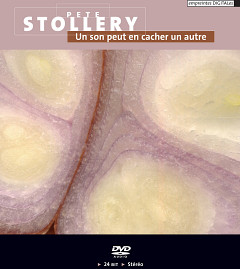
    Un son peut en cacher un autre dans Sonoloco Record Reviews

    «Review», Ingvar Loco Nordin, Sonoloco Record Reviews, 20 octobre 2006
    vendredi 20 octobre 2006 Presse

    Pete Stollery is well-known to the electroacoustic community, no least through his work at the Sonic Arts Network in the UK. He is the Director of the Electroacoustic Music Studio in Aberdeen, Scotland. Personally I’ve even had a correspondence with him once about the Scottish folk singer Hamish Imlach!

    Many of the UK composers of electroacoustic music are distinguishable by their fluent, innovative style of composing, and their freedom of speech, so to say. The BEAST – Birmingham Electroacoustic Sound Theater – may in part have to do with that certain resonance in the UK. Pete Stollery was one of its first members.

    To establish the lines of evolution and tradition, I note that Stollery studies with Jonty Harrison at Birmingham University.

    Pete Stollery collaborates with artists from other disciplines, like dance and sculpture. He founded the group InvisiblEARts in 1996 with Alistair MacDonald, Robert Dow and Simon Atkinson, with the aim of performing acousmatic music throughout Scotland and make the art form more widely known.

    Onset/Offset (1996)

    This piece was released on Artemiy Artemiev’s Russian label Electroshock in 1999, as part of their third release in the ongoing series Electroshock Presents.

    The work deals with the interplay of recognizable sounds and the sonic qualities of these sounds per se. A brief introduction by Jonty Harrison is given in the booklet.

    Stollery’s EA music is delivered and received at high altitudes. This is mountaineering electroacoustics, serving adventurous and curious people well, oxygen or no oxygen! It is clear that he is a very good climber, traversing the void in daring zigzags up granite walls in snowy landscapes, and like in mountain climbing, the minute details mean everything also in the execution of acousmatic music. The sound wisps away and walks a razor’s edge, like the climber daring the ridge between the South and North summit of Kebnekaise! There is a lot of air around the sound here! Below are the glaciers: Björling Glacier to the east, Rabot’s Glacier to the west.

    Being inside these sounds that tweak and wisp and soar and bounce, is like being inside your own head, as your body engages its entire breathing capacity to squeeze the last molecule of oxygen out of the atmosphere, to keep your population of cells working, in these cold, thin-aired conditions. Your panting almost drowns the details of the music; the cold sweat behind your goggles dims your view of vast expanses below, as you enter a Shaman’s realm in your fearsome fatigue, envisioning all your lives lived and yet to live as a bead of pearls spiraling around the globe and winding on out into infinite space.

    Stollery’s feeling for detail swings these sounds very, very close to your senses, skimming your corneas and your tympanic membranes in skidding, giddiuping performances that make you dizzy! The ordering and artistic handling of these miniatures in the scope of the whole piece is amazing. This is one of the traits of electroacoustic music that I enjoy the most; the sweet venomousness of persuasive danger; the soft-spoken harshness of incisive slits; the roundabout centrifugal force that throws you off-center and have you crawl in the grass like Nebuchadnezzar!

    From another viewpoint this is entomological music, happening behind crusted leaves of yesteryear and in the cracks of existence, behind your ear, in the pleats of your bed sheets, in the wrinkles of your age! At times Pete Stollery’s Onset/Offset is contact-miked lice! Hurray!

    The parts of this piece that develop later rumble and ring like prolonged industrial processes on the Baltic coast or a flock of Lancaster bombers heading for Dresden on 13th February 1945 – but to me the most fitting illusion is that of a Shaman ride into the Bardo of afterlife and back – without any unnecessary rebirths yet to come. Splendid! Fantastic sound, amazing structural ideas standing their ground, delivering a daredevil deliverance of sonic scenarios!

    Peel (1997)

    “Peel back the layers – what’s under the surface? The roulette wheel spins and we follow”. That’s how Stollery’s colleague Alistair MacDonald describes the beginning of this piece. He elaborates further, and much in a vein that I’m familiar with doing myself, with seemingly un-connected associations and analogies, which is the only way, really, to convey a feeling or an impression of something as abstract as electroacoustic art music.

    It begins with a crash-landing in a drawer, it seems. Something unusual sweeps out of the skies, shoots through an open window and enters the socks neatly stacked in the drawer, sweeping past you ear on the way. It’s like the beginning of Olaf Stapledon’s Star Maker, as he stands on the hill above his house, with electric light shining out of its windows and t he stars of the Milky Way glimmering in all their splendor, as time and space opens up around him and transforms him into God Almighty or at least as far into his likeness as you can reach. Or it could be a sonic illustration to that place in Hitchhiker’s Guide to the Galaxy where the war fleet of a distant star comes to attack humanity, only to be gulped and eaten by a little dog, because of a simple miscalculation of size…

    In fact, the music begins with a swooping sound, indicating fast motion, followed by small, confused sounds – like a minimal alien getting entangled in socks…

    The continuing events distantly resembles Rolf Enström’s Tjidtjag & Tjidtjaggaise, a Prix Italia winner from 1987 (and one of my absolute favorites!), in which Enström utilizes the voice of Saami yoiker Jonas Steggo, which is transformed and permuted in such a way that it comes to constitute the various layers of consciousness in a Shaman ride, such as the one I’ve touched upon earlier in this text. The phasing in and phasing out of auditive focus is a common trait for Enström and Stollery. This brings great excitement to the listening.

    Pete Stollery also applies – vigorously – the case of the spinning coin, absolutely naturalistic to begin with, but then gradually veering off into a realm of unreality and sorcery. You almost feel fooled, as if you’ve been lured deep into the forest by some mean wizard, in your perceptive fixation on this intense spinning.

    Later many other classes of sound appear, from various expressions of society, also in mixed forms, i.e., with abstract sounds hopping around like the dots you may see just before you faint, around more palpable sounds of streetcars or buses that rumble through the center of attention in fumes and pneumatic transmission of power.

    As this particular part of Peel, which I took for a spinning coin, comes to a halt, I realize that it actually was a roulette wheel, even talked about in MacDonald’s own introduction… So much for my discernment of source sounds…

    High pitch bird song – so high-pitched that it’s almost inaudible to the aging reviewer – combines with the crackling tour-de-force of a falling giant of the woods; a tall tree brought down by planetary gravity. Through some inching and wrangling state-of-the-art soundscaping, the sound of this falling tree is suddenly perceived, in my ears, as a watery, marine event, like closely miked small waves dancing in and out over pebbles of an Alaskan shore… Wondrous artistry of the sonorities from Pete Stollery!

    This is just one fourth into the piece, but I’ll leave it at that, absolutely sure that there are just too many curious sound events to describe in Peel if I continue, and move over to the next track.

    Shioum (1994)

    Simon Atkinson describes his impressions of Shioum in the CD booklet. It’s just as abstract as the other introductions I’ve read about Stollery’s art, and that in itself says something important about this art; that it is pure sound, usually, wit no programmatic aims – in the best sense abstract art music, acousmatic music, the way I like it most. You can only talk about this art through talking around it, dancing around it, like tribesmen dancing around the fire.

    The beginning, rising gradually in volume, gives the faint impression of a stirring crowd through wobbling filters of time and age, of many voices lost in the collective ringing of human vocal cords in a plaza or – thinking about a text-sound piece by Alvin Curran called For Julian – the open space in front of the Wailing Wall in Jerusalem – or for that matter, the circular motion of millions of pilgrims around the Ka’abah. It could as well be the lightly manipulated sound of water across pebbles in a creek. It’s massive or peaceful, all depending on at what distance you decide you hear it!

    It’s like an angelic choir in some kind of distress, accompanied by occasional, tumbling dark sounds, like large rocks falling away off slopes – perhaps the sounds you’re supposed to hear at a certain stage of dying, as the elements dissolve into consciousness, according to Tibetan Buddhism.

    This scary torment is relieved by a stillness surrounding the falling trajectories of electronic birdsong, screwing themselves into the world of matter, originating in some better place. This fascinating warbling at the outer rim of reality takes off and scouts into sheer unreality, where it is transformed into metallic tumble weeds rolling cross empty, turned-away plains of obscure dusk states of mind; a Western Texas hidden deep inside a Dali painting, if the thought is possible.

    The combination of piercing, shrill beak binaries on a backdrop of dark, threatening voodoo viciousness is very effective, keeping your listening attention focused. Stollery’s Shioum is dreamy, visionary, and involuntary, somehow, like the little tics of your eyelid or a sudden itch that you can’t control: the irrational core of everything rational – and the bottom line is sheer beauty, be it thunderous or meek, colorful or ominously dark.

    Far into the piece Stollery surprises me with a drone that moves in long, outdrawn, wavy motions along the duration – with chirps strewn here an there like the irregular but constant turning on and off of electric lights in windows of a big fall city of the Western world.

    This drone, slowly slipping downwards along seamless micro tonalities, is brutally cut short by an explosion of harsh bucket sounds and a flickering chirp flock of ecstasies, like fireworks opening in the guise of flowers blooming in a second. Another, more distant – physically and metaphysically – drone slides along the upper layer of the atmosphere, grainy and glowing with the picked-up energy of starshine, the bombardment of cosmic radiation, turning, imperceptibly, into high-pitch female vocals; a Stockhausenesque Angel Procession across dark territories…

    Altered Images (1995)

    Joseph Anderson says in his introduction to the piece in the booklet that he sees the composer, in this piece, “as [a] conjurer seeking a sacred, primal experience”. And he goes on: “Am I hearing? Am I dreaming? I am listening”. This rhymes pretty well with my impressions of Pete Stollery’s music as reviewed above. Precisely, indeed!

    Little trickling sounds open this event; echoing through the tubular worlds of extra dimensions of quantum mechanics; echoing through rolled-up dimensions of scientific imagery – or has he lowered his microphone down a sewage pipe, adding just a fraction of filtering?

    Soon the sound tightens considerably, all around you, like a G-suit in a fighter plane loop! The sound all but crushes you… until relief is administered in soothing, withdrawn curiosities across the spotted emergence of a returning conscience as the plane levels out and soars… as the music levels out and soars…

    Cut-up sound events follow, like the permuted speech of sound poetic deliberations. Shreds of audio flicker by like splinters of heat shield debris off of a doomed space shuttle. At times you hear the distant rumble of some flying machine passing way up above the clouds, towards far-off continents in the night.

    Very dark, rumbling motions – in this music! — through the clay deep below your feet, below your lawn, below your asphalt highways and your mighty runways – remind me of Åke Hodell’s devastating The Way to Nepal. Again the shamanistic realms open up, as so often in Pete Stollery’s soundworld; secret places, hidden rooms in your consciousness, spiral staircases in the back of your mind, sleepy gardens with hammocks; Beatleslands: “I’m only sleeping…”

    Aha! Surprise! Them ugly goblins come charging from behind the trees in the dark October garden! The rain sounds like peas dropping on the cement floor near the dunghill of a childhood farm in Sweden! Everything is changing, always. This is the law of impermanence. That goes for Stollery’s music too, changing, changing: horse carriages through rainy evenings of London, poverty and cruelty scribbled in lengthy novels…

    Shortstuff (1993)

    This is one of the pieces I already had of Stollery, on a DAT tape from quite a few years ago – but now I can’t find the tape, and thus don’t know from where I got the piece, if it was from off of a Swedish radio broadcast (likely) or from somewhere else. (In the 1980s and 90s, Swedish art music radio was very good, intensely interesting, with producers like Folke Rabe and Berndt Berndtsson, but since then Swedish radio has gone downhill, now showing a blank and stupid face; a brat face of no visions, as public service looses its identity). However, that is only the second piece I found on some media at home by Stollery, the other being Onset/Offset on a Russian CD – so the man doesn’t seem to have published himself very much, which is strange, as the content of this DVD-Audio is so good.

    Shortstuff is a wonder of efficiency and crude, crisp statements! Adrian Moore, in his booklet introduction, talks about “clear spatial trajectories and tight gestures in counterpoint with dark spaces and the small textural sounds of the night.” I wish I had said that!

    The piece is made up of very brief incidents surrounded by silence. Like Adrian Moore said, the spatial property is important, as the sudden short strikes hit here and there, hither and thither across the sound space. I always enjoyed this method, often practiced in earlier electronic music, like, say, in Morton Subotnick’s Silver Apples of the Moon and in even earlier stuff like Gottfried Michael Koenig’s works Funktion Rot, Grau, Violett, Blau and Indigo (1968–69). It’s simple but very effective, and a pleasure to hear. It sort of tickles your perception in a special way. It’s a rhythmic thing, albeit crooked and wicked, irregular in a wonderfully nauseating way!

    Further up ahead, in the latter part of the piece, different strands of sonics merge to form a fuller, more coherent band of nuances, at times thickening to fill your allotted space in time completely, at a choking danger distance!

    This is high-class, high-end audio candy! Enjoy!

    ABZ/A (1998)

    For the first time we’re introduced into a real world, populated encounter, where guys talk about sandwiches. Not bad, after these slingshots through space and time and various hypothetical dimensions.

    Of course, this can’t last in a Stollery world! He keeps the common, recognizable sounds of human voices in normal, everyday situations – but he permeates these normalities with his electroacoustic elaborations and deliberations.

    Somehow it feels like we’re visiting a museum on a planet in the vicinity of Betelgeuse, where one has collected some live samples from planet Earth. The rest of the sounds we hear, into which the Earth samples are brought, are the natural insanities of… Betelgeuse and its celestial neighbors…

    Towards the end some extremely tightening and accelerating densities of sound spellbind you, as you race towards extinction on a ray of dwindling light. You hear a chaos organ somewhere in your lower chakras consuming asteroids and other celestial misfits, like a stone crusher at the far end of everything, in full view of the guests at the Restaurant at the End of the Universe… a musical black hole in the form of an asteroid-munching chaos organ! That’s Stollery, for you, boys and girls! After that, only some few flakes of reality as we know it fall by like sooty shreds of newspapers from a neglected and finally decomposed world of shallow minds and stupid causes…

    Vox Magna (2003)

    Robert Dow explains a few things about Vox Magna in the booklet, saying, for instance, that the piece “comprises a set of fragmented recollections, a piecing together of the failing memory of an industrial era…” and so forth. I wish I’d said that too! It seems we’re a few outcasts that think in similar terms about Pete Stollery’s music. It brings us abstractors together!

    First: a recurring motion, heavy weights and great masses passing through tunnels. Then: a sparse rain, just a thin drizzle… Roaring, undeterminable loud sounds, brute, engulf you, as an engine, perhaps a helicopter engine, winds down, the blades sweeping around and around in a slowing motion.

    Robert Dow’s words of industrial remembrances may be right on, because I also hear those indications, stirring my own recollections of the many years I worked in the steelworks of Oxelösund on the Baltic coast in the 1960s and 70s. I see those giant shadows up brick walls, from workers welding somewhere at the bottom of large halls that could have been the living room of dirty giants of the Earth.

    Old industries mean brute force and brute sounds, and Stollery delivers, but not just with close, dangerous horrors, but just as often with a distant rumbling noise that just hints at the illnesses risked: lung cancer, loss of hearing, injury caused by crushing and squeezing etcetera, plus the ever-present silicosis. The advantage of jobs in those disastrous places always was the money. Steel industry (in Sweden: my experience) paid well, and still pays very well.

    Stollery mixes the sounds of industrial environments with their echoes in the minds of the workers; their unruly dreams of relentless weights closing in, or of 1500 degree centigrade iron pouring out of a blast-furnace at the center of their skulls…

    This is energizing electroacoustics, engaging the iron and steel trade of the 1960s and 70s to ensure the brute force needed to conclude this greatly appreciated and vastly enjoyable and exciting CD of acousmatic sound art from Pete Stollery in Aberdeen.

    This is energizing electroacoustics…

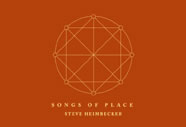
    Songs of Place dans Octopus

    «Du processus à la cité sonore (3e partie): Le lieu en soi, d’après Songs of Place de Steve Heimbecker», Philippe Gimet, Octopus, 1 septembre 2006
    vendredi 1 septembre 2006 Presse

    Nouvelle étape dans notre voyage au cœur des mondes de l’art et du renouvellement du répertoire formel, Songs of Place est une série de portraits sonores de lieux urbains ou ruraux (Halifax, Montréal, Vancouver) entamée en 2000 par l’infatigable Steve Heimbecker. Œuvre fleuve, elle se poursuit au gré de ses déplacements, souvent motivés par des invitations ou des résidences d’artiste au Canada. Songs of Place a été réalisé dans le cadre d’une résidence à Oboro, acteur incontournable et atypique de la scène montréalaise, pour paraître au printemps 2005. Utilisant de multiples enregistrements réalisés sur une courte période de temps, ces œuvres visent à capturer l’espace sonore propre à un lieu, de manière à révéler le lieu en soi. Un voyage au cœur de la résonance physique du lieu, un voyage intérieur qui transcende le sensible.

    La série Songs of Place est aussi difficile à catégoriser que Steve Heimbecker lui-même. Il s’agit d’une œuvre d’art visuel et sonore qui engage pleinement les sens et la sensibilité du public. Nous sommes ici à la croisée de la composition électroacoustique, du paysage sonore et de l’écologie acoustique, du montage vidéo et de la sculpture sonore. Amis de la catégorisation, bon courage! Steve Heimbecker est la parfaite illustration du principe nietzschéen, selon lequel la vertu salvatrice d’un parcours ne peut se trouver que dans le zig-zag.

    Originaire de la province de Saskatchewan, Steve Heimbecker a reçu une formation en beaux-arts au Alberta College of Art and Design (Calgary, Canada). Sans pour autant délaisser ses intérêts pour la dimension visuelle, ou plus précisément spatiale, de la création, il a principalement axé sa pratique sur la dimension sonore. Heimbecker s’intéresse à l’effet sculptural du son et se définit lui-même comme un sculpteur sonore. Reconnu pour ses créations dans le domaine de l’art audio et de la musique électroacoustique, il a également réalisé plusieurs sculptures et installations intégrant des composantes sonores ou des dispositifs générateurs d’éléments sonores de son invention.

    Les installations d’Heimbecker sont liées à la tradition très riche des concepteurs d’instruments alternatifs et de systèmes de production sonores, remontant aux expériences des futuristes et des dadaïstes. Ainsi en 1996, une exposition personnelle intitulée Soundpool: The Manufacturing of Silence est présentée à la Illingworth Kerr Gallery du Alberta College of Art and Design. Installation interactive à caractère fantaisiste, on pouvait y voir et entendre huit peintures de grand format fonctionnant également comme haut-parleurs. Activée, l’installation enveloppe le public avec une vibration de trois hertz, inaudible mais perceptible par le corps, dans une cacophonie de bruit de moteurs et de machinerie. Cette installation a été par la suite présentée à Montréal (2001), Québec (1996) et Edmonton (1996).

    Dans le cadre de l’exposition et de la conférence internationale «The Tuning of the World», tenue au Banff Centre et au Nickle Arts Museum de l’University of Calgary, et inspirée du livre éponyme de R Murray Schafer, Heimbecker crée l’installation The Acoustic Line as the Crow Listens (1993) qui explore les qualités acoustiques d’espaces extérieurs souvent très vastes. Pour la réalisation de cette œuvre, l’artiste qui est aussi membre fondateur du World Forum for Acoustic Ecology, effectue des enregistrements simultanés en huit points sur une distance linéaire de 1,5 km dans le but d’élaborer une «cartographie sonore» et de créer une expérience auditive riche sur le plan spatial, en utilisant la vitesse du son dans un environnement naturel comme un événement sonore susceptible d’être enregistré et donc joué par après.

    À la même époque, Heimbecker met au point des techniques de mixage de sons directs et préenregistrés pour diffusion en quadriphonie et en octophonie sur un système multipiste de son invention. Une série de concepts tels que le «bassin sonore» (soundpool), la «navigation sonore» (sound sailing), et la «cartographie acoustique» (acoustic mapping) résultent de ces techniques, qui enveloppent l’écoutant d’une matière sonore riche. Ces techniques s’inscrivent dans la lignée de la musique concrète, à la suite de pionniers tels que Pierre Schaeffer, qui utilisait des sons enregistrés dans l’environnement pour créer des œuvres.

    Songs of Place est une œuvre qui mérite une immersion totale, car même s’il s’agit du déroulement normal de la vie tous les jours de lieux en soi, les portraits qui en résultent sont loin d’être insignifiants. Le quotidien y devient plutôt extraordinaire lorsque rendu audible à une pareille haute résolution. Les deux DVD présentent en effet quatre portraits vidéos et sonores multiphoniques de lieux: Halifax, Montréal, Vancouver et Springwater, Saskatchewan. Ils ont été réalisés avec des techniques d’enregistrement et de production quadriphoniques. Le principe repose sur l’application pour chaque lieu du système cartographique mis au point par l’artiste, pour identifier un point central et une circonférence géographiquement déterminés. Suivant les points cardinaux, huit à dix points d’enregistrement équidistants sont choisis le long du cercle ainsi défini et un enregistrement audio omnidirectionnel et quadriphonique est fait de chaque point. L’image et la vidéo, elles, sont tournées vers l’extérieur sur le pourtour du cercle aux endroits mêmes où la partie audio est enregistrée. Nous sommes donc au cœur de l’interface au sens kantien du terme.

    Ainsi, le système fonctionne essentiellement comme la partition d’une composition faisant à la fois à appel à l’intention artistique et à l’aléatoire. Les emplacements d’enregistrement sont tous des lieux publics extérieurs: rues, intersections, parcs, rives. L’espace ainsi cartographié offre une organisation et une expérience temporelle complexes, une mise en espace qui révèle ce que nombre de démarches tentent en vain d’obtenir: l’expression du lieu en soi, la révélation de l’identité et du patrimoine sonore de nos espaces publics.

    Ces portraits sont au fond des méditations sur les courants qui animent les lieux tout en permettant au public de changer continuellement de points de vue parmi leurs multiples subjectivités, avançant le long de la circonférence de l’espace cartographié et entre la périphérie et le centre. Par moments nous sommes immobiles mais pas statiques, oscillant entre l’immobilité et le mouvement. Tout comme la marche est une curieuse fuite en avant formulée par la danse du déséquilibre, Heimbecker nous offre avec Songs of Place la possibilité de comprendre les courants multidimensionnels d’un lieu et ses œuvres en général se caractérisent peut-être mieux avec l’analogie de la quadrature du cercle. Les huit points de la diffusion octophonique suggèrent un cube, soit un son immersif vécu dans quatre dimensions (la quatrième étant le temps). Nous nous trouvons ainsi submergés dans un bassin de sons et dans la résonance du lieu, une expérience sensible hors du commun qui nous plonge dans un univers musical d’une sérénité rare. Finalement, la grande victoire de Steve Heimbecker, celle qui fait de Songs of Place une œuvre remarquable et significative, c’est de parvenir à procurer une satisfaction de savoir et de découverte faite de temps qui s’écoule et de temps en suspens, de chant audible et visible.

    … une œuvre remarquable et significative…

    Poster No 1, Poster No 2 dans Nightlife

    «Ekumen Make Posters You Can Listen To», Lateef Martin, Nightlife, 1 septembre 2006
    vendredi 1 septembre 2006 Presse

    This is a city of posters. Posters for bands, movies, festivals, lost animals, planned orgies and pillow fights; you know, the standard stuff. On occasion though, there are some posters that promote nothing but art, with not so much as an email address or a signature. But leave it to Montréal’s craziest to take it up a notch. If you happen to be at the right place at the right time, you’ll find Ekumen: poster art with music attached. In the form of a CD, you can bring home electroacoustic music that creates tension and grace; abstract atmospheres in the haze of urban landscapes, mixing piano, voice, cello and guitar with samples, courtesy of Milliseconde topographie. Urban9, on the other hand, combine modern design with antique pictures to create the visual counterpart. So don’t hesitate if you see a CD attached to a poster. Pluck it off and run. You’re supposed to.

    Nightlife: This is a great, original urban concept. What inspired you to create it?

    Nicolas Bernier of Milliseconde topographie: Our work is usually entirely digital. We wanted to create something “real,” something that people can touch. We (Milliseconde topographie and Urban9) have been working together for a long time and wanted to try something different, mixing still images and music instead of moving images and music.

    Nightlife: Any soundposter groupies yet and, if so, can you gimme their emails and say I’m the Soundposter Pimp Daddy of them all?

    Nicolas Bernier: It would be better if I gave them your email. I don’t want them to yell at me.

    Nightlife: How many posters/CDs do you do in a run?

    Nicolas Bernier: We look at the weather for the week, take a nice Sunday night and post two batches of 25 and sell the rest on our website. We let those live for about two months then do another run. You can still see Poster No.1 and Poster No.2 at some places around the Mile-End area, but the CDs only last one night! We always go back to the crime scene the day after and the CDs are always gone.

    Nightlife: Isn’t this bloody expensive?

    Nicolas Bernier: Indeed.

    Nightlife: Will you do a series based on different neighbourhoods, bagel shops, coffee shops and the smell of dirty old men walking their cats?

    Nicolas Bernier: For now, our theme is more poetic than concrete. This series of three posters each show a character. This character is older on the first poster and will get younger by the third. The poster itself is also a representation of time passing as it is washed away by rain and poster removers.

    Nightlife: How have other poster people been reacting to all of this?

    Nicolas Bernier: We don’t have much contact in the poster community but the feedback we received so far has been really cool. There’s an art teacher who goes on the street with a pot of water and takes her favourite street art home. She probably has an amazing collection. Crazy… She talks about our project in her classes.

    Nightlife: Any plans on opening for Radiohead or Björk?

    Nicolas Bernier: We were there man, at the last Radiohead concert. We were playing air guitar in the back. It was like being on the stage with them… yeaaaah! I think we could be a good fit with Mum though. This excellent band from Iceland is one of our inspirations.

    Nightlife: Will you have remixes by Kanye West and Timbaland with interpretations by HVW8 entitled the “Gritty Series”?

    Nicolas Bernier: Wow! How could you have guessed! The Kanye West remix will be on the air across all the radios of the universe next month! Ha.

    So don’t hesitate if you see a CD attached to a poster. Pluck it off and run.
  • 1
  • 2
  • 3
  • 4
  • 5
  • 6
  • 7
  • 8
  • 9