Theodore Lotis was born in Thessaloniki, Greece in 1967. I can easily place myself in that location and time, because in 1967, right after the Six-Day war in the Middle East, I was sailing across the Adriatic and the Mediterranean Seas aboard the Italian passenger ship M/S Messapia of the Adriatica Shipping Company, from Venice in Italy to Haifa in Israel, to spend some youthful months at a kibbutz (Gan Shmuel), which was a possibility to stay away abroad in search of adventure, even if you had no money — and in 1967 the world was a much, much bigger place. You really felt that you passed a border even when you went from Sweden to Denmark or Germany. Greece was exotic, and Israel even more so.
I remember with a shudder the time in late August of 1967 passing through the Corinth Canal into the port of Piraeus, and how the leisurely atmosphere of the voyage turned into a brooding, guarded feeling, as if a cloud had suddenly moved in front of the sun. The reason was the military coup that had befallen the Cradle of Democracy in April the same year… The crew aboard M/S Messapia told me to stay in my berth the eight hours we’d be in the harbor, because I had long hair, and that was ruled out by the military junta. Accordingly, I bided my time in my little cabin in Piraeus, reading and sleeping, finally sensing with relief that the ship left the quay and headed back out onto the sea, making possible my ascension onto deck, from where I watched the silhouette of Athens sink back into haze and distance and military repression, as I took some deep breaths of air.
And this was around the time when Theodore Lotis entered this physical world.
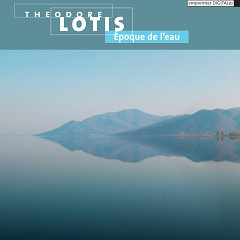
To me, Theodore Lotis is a new name, which is why it’s all the more interesting to find out about him. He has been chosen by Empreintes DIGITALes for a new release, and that in itself vouches for quality and talent.
He studied guitar, flute, music analysis and composition in Greece, Belgium and England, and got his PhD in Music at the renowned City University of London. He has achieved a number of instrumental compositions and collaborated with artists within the dance, theatre and video idioms, arriving at the aspects of spectrum, timbre, sonic space and light where he invests his creative forces today.
Currently Theodore Lotis is lecturing at the Ionian University at Corfu, Greece. He is a founding member of the Hellenic Electroacoustic Music Association (HELMCA) and the Hellenic Society for Acoustic Ecology.
Theodore Lotis has received the honor of being presented in the CD booklet by none other than Denis Smalley; one of the Grand Seigneurs of Electroacoustics, who expresses his impressions thus [my quotes]:
“What most attracts me to the music of Theodore Lotis is his mastery of the spatial image […] The spectral texture is distributed in multiple registers. Layers interact, come and go, relate sympathetically, or pressurize themselves as they seek their place, or move on […] For Theodore Lotis, the distribution of sounds over spectral space and across time creates a diffused ambient space, in much the same way as natural light does […]”
Track 1. Arioso Dolente / Beethoven Op. 110 (2002) [7:06]
It’s one of those coincidences that aren’t any coincidences — according to Deepak Chopra (SynchroDestiny: ISBN 184413219-6; RIDER) — that I start to review Theodore Lotis and find that the first track has a Beethoven lineage back to the Piano Sonatas right at a time when I’ve purchased my sixth complete Beethoven Sonatas Edition, with the blessed pianist Paul Lewis (Harmonia Mundi). I already had the set with Arthur Schnabel, Wilhelm Backhaus, Wilhelm Kempff, Annie Fischer and Friedrich Gulda). Theodore Lotis specifies that he bases Arioso Dolente on Beethoven’s 31st Sonata, movement 3, even letting on that all the sonic material is derived from a version of that one movement. Of course this makes me pick up Paul Lewis’ fourth set from the Complete Sonatas, issued this year of 2008, and listen to this specific item, before continuing writing, in name of the apparent synchronicity of the moment! It sets a certain subdued, serene emotion in motion right from the cautious beginnings, delicately delivered by Paul Lewis. Theodore Lotis remarks:
“I was […] interested in the spiritual aspects of the sonata. Beethoven had just rebounded from a period of illness […]. Both the joy and the melancholy of life are merged in this movement as an omnipresent duality […]”
At 03:09 — 03:19 a clean quote from the Beethoven Sonata appears like a window on reality, however past and limited, floating in this everness like a lost relic from an unknown culture, blipping like a beacon through the mind as it turns and tumbles away, away…
On both sides, however — i.e. backwards and forwards in linear time (which some of us hang on to as if our lives depended on it, in spite of its illusionary property) — this daunting realism floats in an unknown aspect of space and time that escaped the menacing laws of nature. Lotis’ music expands like unfolding rolls of tinfoil in absolutely steel blue space, touched upon by fingers of light and the eleven-dimensional thoughts of a towering thunderclap of a man; Ludwig van.
With the most delicate and brittle breath of electroacoustics, Theodore Lotis lets the clarity of biased expectation — homeblindness! — mist over with the suggestion of mystery, bringing other aspects of life and sonata to the fore, which for the most part lie dormant in the field of pure potential, and new messages from within reach the surface of the actual, the same way you might find jolly calls from your children written with little fingers in the breath on your bathroom mirror!
This piece opens in shooting rays of piercing light between ominous, dark thunder clouds; the light, dancing pitches moving in an elves’ dance ‘round a heavy, moss laden ice age rock in a Scandinavian coniferous forest; the Giants of the Earth snowcapped on the horizon, in the darker, deeper timbres of Lotis’ imagination.
There is a lot of motion inside this fabric of timbres, and you can sense upwards curves in transparent glissandi, like the fluffy hair of an infant stirred by a summer’s breeze. The murmuring in the back of the day provides a backdrop for incredibly beautiful, tiny events that curl and meander in metallic glares, like gold foil contracting and expanding on black velvet as humidity and temperature shift, as timbres swell and retract. Such is the delicacy of this soundworld; a truly fine-tuned experience.
It was long since I heard such a nuanced and nano-emotioned sound web. At times the tiniest of sonic objects glare and tingle in flurries and swoops out of and back into the mineral realms of sound. The feeling is so abstract, yet physical, that I get a sensation of hovering weightlessness, and almost believe I’ve found a cure for gravity!
At 06:42 a second brief, clear-cut piece of Beethoven keyboard appears, concluding Arioso Dolente / Beethoven Op. 110 — and I think Maria Metaxaki plays the grand piano…
Track 2. A South Wind Will Bring the Sand (2002) [10:11]
The composer explains that he has used granular synthesis to mimic sand grains blowing, so he seems to be working the details and minuscule nuances here too.
As I get caught up in this second track of Theodore Lotis’ Empreintes DIGITALes CD, I feel more and more respect for this composer and his uncanny sonic wizardry, which lets him mix so much motion and so many timbres, while keeping the moment of experience so serene and clean; a transparency of all these events, these sweeping motions-emotions, in which time is exchanged for space and space for time, in a glorious lightness that must be drawn from the realm of the Buddhas, from that enlightened state at the end of perfection.
I feel my senses arriving at an absolute awareness; a stillness in which I can observe and see my life, calm and without remorse or biased reservations. Lotis has tapped into a holy resource, delivering his good medicine in these musical quanta of energy; rainbow mist out of the loudspeakers. Such might a fantasy allowed some freedom of flight soar through your feelings, on listening attentively to the electroacoustics of Theodore Lotis; a pleasant daydream that may even rearrange some of your day-to-day priorities, if you take it to heart, just like a moment in front of a Chagall or a Miró, or a dizzying descent on crampons from the Pyramid Pass into the Unna Räita Valley will.
Track 3. Underwater Theories (2002) [15:39]
Theodore Lotis explains in his introduction to this submerged event that he combines acoustic instruments — for example the human voice and the contrabass — and electronic sounds, initially expecting some kind of rivalry between sounds from such different prerequisites, but he found, he says, that these sounds with such different heritages, “blended together in a concordant way”, with “no confrontations between artificial and natural […]”
The opening couldn’t be more ominous, with diminutive specks of sounding debris squirting over a dark, smoky progress of evil, relentlessly expanding down the duration. Watery, bubbling events turn back on themselves, like someone almost vomiting but managing to get it all down the pipe before it reaches the oral cavity — or like someone swallowing salty seawater, exhausted in the water, almost drowning… but simultaneously these swirling, swooping, bubbling sensations are beautifully chiseled out of the submerged moment. Theodore Lotis manages to keep these two aspects of musical reality going simultaneously; the wet, dire, submerged anatomical state of affairs, and the highly hypothetical, calculating and also dreamy aspect of the free-flowing intellect, safe from all material hazards. This renders the composition a tempting, desirable feel that one cannot resist. I submerge myself in the music and flow with it! If you really commit yourself to the act of listening, you might arrive at a point where you find yourself immersed totally, which is the only honest way to hear Theodore Lotis, really. I come to think of the little girl who stood in front of an impossible (geometrically and architecturally impossible) painting of a building by Maurits Cornelis Escher. She watched and watched and watched, got sucked up in her own act of observing, until she fainted in front of the painting. That is perception at its height! That is the manner in which one ought to hear Theodore Lotis’ sonic art. It is so carefully crafted, so diligently chiseled out of the silence from whence it rises, that it becomes an act of respect for the art as well as the artist to really, really listen.
At times I get the sensation of something really heavy in motion, like a huge locomotive, but with only the vibrations of the motion recorded; not the sounds of engine or rails, but just the things shaking and vibrating; loose things all over the huge moving machine. That is to say that Lotis music, by way of the sounds actually heard hint at something much bigger; hint at a cause that jeopardizes the entire composition.
There are so many sounds of so many kinds in this piece that I can’t even begin to explain them, except that they’re all caught up in a grander motion. The composer just shifts his attention to different places in this moving contraption, like a diver sweeping his flashlight along the hull of a submarine that glides by. I hear all kinds of sonorities, like the rumblings of a dijeridoo and the monotonous rhythms of a small machine of sorts, plus grinding, frictional sonorities, as from the rubbing of a balloon, not to mention dark strokes of humus and clay, and lighter timbres like warm updrafts in the darkness of the void. This music absolutely has no end, although the piece stops after fifteen minutes and thirty-nine seconds…
Track 4. Sibylla’s Voice (2001) [14:53]
Dedicated to Annette Vande Gorne
Lotis explains how he uses the violin and the human voice in this work, albeit heavily treated. His aim is to achieve “a strange vocal feel”. Of course, he refers to classical mythology in a piece named Sibylla’s Voice, i.e. the female prophets who were thought to have access to the god Apollo, from which they derived their cryptic messages, which were received with screams and shouts by the people gathered, who actually believed that they tapped into the mind of the god through the Oracles.
A cackling abstraction of a flock of seabirds opens this piece, white wings fluttering up over a torrential sea that hammers the lower chackras with the real motives of the day, like in a rugged coast by painter Claude Joseph Vernet (1714 — 1789), the planet turning slowly as it moves down its path of gravity. In this way, Theodore Lotis works with the tiny grains of sound inside a wider scope that takes on an atmosphere of a musical biosphere; a perfect realm to present his artistic ideas.
A sequence of myriads of passing sonic strangers in varying pitches and of different durations ride a wave pattern through the score, be it a sound painting of the electromagnetic forces through interstellar space, the swell of an ocean; visible (audible) remnants of a storm died down below the horizon — or the passage of a wave of energy through a brain suffering a migraine attack. Your analogies may move in any of these, or any other direction — or you can try to listen without analogies, just letting the sounds, the pitches, the rhythms, the staggering musical figures pass through your moment, letting them color your atmosphere for a while, while you’re keeping those insistent associations at bay.
Lotis’ musical world is a highly abstract one, of course, in line with the prerogatives of distinct electroacoustic art, but this can be done at various levels of intensity, of abstraction. Lotis works the upper layers of this art, where the air is thin and the colors faint, and the perceptions sometimes white-outed by lack of oxygen — but that is also the altitude where you have the widest views. Before you faint, your visual field is breaking up into patterns of consciousness and unconsciousness, and this is the playground for Theodore Lotis’ music… or, also, in that undefined moment just before falling asleep, when gravity loosens its grip on your material manifestation and lets you hover into a state of daydreams that become movies shown on the inside of your eyelids, when one world is exchanged for another! This music is looking down on mountain ranges!
It may seem contradictory of me to point to Theodore Lotis’ masterly aptitude for sonic abstraction in a piece which he himself counts among his mixed-form works, using acoustic instruments along with his generated sounds; even the human voice… but I can’t — on first hearing, anyway — determine where those instruments arrive or recede. They’re probably poured through Max/MSP software before stitched into the tapestry, like they were in the previous piece, and to me they’re blending so well I can’t make them out, individually. They just color the magic, just like the electronic sounds — and as Stockhausen said at one of his last courses in Kürten, Germany: “Making music is sculpturing air”: All these sounds so wearily arranged, become airy sculptures, compressions of air arranged in time, space and density; shadowy figures of an atmospheric breath!
Track 5. Shadows (2000) [12:05]
A quote from the composer’s introduction:
“Shadows are the dark faces of light, the unexplored view of reality. Obscure or transparent, threatening or airy, a shadow always suggests motion. […] The generative idea throughout the piece is Heraclitus’ principle of the opposed duality. According to the Greek philosopher, an opposed duality contains two poles. Although seemingly opposing, these poles are interdependent and mutually connected. Light and shadow are the two poles of an opposed duality.”
[Heraclitus of Ephesus (500 — 440 B.C.), known as ‘The Obscure,’ was a pre-Socratic Greek philosopher from Ephesus in Asia Minor. As with other pre-Socratics, his writings only survive in fragments quoted by other authors. He disagreed with Thales, Anaximander, and Pythagoras about the nature of the ultimate substance, but instead claimed that the nature of everything is change itself; he uses fire as a metaphor rather than his solution to material monism. This led to the belief that change is real, and stability illusory. For Heraclitus everything is "in flux"]
This coin — through the first breaths of this piece — rotating on a marble step is so idealized it can only be envisioned as a cartoon coin on a cartoon marble step, spinning at such a high velocity that it would glow, were it a manifest object. In my musical mind, spun there by Theodore Lotis, it can spin at this unparalleled speed without any effort at all, save the imagination and ingenuity of the composer! I get an obviously powerful feeling of motion and lightness in the very first instances of Shadows. Somehow these first centimeters of score places the imagined marble steps in a big, lofty castle high up in the mountains, with a ghostly Daddy Longlegs as the lord of the manor, and with the trigger-happy Mickey Mauser as his esquire, in much the same way that they turned Batman into a quite questionable figure…
If music is poetry, then this is Lord Byron music, so lofty and highbrow, so noble and shiny with etiquette and good heritage — absolutely brilliant and authentic, dancing forth across shiny marble floors: the exquisite art of a dandy, expressing himself in immaculate meter, through sonnets of pale-skinned courtships… but a warning moves like a withheld quake through rock bottom, deep below the floor, like the shadowy motions of the feared Morlochs in H. G. Wells’ The Time Machine (1895), while the purity and lightness of Lotis’ almost indecent sonic brilliance might equal the pale and infantile Eloi of the same story.
The metal of these sonorities wind and swirl in shiny, polished reflections of a surface, level and smooth down to the hastiest low-range reconnaissance, right in your face — and then suddenly from a space shuttle view, in planetary orbit… and back. The sonic flight, in all its fabulous, immaterial means of motion, magnifies and diminishes with the same Theodore Lotis magnificence. The music demonstrates beauty of a superfluous, nauseous dignity, worthy a Percy Bysshe Shelley in exile, penning his Ode To The West Wind:
I
O wild West Wind, thou breath of Autumn’s being,
Thou, from whose unseen presence the leaves dead
Are driven, like ghosts from an enchanter fleeing,
Yellow, and black, and pale, and hectic red,
Pestilence-stricken multitudes: O thou,
Who chariotest to their dark wintry bed
The wingèd seeds, where they lie cold and low,
Each like a corpse within its grave, until
Thine azure sister of the Spring shall blow
Her clarion o’er the dreaming earth, and fill
(Driving sweet buds like flocks to feed in air)
With living hues and odours plain and hill:
Wild Spirit, which art moving everywhere;
Destroyer and preserver; hear, oh, hear!
II
Thou on whose stream, ’mid the steep sky’s commotion,
Loose clouds like earth’s decaying leaves are shed,
Shook from the tangled boughs of Heaven and Ocean,
Angels of rain and lightning: there are spread
On the blue surface of thine airy surge,
Like the bright hair uplifted from the head
Of some fierce Maenad, even from the dim verge
Of the horizon to the zenith’s height,
The locks of the approaching storm. Thou dirge
Of the dying year, to which this closing night
Will be the dome of a vast sepulchre,
Vaulted with all thy congregated might
Of vapours, from whose solid atmosphere
Black rain, and fire, and hail will burst: oh, hear!
III
Thou who didst waken from his summer dreams
The blue Mediterranean, where he lay,
Lulled by the coil of his crystalline streams,
Beside a pumice isle in Baiae’s bay,
And saw in sleep old palaces and towers
Quivering within the wave’s intenser day,
All overgrown with azure moss and flowers
So sweet, the sense faints picturing them! Thou
For whose path the Atlantic’s level powers
Cleave themselves into chasms, while far below
The sea-blooms and the oozy woods which wear
The sapless foliage of the ocean, know
Thy voice, and suddenly grow grey with fear,
And tremble and despoil themselves: oh, hear!
IV
If I were a dead leaf thou mightest bear;
If I were a swift cloud to fly with thee;
A wave to pant beneath thy power, and share
The impulse of thy strength, only less free
Than thou, O uncontrollable! If even
I were as in my boyhood, and could be
The comrade of thy wanderings over Heaven,
As then, when to outstrip thy skiey speed
Scarce seemed a vision; I would ne’er have striven
As thus with thee in prayer in my sore need.
Oh, lift me as a wave, a leaf, a cloud!
I fall upon the thorns of life! I bleed!
A heavy weight of hours has chained and bowed
One too like thee: tameless, and swift, and proud.
V
Make me thy lyre, even as the forest is:
What if my leaves are falling like its own!
The tumult of thy mighty harmonies
Will take from both a deep, autumnal tone,
Sweet though in sadness. Be thou, Spirit fierce,
My spirit! Be thou me, impetuous one!
Drive my dead thoughts over the universe
Like withered leaves to quicken a new birth!
And, by the incantation of this verse,
Scatter, as from an unextinguished hearth
Ashes and sparks, my words among mankind!
Be through my lips to unawakened earth
The trumpet of a prophecy! O Wind,
If Winter comes, can Spring be far behind?
Mythic birds croak and caw two thirds down the score, while bronze-light whirlwinds sway across the valleys in dusty sonorities. We’re deep inside a tale of enchantment by now, prey to the timbres of amnesia that pass like dark curtains over the windows of the mind. Our arms extend out from our bodies, our legs spread, until we’re hovering clouds of crumpling X’s, blown across the languages of the planet; the continents filled with foreign faces facing skywards.
Tracks 6 — 7. La mer (1996) [15:43]
La mer bleue; la mer profonde — à Martha
Lotis:
“La mer expresses the joy and the purity of the water and proposes a listening in two levels; […] an imaginary perception of the sea; serene and stormy […], sun sparkles on the water […]; the second a […] a symbolic perception […]; the passage to Hades and the road to new discoveries.”
Lotis reveals some of his methods in his introduction. He lets on that he uses the electronically treated hum of bees to paint the sounds of waves of the sea. He utilizes a string quartet, electronically chiseled, to take on the likeness of light on surface and liquid fluency.
The first movement of La Mer — track 6 — deals a great deal with the perception of heavy wave formations; the swell of the ocean tugging at a rugged coast; the message from alien intelligences transmitted through space; the outpour of electricity through a cerebral cortex suffering an epileptic episode; a satin curtain moving softly in the draft from a window ajar. The concept, and also the execution of the concept — the sounding material — reminds me of a couple of works by Robert Erickson (1917 — 1997), the California composer (born in Michigan) who was so many younger composers’ (Terry Riley, Pauline Oliveros, Morton Subotnick) teacher: Pacific Sirens and Oceans. Pacific Sirens for ensemble & tape achieves this pattern of oceanic swell by large, grey motions in the ensemble and the electronics. Oceans for trumpet and percussion has a more cunning and surprising way of reaching this end; by metal percussion with extremely long reverberation and the most golden of trumpet sounds in long breaths. In fact, much of the serenity and transparency of Theodore Lotis’ electroacoustics could have been born once upon a time in the golden garlands of Robert Erickson’s Oceans; that’s how reminiscent it is of those purely acoustic timbres of gold and air that blesses the duration of Oceans. Of course, Oceans in turn receives much of its otherworldly gold dust glimmer from the idea of a golden age of noble men and fair ladies in legends like the one of Tristan and Isolde, as well as the archetypal vision of a young boy god with golden locks playing absent-mindedly and happily on a white beach against the backdrop of a smoothly rolling sea and a deep blue sky, be it in Cornwall or Folegandros.
Professor Jack D Logan, the Oceans trumpeter, says (in a text on the web):
”Robert Erickson’s Oceans is a composition for solo trumpet and a collection of instruments made by Robert Erickson. It evokes the many experiments that he and I (Jack D. Logan) did when I was a graduate student at UCSD in the Ph.D. program from 1968-1971. In one such experiment, he and I ventured to a storm drain in La Jolla, California that emptied into the ocean for a recording of the acoustic long waves of the sound of the trumpet. Oceans is made from source tape make in St. Paul’s’ Cathedral in San Diego, California in 1971.”
Although this text takes on Theodore Lotis’ music, and not primarily Robert Erickson’s Oceans, I’ll still execute my author-itarian (!) freedom and linger a while longer, quoting here the liner notes that Robert Erickson wrote for the 1971 vinyl issue of Oceans, received with thanks from the trumpeter on the recording, Professor Jack D. Logan, Professor of Music at the School of Music and Dance at San Diego State University, California:
“The composition had its origin in a sound, the remarkable reverberation of a five foot storm drain in La Jolla, California. This drain could be entered from the beach, and one strenuous afternoon of activity yielded tapes of trumpet, percussion and ocean sounds. A year or so later the idea for Oceans came into focus, an expansion and idealization of the sounds heard during that recording expedition. Nevertheless, there is nothing programmatic about the piece, although its long rhythms are more wave-like than are most land-based rhythms.
After exploring many spaces for their sound and reverberation potential, we decided to record in St. Paul’s Cathedral, San Diego. The original storm drain was ruled out — it was too wet, and the sounds of the ocean too insistent. The composition is a mix-down of six over-dubbed tracks, four of trumpet and two of percussion. The percussion sounds are produced by an aluminum bar, about four feet long, with an attached resonator, the same bar used in the original tests, and a single Bb tuning fork. Different beaters and striking points produce different pitches and timbres.”
The second part of Theodore Lotis’ La mer really brings on sonic imagery from submerged regions of the mind, wobbly, wavy, pressurized… fast and winding currents and wildly panning sonorities, as well as twittering, glimmering near-fainting experiences in an atmosphere of slow, strong, dark forces that cannot be dealt with; facts of life that must be accepted as are, no negotiating possible; the shadows of death in rumbling standing waves through subterra and sub marina and subconscious.
The alien, eerie whines near the conclusion of the piece, on that soaring, humming and wheezing darkness of a backdrop, coldly illustrates the dire situation of each lonely soul in transmigration through the frightening and completely objective — and therefore merciless — Bardo of Afterlife; that section of the life-death-life flicker where we must confront ourselves.
Theodore Lotis’ sound worlds are shaped in such merciless brilliance, as to scare as well as sooth; agitate as well as calm. His electroacoustic imagery opens arch after arch on the mind, hallway after inner hallway, finally descending the listener into a hall of mirrors, in which you can find endless angles on yourself, till time indefinite; the Universe observing itself through a human nervous system. The point of departure is the point of arrival. All times are now, all places are here — or… all times are here, all places are now… Listen and unlearn!