Sauter au contenu principal
electrocd

Blogue

2899 résultats
  • 199
  • 200
  • 201
  • 202
  • 203
  • 204
  • 205
  • 206
  • 207
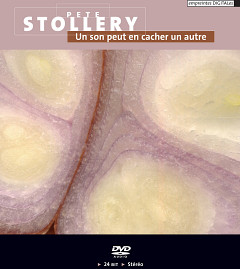
  • Un son peut en cacher un autre dans De:Bug

    «Kritik», ASB, De:Bug, no 108, 1 décembre 2006
    vendredi 1 décembre 2006 Presse

    Die surrealistische Musik des Schotten Pete Stollery funktioniert auch ohne akademische Grundbildung in Sachen Elektroakustik und Akusmatik. Die elektronische Bearbeitung lässt oft die Quellen der Klänge und Soundscapes erkennen, die Musik bietet einzelnen Klängen viel Platz, wirkt dadurch leicht und bleibt trotzdem durchweg spannend. 4/5

    4/5

    Mondes inconnus, Un son peut en cacher un autre, Alter ego dans Bad Alchemy

    «Kritik», Rigobert Dittmann, Bad Alchemy, no 51, 1 décembre 2006
    vendredi 1 décembre 2006 Presse

    Pete Stollery (1960, Halifax, UK), Mathew Adkins (1972, Leamington, UK) und Pierre Alexandre Tremblay (1975, Montréal) haben sicher Vieles gemeinsam, schon auf den ersten Blick auf ihre Biographien aber ihr Studium bei Jonty Harrison an der University of Birmingham, das Tremblay 2005 mit dem PhD in Electroacoustic Composition abschloss, die anderen natürlich ebenso. Das ist hier die Sorte von Elektroakustik, bei der so etwas obligatorisch ist und zählt und auch dazu führt, dass Stollery z.B. heute Lecturer in Music und Director des Electroacoustic Music Studio at the University of Aberdeen ist oder Tremblay Komposition an der University of Huddersfield lehrt. Ebenso obligatorisch ist, dass man für seine Musik Preise bekommt, in Sao Paulo, Prag, Stockholm oder Bourges.

    So wurde etwa Stollery für Altered Images (1995) und Vox Magna (2003) ausgezeichnet, die zusammen mit 5 weiteren Kompositionen enthalten sind auf Un son peut en cacher un autre (IMED 0678, DVD-Audio). Dabei spielt er mit Roulettekugeln (Peel, 1997) und Fahrradspeichen, schließt Debussy mit Ken Russell kurz, lässt Kinder grüne Bienen malen, lässt sein Material knackig zucken (Shortstuff, 1993), umrundet, angestoßen von Aberdeen-O-Ton, im Zeitraffer die Welt und begegnet dabei zwischen Meeresstrand und Autobahn einem Akkordeonspieler (ABZ/A, 1998). Das ziemlich großartige Vox Magna schließlich meditiert als postindustrialer Soundscape über die nordenglischen und schottischen Hinterlassenschaften des Industrialen Zeitalters, mit geisterhaften Echos des eisernen Eifers eines Fortschritts, der längst vorüber geschrittenen ist. Konzept muss sein, meinte die grüne Biene und tänzelte dabei auf einem Bein.

    Mondes inconnus (IMED 0679, DVD-Audio) versammelt 8 Arbeiten von Adkins, darunter seine Preisträger Melt (1994) und Mapping (1995-97). Adkins Musik kreist um Anfänge (Mapping), Ruhezustand und Geschwindigkeit (Still Time, 2001), sie wirft Blicke aus der Satellitenperspektive auf die Erde und per Teleskop ins All (Aerial & Deepfield, 2002) oder pendelt mit dem Zug ins Zentrum von Birmingham, mit Turners Rain, Steam, and Speed und Schaeffers Étude aux chemins de fer im Hinterkopf (Melt). Symbiont (2002) und das gleichzeitig übereifrig stotternde und pathetisch nach den Sternen greifende Cortex (2004-05) wurden angeregt durch die Science Fiction von William Gibson und Isaac Asimov und die visuelle Phantasie von HR Giger. Silk to Steel (2005) entstand als Geburtstagsgeschenk für den Kollegen Christopher Fox und variiert mit Hilfe von Primzahlen auf elektroakustische Weise Fragmente aus dessen Pianostück Prime Site. Die brillante Akustik gibt Adkins fantastischen Reisen in unbekannte Welten eine oft nicht mehr geheure Plastizität. Schnitte wooshen wie Poes Pendel. Wenn es knirscht, dann rummmst gleich eine Gerölllawine aus den Boxen. Immer wieder gerät man als Incredible Shrinking Man zwischen die Backenzähne eines Riesen. So etwas nenn ich Sonic Fiction erster Güte.

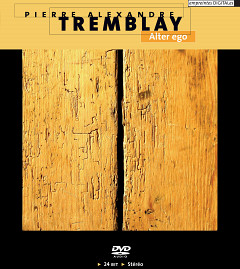
    Tremblay, ansonsten auch Bassist und Kopf des Quebecer Jazzquintetts [iks], beginnt seine Sammlung Alter ego (IMED 0680, DVD-Audio) mit einem autoportrait (2001), einem Blick auf die zurück liegende Dekade des eigenen Strebens und Werkeln, der 10. Ausgabe des Festivals Rien à voir entstand. Danach folgen Klang gewordene expressive und romantische Reflexionen über die unmögliche Stille (au Croisé, le silence, seul, tient lieu de parole, 2000), über Mind & Body (Binary (Virtual Rapper Remix), 1998), über Ovids Spruch „Tempus edax rerum” und die Flüchtigkeit der Zeit (fugue; qui sent le temps?, 1997) und über Baudelaires Zeile „Moi, mon âme est fêlée” (la cloche fêlée, 2004). Immer wieder werden Stimmen, Schritte, demagogisches Gebrüll geloopt oder Fetzen von Rap (Dice B von The CatBurglaz). Dazu brodelt es und rauscht aus allen Fugen und selbst Breakbeats oder vorbei röhrende Formel 1-Boliden und schließlich auch noch Kirchenglocken geraten in Tremblays Zentrifuge. Hier ist endlich mal wieder einer, der von Musik groß denkt und sogar das Wort Übermensch nicht scheut. Musik ist Komplize, Spiegel, das Andere (Alter ego). Eine Poesie des Unvollkommenen und Traumpfad ins Andereswo. Zumindest der Versuch, Übergänge zu finden oder zu bahnen zu Altered States, zu einem lebendigeren und schöneren Selbstsein (Alter ego).

    In Transmediale, Chronopée (2), Waste of Songs dans Vital

    «Review», Frans de Waard, Vital, no 553, 21 novembre 2006
    mardi 21 novembre 2006 Presse

    A collaboration of many kinds, this one. Dirk Dresselhaus is at the core. The man from Schneider TM, as well as band member of Locust Fudge, Pancake and Dr Drek has played with Hildur Gudnadottir before, on the CD Good Sound under the banner Mr. Schmuck’s Farm (on the same label as this new one) and also with Ilpo Väisänen is active as Angel. Väisänen is most known for his involvement with Pan Sonic, but also played with Bruce Gilbert, Alan Vega and a forthcoming release with The Hafler Trio. Back when reviewing Mr. Schmuck’s Farm I had no idea who she was, but she is part of Kitchen Motors collective in Iceland, as well as playing the cello with many people on Iceland. In April 2005 the three played together at the Transmediale festival for more than an hour, and the result is now available on CD. This release continues the style set out by Mr. Schmuck’s Farm rather than the music of Angel. One long piece of drone music. The basic rule, so it seems, is that they agreed to start out in a rather soft manner and then make a sweep into noise land and land safely in more quieter realms. The noise part really cracks out here. I believe that the two men pick up the signals produced by Gudnadottir and process these through their own blend of electronics, by which we don’t understand laptops, but all sorts of black boxes with knobs. This has only vaguely something to do with drone music, but it is made on entirely different level than the usual drone suspects of Vital Weekly. Powerful music, as opposed to music that is supposed to lull you to sleep. It’s great to see at least something moving away from the usual path.

    Joe Colley is also someone who shouldn’t need much introduction. Years ago he was active under the name Crawl Unit, but who remembers that? It’s been Joe Colley for some time now and as such he is quite active as a recording artists (solo, but also in collaboration with say people like Francisco López and Jason Lescalleet), performing around the world, and putting up sound installations. His work got recognition at Ars Electronica and Transmediale (but I wonder who would care about that really?). Colley is a man who loves the sound of decay. Things that are on the fringe of being broken beyond repair find a good place in his hands. The last breath of something electrical is in good hands with him. All to easily you could think that Colley deals with ‘just’ noise. Not so at all. He is also a man who loves drones — how he conceives them is not really of great importance, certainly not through a laptop, but he has them. These two ends, the drones and the noise, may seem opposite s but be assured they are in very capable hands. The opening piece Bruise Voltage And Field Error is a loud beast of a broken contact microphone choir and cable hum. The Last Audience closes the CD with a heavy drone piece that could almost be derived from feedback, but it stays away from the real noise bursts. In between the journey went through various stages, various moods (not all that negative, which seems to hover around his work) and various forms. Joe Colley’s music is an unique blend of highly intelligent noise, blending the harsh end with the more soft side, but always remains listenable. From his solo work this is perhaps the best so far.

    The final new release on Oral is by someone of whom I never heard, Mylena Bergeron, and still don’t know anything, other than her working methods. She collects raw, concrete sounds which she then dully processes. In this process she wants to preserve the essence of the sound, which is done in the third phase, harmonization, through methods of editing. She calls her compositions “evocative and narrative sound landscapes”. Many of the pieces here (twelve in total) seem to be made with the sampler. She loops small particles and creates per piece indeed a sort of landscape, or rather a picture of landscape. The original sources are not always to be recognized, even when we hear voices, the supermarket, muzak and such like, but they are embedded in the overall processed sound. It took some time for me to get into this, as at first it all sounded a bit too simple, too easy, but as the CD progressed I got the drift of it, and thought it was quite nice, but perhaps a bit long. Sometimes Bergeron seems to be taking a little too much time to tell her story without knowing where to end it. A bit more concise and perhaps with a couple of pieces skipped, this would have been an absolute gorgeous CD, now it’s just pretty much alright.

    Alter ego dans Vital

    «Review», Frans de Waard, Vital, no 552, 14 novembre 2006
    mardi 14 novembre 2006 Presse

    […] this DVD has no images or film. The sole reason for putting it on a DVD is to make sure it can have 24-bit versions, instead of the regular 16-bit found on a regular CD. Tremblay is a Canadian composer who moved to Britain, where he is a composer at the University of Huddersfield. He is also a member of [iks], a contemporary jazz ensemble, which he formed in 1996. On this DVD there are five pieces, the oldest from 1997 and the most recent from 2004. He certainly has a diverse style: in Binary (Virtual Rapper Remix) he adds the processed of a rapper to a crazy blend of chopped up rhythms. That might be something new for the lovers of empreintes DIGITALes! In his other pieces he offers more ‘regular’ music that we find usually on the releases of this label. Acousmatic music of processed sounds all sort, and normally I do not find this always to be highly interesting, because it’s all rather academic in approach and it moves very much along strict patterns, but Tremblay seems to be adding something of his own, a bit more humor (as in the aforementioned ‘Binary’), but also in his other pieces. It’s hard to define what that is, exactly, but I very much enjoyed this release, as it all sounded quite fresh in an otherwise rigid world of its own.

    … I very much enjoyed this release, as it all sounded quite fresh in an otherwise rigid world of its own.
  • 199
  • 200
  • 201
  • 202
  • 203
  • 204
  • 205
  • 206
  • 207