Sauter au contenu principal
electrocd

Blogue

2899 résultats
  • 265
  • 266
  • 267
  • 268
  • 269
  • 270
  • 271
  • 272
  • 273
  • All Your Dreams Are Meaningless, Coin Gutter dans The Georgia Straight

    «Straight Choices», The Georgia Straight, 23 octobre 2003
    jeudi 23 octobre 2003 Presse

    Since forming the electroacoustic duo Coin Gutter in 2000, Vancouver’s Emma Hendrix and Graeme Scott have been blessing local ears with their consistently beautiful noise. The pair’s latest release, All your dreams are meaningless is like a surrealist landscape painting rooted firmly in our city’s rich tradition of experimental sound design. As if October hadn’t already given us enough wonderful electronic music concerts, Coin Gutter adds to the lovely din with an appearance on Tuesday (October 28) at the Railway Club. Noise freaks unite!

    Noise freaks unite!

    Sings the Blues dans Rolling Stone

    «Review», Adrian Zupp, Rolling Stone, 22 octobre 2003
    mercredi 22 octobre 2003 Presse

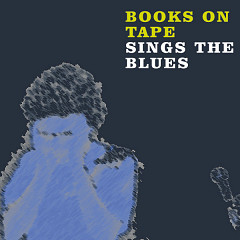
    Books on Tape, a.k.a. ’puter noodler Todd Drootin, are an acquired taste. Unquestionably interesting and indisputably arcane, Books’ synthetic-music experimentalism is a nuthouse art gallery for your brain. Fixate on a track title and let the scene gel in your mind’s eye: She’s Dead To Me (manic and disturbing), Death In the Sex Shop (stranglehold manic), Church Bus (ominous industrial), See You In Tokyo (curiously Teutonic-styled menace intermingled with Talking Heads frivolity), Circus Animal Battle Rap (instrumental) (edgy and onomatopoeic). The best moments are definitely the darker ones. When things get too vanilla (e.g. the Pollyanna minimalism of Pointe du pied) the engagement quotient declines noticeably. But all that’s forgiven and forgotten when you hit cuts like the sax-n-drugs The Crucial. A tumbling bundle of samples, loops and general electro doodling, Sings the Blues plays hopscotch across your synapses and gets you thinking about things you’ve never done and probably shouldn’t.

    Sings the Blues, Books on Tape dans LA Alternative Press

    «Ten Bands You Need to Know About», Lesley Bargar, LA Alternative Press, 22 octobre 2003
    mercredi 22 octobre 2003 Presse

    […] Valley native Todd Drootin (a.k.a. Books on Tape) suffers from a severe case of electronic epilepsy. Standing behind his series of odd sequencers and mysterious boxes bursting with knobs, levers, and who-knows-what, the man seems to compose in a fit of spontaneity. However, the brilliant premeditation is evident in how friggin’ good his stuff is. Using samples as minimal as a single guitar chord or bass line as his palate, Drootin mixes in blips, buzzes and other kinds of primitive electronic noises to create music that is somewhat punk, somewhat dancey and often cinematic in scope. The project began when Drootin wanted to play music but lacked the space necessary to store his various bulky traditional instruments. Sequencers, about the size of shoeboxes (but a lot more fun), seemed like the way to go. What has grown out of this space-issue is a full-fledged act that is less “electroclash,” and more a direct result of influences such as jazz, punk, indie, and just plain rock. Books on Tape shows have been described as “high-energy gymnastics” and even the most die-hard electronic traditionalists and jaded indie-rockers have been known to break a smile watching the frantic, knob-turning, pedal-slamming spectacle that is a Books on Tape show. Drootin has had the opportunity to play with such established acts as Cursive, Rilo Kiley and Stars as Eyes. The debut Books on Tape album received high critical acclaim and became a staple on college radio stations nationwide. Drootin feels that his recently released second album, Sings the Blues, captures the vibe of his live performances. He has been invited to play at this year’s CMJ festival in New York City and can be expected to surpass the Los Angeles underground soon enough. […]

    … the brilliant premeditation is evident in how friggin’ good his stuff is.

    Sings the Blues dans Earshot

    «Review», Anne Sulikowski, Earshot, 21 octobre 2003
    mardi 21 octobre 2003 Presse

    I feel this array of warmth and romance when I listen to Sings the Blues (for a hopeless romantic like me that is a good thing). This release by Books on Tape is mainly comprised of samples from Todd Drootin’s girlfriend Kerri’s record collection. He explains in his liner notes “Books on Tape is as much hers as it is mine… besides I love her and I sample her records…” How sweet is that…

    Todd also explains that Books on Tape would not have happened without Pavement, Talking Heads, Albert Ayler, Sonic Youth (the band of dreams), Sun Ra, Wire, Lee “Scratch” Perry, Neil Young, Mike Patton, Gang of Four, The Pixies, Public Enemy, The Fall and David Bowie. Sounds like she has an awesome record collection to me. The music on Sings the Blues is to say the least captivating and interesting. Ranging from these slow, sexy, experimental dub-esque sounds to upbeat clip hop this release as a whole is like this awesome mix-tape of a listen, with each song building towards the unraveling of the next song. It is seamless and powerful and full of bubbly fun. I really enjoyed the track Frisson as it demonstrates Todd’s immense talents in the musical arrangement of collected fragments, segments and slices. Frisson is a heart drenched lullaby sung to you from outer space. I love this CD more each time I listen again and again…

    It is seamless and powerful and full of bubbly fun.… a heart drenched lullaby sung to you from outer space. I love this CD more each time I listen again and again…
    Seuil de silences dans AllMusic

    «Review», François Couture, AllMusic, 21 octobre 2003
    mardi 21 octobre 2003 Presse

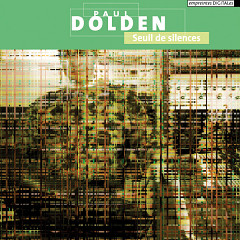
    Released as part of a reissue program for which Paul Dolden “reprocessed, remixed and remastered” his works from the ’80s and ’90s, Seuil de silences is actually an augmented reissue of his 1990 CD The Threshold of Deafening Silence. Dolden’s music is all about density and this density is obtained at a cost: dozens of hours (80 of them for Below the Walls of Jericho) are used in a 15-minute piece, split into a hundred layers of processed tapes. The analog technology of the ’80s meant that a price in sound quality had to be paid for such large-scale sound manipulations. So Dolden revisited his old pieces, cleaning up and remixing to bring out details that had been buried in the past. The result is staggering, giving his music a power matched only by John Oswald’s mammoth works. Seuil de silences reprises the three pieces on the original album: Below the Walls of Jericho (if sound can tear walls down, this piece will do it: listen to it at high volume and you’ll think that the speakers are advancing on you), Caught in an Octagon of Unaccustomed Light, and In the Natural Doorway I Crouch. But the album also introduces two more pieces that are part of the “Resonance” series, pieces for soloist and tape. The first two “Resonance” pieces appeared on 1994’s L’ivresse de la vitesse. These two were composed after the release of that album (1996) and have gone through the same refurbishing process. Violinist Julie-Anne Derome is at the center of Gravity’s Stillness. Resonance #6, while The Vertigo of Ritualized Frenzy. Resonance #4 features pianist Leslie Wyber and clarinetist François Houle. But Dolden’s music has the biggest impact when it consists of tape alone — although in this case “alone” designates a multitude.

    Dolden revisited his old pieces, cleaning up and remixing to bring out details that had been buried in the past. The result is staggering…

    Aparanthesi dans AllMusic

    «Review», François Couture, AllMusic, 21 octobre 2003
    mardi 21 octobre 2003 Presse

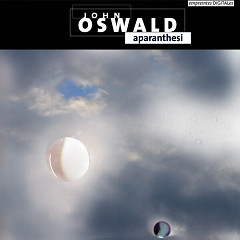
    This album is not about “plunderphonics,” but you’ll find a lot of the sound morphing that has become characteristic of John Oswald’s work. And without the “who-did-he-mistreat-this-time” hook, Aparanthesi stands as Oswald’s most difficult, challenging album yet. It has a lot to offer though and every listen reveals new details — and there are enough in here to last through many listens. The album presents two versions of Aparanthesi, a 30-minute piece built on a single note: A. A piano is at the center of the piece, but it is joined by sine waves, field recordings, strings, and a piano tuner. But everything that happens has been filtered in order to “retune” it to A or one of its harmonics. You can compare it to looking at the world through a lens that would make all light converge toward a tiny point. And yet the experience is much stranger than that, especially since Oswald operates slow morphs between the most unrelated sounds. The two Aparenthesi, studio and concert versions, differ significantly from each other — enough to justify the release of both pieces. The dynamic range is extreme, some sound events happening on the threshold of audibility, and yet both pieces begin with an overwhelming chord (for the concert premiere the audience was asked to wait outside the concert hall while the chord was sounded inside, otherwise it would have been unsafe) that slowly descends toward nothingness. The liner notes consist of another conversation with the fake interviewer Norman Igma in which Oswald takes both tracks completely apart, explaining every little detail as if he was determined to dispel every iota of mystery in the work. Well he fails miserably: even after this difficult read, Aparanthesi stands as one of his most enigmatic works, worth every bit of effort required from the listener, and that despite is rather anti-climactic nature.

    Aparanthesi stands as one of his most enigmatic works, worth every bit of effort required from the listener…
  • 265
  • 266
  • 267
  • 268
  • 269
  • 270
  • 271
  • 272
  • 273