Sauter au contenu principal
electrocd
  • This website is also available in English.

Blogue

2899 résultats
  • 333
  • 334
  • 335
  • 336
  • 337
  • 338
  • 339
  • 340
  • 341
  • Bruits dans wReck thiS MeSS

    «Review», Bart Plantenga, wReck thiS MeSS, 9 décembre 2001
    dimanche 9 décembre 2001 Presse

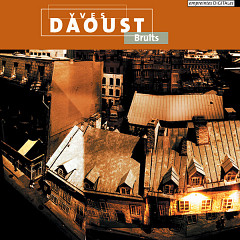
    Bruits on empreintes DIGITALes Yves Daoust exemplifies that empreintes DIGITALes spirit where the entire sonic history of mankind can find residence in the incredibly evocative sound pockets of human-manipulated soundscape documents. The pieces are ripe and bursting with exuberance. Yves Daoust is head of the electroacoustic program at the Conservatoire de Musique de Montréal. This is his 3rd empreintes DIGITALes release. The title piece which is bursting with the schizoidal din of urban mindscapes is “a postcard, a sonic portrait of a landscape dear to Daoust — Montréal.”

    The pieces are ripe and bursting with exuberance.

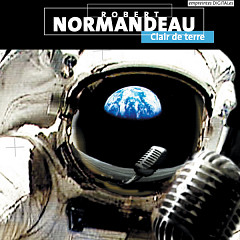
    Clair de terre dans wReck thiS MeSS

    «Review», Bart Plantenga, wReck thiS MeSS, 9 décembre 2001
    dimanche 9 décembre 2001 Presse

    Clair de terre on empreintes DIGITALes is yet another disc in the continuing saga of ED, which is a label devoted to electroacoustic composition of the [generally] most provocative kind. The label’s artists seem devoted to pushing the envelope of what sound can do. There are always dramatic turbulences and breathtaking shifts in timbre, sudden shifts between aural clutter and provocative stillness, complete with organic sounds electronically manipulated and a determined effort to make sense out of the surrounding din. Normandeau is currently pursuing the horizons of acousmatic music: “his compositions employ aesthetic criteria whereby he creates a ‘cinema for the ear’ in which ‘meaning’ as well as ‘sound’ become elements which elaborate his works.”

    … dramatic turbulences and breathtaking shifts in timbre, sudden shifts between aural clutter and provocative stillness…

    The Freest of Radicals, No Type dans Le Devoir

    «Une étiquette virtuelle et vivante», David Cantin, Le Devoir, 8 décembre 2001
    samedi 8 décembre 2001 Presse

    Quatre ans après son éclosion, voilà que le site montréalais de mp3 No Type s’associe à l’étiquette de musique électroacoustique empreintes DIGITALes afin de mieux diffuser le travail «de nouveaux créateurs ignorés des circuits habituels».

    Toujours en marge de l’industrie, la première réalisation est une double compilation qui regroupe 35 œuvres originales par autant d’artistes de No Type. De plus, du 13 au 15 décembre, c’est ce premier site de mp3 gratuit au Canada qui prendra également en charge le volet post rien (ainsi nommé parce qu’il succède [aux événements de la série de concerts électroacoustiques] Rien à voir (10)) à la Casa del Popolo. À Québec, le jeudi 13 décembre, la soirée Machines: abstractions sonores électroniques s’installera pour une incursion initiale dans le studio d’essai de Méduse, en collaboration avec Avatar et Alterflow.

    Pour Érick d’Orion, membre des formations de Québec morceaux_de_machines et Napalm Jazz, The Freest of Radicals est en quelque sorte un best-of des 70 albums pour la plupart encore disponibles gratuitement sur No Type. En tout, on compte pas moins d’une quarantaine d’artistes provenant du Québec, du Canada, des États-Unis, de l’Espagne, de la Suède et de l’Angleterre. «Au début, David Turgeon, le fondateur de No Type, souhaitait rendre accessible au plus grand nombre une musique dite trop bizarre, trop bruyante ou encore pas assez vendable. Trois règles deviennent alors essentielles: la liberté créatrice, le musicien demeure en contrôle de tout et il n’y a pas d’argent qui entre, juste de l’argent qui sort.» Jusqu’en janvier 1999, les premiers à se joindre au collectif seront surtout des gens de Québec, puis la rumeur commencera à courir un peu partout. Désormais chez Alien8, le Torontois de réputation internationale Tomas Jirku s’est d’abord fait connaître grâce à No Type.

    Une occasion rare

    En ce qui concerne d’Orion, toujours à Québec, ses projets se rapprochent davantage de l’esprit du free-jazz, mais en utilisant les machines plutôt que les instruments traditionnels. Une facette parmi tant d’autres sur ce label. Il parle plus précisément de «free-bruit» dans le cas de Napalm Jazz alors que morceaux_de_machines expérimente plutôt du côté de la «noise-pop». «On ne cherche à effrayer personne puisqu’il existe un véritable public pour ce genre d’approche radicale. Il faut aussi savoir que seulement 30% de la production de No Type touche essentiellement à la «noise». La compilation double a l’avantage de présenter aussi les autres volets d’une musique dite de recherche.» Bien qu’Érick d’Orion se soit produit à maintes reprises à Montréal, il veut désormais installer un créneau pour ces diverses tendances de la musique électronique dans la Vieille Capitale. Après la soirée du 13 décembre au studio d’essai de Méduse, il prévoit une suite à cet événement lors du prochain Mois Multi. Le musicien insiste par contre sur quelques détails: «Il ne faut pas que les spectateurs s’attendent à entendre de la techno comme dans les raves ou un académisme purement réducteur. Cela n’a rien à voir avec ce que No Type préconise comme idée des musiques différentes. On veut proposer une véritable alternative.»

    Lors de ce spectacle-lancement, des noms comme Monobor Télécom, de la France, Arborisation Terminale, du collectif Alterflow, E3F1, de Montréal, et morceaux_de_machines se produiront sur scène. Une occasion, plutôt rare à Québec, de s’initier à ces nouvelles musiques électroniques. À suivre dans un futur rapproché.

    No Type s’associe à l’étiquette de musique électroacoustique empreintes DIGITALes afin de mieux diffuser le travail “de nouveaux créateurs ignorés des circuits habituels”.

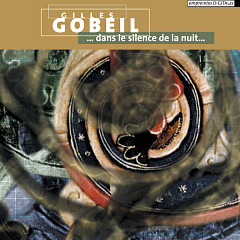
    … dans le silence de la nuit… dans Recycle Your Ears

    «Review», Nicolas Chevreux, Recycle Your Ears, 6 décembre 2001
    jeudi 6 décembre 2001 Presse

    Before this CD, all the releases I knew from empreintes DIGITALes were very complex and difficult works of musique concrète and electroaccoustic. That is to say, they were clearly more a music for people who are actually studying this genre than for the rest of the world. …dans le silence de la nuit… is, to the contrary, a more accessible work, on which fans of industrial music can have more grip.

    And, briefly said, these four tracks are a combination of dark soundscapes made of fields recordings, outbursts of noises and spoken words in French (with readings of Du coté de chez Swann and The time machine). As far as the music is concerned, this work doesn’t have the complexity and opacity of musique concrète, and sounds more like muffled and cut up recordings of footsteps, winds and ambiences, meshed into a rumbling light noise. In fact, the recording is often extremely light, causing you to crank up your stereo quite loud, before getting your ear blasted by some very dynamic and unexpected loud sample.

    Very atmospheric and dream inducing, this work has enough coherency and consistency to be really enjoyed as a whole, and doesn’t lose his listener to much. The texture it uses are interesting and relatively close to sounds commonly used in dark ambient and industrial music. However, a very strong point of this CD is, as always with empreintes DIGITALes, a very good recording quality, with a dynamic and cristal clear sound.

    Still very academic, but really close to what’s been done by some dark ambient projects, …dans le silence de la nuit… is easily the most enjoyable, cinematic and listener-friendly CD I have heard from this label. Nice.

    … the most enjoyable, cinematic and listener-friendly CD I have heard…

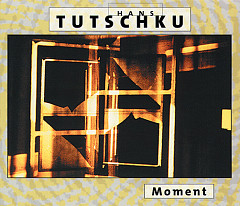
    Moment dans Computer Music Journal

    «Review», Patricia Lynn Dirks, Computer Music Journal, no 25:4, 1 décembre 2001
    samedi 1 décembre 2001 Presse

    Hans Tutschku is a German composer born in Weimar in 1966. He has been involved in electronic music and the creation thereof from an early age. At 16, he joined the Ensemble für Intuitive Musik Weimar and later accompanied Karlheinz Stockhausen for three years to study sound diffusion. Moment is a collection of electroacoustic compositions by Mr. Tutschku. This compact disc features the subtle blending of vocal, instrumental, and environmental sounds to create rich sonic textures. Although all of the works on Moment were created to some extent through computer programming, manipulation of recorded material, and digital signal processing, it is Mr. Tutschku’s precise craftsmanship in compositional techniques that allows the listener to hear only the voice of the music he has created and not the technology. It is both his ease of knowledge and skill that allows his passion and personality to be present in his compositions. His accomplishments have been acknowledged worldwide with numerous awards and honors for his works. Since 1997, Mr. Tutschku has held a teaching position at Ircam (Institut de Recherche et Coordination Acoustique/Musique). In the composition extrémités lointaines (1998), the composer takes the listener on a sonic journey through Asia, Singapore, Indonesia, the Philippines, and Thailand. Recordings of various cities, churches, temples, and children singing can be heard in this soundscape. In the creation of this composition, Mr. Tutschku used real-time granular synthesis to divide and reorganize the sounds to create new sonic relationships among the sources. Throughout extrémités lointaines the composer is vigilant in maintaining connections to the specific cultures from which the sound sources originated. It is this passion and dense compositional structure that creates the intensity of this fascinating work. extrémités lointaines was originally composed for eight channel dispersion and was commissioned by the French Ministry of Culture in collaboration with Ina-GRM (Institut National de l’Audiovisuel — Groupe de Recherches Musicales) in Paris. This work was a finalist in the 1998 Bourges International Electroacoustic Music Competition in France and was given the award of Distinction at the 1998 Prix Ars Electronica competition in Austria. Most of the compositions on Moment feature the human voice in one form or another. Mr. Tutschku’s … erinnerung… (1996) is no exception, as unique gestures of the human voice are used to create richly colorful and sometimes quite dense textures. The piece is based on the poem … erinnerung… by Antonio Bueno Tubia. This collection of words provides the starting point for the transformation of the human voice later interspersed with bells and tamtams. The intensity created by the juxtaposition of these sound worlds is then interrupted by the clearly spoken text: “Yo/ os lo aseguro, / la cárcel existe, / la recuerdo como untrallazo en la sien” (”I/ assure you/ the prison is there/ I recall it like a lash to the face”). In this recording the poet is also the male voice featured reading the text of the poem. … erinnerung… is a highly dramatic composition full of truly evocative sounds which are well suited to the intentions of the poem. Les invisibles (1996) is a composition for tape without live performers derived from an earlier work, Freibrief für einen Traum (1995) for soprano, flute, cello, percussion, and computer-generated sound files. The work featured on Moment uses 25 short melodies and five longer sequences for instruments, as well as a four-voice counterpoint for soprano. The text for the soprano comes from the poem “Es wird später” (“It’s getting later”) by Austrian poet Karl Lubomirski. The musicians who made the recordings for Les invisibles include Donatienne Michel-Dansac, soprano; Catherine Bowie, flute; Antoine Larette, cello; and Jean Geoffroy, percussion. All the recorded sound material was later reorganized and given different spatial placements within the new composition. The sound world and melodies created are very well suited to the text of the poem throughout the work. Les invisibles focuses on the understandability of words as a part of the compositional process. The poem’s description of travel and its allusions to time are very clearly illustrated in the design of the melodic lines and long sustaining tones created from the elongation of the original instrumental material. Sieben Stufen (“Seven Steps”) (1995) is based on the poem Verfall (decline, decay) by the Austrian poet Georg Trakl (1887–1914). Mr. Tutschku uses the text of the poem primarily as a sound source and is not necessarily trying to “set” the text or illustrate the intentions of the poem itself. This is obvious in the treatment of the words which is, at times, very disjointed, and thus the resemblance to the spoken text is null. At the same time, the sounds that the words create through various processes is very musical, often with long, sustained, subtle, changing timbres which are pleasing to the ear. The piece is divided into several sections, emphasizing various processing techniques. These range from glissandi through movement, clear spoken text, male and female voices, harmonic and melodic elements of the voice, granular synthesis where a single vocal sound is elongated over time in minute splices played together, to superimposed text creating varying delays and echoes. The poem is presented in two languages, German and French, and is spoken by a total of four voices, two male and two female. Mr. Tutschku selected four main words in each language to corresponded to seven different pitches for a total of fourteen pitches for the entire composition. This piece uses the difference in languages to act as a counterpoint throughout the composition. This work received Second Prize in the CIMESP International Electroacoustic Music Competition of Saö Paulo in Brazil in 1995. It is a powerful composition which alters the listener’s perception of strict time through the haunting ebb and flow of the voices. Die zerschlagene Stimme (1991) features sound material derived from only the human voice and percussion sounds. In this composition, Mr. Tutschku imposes vocal articulations on the sounds of the percussion material while those of the voice are transformed into percussive ones. This is similar to Jonathan Harvey’s Mortuos Plango, Vivos Voco (1980), where the envelopes of two sound sources, a boy’s voice and a bell, are switched. Thus, in Die zerschlagene Stimme, the percussion imitates the vocal envelope of a gradual attack, no immediate decay, long sustain, and gradual release, while the voice at times has a percussive envelope, with a short attack and sudden decay followed by a relatively short sustain and decay. The basis of the composition is the exploration and play of the various stages of transformation for both sound sources. The juxtaposition, integration, and relationship between the new and original materials produce an enticing listening experience. The transformation of the human voice into a percussive element surfaces strong emotions such as fear, anger, and distress, feelings commonly associatedwith quick abrupt vocal sounds. On the other hand, the lengthening of the percussion sounds creates a dreamlike setting which is at times quite calming. When transformations occur at the same time there is a great range of intensity as familiar sounds of human emotion meet the aural sound play of the unfamiliar. While Die zerschlagene Stimme was originally written for four-channel diffusion, the sense of sound transformation through movement in a compositional space is still present in this two-channel version. Ideally, this work should be listened to in a concert hall setting to experience the full changing and processing of the sounds as they travel throughout the space. Overall, the compositions featured on Moment are well crafted in the expression of common sounds and poetry transformed into elegant tapestries of music. Mr. Tutschku’s use of the voice for presenting discernable words, text in a harmonic sound source, or the combination and juxtaposition of materials creates rich compositions. It is these various techniques that expose the music within the words themselves. The compositions featured on Moment form a well-rounded collection that include city soundscapes, bells, and percussion, to more melodic works such as Les invisibles, featuring acoustic instruments played and recorded. Mr. Tutschku created his compositions through the use of computer programs, his own programming, and various other electroacoustic techniques. It is his vast talent in this area that enables his music to sound natural and free flowing, rich in emotion and intensity. Unlike some early “computer” music, which sounds very programmed, heavily structured, and devoid of any human element, Mr. Tutschku has elegantly bridged the gap between the music and the medium to produce stunning compositions of exceptional caliber.

    … natural and free flowing, rich in emotion and intensity.

    Islands dans Musicworks

    «Island of Contemplation», Darren Copeland, Musicworks, no 82, 1 décembre 2001
    samedi 1 décembre 2001 Presse

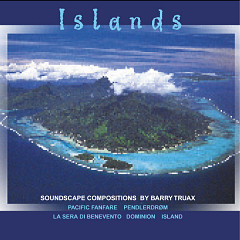
    The title of the disc Islands metaphorically refers to islands of place, event, and community. Many places drift in and out of consciousness over the sixty-three minutes of the CD, with European commuter trains, the Vancouver skytrain, and the Canadian Pacific Railway connecting visitations to idyllic settings of quiet, natural repose. The idea of visiting places in dream-like succession is common to many soundscape compositions, due to the inherent referential qualities of real world sounds — and this CD is no exception.

    Chief among the distinguishing characteristics of Truax’s work is a romantic sensibility. Sounds of industry and society are limited to transportation sounds and time signals. Also, there are absent from these soundscapes the perhaps less-desirable sounds of society, such as traffic, factory machinery, and shopping malls. And there is an implied narrative in the sequence of sound environments visited. Train rides lead to restful escapades away from the stress of the workday, an afternoon nap invites a sonic meditation with cicadas and Italian water fountains, and cicadas (again), along with other natural soundscape elements, provide the makings of a magical place of wonder and rest. Truax indeed hears the world through a different aural filter, judging by the makeup of these sound worlds.

    The CD also includes Truax’s trademark granular synthesis, through which sounds from the environment are stretched out to over a hundred times their length, while their pitch is preserved. However, unlike its use in his computer music of the late ’80s and early ’90s it occurs here in conjunction with other processing techniques, such as comb filtering (in the composition Islands) and is used with careful discretion. In this case, the lines between artifice and reality blur in the same way that distortions in colour and image in photography create an ambiguity about fact and fiction. However, one can never dismiss the predilections of the artist in rendering reality in an artificial form — which makes me wonder how much our own perception of our everyday acoustic environment strays from objective truth. Although Truax is not presenting everything in the acoustic environment, his choices say something about the role sound plays in our sense of well-being in the world. I think the implicit statement of this CD is that our society is in need of islands of rest and contemplation. Certain sounds from nature present that opportunity, which is missing from a culture with an appetite for information excess and light diversionary entertainment.

    Chief among the distinguishing characteristics of Truax’s work is a romantic sensibility.
  • 333
  • 334
  • 335
  • 336
  • 337
  • 338
  • 339
  • 340
  • 341