Sauter au contenu principal
electrocd

Blogue

2899 résultats
  • 354
  • 355
  • 356
  • 357
  • 358
  • 359
  • 360
  • 361
  • 362
  • Évidence matérielle dans Ici Montréal

    «Critiques», Catherine Perrey, Ici Montréal, 26 avril 2001
    jeudi 26 avril 2001 Presse

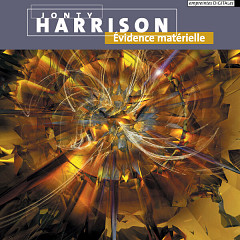
    Cet enregistrement est en fait une compilation de plusieurs œuvres de Harrison créées entre 1982 et 1999. Avec un mérite principal, celuide nous faire entrer dans deux des «branches» de l’acousmatique. En effet, les son manipulés peuvent être en quelque sorte des objets sonores, sons sans distinction de source (ça, c’est le point de vue de Schaeffer) ou des sons provenant de la nature (c’est le point de vue de Schafer). Les pièces ont des dominantes très marquées: Klang (sons métalliques, de cloches ou autres), Splintering (travail du bois), Streams (eau). Sorties, une pièce destinée à faire partie d’une installation sonore, reflète bien l’impossibilité de sortir d’une impasse sans se remettre dans un autre! Un intéressant panorama didactique. (7/10)

    7

    L’ivresse de la vitesse, L’ivresse de la vitesse 1, L’ivresse de la vitesse 2 dans Sztuka Fabryka

    «Review», Geert De Decker, Sztuka Fabryka, 19 avril 2001
    jeudi 19 avril 2001 Presse

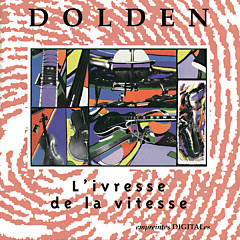
    2 CDs in this CD box, on the first one there are 5 tracks on the 2nd one 6 tracks. Listening to the 1st track (CD 1) it seems as I am listening to a jazz-band or a symphony orchestra in overdrive, fast music. The booklet learns us that Paul Dolden is the high priest of crash music. Music where speed is an important part, so our first impression is a good one. Nothing less the music is not always fast it can be symphonic also, as there are tranquil moments when the music has the usual common speed of musical tunes. The style is different sometimes jazzy sometimes symphonic. And even when the music is fast it never starts to become one big mess of sounds. There is in each track a balance between fast and slow moments and a superb use of instruments. Some tracks are build around one specific instrument such as harpsichord, cello, saxophone, electric guitars and other instruments. Yet a complete set of different instruments are used in all tracks. We might call it contemporary jazz symphony. The tracks on CD 2 are somehow different from CD 1, they are more atmospheric. What especially can be said about the last 3 tracks which are atmospherically ambient tracks, thanks to specific recording techniques of acoustic instruments no electronic effects at all.

    Traces dans Equinoxe

    «Kritik», Alexander Götzke, Equinoxe, no 15, 19 avril 2001
    jeudi 19 avril 2001 Presse

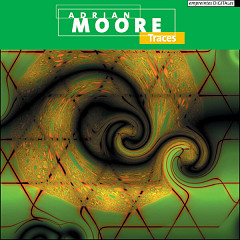
    Eine echte Überraschung stellt für mich dieser Adrian Moore dar. Er studierte Musik und engagiert sich seit Jahren in Einrichtungen verschiedener Universitäten. So ist er unter anderem Direktor des Sound Studios Sheffield und komponiert seit geraumer Zeit elektronische Musik. Mit dieser Beschreibung kann man ihm aber nur bedingt gerecht werden, denn seine Arbeiten sind von besonderer Qualität, und lassen sich mit dem professionellen Stil von Coil und Robert Rich vergleichen. Auf Traces befinden sich fünf Soundscapes die es wahrhaft in sich haben. Selten habe ich so vielschichtige und gleichzeitig wohl aufeinander abgestimmte Klanglandschaften vernommen, die selbst abgebrühte Kenner des Genres hellauf begeistern können. Das Album ist mit seinen fünf Tracks in drei Bereiche eingeteilt: abstrakte Soundquellen, Wiederentdecken natürlicher Klangobjekte und elektronische Manipulation natürlicher Geräusche. Die einzelnen Sektionen fließen spielerisch ineinander und fügen sich zu einer abwechslungsreichen Veröffentlichung voller Energie und Esprit. Eine perfekte Synthese, organisch, zugleich abstrakt und einfach nur genial!

    Évidence matérielle dans Sonoloco Record Reviews

    «Review», Ingvar Loco Nordin, Sonoloco Record Reviews, 15 avril 2001
    dimanche 15 avril 2001 Presse

    Évidence matérielle is Jonty Harrison’s second CD on empreintes DIGITALes; the preceding one – Articles indéfinis (1996) – being very successful, and this one providing enough material evidence to forecast another electroacoustic chart-jumper!

    Klang (1992) is Harrison’s first entry. Some of the base material of the piece was recorded as early as 1981. This pertains particularly to two earthenware casseroles discovered in Denis Smalley’s kitchen… (Man, these guys go back a long time…)

    Suddenly, as I’m writing, my mind makes an involuntary jerky cross-reference that is completely unexpected even unto myself, but I think it holds some kind of truth of an intuitive kind: As I’m contemplating the atmosphere around this Jonty Harrison issue, as well as the other two components of The British Connection -concept that just arrived, I feel a similarity with what was happening on the British pop scene in the middle of the 1960’s, when some really sophisticated groups came along, carving out a certain niche for themselves, in a kind of intellectual and artistic splendor, which struck some of us with awe at the time, as we were completely elated with joy at the power of that which rose out of the darnest corners of the mind of the British Isles.

    Anyhow, the similarity would be that of a certain splendor, a certain timeless creativity of a loftier, nobler kind, a certain craftsmanship way above the average state of affairs, a flair of excellence – which in turn unfolds a tradition back to the bards and the sages of olden times, and beyond that, to Stonehenge, and beyond, beyond… The atmosphere is such… I believe Harrison, Moore and Smalley would have been poets at the court of the king, and that many a dear Lady would weep at their wordings and phrasings…

    Klang (1992) emerges like a glass world of gentle, brittle touches, swirling about you like the mist of a fairy’s airy dance, visible only in very rare lightings, when you’re in a serene state of mind, in and out of vision; now you see it, now you don’t! I can hear the lid being banged shut a few times in Smalley’s kitchen of 1981, but mostly it’s this hovering, circling dance of the fairies, gentle, careful, sensitive – wonderful; like the sunlight reflecting off the long hair of a beautiful long-legged female soaring down a London street (and there are four kinds of Sunsilk Shampoo; one is for you!). I’ve heard a few glass musics, like for instance Denis Dufour’s Bocalises (1977) and Annea Lockwood’s The Glass World (1970) – but this outshines the predecessor by sheer beauty, sheer breezy lightheartedness! It’s spatial, swift, candid! Soaring! Soaring like that one extended, breathtaking many-colored 1965 harmonica exhalation in Donovan Leitch’s Ballad of a Crystal Man

    Sorties (1995) gained Harrison some well-deserved international recognition back in 1996, when the piece was awarded Prix de la Musique Electroacoustique á Programme at the 23d International Electroacoustic Competition in Bourges, France, and consequently released on the double CD of the 9th edition of the releases from the competition; Cultures électroniques 9. From the title of the prize one might deduce that this is programmatic music. It was originally composed for an installation/sound sculpture, which was a collaboration between BEAST (Birmingham ElectroAcoustic Sound Theatre) and graphic artist Lorne Christie. It has to do with fleeing, escaping, from an entrapping interior to an exterior, which in turn turns out to be just another entrapping interior and so forth… (…are birds free from the chains of the skyway…? [Bob Dylan: Ballad in Plain D]). This is more of a concrete piece with original street sounds, footsteps tripping off in the gangways between supermarkets or in the subway stations, children’s voices, trains arriving and leaving, commotion, motion, cars, streets, traffic, squealing breaks, humming generators, slamming doors… and then in a sudden silence; private, close sounds, a door opened or shut… and now the electroacoustic wizardry kicks in, with minute events amply illustrating the inward thoughts of the person in flight, huddling away from one state of mind to another, inside a cab? There are two levels at play here; the interior of the mind, and the exterior through which you have to carry your body through all this weighing gravity of celestial bodies… your body and the celestial bodies and your very existence put to the test in a Russian doll type of world, where one kind of anxiety opens up into another kind of anxiety, and where the final aim can only be to find the right panic… Midway Sorties allows for some weather, and then for the shores of great waters, and birds, flies, bumble bees, voices of children carried on the wind, a single engine propeller plane passing in peace above; an illusion of domiciliary rights – but are these just the lonely sounds of homeliness reaching the thirsty ears of a destitute old-timer (ruined teeth…) on a park bench…? The electronics gradually take on a more vicious guise, and there is probably no mercy at hand… The mixture, the blending of concrete sounds, purely electronic sounds and transiting sounds – is magnificent, almost nauseating! Jonty Harrison knows his craft! He never does more than is needed, in a delicate and most tenderly application of binary film. In an all-encompassing tape-music gesture he lets the summery breeze comb through the leafy crowns of the trees of July, and you sit beneath one of the trees, your back against the trunk, a bottle of mineral water in your hand and lucid thoughts of loss in your mind, as your gaze levels out and locks in a hypnosis of horizons, as the winds blow… (… oh the winds blew high, and the trees did sway; not much from life was I asking… [Donovan Leitch: Ballad of Geraldine])

    Surface Tension (1996) utilizes garbage; all sorts of waste; containers etcetera — and tries to extract some significance… and wouldn’t you know it, it succeeds splendidly, as those empty milk cartons and other throw-aways from the garbage can take up position inside a work of high art, electroacoustically composed of decomposing material for the compost! I sort of see this maniac sticking his hands down into whatnot, his microphone protruding down cracks in the shit, collecting beautiful sonic waste products out of the smelly mess… Fantastic! Even here, inside the shit itself, Jonty Harrison manages a plastic, hollow, spatial feel of curves and angles and trajectories, as the genetic codes flare up and fall down like the soot of fire-crackers all around those little boxes, in the waste damp, little boxes made of ticitac, little boxes, little boxes, little boxes, all the same…

    Splintering (1997) is dedicated to Jonty Harrison’s parents. With its almost 20 minutes’ duration it is the longest work on the CD. The source material turns out to be wood. In the introductive text Harrison alleges environmental remorse, but also recognizes the deep-forest archetype of our subconscious, with weeping princesses, fire-breathing dragons and wolves disguised as grandmothers… We all share those images, don’t we? While I’m at I may as well make known my theory on the origins of the trolls, the giants and all those secret, somewhat dangerous, risky beings of the forest and the mountains. I think – without much doubt, really – that all our conceptions in that direction, about trolls and giants, are humanity’s memories of our brother race, the Neanderthals, who roamed these vast expanses up to at least 38 000 years ago, and that is almost until yesterday, in the perspective of the emergence and development of Homo Sapiens and the Neanderthals. The last remnants of them – dated to be 38 000 years old — were found in a cave in Brittany, so for endless periods we lived side-by-side with this other human race… Incredible. Now it’s just us left… However, the Neanderthals were bigger than us, sturdier, and in the memories seeping down through the millennia they have taken on the guises of trolls and giants. Remarkable but probable! They still live in the fairy-tales and the age-old legends! Certainly there must have been crossbreeds, but they in turn were probably not reproductive, which is why no Neanderthal traces can be detected in our genetic code. Harrison’s wood piece – piece of wood! – rumbles, rolls… and splinters! The music is sometimes percussive, sometimes gently cracking, always woodying! It goes from sparse brancheries to dense groves, and the naturally occurring and healthy forest fires burn through the piece too… if it isn’t Man again, burning down the forest to make space for cultivation of the land… You can hear the smallest of insects whizzing by and the faintest of creatures rustle a leaf… The nocturnal silence puts a misty damper on events, and there is time for reflection inside the composition of sounds… nose-tip introspection… long-last leg-rest of forest trekkers…

    The last piece on this tremendous Jonty Harrison release is Streams (1999). Harrison’s introduction is so well formulated that I’ll quote from it: “The image evoked most immediately is, of course, that of water – turbulent, troubled, restless, at the mercy of wind and terrain, flowing onward to the sea – itself turbulent and in constant motion. Evaporation, clouds and rainfall complete the cycle, which is always renewing, always moving… […] …Streams of data, of consciousness and, most importantly, of perception – the ability to link often disparate elements together and to understand, to ‘hear’, that they are part of one line, one ‘stream of thought’, distinct from other (possibly coexisting) parallel or contrapuntal streams.” That said, it’s not much for me to add, except a respectful bow to the mastery of Jonty Harrison, revealing itself in the masterpieces of electroacoustics herein presented. Good day, Sir! It has been a pleasure!

    A note on the packaging: empreintes DIGITALes’ packaging has always been inventive, and very beautiful, with an original idea for getting the CD out of the cover, among other features. Lately – as is evident with Harrison’s CD, but applying also to the two other CDs arriving in the triptych The British Connection; Adrian Moore’s Traces and Denis Smalley’s Sources/scènes (and maybe all other new CDs from the label?) – the format has shrunk somewhat, making it perfectly square, with even sides, making the whole look of the deal very neat and compact. I hold nothing against that. Earlier releases provided a booklet with the information, but now you fold out a guarded (folded) inlay made of high quality hard paper, with all the info.

    … sheer beauty, sheer breezy lightheartedness! It’s spatial, swift, candid! Soaring!

    Sources / scènes dans Sonoloco Record Reviews

    «Review», Ingvar Loco Nordin, Sonoloco Record Reviews, 15 avril 2001
    dimanche 15 avril 2001 Presse

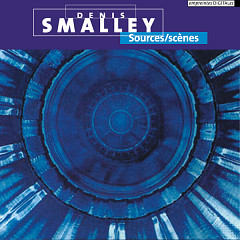
    A new CD from Denis Smalley is in itself a real event; such is his reputation! This CD is one third of the new grand slam from empreintes DIGITALes: the British Connection – though Smalley really does originate in New Zealand… but he moved to the UK already in the 1970s. For a while there, though, I thought the old Empire burlesque (!) had started to brew again… Well, Smalley really initially came to Europe on the French Government Bursary in 1971 to study with Olivier Messiaen in Paris, but also achieved a diploma of electroacoustics at the renowned institution GRM; Groupe de recherches musicales.

    I’ve always held Smalley in the highest esteem, as one who continuously keeps on putting out high quality, high-art electroacoustics. The piece that really blew me away once upon a time was Wind Chimes (1987), released as part of a CD (WER 2025-2) in Wergo’s series Computer Music Currents – on CD 5 of that series (1990). I remember that I’d just set up the gear at home after a major up-grade of equipment. Wind Chimes was the first CD that I played through it – and I was stunned! They guy who helped me bring the gear home and set it up was unfamiliar with any kind of electroacoustic music, and looked completely helpless when the first loud chime cut through the room like a shining sword! So many intriguing sounds; so much imagination, beauty, playfulness, downright auditive obsession! Later on Wind Chimes was released on Smalley’s first CD on empreintes DIGITALes; Impacts intérieurs (IMED 9209). On that CD another piece, which Smalley first issued on Volume 6 of the aforementioned Wergo series – Clarinet Threads – was also reissued.

    So, this is his second CD on the label. I do not usually take much note of what the composer or the label has to say about the different pieces, since electroacoustic music in my view is to be compared with abstract art, I mean abstract, non-figurative painting — which it can be intellectually amusing to discuss the ins and out of, but… that’s that! It might be of interest to some to know what kind of software was used, or which machines – but ultimately it’s the resulting sound that constitutes the end to which the soft and hardware are the means. Only experts and conservators will want to find out the exact chemical make-up of a painter’s paint. Contradicting myself – not uncommon! – I nonetheless recommend the listener to read Smalley’s texts on his music, since they are unusually well formulated, taking on a sort of musical, spatial guise themselves.

    The first piece on this CD is Base Metals (2000). The title alone tells you what to expect; metallic sounds… but maybe this isn’t what you might think anyway, from the title. The events are extended, swooping, like running your hand or your mind along the curved surface of a parked Boeing 747, below and in front of the cockpit windows, down along the bulging nose section, and the sun is shining on a cold spring day, maybe up in Seattle. The metal is smooth, cool, almost sexy under the passage of your hand, and you feel the molecular make-up of the metal, you can sense the atomic jitter, and as you identify even further into the metal you feel, in bewilderment, the shooting trajectories of elementary particles… until you brace yourself, shake your senses and return back up through the worlds of matter, back to your good old self, with your hand almost perversely stroking the jet… and you realize that that’s not where it’s at either, because in real reality your just sitting there listening to Denis Smalley’s Base Metals

    Empty Vessels (1997) is the second entry. In this case it definitely pays off to read the composer’s introduction. Smalley has recorded the air resonating through some large garden pots from Crete and an empty olive jar from Turkey. The recordings took place in the composer’s garden in northern London, which explains why you can hear the sound of rain and passing airplanes, for example. Naturally Smalley has gone further with the resonating sounds, and developed certain aspects of them by the manipulations that are easily accessible to a shaman of sonics! At first you hear the thrushes of a wet garden, but it doesn’t take long for a mosquito and an airplane to arrive and pass at the same instant… The thrushes keep it up, so I suppose the recording was made no later than May. The next plane flies by above the roofs of London, but the resonance it causes in the jars hang on and develop into a murmur of its own, sporting a brilliance of overtones, when the rain starts coming down like miniscule explosions. The rain on the jars produces a rewarding noise, with many beautiful layers of sound that seem to be moving forward relentlessly, as the sound of the rain merges with the intense buzzing of a swarm of bees which perhaps seeks protection from the rain inside the jar, right at the microphone… It’s all seamless, streaming – streaming audio! When you feel too sedated as the environment gears down into a lazy day of leisure with a hypnotic backdrop, Smalley slaps you on the cheek with a sudden impact, which again introduces rain, birds, planes and the vibrating resonance of a rainy London day, when the smoke bends back to the ground and umbrellas make an aerial view of the streets look like mushroom marches of fungi causes. Even thunderclaps echo inside the jars in the garden. It’s a bit like a hidden-away feeling, as if you were curled up inside a drain pipe outside the factory, eating away at your sandwich as the rain pours down; a safe, cozy, secret feeling!

    On it goes. Number 3 is Tides (1984), with the subtitles Pools and Currents and Sea Flight. This was the first work in which Denis Smalley utilized computer transformations of source sounds. This quite much older piece brings us into a marine environment, title-wise, but is it, in context, mostly as an idea, a theoretical construction of relations between events…? Not really. Soon events occur that place you right at the shore of a woodland lake, as the gentle ripple of miniature waves taps the sand and pebbles, and you lie there by your canoe, resting, studying the light summer clouds. You feel all that gravity, but at the same instant you feel your mind letting go, to hover in suspended weightlessness and hypnotic introversion some distance out above the surface of the water. Piece! Rest! Many inner sounds! Visions on the loose! Body let alone! Pearls of sound, reflecting daylight thoughts. Bubbles of sound, emerging, popping. Much is going on here, of an intricate character, on a mystical level, and the piece is long, adding up to no less than 30 minutes; almost French durations! We like it! Leave it out there for a good while and let it brew. Then the fairytale quality is bound to seep up like methane through the marshes, as so often in works by Jacques Lejeune or François Bayle – and the procedure functions in Smalley’s piece! Nature becomes enchanted here, and the elves and the fairies gather around a gray, bearded sage, sitting on a moss laden rock in the meadow, as individual rays of light angle down through the greenish mist, lighting up the wrinkled features of the old magician’s thousand-year-face. Secrets are felt through the vibrating sonic transparence. The sea is never far away, and in the second movement the waves roll back and forth through your head, if you’re listening through earphones. Some chirping sounds call up visions of sea birds, while bell-sounds (without the attack) make me think of some pieces by Jean-Claude Risset (Sud in particular)

    In the last, and oldest, piece – Pentes (1974) – you may hear Northumbrian pipes. Smalley has transformed other instrumental sounds here as well, though without providing any hints as to their origins. Short and noisy events come charging in clusters, violently, and it is apparent that the music is older – but by no means inferior to newer stuff – just… older. Maybe Smalley’s electroacoustic identity hadn’t been thoroughly molded by 1974 either, which is why this piece could have been realized by a number of emerging composers of the time, like Rolf Enström, Tommy Zwedberg or Åke Parmerud. Nevertheless, it’s a massive piece, with dangerously sudden changes of moods and speed… and volume! Later slowly gliding processions of timbral drones let the Northumbrian pipes rise like mist out of the glens… Magnificent!

    Magnificent!
  • 354
  • 355
  • 356
  • 357
  • 358
  • 359
  • 360
  • 361
  • 362