Sauter au contenu principal
electrocd
  • This website is also available in English.

Blogue

2899 résultats
  • 372
  • 373
  • 374
  • 375
  • 376
  • 377
  • 378
  • 379
  • 380
  • Présence II dans AllMusic

    «Review», François Couture, AllMusic, 16 octobre 2000
    lundi 16 octobre 2000 Presse

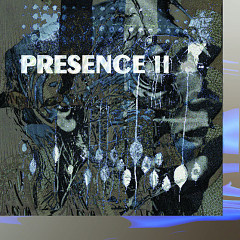
    Présence II is a 2-CD set of electroacoustic music released by Productions électro Productions, an arm of the Canadian Electroacoustic Community (CEC). The scope of the music presented here is very wide: established composers and newcomers, 60-second snapshots and large-scale works (the longest piece is 12 minutes), typical musique concrète and approaches closer to real-time performance. A third of the composers are Canadian, another third come from England, the rest from France, Belgium, Germany and South America. Some pieces date from the mid-80s (Otto Joachim’s Three Electronic Sketches) but most material is fairly recent (1997-1999).

    Présence II offers a nice overview of what is produced around the world in terms of electroacoustics, but it remains a very straight compilation: no attempt has been made at giving the record its own identity. Tracks are presented in alphabetical orders of their composers, without any regards to compatibilities, interesting contrasts, etc. It might be democratic but since there is no continuity in the program, the listener must reset his attention 36 times. Still, Présence II documents a number of valuable composers like Alastair Bannerman, Gordon Fitzell, Barbara Golden, Jean Routhier and Ben Thigpen that are cruelly under-recorded.

    … a nice overview of what is produced around the world…

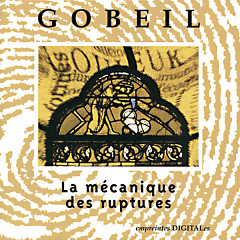
    La mécanique des ruptures dans Incursion Music Review

    «Review», Richard di Santo, Incursion Music Review, no 015, 5 octobre 2000
    jeudi 5 octobre 2000 Presse

    Comprised of eight compositions dating from 1985 through to 1993, La mécanique des ruptures (The Mechanics of Cleavage) was released in 1994. Gobeil describes his compositional technique as being similar to that of medieval stone-cutters, “who would strike rock, making it ‘ring’ in order to judge its worth for construction”. He further describes that his sound material “is subjected to restraint, to enormous pressure, until it finally sunders, shatters, transforms — brought to its breaking point.”

    Fitting words indeed; each of these compositions carries with it feelings of intensity, tension, and urgency. The sounds are reaching critical mass, and seem like they’re going to break at any moment and explode right in our faces.

    The first piece, Le vertige inconnu (The Mysterious Vertigo), takes as its theme “the essense of solitude,” but on the contrary doesn’t feel very solitary. Bursts of concentrated sound alternate with quieter moments of field recordings and incidental noises.

    Voix blanche (White Voice), featuring Suzanne Binet-Audet on the ondes Martenot, is an extremely dramatic piece with a stunning sound dynamic. Abstract tones and concrete sounds fill a three-dimensional space that shifts in rapid motions, presenting first one scene, then another, creating a work of immense drama and movement.

    The third piece features the dynamic improvisational talents of René Lussier on electric guitar. The piece, explains Gobeil, “consists of a succession of very dense and expressive scenes, a suitable foil for the guitar’s vibrant, playful gestures.” As good a description of this piece as any.

    The fourth piece, probably the most ambitious and unique among this grouping, incorporates a text and scenario by Lyette Limoges, an intriguing and complex radio-play, full of mystery and compelling imagery: “The sun was setting. I saw an angel and it took flight, while all around lions tried to hold it back but… and then it became dark.” I was really drawn into this piece, which runs just short of fifteen minutes, and yet still manages to occupy a substantial psychological space in the listener.

    Further into the disc we find the tightly arranged piece Rivage (Shore), which utilizes “untouched sounds” from an urban environment. The ondes Martenot makes another appearance in the seventh piece, and Traces closes the disc off with further bursts of intense sounds and sharp movements.

    Intense, noisy and complex, La mécanique des ruptures presents a series of very compelling and challenging works. Essential electroacoustic music that is sure to keep you from sitting still for even a moment while listening.

    Essential electroacoustic music that is sure to keep you from sitting still for even a moment while listening.
    Sondes dans Hurly Burly

    «Discos», Esteban Lago, Hurly Burly, no 15, 1 octobre 2000
    dimanche 1 octobre 2000 Presse

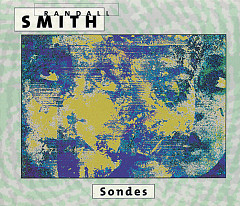
    Randall Smith trabaja desde la electrónica sobre bases que pasan de una insistencia constante, a ráfagas de sonido sin ubicar. Bandas metálicas dialogan con percusiones esporádicas o, en otras ocassiones, agrupadas. Fragmentos melódicos forman espacios ingenuos. Casi infantiles para pasar al más absoluto rigor severo y transformador.

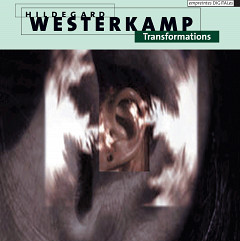
    Transformations, Hildegard Westerkamp dans Encompass

    «Review», Joyce Hildebrand, Encompass, 1 octobre 2000
    dimanche 1 octobre 2000 Presse

    Remember that afternoon on the beach just a few months ago? The flash of sunlight on water, the feel of hot sand under your feet, the tang of lemonade on your tongue. Chances are the sounds of children laughing and icecubes tinkling will come to mind last, if at all. Why does hearing so often take a back seat to vision or taste? Have we been suppressing unwanted noise for so long that we have dulled our capacity to hear? Vancouver-based composer Hildegard Westerkamp offers our ears a wake-up call, reminding us that sounds are as much a part of place as images and smells.

    Westerkamp records whatever reaches her microphone in a particular place and then transforms and combines those sounds electronically. Her “instruments” include everything from creeks and ravens to truck brakes and train whistles. “I transform sound in order to highlight its original contours and meanings,” she says in the extensive liner notes of her CD Transformations. “This allows me as a composer to explore the sound’s musical/acoustic potential in depth.”

    If you are thinking “Solitudes” music, you’re on the wrong track. The first composition on the CD, A Walk Through The City, explores the sounds of Vancouver’s Skid Row’ carhorns, jackhammers, voices. Although perhaps the most challenging of the five works on this recording, it captures the beauty and complexity even in those sounds that we often try to filter out.

    In Kits Beach Soundwalk the “intimate sounds of nature” like clicking barnacles and sucking mussels are set against the pervasive hum of the city, blurring the line between nature and non-nature. Beneath The Forest Floor offers an opportunity to experience the deep peace that the composer felt while recording the sounds of BC’s Carmanah Valley.

    Cricket Voice emerged from a Mexican desert region called, strangely enough, the Zone of Silence. The cricket’s high-pitched trills become the desert’s heartbeat when slowed down in the studio. Cacti spikes, dried up roots, and the echoes of an old water reservoir provide the instruments for background percussion.

    Westerkamp thinks of sound as a part of ecological systems and is careful not to overmanipulate it. “I feel that sounds have their own integrity and need to be treated with a great deal of care,” she says. She also recognizes that her compositions, played far from the places in which they originated, become part of another “soundscape.” Indeed, my dog spontaneously howled through Fantasie for Horns II, adding his voice to those of foghorns, train whistles, and a French horn!

    More recently, Westerkamp has been working with photographer Florence Debeugny on At the Edge of Wilderness, a sound/slide installation about ghost towns left by industry in BC. It opens as part of a larger exhibition on September 8, 2000 in Vancouver. She also travels widely, giving workshops, lectures, and concerts, and she plans to put out a double CD in the next year with works based on her experiences of India.

    … captures the beauty and complexity even in those sounds that we often try to filter out.

    Sondes dans Intro

    «Tonträger: Hörtest», Sascha Karminski, Intro, no 78, 1 octobre 2000
    dimanche 1 octobre 2000 Presse

    Smith hat seinen Arbeitsschwerpunkt von Soundtracks zu “gemischten elektroakustischen Kompositionen” verlagert; will heißen: klassische Instrumente (v. a. Streicher und Bläser, aber auch Akkordeon) meet Tapemanipulationen. In weniger illustren Momenten klingt das verdächtig wie das, was György Ligeti und Co. auch ohne Elektronik erschaffen. Im Verlauf der Kompositionen immer häufiger jedoch umspielen sich Originalsounds und Effekte, bis sie kaum noch zu unterscheiden sind und völlig neue Klangwelten erschließen, die assoziativ mit biologischen (Liquid Fragments 1) und geologischen Phänomenen und Vorgängen (Elastic Rebound, Continental Rift) verbunden werden. Wozu ein Sampler, wenn auch so Soundmalereien gelingen — der Film läuft eh im Kopf ab.

    Bruit-graffiti dans Intro

    «Tonträger: Hörtest», Sascha Karminski, Intro, no 78, 1 octobre 2000
    dimanche 1 octobre 2000 Presse

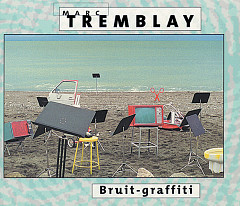
    Daß die Welt um uns herum Klang ist, wissen nicht nur Joachim-Ernst Behrend und Talvin Singh — die unesoterische, krachige Variante vertritt u.a. Tremblay, der hier mit scholarischem Ernst Autos (Vroum), Klos (Résidus (clip dadaïste) — Vorsicht, nicht als Tafelmusik geeignet!) und alte Westernfilme (Cowboy Fiction) als unerschöpfliche Klangreservoirs entdeckt. Ganze Universen erschließen sich in der Welt der Telekommunikation bei «… Ceci est un message enregistré…» (vom schnöden Klingeln übers Knacken in der Leitung hin zum Telefonsex) und des Geldes bei L’argent… toujours l’argent! — von der Börse über Werbung hin zum TV-Quiz. Richtig aus dem Rahmen fällt lediglich das kindlich-naïve Conte sous la lune, das ohne den konzeptuellen Überbau viel direkter wirkt und uns zeitweilig die Welt mit Kinderohren hören läßt — wahrhaft psychedelisch.

  • 372
  • 373
  • 374
  • 375
  • 376
  • 377
  • 378
  • 379
  • 380