Sauter au contenu principal
electrocd
  • This website is also available in English.

Blogue

2899 résultats
  • 1
  • 2
  • 3
  • 4
  • 5
  • 6
  • 7
  • 8
  • 9
  • Histoires de soldats dans The Sound Projector

    «In This Square», Ed Pinsent, The Sound Projector, 14 décembre 2025
    samedi 20 décembre 2025 Presse

    Histoires de soldats offers us two military-themed pieces from the New Zealand composer John Young. For An Angel at Mons, he’s done his research into the origins of this popular “apparition” story and worked hard to build a sympathetic portrait of John Ewings, one of the witnesses of these WWI angels, incorporating snippets of his story from a 1980 TV interview. John Young combines story-telling with suitably eerie and “magical” music and sounds, hoping to say something about the nature of allegory and make a wider statement about the human condition. A similar technique has been applied to Once He Was a Gunner, realised four years earlier, but now the theatre of operations is the second world war, and the person interviewed is John Young’s own father. I suppose there’s more authenticity, realism, and personal truth in this second work, but it’s also very prosaic; I prefer the Angelic vision with its mysticism and magic.

    … I prefer the Angelic vision with its mysticism and magic.

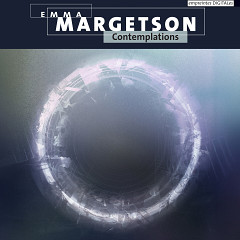
    Contemplations dans The Sound Projector

    «Our Perception of Chaos», Ed Pinsent, The Sound Projector, 10 décembre 2025
    samedi 20 décembre 2025 Presse

    Contemplations is a survey of electro-acoustic compositions by Emma Margetson from Derby (UK), dating from 2015 to 2022. Mostly she used very simple means — close-miked objects, concentrating on one subject per composition, no especially radical changes and no foregone conclusions about what the work “means”. By the time of 2019’s Sketching Froanna she attempts an ambitious eight-channel composition, responding to the lines and shapes of an artwork by Wyndham Lewis. If there’s an underlying theme to Margetson’s observations, it’s about introspection and reflection, linked to the passing of time. Some pieces might be prosaic and descriptive, but I like her understated outlook on the world.

    … I like her understated outlook on the world.

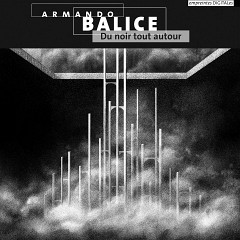
    Du noir tout autour dans Radiohoerer

    «Release Tipp», Radiohoerer, 17 novembre 2025
    lundi 17 novembre 2025 Presse

    Imposant, beeindruckend und sehr dicht prallen hier die von Armando Balice kreierten Sounds und Field Recordings aufeinander. Das ist nichts für schwache Nerven, denn gerade die großen Lautstärkeunterschiede können ganz schön erschrecken. Der Aufbau der Stücke hat eine Wirkung der Überwältigung. Gerade unter Kopfhörern wird das zu einem Erlebnis. Nur ist bei der gewählten Lautstärke Vorsicht geboten. Du noir tout autour (Rundherum nur Schwarz) ist der Titel des Albums. Es enthält erschreckend viel Dunkelheit in all seinen imaginären Gärten, aber der Gang durch eben jene Gärten hat viele schöne Momente.

    Ce n’est pas pour les âmes sensibles, car les grandes différences de volume peuvent être assez effrayantes. La structure des morceaux a un effet bouleversant. C’est une expérience particulièrement intense avec un casque.

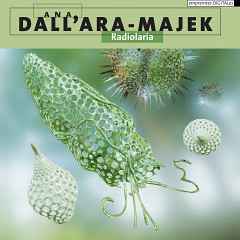
    Radiolaria dans The Sound Projector

    «Circles in the Sea», Ed Pinsent, The Sound Projector, 12 novembre 2025
    lundi 17 novembre 2025 Presse

    Radiolaria is a superb suite of Buchla synth music composed and played by Ana Dall’Ara-Majek, Parisian-born now living in Montréal. It began life as improvisations performed on the Buchla 200 — a 1970s model which probably induces frissons of excitement among vintage-synth buffs — when she was able to get her hands on its knobs and cables in Sweden. She used these recordings as “raw material” for the composition here, which has ended up as a very coherent compelling suite in eight parts. While sequestered in Sweden, she also clobbered the EMS night watchman with a cosh so she could break into a locked cabinet and start tinkering with an analogue spring reverb unit (frisson #2, see above). But no equipment fetishist she, rather the plan here is to create a plausible and sympathetic sound portrait of plankton and other microscopic forms of marine life. About time too — they’ve been neglected in experimental music for far too long, although Thomas Tilly has come close with his detailed field recordings of water-bound insects. Ana Dall’Ara-Majek has evidently made some close studies of plankton if her well-informed liner notes are any indication, and each track is also the springboard for further avenues of exploration and thought — ideas about the environment, life-cycles, industrialisation… fascinating observations about movements in the water and preparing for a mighty wave, the sound of weird clicks under the ocean, the way that diatoms are so numerous that they colour the entire ocean and can be seen from outer space… phenomenal insights, and an excellent set of music, composed and realised with consummate care and skill, and distilled into a concise package of information.

    Radiolaria is a superb suite of Buchla synth music composed and played by Ana Dall’Ara-Majek, Parisian-born now living in Montréal.

    Radiolaria dans Neural

    «Review», Neural, no 76, 1 juillet 2025
    vendredi 4 juillet 2025 Presse

    One of the most iconic modular synthesizers of the 1970s, the Buchla 200, continues to attract musicians, sound designers and experimenters from different backgrounds, almost as if time has stood still between the first analog electronic avant-garde movements and the present day. It has been well documented how Ana Dall’Ara-Majek’s synths were engineered to facilitate an unconventional approach towards creating complex and random textures. Part of the Californian synthesizer’s undeniable charm lies in its ability to bring us back to that seminal era of sounds never heard before. By not using a traditional keyboard, the tactile experience of the Buchla 200 evokes a sculptural dimension of composing, a characteristic that continues to inspire sound creation in the digital age – the creative freedom of modularity suggests new, more open and non-linear ways of composing, which for many musicians offers an advanced form of improvisation. Ana Dall’Ara-Majek’s work on Radiolaria rests comfortably in this category.

    Inspired by marine life, both at a microscopic and macroscopic level, the Italian-Canadian artist shows herself to be sensitive and meticulous in articulating fruitful mixtures between technology and the organic world, and in doing so, points towards a revival of the conceptual natural-artificial dichotomy. The tracks on Radiolaria immerse us in a soundscape constantly oscillating between different poles. The opening track, Mare Buchlae transports us to a liquid-like environment, where voices and sounds evoke the flow of currents and the presence of mysterious organisms. Improvisus B200-1 offers fragments of an uncontrolled and unstable language, suggesting almost imperceivable lifeforms. Perpetuum spirae introduces a repetitive movement, a sound spiral that refers to the infinite growth and cyclical rhythm of the natural world. ‘Parasiti fluxique’ creates a sense of tension that recalls the struggle for survival that animates the world of marine microcreatures. Canticum asphodeli moves in a more contemplative direction, almost like an ancient song for creatures of the abyss. The final track, Ostinato micromacro, returns to a circular movement, expanding into a hypnotic, layered, almost orchestral crescendo – a profound reflection on the beauty and complexity of being, reminding us how the synthetic and inhuman can possess a life of their own, one that is capable of resonating with the essence of the natural world.

    … a profound reflection on the complexity of being, reminding us that synthetic and inhuman possess a life of their own, capable of resonating with the essence of the nature.

    Magali Babin, Marcelle Deschênes, Francis Dhomont, Chantal Dumas, James O’Callaghan dans Vie des arts

    «Trajectoire de l’électroacoustique au Québec: petits big bang», Esther Bourdages, Vie des arts, no 277, 21 mars 2025
    mardi 3 juin 2025 Presse

    Depuis la libération du son au XXe siècle en Occident, marquée par l’affranchissement de la domination des recherches centrées sur la mélodie et les notes, les pratiques musicales ont pu se développer de manière protéiforme.

    L’insertion du bruit, du silence, du hasard et de l’aléatoire dans les compositions, ainsi que l’usage de microphones, de magnétophones, de synthétiseurs et d’ordinateurs ont favorisé l’émergence de nouveaux langages sonores et ouvert la voie aux modulations électroniques, à la musique électroacoustique, aux textures, à la musique algorithmique et à bien d’autres formes encore.

    Cela fait plusieurs années que le son au Québec affiche une signature particulière: il est reconnu pour sa capacité à faire s’entremêler les genres et les styles musicaux.

    Nouvellement arrivé au Québec en [1978], le compositeur français de musique électroacoustique Francis Dhomont voyait déjà le «son québécois» comme marqué d’une disposition hybride, éclectique, qu’il définissait comme le croisement de l’acoustique avec des sources électroniques et d’autres fusions postmodernes de matériaux et de genres.

    Au Québec, la polyvalence des musiciens et des compositeurs demeure une réalité dans le milieu des musiques nouvelles. Il est commun de constater que les compositeurs du Québec sont impliqués à la fois en électroacoustique, en musique de chambre ou bien en musique orchestrale, en performances in situ et encore en installation audio, pour ne nommer que ces quelques pratiques.

    Ce contexte a pris forme grâce à la création, au fil des ans, d’organismes et aussi à l’accessibilité au financement gouvernemental qui soutient les démarches exploratoires et les projets novateurs. Ces structures engendrent des réseaux et des échanges culturels à l’international.

    Les centres tels qu’Avatar, à Québec, et Oboro, à Montréal, soutiennent la discipline à travers des résidences; des festivals et des diffuseurs d’arts numériques tels que Mutek et Elektra exportent leurs productions; des étiquettes de disques comme empreintes DIGITALes contribuent à l’épanouissement de l’électroacoustique et des musiques mixtes du Québec et d’ailleurs. Ces initiatives valorisent l’éclosion d’une grande variété de pratiques musicales, allant de l’académisme à l’expérimental.

    Histoire

    Parmi les pionniers des musiques électroacoustiques, qui ont jeté un pont entre l’Europe et le Québec, il y a la compositrice québécoise Marcelle Deschênes. Elle a fait partie de la première cohorte de Québécois à suivre le cours du Groupe de recherches musicales (GRM) de l’Office de radiodiffusion-télévision française (ORTF) à l’Université de Paris VIII, de 1968 à 1971. Elle a cofondé à Québec, en 1972, le Groupe d’interprétation de musique électroacoustique de Laval (GIMEL) au Studio de musique électronique de l’Université Laval (SMEUL).

    La théoricienne et artiste audio Lorella Abenavoli étudie les pratiques basées sur la sonification, qui rendent audibles des expériences, des phénomènes ou des données qui sont inaudibles. Certains artistes se consacrent à l’amplification, d’autres captent et transmettent des réalités invisibles.

    Le compositeur James O’Callaghan, par exemple, se distingue par son travail d’amplification, qu’il applique à des guitares acoustiques, des pianos jouets et des objets du quotidien tels que des livres. Une œuvre phare de son répertoire demeure Reasons (2012) — pour livres amplifiés et électroniques. Les instruments et les objets deviennent dans ce cas des caisses de résonance.

    En 2021, Nicola Giannini créait de son côté Expansion, une pièce pour blocs de glace amplifiés. Les interprètes suivaient une partition qui les amenait à intervenir sur les blocs, devenus instruments de création acoustique, faisant ainsi émerger une multitude de timbres et de couleurs sonores.

    Dans un autre esprit, l’artiste Stephanie Castonguay rend couramment audibles les ondes électromagnétiques, cette couche invisible qui nous entoure, dans ses improvisations musicales. Les artistes sonores Preston Beebe et SABE, quant à eux, placent au centre de leur composition la rétroaction acoustique, communément appelée feedback. Il et elle contrôlent et modulent ce son singulier dans la pièce Living Systems (présentée 2019) pour le premier, et dans la performance audiovisuelle Ephemerality (2024) pour la seconde.

    La pratique créative des compositeurs au Québec advient au sein d’un terreau fertile. Ils et elles entretiennent avec leur médium une relation engagée, ce qui nécessite une écoute sensible et une volonté de pousser les limites de leur(s) objet(s) sonore(s). Les démarches, des musiques nouvelles, révèlent une malléabilité infinie et de multiples possibilités esthétiques y foisonnent.

    [Extrait (du texte original) tel que paru le 3 juin 2025 dans Le Devoir.]

    Cela fait plusieurs années que le son au Québec affiche une signature particulière…
  • 1
  • 2
  • 3
  • 4
  • 5
  • 6
  • 7
  • 8
  • 9