electrocd

Blog

74 results
  • 5
  • 6
  • 7
  • 8
  • 9
  • 10
  • 11
  • 12
  • 13
  • Lieux imaginaires in Chain DLK

    “Review”, Vito Camarretta, Chain DLK, March 26, 2013
    Tuesday, March 26, 2013 Press

    The filter Steven Naylor interjects to a series of field recordings on this release is mainly emotional memory. He makes such a cognitive and creative operation in a way which could be associated to the sight of a director of a movie or an essayist on a plot, so that there’s always an emotional transmission which interferes with the somehow cinematic palette of field recordings: the mechanical and electromechanical creaking and squeaking of gearwheels which enliven automatons of Devon-based designer-maker Tony Mann subtends an astounded and sometimes frightened wonder in front of the complexity of an “artifical life,” the emotional wires which permeates the fragment I wish taken from plaintive song Home by Rita Rankin seem to be stretched by longings, fears and imperilments related to wishes, a certain daunted and confused upheavel emerges from Irrashaimase, an immersive track, named after the typical form of greeting that some Japanese shop keepers shout to invite new customers inside their shops, which depicts urban Japan with its inner contrasts between robotic and elegant, chaotic and musical, a dumbfounded contemplation arises from the wonderful sonic painting of Chiang Mai night market in northern Thailand where Steven kept the noises of motorcycles and other occasinal intrusions in his ethnomusicological documentary and a certain estrangement comes out on kune kune, a track based on the oinks by these rare hairy pigs living in New Zealand and recorded nearby Bath. The final long-lasting The Thermal Properties of Concrete, based on the fictitious narrator-character of a woman, wondrously performed by Jody Stevens, and a couple of senior staff members of the Planning Department of the City of Halifax. emphasizes the cinematic hooks of Naylor’s skills.

    … there’s always an emotional transmission which interferes with the somehow cinematic palette of field recordings…

    À l’ombre des ondes in Chain DLK

    “Review”, Vito Camarretta, Chain DLK, March 25, 2013
    Monday, March 25, 2013 Press

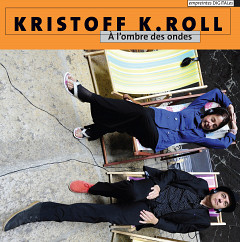
    Headphones become an entrance ticket for a sort of representation within representation by means of this bizarre release by Kristoff K.Roll (J-Kristoff Camps and Carole Rieussec), who focused on so-called dream narrative, not properly on dreams themselves. Their weaving of really immersive field recordings and inoculated frequencies lies on the perceptive threshold between outer happenings (hoo-ha or voices which sounds like coming from wide halls of consciousness before blackout and random dream assemblage, interferences of television broadcasting, traffic noises, chirping birds, barking dogs and so on are so perfectly rendered that listeners are going to experience a really immersive listening) and inner transfiguration which characterizes the half-sleep and dream states during occasional naps from the viewpoint of a napper, so that auditory stimulations get deliberately warped while each napper reports its own dream as a tagline and preface (in French) to the following sonic probing over the three long lasting tracks. Dreams or it’s better to say the deforming lens of dreams look like the real source of sounds, which awakens speechless archetypes, which inhabit inner depths of napper’s mind and resurface from the creases of senses while dozing under the perogla of frequencies. The final result is really interesting and the duo is so aware of it, that Carole and J-Kristoff are planning to buld a proper library of dream narrative by inviting listeners to record their own dream reports and some audio files to request a personal recording session to them. Just check À l’ombre des ondes and submit your file into this bizarre library in case you got intrigued by their odd sound concept.

    The final result is really interesting…

    À l’ombre des ondes in Le son du grisli

    “Critique”, Héctor Cabrero, Le son du grisli, March 25, 2013
    Monday, March 25, 2013 Press

    À l’ombre des ondes, de Kristoff K.Roll (J-Kristoff Camps et Carole Rieussec), est une invitation à la rêverie. Des hommes et des femmes sont invités sur une méridienne (pour ne pas dire un divan, ce qui ferait de nous, auditeurs, des psys incompétents) à nous parler de leurs rêves.

    Il est difficile de raconter des rêves, pour cela il faut choisir les bons mots. Il faut aussi se concentrer pour ne pas être dérangé par le bruit d’un avion qui passe ou par celui de pas sur le gravier. Mais certains n’hésitent pas. Un homme dit qu’il a rencontré Brigitte Bardot pendant la guerre, que celle-ci vendait ses meubles. Une femme raconte son exploration de villes qui n’existent pas. Un autre homme avoue rêver érotique. Une autre femme se souvient avoir perdu ses amis et s’être retrouvée seule dans une ville inconnue… Il y aura d’autres histoires, mon intérêt variera – je m’aperçois que le son de la voix et les intonations (trop «jouées» parfois) peuvent avoir un effet néfaste sur mon attention.

    Les ombres sont courtes comme les ondes, même si l’on peut y trouver une certaine fraîcheur. Mais lorsqu’on décroche, c’est l’imagination (je veux dire, le beau bruitage) de Kristoff K.Roll qui nous rattrape. Le bois qui craque, l’eau qui endort, me convainquent de me laisser aller. Une foule parle fort, le soleil est aveuglant. «Je suis photographe d’animaux sauvages ayant pris place dans des voitures». Est-ce le rêve d’un autre étranger ou bien le mien qui commence?

    … c’est l’imagination (je veux dire, le beau bruitage) de Kristoff K.Roll qui nous rattrape.

    À l’ombre des ondes in Musik an sich

    “Reviews”, Wolfgang Kabsch, Musik an sich, March 25, 2013
    Monday, March 25, 2013 Press

    Dieses Duo aus Paris existiert seit 1990 und beschäftigt sich mit elektronischer Klangerzeugung und Klangkunst. Zumindest auf Ihrem neuen Werk À l’ombre des ondes kommt eine Art Spoken Word Komponente dazu. Bevor ich den fast unmöglichen Versuch starte, dieses Werk zu beschreiben eines vorweg: Der Hinweis auf dem Album, es sei für den Kopfhörer gemacht, ist sehr wichtig. Dieses Tondokument haut einem bei dem Genuss unter Kopfhörer rein klanglich weg. Die Sounds, Geräusche und auch musikalischen Fragmente umschwirren einen wie ich es selbst bei Surroundaufnahmen noch nicht gehört habe.

    Die Basis der 2 fast halbstündigen sowie dem 7 Minuten Stück sind jeweils surrende und brummende Elektronik. Über diese legt das duo hauptsächlich zwei Komponenten: 1.) eine dezent zusammengesampelte Geräuschkulisse aus Stimmen, Wasserrauschen, Stadtlärm und sonstigem und 2.) sehr angenehm und ruhig gesprochene Textpassagen. Da ich dem französischem leider nicht mächtig bin, kann ich über den Inhalt leider nichts sagen, die Stimmen kommen jedoch klar und deutlich und angenehm gesprochen daher. Zu diesen Hauptkomponenten mischt das Duo dann und wann auch eine seltsame Form der Rhythmik und lässt aus den Geräuschen, Stimmen und Sounds sogar so etwas wie Melodien erwachsen. Keine herkömmlichen, doch der Hörer hat im Gegensatz zu anderen Werken dieses Genres nicht den Eindruck, ständigen Geräuschen ausgesetzt zu sein, sondern einer spannenden Entwicklung folgen zu können. Und zumindest beim ersten Hören zuckt man häufiger Zusammen, wenn dann plötzlich von ganz weit hinten tief dunkle Perkussive Schläge kommen.

    Ich möchte diese Scheibe als klangliche Erfahrung anpreisen. Ein perfekteres Kopfkino aus der Welt der Geräusche habe ich bisher noch nicht zu Ohren bekommen. Wie immer bei CD empreintes DIGITALes wird das Release durch das schöne Pappcover + die mit vielen Informationen bestückten Inlays veredelt.

    Dieses Tondokument haut einem bei dem Genuss unter Kopfhörer rein klanglich weg.

    Formes audibles in Liability Webzine

    “Critique”, Fabien, Liability Webzine, March 24, 2013
    Sunday, March 24, 2013 Press

    Manuella Blackburn a un cv long comme le bras comme, bien souvent, tous ceux qui évoluent dans la musique électroacoustique et/ou acousmatique. Bien qu’elle ait réalisé de nombreux travaux à travers le monde, Formes audibles est son tout premier album qui paraît sur l’un des labels les plus essentiel dédié à la musique électroacoustique. Composé de six pièces enregistrées entre 2007 et 2011, ce disque nous dévoile une créatrice hors pair. Il est toujours difficile de dégager quelqu’un par rapports aux autres créateurs tant ces derniers sont tous des spécialistes du son, de son organisation, de sa pureté, de sa perfection… Cela se joue sur pas grand chose, sur des détails mais aussi sur un esprit artistiques que les autres n’auraient pas forcément. Certains restent trop techniques ou trop ancré dans les pré-requis du genre pour prétendre accéder à un statut différent de rat de bibliothèque sonore. Manuella Blackburn tente ici, avec une certaine réussite, à s’extraire d’un académisme bon teint dont on a fait largement le tour depuis bien longtemps. Certes, Manuella Blackburn ne s’en échappe pas totalement mais elle propose des œuvres kaléidoscopiques qui n’hésitent pas à mélanger de superbes traitements électroniques à des instruments plus traditionnels. Formes audibles n’est évidemment pas un album facile d’accès et il est largement adepte des formes abstraites mais il y a une réelle volonté d’avancer et de fabriquer des univers foisonnants qui ouvre notre imagination sur d’autres espaces. De fait, Formes audibles ne saurait être cloisonnée mais ce n’est pas non plus un album irraisonné. Tout y est assurément réfléchit, minutieusement préparé, enrichit à merveilles par un traitement d’une rare qualité. Œuvre fantasmagorique qui rend l’abstraction musicale attractive tout en se rapprochant du glitch, Formes audibles touche la perfection et met en lumière une Manuella Blackburn qui risque bien de faire reparler d’elle si elle continue dans cette voie.

    … des œuvres kaléidoscopiques qui n’hésitent pas à mélanger de superbes traitements électroniques à des instruments plus traditionnels.

    Formes audibles in Chain DLK

    “Review”, Vito Camarretta, Chain DLK, March 12, 2013
    Tuesday, March 12, 2013 Press

    A breath of fresh air over electroacoustic and acousmatic scene wafts from renowned Canadian label empreintes DIGITALes, which recently released the very first album by young English sound-artist Manuella Blackburn, whose remarkable curriculum isn’t frankly the one you could expect from a newcomer: she completed her musical studies at the University of Manchester with a Master’s Degree in Electroacoustic Composition with composer and director of Manchester Theatre in Sound (MANTIS) David Berezan and a Philosophiae Doctor with Ricardo Climent, her music has been performed all over the world (Brazil, Canada, Italy, Cuba, France, Germany, USA, Canada, Sweden, Portugal, Costa Rica, Japan, Mexico, Chile, Argentina and so on) at concerts, conferences, gallery exhibitions and festivals and won many international awards and prizes such as Grand Prize in the Digital Art Awards in Fujisawa, Japan, in 2007, two first prizes at Concurso Internacional de Composição Electroacústica Música Viva in Lisbon (Portugal) and many more.

    The feature which makes Manuella’s sonic emissions so interesting is the bizarre blitzes of tonal music in the midst of electroacoustic lumps, particularly in the first two tracks of this album, Vista Points, built on different interactions between electric guitar sounds and processed material, and Switched on, which sounds focused on chimes, laminar flows, switches and mechanical devices, where bubbles of tonal music seem to emerge from the depths of deep ponds. Another distinguishing feature of her sonic organisational set-up is the alternation of moments of intense activity and breaks or temporary inactivity, so that it seems that dynamics follows an inner respiratory drive as if each sonic entity is somewhat alive. In addition to the above-mentioned recordings, this feature is clear in the following ones: the engaging automaton of “Japanese” sounds in Karita oto, the amazing flatware and kitchenware powered Kitchen Alchemy, the following Cajón!, which combines the timbre of the Cajón, a Peruvian percussion instrument, “palmas” claps (a clapping technique of flamenco) and other percussive material and the spellbinding gargles of microsounds and onsets of Spectral Spaces.
    The feature which makes Manuella’s sonic emissions so interesting is the bizarre blitzes of tonal music in the midst of electroacoustic lumps…
  • 5
  • 6
  • 7
  • 8
  • 9
  • 10
  • 11
  • 12
  • 13