Sauter au contenu principal
electrocd

Blogue

100 résultats
  • 9
  • 10
  • 11
  • 12
  • 13
  • 14
  • 15
  • 16
  • 17
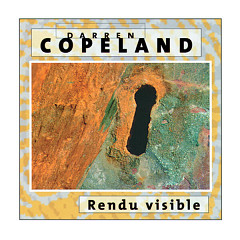
  • Rendu visible dans Sztuka Fabryka

    «Review», Geert De Decker, Sztuka Fabryka, 1 juillet 2000
    samedi 1 juillet 2000 Presse

    This CD is just wonderful, that is the only way how we could start this review.

    Darren Copeland’s compositions are made entirely from environmental sounds. Which results in atmospheric music. Five compositions are there on the CD, sometimes you wonder to be in a somehow dark atmosphere surrounded with the sound of extincted annimals. A soon later you are in the middle of a beautifull nature with full of tranquillity. Sounds from nature comes and go combined with unknown sounds that all brings an other dimension in the atmospheric compositions.

    This CD is just wonderfull, that is the only way how we can end this review.

    This CD is just wonderful…

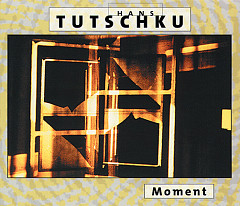
    Moment dans Incursion Music Review

    «Review», Richard di Santo, Incursion Music Review, no 005, 28 juin 2000
    mercredi 28 juin 2000 Presse

    Born in Weimar in 1966, Hans Tutschku has been studying, composing and performing electroacoustic music for a number of years with various groups and institutions. He has an impressive CV of compositions and multimedia productions to his credit. Moment presents 5 compositions dating from 1991 to 1998. Each of these pieces can be seen as an exercise in integrating vocal and instrumental sounds into electroacoustic compositions, done — in Tutschku’s own words — “with the esthetic concern to maintain the cultural context of the source”. The first, extrémités lointaines, uses recordings he made during a concert-tour of Asia, of city sounds, the music of churches and temples and children’s songs. Presented with “these unexpectedly rich sound worlds… “the intensity of the impressions experienced during the trip has resulted in a dense compositional structure”. This density has been achieved with stunning results, the sound manipulations are incredibly complex and delicate, and these qualities can be found throughout these recordings. The second work, … erinnerung… is based on a poem written and performed by Spanish author Antonio Bueno Tubia. The recording of the reading “forms the starting point for acousmatic transformations.” What results is a “musical translation” of the poem, created by first cutting up the sounds of the poem into minute pieces and played back “polyphonically to create dense sound textures”. The fourth piece, Sieben Stufen, is one of the most notable compositions here. It is based on the poem Verfall by Georg Trakl (1887-1914), and uses two readings of the poem (spoken by four different voices) as its sound sources. The four key words of the poem, Verfall/ruine/decline, Abend/au soir/evening, Glocken/cloches/bells and Vögel/oiseaux/birds, are sung in fourteen pitches (seven in German, seven in French). The results of Tutschku’s acousmatic treatments are truly remarkable, haunting and mysterious. The compositions on this disc each have their own intense structural constraints, almost all with numeric fixations. Les invisibles is based on the number five (5 parts, each divided into 5 subparts, the harmonic material based on 5 chords of 5 notes each), and Sieben Stufen is based on the number 7 (seven sections, compression of the piece into 49 seconds, two sets of vocals in seven pitches each). These works are structural marvels. Also, the sound-sculpturing and production work here are of superb; the sounds breathe a life and dimension of their own, and seem to crawl out of the speakers and into the space around you. Highly recommended.

    … the sound-sculpturing and production work here are of superb; the sounds breathe a life and dimension of their own, and seem to crawl out of the speakers and into the space around you. Highly recommended.
    Bruit-graffiti dans CFLX 95.5 FM

    «Délire actuel: Critique», François Couture, CFLX 95.5 FM, 1 mai 2000
    lundi 1 mai 2000 Presse

    Marc Tremblay enseigne à Matane (Québec). Il a d’abord fait des études en percussion au Conservatoire de Chicoutimi, puis a étudié en musique électroacoustique au Conservatoire de Montréal. Il a collaboré avec Michel Ratté et Martin Tétreault et travaille présentement à un projet de film western avec l’écrivain Gilles Arteau.

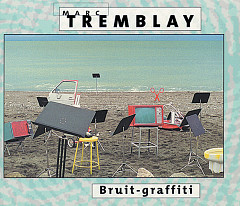
    Bruit-graffiti constitue son premier disque. L’approche de Marc Tremblay est ancrée dans le populaire. Bruit-graffiti propose six œuvres qui font toutes appel aux sons quotidiens. Pas de musique concrète ici: l’auditeur reconnaît les sources, en fait cette identification fait partie intégrante du plaisir d’écoute. Tremblay est à la fois évocateur et citationniste. La première pièce, Vroum, consacrée à l’automobile, débute par le «Beep beep» de Drive My Car des The Beatles. Le ton est donné. Cette pièce explore les possibilités sonores de l’automobile — joli concert de klaxons. Dans Conte sous la lune, Tremblay évoque l’univers de l’enfance — Grand-Papa Bi fait une apparition surprise. Cowboy Fiction est la pièce la plus intéressante du disque. Elle est constuire à partir de deux films western (El Dorado et The Searchers), en plus d’échantillons de Hank Williams. Le climat est superbement rendu. «… Ceci est un message enregistré…» explore le monde du téléphone, en laissant une large place aux conversations érotiques — une belle allégorie sur la difficulté de communiquer. L’argent… toujours l’argent! nous rappelle ce qui mène le monde. Toutes ces pièces ont entre 10 et 15 minutes. Résidus (clip dadaïste) en fait cinq [et] constitue la plus horrible pièce électroacoustique que j’aie entendu. Clip dadaïste en hommage à la Fontaine de Marcel Duchamp, Résidus (clip dadaïste) utilise des bruits entendus dans les toilettes. Pièce très graphique, qui ne laisse aucune place à l’imagination, elle tire un sourire au cours des deux premières minutes qui se transforme en moue de dégoût par la suite.

    Bruit-graffiti n’appartient pas au même monde que l’art électroacoustique si poétique de Francis Dhomont. Plus populiste, mais en même temps plus accessible, voire rigolo, Bruit-graffiti s’écoute facilement, sans effort et réserve plusieurs surprises à l’auditeur. J’ai beaucoup aimé.

    Très fortement recommandé ★★★★

    Plus populiste, mais en même temps plus accessible, voire rigolo… s’écoute facilement, sans effort et réserve plusieurs surprises …
    ★★★★

    Île bizarre dans Nightwaves

    «Review», Gary Flanagan, Nightwaves, no 6, 1 mai 2000
    lundi 1 mai 2000 Presse

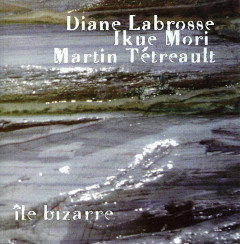
    Promotional material for this album described it as “cinema for the ear”, and that is a pretty accurate description. This is “sound as art” in the truest sense of the term. Grinding, whirs, buzzes, snaps and bangs are all brought together to create a suggestive sonic soundscape. Diane Labrosse (samples), Ikue Mori (electronic percussion) and Martin Tétreault (turntables) have created a work which achieves an almost organic quality from the most inorganic resources. if you are looking for something that is daring and goes nowhere near the mainstream, then this is for you. Most of the moods captured on this disc are stark and hollow, giving the listener a true taste of coldmetal machinemusic. One could almost subtitle this “Symposium for Junkyards”. If you enjoy the true industrial approach (ie Einsturzende Neubauten), then you will undoubtedly love the challenge of this work. One suggestion: Île Bizarre must be heard on the best possible sound system that you can get access to. Sound enthusiasts will love turning track two (Ad Ventum Capere Grandes Machinae) up as loudly as their stereo systems will permit!

    This is “sound as art” in the truest sense of the term.

    The Enormouslessness of Cloud Machines dans Splendid E-Zine

    «Review», Noah Wane, Splendid E-Zine, 10 avril 2000
    lundi 10 avril 2000 Presse

    The Enormouslessness of Cloud Machines collects seven multi-channel works by composer and sound artist Steve Heimbecker. Some of them, like The Forum for the Alienation of Art, are for use in sound installations. In this case, the piece is a three-minute audio tape that combines bird songs with a sort of spoken manifesto. It is intended to be played continually for the duration of the exhibition. Another work, Spin Cycle, derives rhythmical sounds from the manipulation of a 17-second quadraphonic sound sample of a spinning roulette wheel. A kind of subdued counterpoint is produced here — limited in color, but strikingly hypnotic. Tic Talk #1 is a live quadraphonic work that involves open microphones, delay lines and 4 kitchen timers. The piece lasts as long as the kitchen timers are running. It is no less hypnotic than Spin Cycle, although the timers add a sense of urgency that disembodied sound objects do not. Clearly Heimbecker is an conceptualist! His works are not songs, sonatas or symphonies. Nor, in a way, are they really music. They are more like collages in the spirit of a Kurt Schwitters. The disc’s title is particularly apt because Heimbecker’s pieces have such a profound sense of timelessness. They seem quite capable of going on forever. Heimbecker is a consummate artist capable of simple, unique and beautiful things, and this two disc set is a fine homage to beautiful art.

    Heimbecker is a consummate artist capable of simple, unique and beautiful things…

    Corazón Road dans CFLX 95.5 FM

    «Délire actuel: Critique», François Couture, CFLX 95.5 FM, 4 avril 2000
    mardi 4 avril 2000 Presse

    L’étiquette montréalaise empreintes DIGITALes vient de rééditer le superbe disque Corazón Road des Kristoff K.Roll, un duo [français] d’électroacousticiens composé de Carole Rieussec et de Jean-Christophe Camps. Ce disque était paru en 1993 sur l’étiquette SONARt.

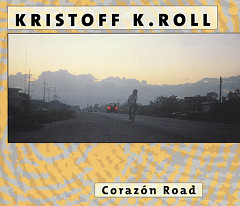
    Kristoff K.Roll nous invite à un voyage en Amérique centrale, dont Corazón Road constitue la narration. À travers les bruits du voyage, les bribes de conversations (en français, en anglais, en espagnol), la sympathie des gens rencontrés, l’allégresse de la découverte mais aussi la solitude, le déracinement et surtout la découverte de l’être humain, ce disque nous interpelle, en plus de nous porter pendant 75 minutes dans un périple ou l’électroacoustique n’est pas cet art austère que certains veulent bien y voir, mais la transcription artistique, émotive, humaine d’une expérience très difficile à traduire (j’en sais quelque chose: l’un de mes champs de recherche en littérature (mon gagne-pain) est le récit de voyage). L’art électroacoustique des Kristoff K.Roll est à rapprocher de l’esthétique de Francis Dhomont, en particulier de Forêt profonde (aussi sur empreintes DIGITALes [IMED 9634]).

    Très fortement recommandé: ★★★★

    … ce disque nous interpelle, en plus de nous porter…
    ★★★★
  • 9
  • 10
  • 11
  • 12
  • 13
  • 14
  • 15
  • 16
  • 17