Sauter au contenu principal
electrocd

Blogue

268 résultats
  • 22
  • 23
  • 24
  • 25
  • 26
  • 27
  • 28
  • 29
  • 30
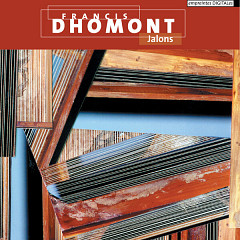
  • Jalons dans Coda Magazine

    «Critique», PR, Coda Magazine, 10 juillet 2003
    jeudi 10 juillet 2003 Presse

    En guise de présentation, l’on dira de Francis Dhomont (dont Richard D James, alias Aphex Twin, est fan) qu’il a découvert les possibilités de la musique concrète peu de temps après Pierre Schaeffer, abandonnant dès lors l’écriture instrumentale classique pour se consacrer exclusivement à la composition électroacoustique. Jalons n’a pas été conçu comme une rétrospective, bien que les huit œuvres qui s’y trouvent rassemblées aient été réalisées sur quinze ans, entre 1985 et 2001. Malgré l’absence de thématique commune (le seul fil conducteur étant la rareté de ce qui est compilé), l’ensemble est cohérent, même si les ambiances échafaudées sont plus ou moins oniriques. Saisissante, une pièce complétement électronique fut pensée comme une “forêt profonde”, récurrence qui hante l’œuvre de Dhomont et symbolise l’inconscient. Un autre morceau, pour guitare, démultiplie les cordes grâce aux manipulations électroacoustiques, tandis que tout le reste se présente comme une petite musique du souvenir jamais naturaliste, aussi explicites que soient les réminiscences évoquées -la nuit qui tombe sur un village, la rumeur qui monte… Poétiquement intégrés, les éléments concrets agissent comme des ponctuations du flux sonore qui captivent de bout en bout.

    Poétiquement intégrés, les éléments concrets agissent comme des ponctuations du flux sonore qui captivent de bout en bout.

    We Remain Faded dans Earpollution

    «Review», Mark Teppo, Earpollution, 9 juillet 2003
    mercredi 9 juillet 2003 Presse

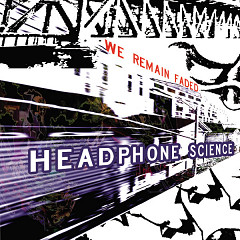
    After a number of successful web releases with No Type, Subverseco, and Observatory, Dustin Craig has released his first CD under the name of Headphone Science. Cleaving closely to the two pieces of his name, Craig delivers six tracks of vocal cut-up flavored IDM that will fill your headphones nicely.

    We Remain Faded is propelled along by a solid kick drum beat. Colored by thin shards of digital noise, the track washes over you with restful melodies that harkens back to Amber-era Autechre. If this is Craig’s nod to what has gone before, it is a very solid nod and well worth the price of admission for this eight-minute slice of blissful chilled ambience. Air Bubble Material is also chillout room material, colored with a little sharper tempo and the inclusion of droning cellos and sprightly plucked violins to the click and skitter of the digital beats.

    Games finds Craig leaping forward to the more current phenomena of throwing cut-up hip-hop vocals into the mix. Like Amon Tobin and Prefuse 73, Craig slices and dices the vocal track over his beats and melodies, dropping his ADD-addled scat singer onto an otherwise laidback IDM track. Cut-up vocals populate the most of the remaining tracks on We Remain Faded, adding a certain amount of grit to an otherwise pristine electro-beat environment. Beats squelch and skitter, melodies caper and slink, and hip-hop voices are Ginsu’ed with gleeful abandon. The technique adds a human element (albeit a scattered and fragmented one) to an otherwise digital landscape. The closer Life Struggles Constant fuses the Autechre ambience of the beginning with the precise beats and echo-driven and cut-up vocals of the middle tracks into a thoroughly successful summation of what Headphone Science has to offer.

    But just prior this closing statement, we have To Dine in Distance which, like We Remain Faded, pulls out all the stops. While the rest of the tracks on the record are solid players in the IDM field, these two tracks really make the record shine. To Dine in Distance is like the lost track from DJ Krush and Toshninori Kondo’s sublime Ki — Oku, filled with sharp beats and a lonely trumpet melody. Craig applies the same backmask and cut-up methodology to the trumpet line that he uses on the hip-hop vocals in the previous tracks. Tack on a lazy Spanish guitar player and a stolen conversation between distant lovers and we’ve got a solid winner on our hands.

    Apparently Craig has a full-length release planned for later this year on Vienna-based Skylab Operations. You know I’ll be Googling up their site later tonight and bookmarking their shopping cart for the record’s eventual release. Craig’s work as Headphone Science is very good and We Remain Faded shows a deft hand that is worth adding to your collection.

    … we’ve got a solid winner on our hands.

    Gast, Quality Hotel dans Vital

    «Review», Frans de Waard, Vital, no 379, 9 juillet 2003
    mercredi 9 juillet 2003 Presse

    For many Mutek is Sonar’s little sister in North America. Similar music, but because of the smaller size, maybe a more friendly approach. In 2001 Goem played there, and they took the chance to work on their Abri CD in their hotel room. Other artists from the festival shared rooms next to Goem, and dropped by to see what they were doing. After some explaining, some of the artists used the Goem set up to do their Goem (re-?) mixes. A CD was released later on, Gast on the Mutek side label. This idea of using hotel rooms for artists in transit was further explored in 2002, when Radboud Mens, Stephan Mathieu, Janek Schaefer and Timeblind decided to do some music together which is now released as Quality Hotel (just like Abri a name of a hotel in Montréal). It’s a bit different then the Goem CD, in that respect that Gast still sounds like Goem, but in the hands of others. Quality Hotel is the result of editing the finest moments from probably several hours of improvising music together. It’s hard to tell who did the final selection, but my guess it’s Stephan Mathieu having a big hand in this. I don’t hear Radboud Mens crazy minimal techno, Timeblind’s hip hop inspired rhythms and from Janek we hear his turntable, but it’s very much incorporated in the total. Leaves the warm crackles of Mr. Mathieu, still one of the more refined musicians when it comes to warm glitches, and it seems to me that he has a firm hand in editing this album. It’s subdued ambient like music, with occassional crackles and hiss, maybe even an odd bang here and there (although rhythm is altogether not a theme here). Held back and refined, warm and glitchy. There is a lot of improvisation going on between people with laptops, but it not always reaches great height. Here’s one that matters.

    No Type dans Splendid E-Zine

    «Review», Walt Miller, Splendid E-Zine, 8 juillet 2003
    mardi 8 juillet 2003 Presse

    No Type is a Canadian label with a name that serves as its mantra. With a roster that ranges from improvisational jazz to noise to austere techno, their signings are not based on a particular sound or genre; the requisite seems to be quality, and it’s an A&R policy I sometimes wish all labels would follow, as financially suicidal as that may be. But No Type doesn’t worry about money, apparently. Formed in 1998, they’ve been giving away their music in strictly MP3 form for the last five years. Only recently have they decided to put their music out in the more traditional forms (CD, vinyl), which they do through a joint venture with www.electrocd.com.

    If no one gets paid, how does No Type attract such great artists? Any one of the eleven on this label sampler could — and sometimes does — have a deal on a less obscure label. The choppy hip hop of Headphone Science bridges Autechre and Prefuse 73, a brilliant mash of melodic IDM effusion and urban milieu that would be at home on Chocolate Industries. Both Balai Mécanique and PO, two artists featured in the recent and heralded Montréal Freebox set, turn in chunks of free jazz rhapsody that Thirsty Ear would be advised to get their hands on. Claudia Bonarelli and Tomas Jirku, who have had releases on Mille Plateaux and Force Inc., respectively, are masters of minimal laptop techno, individually infusing gentle glitch into absorbing four-on-the-floor chillout. Vancouver’s Coin Gutter lays down five minutes of ambient penetration on Timewise, its otherworldly isolationism taking sharp swings at the aorta with dark droning turns and eerie female spoken word. And then there is A_dontigny & Diane Labrosse, a collaboration of two sound-sculpture heavyweights. Their track, t.s.f., lifted from their recent one-off Télépathie, is an amorphous treat of liquid sound and musique concrète, with each artist playing off of the other in expert, real time manipulation. And so on.

    Judging from the music featured here, the No Type roster is the equivalent of titanium: strong and uncompromising. I’d venture to guess that just about any No Type would be worth your while, but it’s a little too early to etch that in stone. In the meantime, I think I’ll put a little trust in the keen senses of these Canadians and see where it takes me. Feel free to follow.

    … the No Type roster is the equivalent of titanium: strong and uncompromising.

    Télépathie dans Blow Up

    «Recensione», Nicola Catalano, Blow Up, no 62-63, 1 juillet 2003
    mardi 1 juillet 2003 Presse

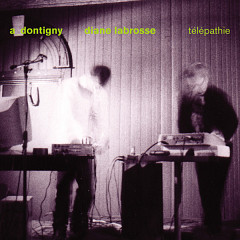
    Registrato dal vivo sulle assi dell’attivissimo club Casa del Popolo, il disco è un incontro impro-telepatico tra il computer di A_dontigny (Napalm Jazz e morceaux_de_machines) e il campionatore di Diane Labrosse (un passato in gruppi art-rock al femminile nonchè frquenti collaborazioni con Ikue Mori, Zeena Parkins, Martin Tétreault etc.), scuro e pastoso sound design elettro-acustico sotterrato da brute valanghe di interferenze e disturbi.

    All Your Dreams Are Meaningless dans Blow Up

    «Recensione», Nicola Catalano, Blow Up, no 62-63, 1 juillet 2003
    mardi 1 juillet 2003 Presse

    Il duo Coin Gutter dopo una serie di CDR autoprodotti approda alla No Type con questo cd, edito nella abstract series dell’etichetta guidata da David Turgeon ed Érick d’Orion. Un originale compendio di mezzo secolo e passa di pratiche sperimentali, dalla musica concreta alla nuova elettronica del glitch, passando per industrial, ambient, minimalismo e noise (paradigmatica in tal senso la lunga e inquietante composizione d’apertura), sublimato in una magnifica Lullaby a base di voci operistiche, più o meno manipolate, e cd-skipping.
  • 22
  • 23
  • 24
  • 25
  • 26
  • 27
  • 28
  • 29
  • 30