electrocd

More from the blog

22 results
  • 1
  • 2
  • 3
  • 4
  • Isostasie, Rhizomes, Évidence matérielle, Traces, Jeu d’ombres, Sources / scènes, Tao, La limite du bruit, Jonty Harrison, Åke Parmerud, Denis Smalley, Annette Vande Gorne, empreintes DIGITALes in electrocd.com

    “An Itinerary Through Northern Europe”, François Couture, electrocd.com, February 9, 2004
    Monday, February 9, 2004 Press

    This is a casual listening path, an invitation to travel — not a guided tour per se, more of an itinerary, akin to Romantic-era travel literature. So this will be a listening itinerary, an invitation to discover a highly subjective selection of electroacoustic composers from a specific corner of the world. Our destination: Northern Europe.

    France reigns over European electroacoustic music like a despotic queen. The persisting influence of Pierre Schaeffer’s work — even more than 50 years after the invention of what he has called “musique concrète” — and the gravitational pull of the Ina-GRM tend to hide from the rest of the world the work being accomplished elsewhere in Europe.

    So let’s start our journey in one of France’s neighbors, Belgium. The country owes much of its electroacoustic activity to Annette Vande Gorne, the indefatigable animator of the Musiques & Recherches center. Her music displays a strong sense of serenity, something rare in the field of tape music. Tao, a cycle about the five base elements (air, earth, metal, fire and water), remains a classic. In it she explores every possible transformation of the sounds associated to these elements with an uncommon level of artistry and poetry. A student of Vande Gorne, Stephan Dunkelman has picked up on her grace, a grace he transmutes into movement. Often the result of a collaboration with choreographers, his works are driven by an inner force that substitutes the sensuality of movement to Vande Gorne’s philosophical — almost mystical — depth. His pieces Rituellipses and Thru, Above and Between, released on the album Rhizomes, deserve your attention.

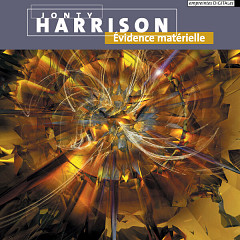
    A jump across the Northern Sea and we set foot on English ground. Birmingham has become an important creative node in electroacoustic music, thanks to the work of composer Jonty Harrsison and his Birmingham ElectroAcoustic Sound Theatre (better known as BEAST), a laboratory for experimentation and sound diffusion that has helped many talented composers in developing their art. Harrison’s music is an essential listen. His piece Klang (released on Évidence matérielle) ranks among the best-known electroacoustic works of the last 25 years. His precise sound constructions and his distinctive way of compressing sound matter into streams of energy put him up there with Pierre Henry, Francis Dhomont and Bernard Bernard Parmegiani. One can follow the traces of his techniques into the works of Adrian Moore, one of his students, especially in the latter’s fondness for putting simple sound sources (marker on a white board, tin foil) through complex transformations. Sieve, from the album Traces, uses a catchy playfulness to make this transformative process transparent.

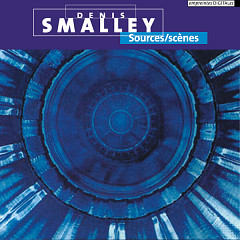
    Denis Smalley was born and raised in New Zealand, but he has been living in the UK since the mid-‘70s. His contributions to the acousmatic corpus and to the development of sound diffusion make him not only the contemporary but in a sense the acolyte of Harrison. Furthermore, the two composers share a similar interest in form and in the choreographed displacement of abstract sound objects through space and time. Wind Chimes (on Impacts intérieurs) and Base Metals (on Sources/Scènes) are good illustrations of the slightly cold yet fascinating beauty of his music. John Young, one of his students — and another New-Zealander who studied and now teaches in England), follows a similar approach, although he replaces Smalley’s elemental sound sources with more emotionally charged images. The works featured on his CD La limite du bruit offer to the listener several occasions to dive into his or her own memories, the sound of a squeaky swing or a creaky door turning into avatars of Proust’s madeleine. Time, Motion and Memory is a choice cut.

    Scandinavian electroacoustic music is still too largely ignored on our side of the Atlantic, but empreintes DIGITALes’ catalog allows us to make a short stop to round up our peregrinations. Natasha Barrett has studied with Harrison and Smalley and has been involved in BEAST, but since 1998 she has elected Norway as her base camp. There, she has stepped away from the style of her teachers and has sought inspiration in the Nordic cold. Her Three Fictions, released on Isostasie, deserve many listens. And let me bring this listening path to an end with one of the key composers in electroacoustic music today, the Swedish Åke Parmerud, whose Renaissance (on Jeu d’ombres) pays tribute to the analog synthesizer without resorting to nostalgic tricks.

    Évidence matérielle, Traces, Sources / scènes in Computer Music Journal

    “Review”, John Dack, Computer Music Journal, no. 26:3, September 1, 2002
    Sunday, September 1, 2002 Press

    There can be little doubt that the electroacoustic medium makes a major contribution to the range of styles and genres of British contemporary music. British-based electroacoustic composers enjoy considerable success in international competitions and regularly receive both commissions as well as invitations to work in foreign studios. Unlike our European neighbors, there are no major centers comparable to the Groupe de Recherches Musicales (GRM), Institut de Recherche et Coordination Acoustique/Musique (Ircam), the Institute of Sonology, or the Zentrum für Kunst und Medientechnologie (ZKM). However, this is not necessarily a disadvantage, as several excellent universities provide both the musical and intellectual environments in which electroacoustic music can be studied at undergraduate and postgraduate levels. It is particularly encouraging to note the many young composers who choose to travel to Britain specifically for this purpose. Britain, therefore, has a rich tradition (insofar as a new medium can have a “tradition”) of electroacoustic music. Pioneers such as Tristram Cary, Daphne Oram, Delia Derbyshire, or Maddalena Fagandini have often been overshadowed by their more illustrious counterparts in France and Germany; their activities are only now being given the serious attention they truly deserve. Despite this level of activity there is little evidence of a “school” of British electroacoustic music, and most composers can be situated without undue difficulty within the various strands of European music. Consequently, while it would be simplistic to claim that Denis Smalley, Jonty Harrison, and Adrian Moore constitute a British “school,” they do, nevertheless, accurately represent many of the preoccupations of electroacoustic composers in this country. For example, all three are committed to the public presentation of electroacoustic music — the composition of acousmatic music is central to each composer’s output. Mr. Smalley has championed the practice of diffusion as a vital aspect of electroacoustic music performance since 1976, thereby re-introducing aspects of performance practice to acousmatic concerts. Similarly, as director of BEAST (the Birmingham ElectroAcoustic Sound Theatre), Mr. Harrison has been involved in the development of a fiexible system for sound diffusion unrivalled in Britain. Mr. Moore is also actively involved in many areas of performance with technology. Lastly, each is an academic which, although not a prerequisite for electroacoustic composers, does emphasize the role played by higher education in disseminating acousmatic music in Britain.

    The compositions on Denis Smalley’s Sources/scènes span 26 years (a remarkable feat in itself). His work and aesthetic falls within a broadly Schaefferian tradition and his own extensive writings deal with the materials, techniques, and aesthetics of electroacoustic music. The Schaefferian framework has been extensively elaborated and Mr. Smalley’s own concepts such as “surrogacy” and “indicative fields and networks” now provide composers, analysts, and musicologists with terminology inherently derived from the medium. This has facilitated both an understanding not only of electroacoustic music but also of its relationship to music in general. In other words: a true electroacoustic musicology. Pierre Schaeffer wrote: “It is the object which has something to say to us, if we know how to make it speak and to assemble it according to the kinship of its families and the similarity of its characteristics” (Chion/Reibel 1976, 57). I believe there are connections between French symbolism and many of Schaeffer’s theories; in Mr. Smalley’s works the sounds (whether recognizable or not) suggest correspondences as “things begin to talk amongst themselves” (Ibid., 47). The first track, Base Metals (2000), exhibits the hallmarks of Mr. Smalley’s language. His affection for attack-resonance sounds is evident (all the source sounds derive from recordings of metal sculptures by Derek Shiel) as is his ability to intervene in their resonances, to extend and develop them into objects of dynamic and spectral interest. Individual nodal components are isolated and given momentum and the energetic processes of sounds are delicately uncovered to reveal hidden textures and transformations. Initially, I found Empty Vessels (1997) the greatest challenge to my expectations. I first heard it during a concert at City University and the real-world sounds recorded from within large earthenware pots in the composer’s North London garden seemed a relatively unmediated documentation of an urban soundscape. However, thanks to this recording, I have heard the work many times and now can begin to appreciate the different acoustic environments through which the listener is taken. The subtle characteristics of the natural sounds are placed in carefully created acoustic spaces thus encouraging an interaction between the confined space of the vessels, the spaciousness of the outside environment, and large but enclosed reverberant spaces. This “play” of acoustic environments inhabited by intimate sounds produced by insects and rain, or smooth and distant ones like airplanes, is possible, of course, only in the electroacoustic medium. I hope to hear Empty Vessels again in the context of a diffused performance where the space of the venue can also participate in these relationships. It is difficult to remain oblivious to the manner in which space is articulated by sound in the real world after having heard it used in this way. This is a composition which transforms how we hear. For many enthusiasts of electroacoustic music, neither Pentes (1974) nor Tides (1984), the remaining tracks on the CD, need any introduction. Mr. Smalley’s control of fine detail and his unerring ear for directing both spectral and dynamic movement ensure that each work engages the listener. The behavior of water — both visual and aural — has long fascinated composers. There is consistency and yet constant variation. According to the composer’s liner notes, Tides was his first work in which source material was transformed by computer. There are two sections, each with distinct characteristics. The “pools” of Pools and Currents, for example, suggest connected sonic areas with individual characteristics of textural play. The water sounds acquire harmonic and gritty characteristicswhich are contrasted with “currents” propelling the music forward in fiuctuating waves of movement and rest. The final track, Pentes, is without doubt a classic of acousmatic music. The source material is mainly transformed instrumental sounds. After some minutes, the significance of the underlying drone becomes clear as a traditional melody, played on beautiful, reedy Northumbrian Pipes, makes a brief and unforgettable appearance.

    The period of Jonty Harrison’s work is only slightly shorter than Mr. Smalley’s, stretching over 17 years. Mr. Harrison’s musical languages range from one based on abstracting features from sound objects to the use of sounds whose origins are often obvious and which inevitably imply cultural (and personal) meanings. As he remarks in the liner notes, his work includes the approaches of (Pierre) Schaeffer and (R Murray) Schafer. Klang (1982), like Pentes, has justifiably acquired the status of a classic acousmatic work. The discovery of the resonant properties of two earthenware casserole dishes owned by Mr. Smalley is the point of departure for the work (a detailed knowledge of a fellow composer’s kitchen-ware is one advantage of living in a relatively small country!). As the composer writes, “Klang… is the German for ‘sound’.” In addition to the onomatopoeic characteristics of the word in English it is worth adding that “Klang” in the original German usually implies some harmonic content and musical intention. It was also one of the basic elements of the Cologne studio and can be translated as “note” to differentiate it from the word “Ton.” (Along with “Schall” and “Geraüsch,” German seems to have a richer vocabulary in its number of words relating to “sound” than English does.) However, harmonic qualities are not the only ones exploited by Mr. Harrison. There are also brittle, fricative sound objects which possess their own energetic momentum. As a result, the resonant characteristics of an apparently mundane utensil are promoted to elements of a musical composition. Percy Bysshe Shelley wrote that poetry “strips the veil of familiarity from the world.” In a similar way, Klang alerts us to the fragile beauty of everyday sounds and their transformations. A common, and natural, progression for electroacoustic composers is to provide sound for installations. Track 3, Sorties (1995), originates in such a work. It contains abstract sounds as well as those heard in urban environments. Footsteps or the sounds of modes of transport such as trains and traffic suggest movement from one place to another but with little sense of arrival or repose. The action of travel is chronicled but we are left as temporary visitors to these sonic landscapes. The occasional presence of more abstract sounds, which are not developed for their own intrinsic properties, does little to stabilize the sense of unease. We hear rain and storms, footsteps on loose gravel (hardly a material for surreptitious arrival or departure), and despite a calming “pastoral” interlude with buzzing insects, birds, and what sounds like children playing, a feeling of gloomy restlessness prevails. Surface Tension (1996) exploits a dry, fricative sound vocabulary. The sources are sounds from packing materials, and in such unprepossessing physical objects Mr. Harrison once again encourages us to listen so that his sound objects “reveal ‘beauty’ in what is normally thrown away.” Often monophonic and sparsely textured, the fractured energies burst into individual trajectories. The sounds seem to express the frantic behavior of capitalist frenzy: buy a product, tear away the packing, and don’t consider where it came from or where it goes. Like the constant deferral of arrival in Sorties, it is in the process of unpacking and manipulating material that music is discovered. (This is, of course, a personal and highly speculative, if not fanciful, interpretation!) The fourth track, Splintering (1997), also reveals an equally carefully constructed series of transparent textures. However, the source materials in this track are the more resonant sounds of wood. As Mr. Harrison asserts, wood is “organic, ” and the sounds often retain that quality. The composer also plays on the concept of the “wood” as the place deep in our imagination where mysterious things can happen. Thus, he uses the sound metonymically to represent and evoke a whole range of connections — mythical, social, and environmental — with this one sonic symbol. The final work on this CD, Streams (1999), is a stereo version of a composition originally in 8-channel format. Once again, the vocabulary extends beyond the immediate musical contexts and natural processes of “evaporation, clouds and rainfall.” Individual lines merge and divide and water becomes inseparable from its spatial setting—enclosed and resonant, or open with spacious acoustic properties.

    Adrian Moore’s works stem from 1994 to 1997. He is the youngest of the three and generously acknowledges his debt to the preceding composers. His first encounter with electroacoustic music was at a concert given by Mr. Smalley and as a postgraduate student he studied with Mr. Harrison and also worked with BEAST. Junky (1996), is described by the composer in the liner notes as “electroacoustic ambient,” although I feel the description of the work as “ambient” is somewhat disingenuous. The opening and closing sections contain slowly evolving harmonies but the variety of interjecting sound objects ensure the piece never descends into New Age navel-gazing. The second track, Dreamarena (1996), makes use of similar sound material, but the rhythmic patterns of Junky are replaced by a more amorphous structure punctuated by gestures which are either dry or reverberant. The third composition is, for me, the most successful. Study in Ink (1997) is a virtuosic demonstration of a sound whose potential is discovered by accident but is then exploited by a carefully controlled series of gestures and juxtapositions. This aesthetic is, of course, a recognizably French attitude toward acousmatic music (in the early 1990s Mr. Moore spent time in Lyon, France). The squeaking of a marker pen on a white board (the sole source for the composition) is extended and magnified with arching melodic profiles to build a repository of sound objects. Short sections of erratic movements trace complex trajectories through pitch-space. With track 4 we move from the single sound source to multiple sources (though precise identification is neither needed nor intended). Foil-Counterfoil (1997) employs closely recorded tin foil, bottles, and balloons. As in the previous work these source sounds are transformed into restless chains of objects, harmonic in content, grainy, fractured—they ensure we are rarely left in repose as our ears constantly seek for connections. The final work is Sieve (1994– 1995), the earliest on the CD. Sieve (a “radiogenic” work, according to the composer) uses electronically manipulated natural sounds. Mr. Moore asserts that by removing certain sections of the sound precise identification can be compromised. The listener begins actively to seek for recognition and occasionally realizes that only when sufficient time is allowed can any accurate recognition be attempted. Even then security is not assured and the sound object slips from our mental grasp and veers off to assume a new identity.

    These three discs are excellent examples of the current state of electroacoustic composition in Great Britain and are welcome additions to the catalog of the empreintes DIGITALes label. The variety of tracks on each CD reflect the diversity of the composers’ languages and the consistent quality of their output. I recommend them highly.

    The variety of tracks on each CD reflect the diversity of the composers’ languages and the consistent quality of their output.

    Sources / scènes in Sztuka Fabryka

    “Review”, Geert De Decker, Sztuka Fabryka, January 14, 2002
    Monday, January 14, 2002 Press

    This CD contains 5 tracks with a variety of musical compositions. Track 1 called Base Metals exist of waves of string and metal sounds. It is a creation of a soft atmosphere where single sounds dominates in a mostly tranquil environment. Yet the music is dominated by waves, it sometimes gets disrupted by strings and metal sounds which appears at once into the soft atmosphere and which gets slowly part of the waves. Track 2 Empty Vessels is a creation of a natural real life atmosphere using recorded outdoor sounds. You hear recording of birds, airplanes flying over, rain, bees… Slowly Smalley adds some musical tunes into the real life atmosphere which adds an extra dimension to the recordings. It sounds as the real life is transforming into the lowest forms of sounds. This CD comes with a cardboard box with a complete and full explenation how the music of each track is created. Therefore when we heard water sounds in track 3 & 4, we were able to read that this track is made with the sonic images of tides based on analogies between water and sound. Big words but how does it sound. It is a mix of tickering sonic sounds randomly repeated and wondering through each other. Some music is just to difficult to describe, also these two compositions. Track 3 is based upon pools and currents and is named Pools and Currents. The bubbles are created with the sonic sounds simulating an underwater reality. While track 4 is build upon waves and is named Sea Flight, recording of waves rea used as basis material and transformed into more electronical sounds that has lost almost its natural sound. For both the computer is used for the transformation of source material into the motions that is typical for these sounds. Pentes is track 5 and a very surprising composition the best I might say. Yet, again a difficult one to review. The basis material are transformed instrumental sounds, which again creates sonic sounds. The sounds are able to appear at once in moments of complete silent ness while some further the music is continuous with sounds waves. It is a creation of a landscape with several emotions ending in one single long note and fading away for ever in complete silence.

    Sources / scènes in Vital

    “Review”, Henry Schneider, Vital, no. 299, November 15, 2001
    Thursday, November 15, 2001 Press

    Denis Smalley is an electroacoustic composer from New Zealand who has spent a year in Olivier Messiaen’s composition class at the Conservatoire de Paris and is currently the Head of the Music Department at the City University of London. Smalley has received a number of international awards for his work over the past 25 years. The music on this CD is a collection of four pieces from his long career. Base Metals, Empty Vessels, and Tides are the realization of the idea that a principal sound source can be the provider of the central material. In Base Metals the source was metallic sound sculptures created by the artist Derek Shiel. The result is an ambient sonic journey through the cosmos. The sound sources for Empty Vessels are large garden pots from Crete and an olive jar from Turkey. This piece incorporates many other elements (birds, airplanes thunder, and rain) and is akin to Lustmords Where the Black Stars Hang. The sonic images of Tides are based on the analogies between water and sound. In the first movement Pools and Currents, digital scraping, bubbling, and squelching sounds surge with the ebb and flow of the tides. The second movement, Sea Flight, uses crashing waves of sound. The final piece, Pentes, brings into play loud bursts of sound, chugging rhythms, slow crescendos of chords, and small alien critters to achieve the sonic equivalent of slopes and inclines. All in all, an interesting release that is fairly accessible for this genre.

    … All in all, an interesting release…

    Sources / scènes, Denis Smalley in SAN Diffusion

    “Review”, Paul Rudi, SAN Diffusion, September 1, 2001
    Saturday, September 1, 2001 Press

    Three words come to mind when listening to Denis Smalley’s new release Sources/scènes on the empreintes DIGITALes label: elegance, depth, and style. A compilation of three decades of one of Europe’s leading electroacoustic music composers, Sources/scènes is a treasure chest of sonic emeralds, diamonds and gold. The four works on this CD bear similarity, not only to the beauty and polish of well–crafted jewels, but also the depth of rare stones created over time. And, as important, the works all bear the stamp of the composer. The lineage from Pentes (1974) to Base Metals (2000) is clear, and each piece, while maintaining a unique identity (largely because of the source material chosen), bears stylistic unity to the whole of Smalley’s output. A style based on clarity (of idea and material), transparency (of tools and processes), expansiveness (of space and breadth), and careful tonality, places him among the elite of contemporary electroacoustic music composers alive today.

    Base Metals (2000), is an attractive play on the sounds of metal from the sculptures of Derek Shiel. From the outset, whether we know this sound source or not, the work has a distinct metallic quality which internally unifies the sonic landscape and structure. The sonic quality of the work is linked externally (to the rest of Smalley’s output), through transformations including pitched glissandi, frequency shifting noise bands, ringing clangs (reminiscent of Wind Chimes), and beautiful sustained pitches and chords: harmonies emulating from the sources themselves, exploited rather than concealed. The opening chord (based around B to my ear) with slowly evolving and shifting harmonies brought about by the clang of a bell–like metal, Smalley contracts the following with the listener: pay attention to the shifting spectra, and listen carefully to the subtle commonalities which link one gesture to another. His play with space (foreground/background, near/far, direct/indirect) is masterful, and gives the work a visual three dimensionality.

    Visual space is very near to the surface in the second work Empty Vessels (1997), which incorporates environmental sounds (such as rain, fire, bees, flies, birds, and thunder) into a largely tonal work with a primary source of garden pots and olive jars. Whilst a full pitch analysis is beyond the scope of this review, a few relationships evident to my ears should be pointed out. The work begins with a focus on D, and proceeds to re–interpret (or re–contextualize) that pitch throughout. There is even a diatonic cadence just past the middle of the work (8’21”). It ends with a D–A flat tritone spectral transformation [cadence?] to B flat–D at the very end. None of this tonality, however, is forced on the material, and that is Smalley’s strength, to draw harmonies out of material, and connect them in completely natural ways, without superimposing predetermined structures and risking the vitality of the sounds themselves.

    One of the most interesting, and paradoxical environmental elements Smalley chooses to use in Empty Vessels is a jet flying overhead (resulting, in his words, incidentally while the microphones were in the pots). The jet provides a natural filtered noise sound (through doppler), and is often used unprocessed, (which I speculate is why the sound was chosen). The jet sound links many of the sections of the work together, and provides a natural connection to the filtering effects of the garden pots, which he also often exaggerates in the studio. The irony is that a jet, presumably a ‘full vessel,’ provides the sonic link between worlds (the transport analogy equivalent to the opening and closing doors often used in electroacoustic music not unnoticed here) in a work about Empty Vessels. Perhaps this irony provides the tension that drives the work from beginning to end. Much more could be said about the aesthetic, tonal and philosophical aspects of the work here, but alas, must wait for a different forum. Suffice it to say, that they bring me back to listen to the work over, and over again.

    Tides (1984), an epic work in two movements, maintains a similar balance between recognizable environmental sounds and synthesized transformations of unrecognizable sounds. Movement 1 (Pools and Currents) makes use of water as a sound source, and as an analog for motion and textures. In this work are wave–like gestures, rain–like textures, and all of the motion that one associates with water [Currents]. Contrasting this motion are slow moving, even static, components [Pools] which, rather than remaining separated, are shaped, disturbed, and shuffled by the motion of the currents (much as water in tidal pools is). The analogy of water in both moving and still states allows Smalley to incorporate highly contrasting sound worlds into an integrated whole, especially when each sound world (recognizable and abstract) begin to take on qualities of each other. The gurgling water for example begins to take on the sustained sheen of the still sounds and vice–versa.

    The wave–like gestures opening Sea Flight (Movement 2) give the illusion of suspended waves, sweeping across the soundscape. A second element, sliding chords, emerges out of the waves and immerses the listener in the sea. Both gestures fly in and out of each other, setting up a dialogue between real and imagined space that moves the music forward. This relationship can be interpreted as two distinct spaces (real and imagined), or antecedent/consequent (statement/commentary), but in either case, these two ‘states’ or spaces beautifully capture the gestural energy and shape present in the motion (or stillness) of the sea. Another gift of Smalley, is to move in and out of recognizable and abstract textures without compromising the integrity of the material, or arbitrarily superimposing pre–determined structures over the sounds.

    The final work Pentes, is a masterpiece of the second half of the 20th century, and brilliantly caps off a must–have CD. This work, mandatory listening for ALL of my students, denies any residue of cliché from the era in which (and tools on which) it was composed. The distance of terrain covered in Pentes is perhaps as far as one composer (or listener) can travel in a single work. Gestures burst into silence, and begin to elongate (gently slope away?). Abstract sound gestures at the beginning give little hint of the Northumbrian Pipes tune which emerges out of the F major texture two thirds of the way through the work, and yet, the ‘enigma’ of these pipes is completely forecast, natural, and indeed, destined. The short, scurrying, even harsh gestures at the beginning, also little belie the sustained textural perfect 5th drone (on F) out of which the pipes emerge. This moment, one of the greatest in the history of Western music, re–defines the entire work for me as a listener. I cannot help but completely re–evaluate the short, abrupt opening material when it returns after the pipes solo. Smalley has transported us a great sonic distance, and in the end, we see all of the material in a new light, unified by the high frequency noise present in the reedy pipes themselves. The spectral clarity of the work on this release is also far superior to the previous release (now on BMG), thanks to some careful re–mastering.

    In Smalley’s music, the elegance is on the surface for everyone to hear, electroacoustic initiate or not. Depth is evident in the consistent quality of all three decades represented, as well as the layers of sophistication woven between immediacy and structural complexity. One need only listen to this CD in comparison to other releases by the composer, to recognize the unique ‘Smalley’ sound, a sound which vacillates freely between noise, tonal, ambient, environmental, synthesized, real and imagined worlds, yet held together by the central idea of each individual work. His is a rare talent, and Sources/scènes is a perfect showcase of these talents.

    Sources/scènes, more than any other single disc, gives me a profound sense of the depth and history which electroacoustic music has achieved. It also gives me the sense that this ‘digital art’ has passed into an adulthood marked by maturity and profundity. It says: electroacoustic music is an art form pregnant with possibilities, and an ability to extend not only organized sound itself, but human perception and thought as well.

    Sources/scènes, more than any other single disc, gives me a profound sense of the depth and history which electroacoustic music has achieved.
  • 1
  • 2
  • 3
  • 4