electrocd

More from the blog

8 results
  • 1
  • 2
  • Isostasie, Rhizomes, Évidence matérielle, Traces, Jeu d’ombres, Sources / scènes, Tao, La limite du bruit, Jonty Harrison, Åke Parmerud, Denis Smalley, Annette Vande Gorne, empreintes DIGITALes in electrocd.com

    “An Itinerary Through Northern Europe”, François Couture, electrocd.com, February 9, 2004
    Monday, February 9, 2004 Press

    This is a casual listening path, an invitation to travel — not a guided tour per se, more of an itinerary, akin to Romantic-era travel literature. So this will be a listening itinerary, an invitation to discover a highly subjective selection of electroacoustic composers from a specific corner of the world. Our destination: Northern Europe.

    France reigns over European electroacoustic music like a despotic queen. The persisting influence of Pierre Schaeffer’s work — even more than 50 years after the invention of what he has called “musique concrète” — and the gravitational pull of the Ina-GRM tend to hide from the rest of the world the work being accomplished elsewhere in Europe.

    So let’s start our journey in one of France’s neighbors, Belgium. The country owes much of its electroacoustic activity to Annette Vande Gorne, the indefatigable animator of the Musiques & Recherches center. Her music displays a strong sense of serenity, something rare in the field of tape music. Tao, a cycle about the five base elements (air, earth, metal, fire and water), remains a classic. In it she explores every possible transformation of the sounds associated to these elements with an uncommon level of artistry and poetry. A student of Vande Gorne, Stephan Dunkelman has picked up on her grace, a grace he transmutes into movement. Often the result of a collaboration with choreographers, his works are driven by an inner force that substitutes the sensuality of movement to Vande Gorne’s philosophical — almost mystical — depth. His pieces Rituellipses and Thru, Above and Between, released on the album Rhizomes, deserve your attention.

    A jump across the Northern Sea and we set foot on English ground. Birmingham has become an important creative node in electroacoustic music, thanks to the work of composer Jonty Harrsison and his Birmingham ElectroAcoustic Sound Theatre (better known as BEAST), a laboratory for experimentation and sound diffusion that has helped many talented composers in developing their art. Harrison’s music is an essential listen. His piece Klang (released on Évidence matérielle) ranks among the best-known electroacoustic works of the last 25 years. His precise sound constructions and his distinctive way of compressing sound matter into streams of energy put him up there with Pierre Henry, Francis Dhomont and Bernard Bernard Parmegiani. One can follow the traces of his techniques into the works of Adrian Moore, one of his students, especially in the latter’s fondness for putting simple sound sources (marker on a white board, tin foil) through complex transformations. Sieve, from the album Traces, uses a catchy playfulness to make this transformative process transparent.

    Denis Smalley was born and raised in New Zealand, but he has been living in the UK since the mid-‘70s. His contributions to the acousmatic corpus and to the development of sound diffusion make him not only the contemporary but in a sense the acolyte of Harrison. Furthermore, the two composers share a similar interest in form and in the choreographed displacement of abstract sound objects through space and time. Wind Chimes (on Impacts intérieurs) and Base Metals (on Sources/Scènes) are good illustrations of the slightly cold yet fascinating beauty of his music. John Young, one of his students — and another New-Zealander who studied and now teaches in England), follows a similar approach, although he replaces Smalley’s elemental sound sources with more emotionally charged images. The works featured on his CD La limite du bruit offer to the listener several occasions to dive into his or her own memories, the sound of a squeaky swing or a creaky door turning into avatars of Proust’s madeleine. Time, Motion and Memory is a choice cut.

    Scandinavian electroacoustic music is still too largely ignored on our side of the Atlantic, but empreintes DIGITALes’ catalog allows us to make a short stop to round up our peregrinations. Natasha Barrett has studied with Harrison and Smalley and has been involved in BEAST, but since 1998 she has elected Norway as her base camp. There, she has stepped away from the style of her teachers and has sought inspiration in the Nordic cold. Her Three Fictions, released on Isostasie, deserve many listens. And let me bring this listening path to an end with one of the key composers in electroacoustic music today, the Swedish Åke Parmerud, whose Renaissance (on Jeu d’ombres) pays tribute to the analog synthesizer without resorting to nostalgic tricks.

    Anecdotes, Jeu d’ombres in The WholeNote

    “Review”, David Olds, The WholeNote, no. 9:5, February 1, 2004
    Sunday, February 1, 2004 Press

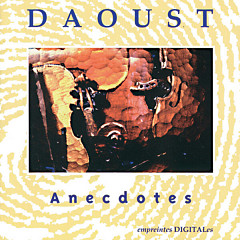
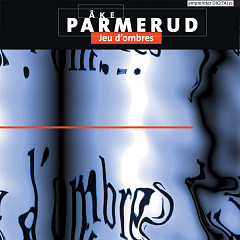
    Åke Parmerud’s Jeu d’ombres provided a strong reminder to me that this independent Montréal label is not just the most significant producer of Canadian electroacoustic recordings, but also has the most important catalogue of international electroacoustic artists. Swedish composer Åke Parmerud has been working in the field since the 1970’s and is recognized as a master of the genre. This current disc, with offerings from 1986 through 1999, provides an excellent introduction to his work. Of particular note are the mixed works: Strings & Shadows for harp and tape with Sofia Asunción Claro and Retur with the Stockholm Saxophone Quartet. I also enjoyed comparing Parmerud’s 1988 Stringquartett, a tape composition based on the manipulation of recorded string sounds, with Canadian Yves Daoust’s earlier Quatuor, which uses many of the same techniques. This latter work is, of course, also available from empreintes DIGITALes, on Daoust’s Anecdotes.

    … this independent Montréal label is […] the most important catalogue of international electroacoustic artists.

    Jeu d’ombres in JazzoSphère

    “Critique”, Sabine Moig, JazzoSphère, January 1, 2004
    Thursday, January 1, 2004 Press

    Åke Parmerud s’est engagé dans la voie des musiques instrumentales et électroacoustiques depuis la fin des années 70. Son travail, reconnu par les professionnels, les critiques et le public est omniprésent dans les arts visuels tels que le multimédia, la vidéo, le cinéma, la danse ou le théâtre. Dans Jeu d’ombres, le musicien suédois nous présente quelques-unes des créations réalisées au cours de ces dernières années, le plus souvent sur commande. Quelles que soient les techniques de création utilisées pou ces différentes pièces, Åke Parmerud est guidé avant tout par le désir d’offrir une musique singulière, inventive et ouvrant des espaces à des introspections futures. Entre souvenance, réécriture et mouvance vers des ailleurs à explorer les pièces s’ouvrent à nous: libre alors à chacun d’y puiser la force et l’élan qui le guideront vers un plaisir d’écoute épuré et originel.

    … une musique singulière, inventive et ouvrant des espaces à des introspections futures.

    Jeu d’ombres in Fluctuat

    “Pièces raffinées pour gourmets musicaux”, Grégoire Courtois, Fluctuat, September 21, 2003
    Sunday, September 21, 2003 Press

    Après une première collaboration à l’occasion de la compilation Miniatures concrètes en 1998, on ne s’étonne pas de retrouver aujourd’hui sur le label canadien empreintes DIGITALes le suédois multi-primé Åke Parmerud pour un enregistrement personnel de six somptueuses pièces électroacoustiques conçues entre 1986 et 1994.

    Basé à Montréal, le label empreintes DIGITALes est en quelque sorte la référence incontournable pour tout passionné de musique électroacoustique. Créé il y a plus de 10 ans maintenant, il compte dans son catalogue la crème des compositeurs canadiens et mondiaux du genre.

    Réunies sous le titre Jeu d’ombres, faisant probablement référence à l’atmosphère intrigante de chacune d’elles, ces six compositions signées Åke Parmerud sont de véritables bijoux de musicalité et de technique mariant à la perfection la richesse des harmoniques instrumentales et la froideur des sonorités synthétiques (cf la harpe de Sofia Asunción Claro exceptionnellement appropriée sur le morceau Strings & Shadows).

    Témoin de la formation classique du compositeur et de sa pratique instrumentale, c’est aussi et surtout cette maîtrise étonnante du rythme qui donne à ses pièces la vigueur et l’épaisseur tragique faisant trop souvent défaut aux compositeurs contemporains européens, encombrés d’une atonalité devenue obligatoire.

    Il faut croire que le Suédois se moque éperdument de ce genre de considérations, impression confirmée lorsqu’on l’entend utiliser sans complexe d’antiques instruments comme la viole de gambe et le luth, réunis pour l’exécution d’une danse guillerette de la Renaissance à la fin d’un morceau très dense lui-même élaboré à partir de vieux synthétiseurs analogiques (Renaissance, 1994).

    Même remarque quand sur Retur (1992-93), il triture des solos de Charlie Parker en juxtaposant bandes originales, composition pour quatuor de saxophones et effets synthétiques métalliques en une sorte d’hommage qui réussit miraculeusement à ne pas tomber dans le pillage bas de gamme.

    Et c’est véritablement cette décontraction dans son approche de l’histoire de la musique qui permet à Parmerud de toujours garder claire son intention et de ne pas définitivement larguer son auditeur quand pourtant sa musique est bien loin des ritournelles standardisées, musique contemporaine comprise.

    À la fois décomplexé et rigoureux, étudié et accessible, ce Jeu d’ombres est donc résolument le disque à se procurer pour se réconcilier à la fois avec l’électroacoustique et plus généralement avec la musique contemporaine.

    À la fois décomplexé et rigoureux, étudié et accessible, ce Jeu d’ombres est donc résolument le disque à se procurer…

    Jeu d’ombres in Coda Magazine

    “Critique”, PR, Coda Magazine, September 11, 2003
    Thursday, September 11, 2003 Press

    Bien que son œuvre comprenne surtout des pièces électroacoustiques, mais également instrumentales, on sent aussi clairement chez Åke Parmerud sa maîtrise de l’interactivité et du multimédia qu’il pratique couramment, comme son expérience acquise en composant pour le théâtre, le cinéma et la danse. Jeu d’ombres compile ainsi des pièces d’inspiration variée, toutes passionnantes. La plus ancienne, datant de 1988, questionne à sa façon les possibilités qu’offre le quatuor à cordes classique au travers de techniques d’échantillonnage sophistiquées. D’autres puisent leur inspiration chez le musicien de jazz Charlie Parker, ou encore explorent les potentialités des textures sonores superposées en couches multiples, et leur spatialisation. Parmi les morceaux les plus singuliers, se détachent ceux qui mixent acoustique (des instruments de la Renaissance comme le luth, la viole de gambe ou le cromorne) et les synthés analogiques utilisés pour ce son crade qui fait défaut au numérique. Plus imagée, Les flûtes de feu fait référence à l’alchimie, via le processus de modification du son progressif inhérent à la composition. De la musique de recherche (Renaissance a par exemple été composé à l’initiative du GRM jamais ennuyeuse.

    De la musique de recherche jamais ennuyeuse.

    Jeu d’ombres in Touching Extremes

    “Review”, Massimo Ricci, Touching Extremes, August 25, 2003
    Monday, August 25, 2003 Press

    Born in 1953, Parmerud is already a major electroacoustic composer and Jeu d’ombres confirms his status without a doubt. The six pieces contained here run across a big rangy arc, spanning from the nice “analog vs digital” contrast of the spacey Renaissance to the almost violent character — like it was a sound shootout — of Stringquartett, where samples of strings are treated in way of percussive hits, electric chattering and environmental menace. The only pure tape piece is the final Repulse, a track based on sound placing and textural transformation more than pitches; on the other hand, Retur is Parmerud’s idea of jazz analysis and a sort of delayed homage, as it’s based upon a Charlie Parker phrase that Stockholm Saxophone Quartet chew and spit out — with the composer’s help of course. While Les flûtes en feu, with its flute spectral modification and timbral scanning, is great listening in itself, the most intense and beautiful piece for your reviewer is the initial Strings & Shadows, where the basic sound is harp: its alternative between fairy tale and nightmare, life and death, security and fear is fundamental in the creation of a masterpiece of unresolving tension.

    … a masterpiece of unresolving tension.
  • 1
  • 2