electrocd

More from the blog

16 results
  • 1
  • 2
  • 3
  • Autour in AllMusic

    “Review”, François Couture, AllMusic, September 13, 2001
    Thursday, September 13, 2001 Press

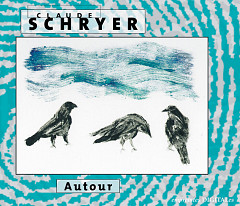
    Autour (“Around”) focuses on Claude Schryer’s environmental compositions and concept of acoustic ecology. The first three works are presented as suites of short (generally under three minutes) vignettes made of orchestrated, unaltered sounds that recreate soundscapes. The idea is to convey a poetic image of a specific location through the use of its original sonic environments. Sounds are not electronically transformed (as in acousmatic music). The resulting music invites the listener to recreate the movies fitting these soundtracks. Musique de l’Odyssée sonore is a reworking of Schryer’s soundtrack for Louis Ricard’s movie Odyssée Sonore. El medio ambiente acústico de México is presented as a “soundwalk” in the streets of Mexico. The exotic setting makes this piece stand out. In Vancouver Soundscape Revisited, Schryer uses the recordings of the World Soundscape Project. The seven resulting fragments lack a general cohesion to be really interesting. The last piece on this CD is its highlight, not necessarily because of its artistic beauty, but for its originality and ambition. Autour d’une Musique portuaire stems from Musique Portuaire pour Sirènes et Cloches (“Harbor Music for Horns and Bells”), an environmental composition scored for six boats, two trains, and the bells from the Notre-Dame Basilica in Montréal. The premiere performance was recorded by Radio-Canada. Schryer and radio producer Hélène Prévost devised improvisational options for Jean Derome (baritone saxophone), Tom Walsh (trombone), and the composer (bass clarinet), recorded in a studio and gracefully mixed in the harbor symphony.

    … vignettes made of orchestrated, unaltered sounds that recreate soundscapes.

    Autour in Henry Schneider

    “Review”, Henry Schneider, Henry Schneider, May 1, 1999
    Saturday, May 1, 1999 Press

    For those ot you unfamiliar with the genre, Claude Schryer composes electroacoustic and environmental music focusing on the spiritual, artistic, and social aspects of sound. If you accept the definition ot music as sound events in time and space, then Claude Schryer is the maestro. Armed with his tape recorder he roams the world capturing the sonic essence ot each location. Then back in his studio Claude assembles these tapes to create some unusual and tascinating sonic environments. Autour contains three such compositions (Musique de l’Odyssée sonore, El medio ambiente acústico de México, and Vancouver Soundscape Revisited) plus a fourth composition (Autour d’une Musique portuaire) recorded live on 3 March 1996 in Montréal. Musique de l’Odyssée sonore is a sonic portrait of Quebec in seven parts incorporating sounds ot water, insects, trains, horse and cart, church bells, car horns, seagulls, Native American chanting, etc. El medio ambiente acústico de México is a six-part soundscape incorporating similar elements as well as a Mexican shepherd and a man selling Chiclets in a Mexico City subway. Vancouver Soundscape Revisited is a seven part impressionistic portrait of the musicality and poetry of past, present, and future soundscapes of Vancouver. Claude uses hundreds of sounds in these three compositions to create his environments. The sound is crystal clear and the movements flow seamlessly as if you are strolling through them. The final composition, Autour d’une musique portuaire, is an environmental composition for six boats frozen in the port of Montréal, two trains in motion, and the bells of the Notre-Dame Basilica all conducted by Claude Schryer via walkie-talkies. This is truly a three-dimensional expenence that is difficult to capture in stereo. You can feel the boat and train horns as they reverberate, yet to be in the middle of it must have been quite an experience! Autour is music for the adventurous listener. Be brave, take a chance, and explore the world of electroacoustic soundscapes.

    Autour is music for the adventurous listener.

    Autour in Hurly Burly

    “Review”, Jesús Gutierrez, Hurly Burly, no. 9, April 1, 1999
    Thursday, April 1, 1999 Press

    In this recording the influence of R Murray Schafer, and particularly of the idea of an acoustic ecology ideology, is thoroughly present. In it, the experience of listening is a holistic one, arising from the different sources which are brought together into a series of continuous soundscape. As with any ecological music, this totality is seen as representing the diversity, complexity and symbiosis of natural soundscapes. Here then is a music of a truly ecological nature.

    Esta es pues una música cuya naturaleza es verdaderamente ecológica.

    Autour in Margen

    “Retratos electroacústicos”, Rogelio Pereira, Margen, no. 16, January 1, 1999
    Friday, January 1, 1999 Press

    El trabajo musical de Claude Schryer se orienta hacia una noción espiritual y musical de la ecologia sonora por medio de la electroacústica. Activo como compositor, intérprete, montador, productor y comunicador de música contemporánea, se considera un seguidor de la ideologia ecotógica acústica de R Murray Schafer, de la aldea global de Marshall McLuhan y de la escueLa de música concreta de Pierre Schaeffer. “Todos estos me han influido artisticamente. Sin embargo a nivel filosófico R Murray Schafer ha sido la mayor influencia con mucho. En 1989, en respuesta a la creciente crisis ecológica mundial, me impliqué en el movimiento ambientalista tanto a nível politico como artistico. Empecé siguiendo los pasos de Schafer cayo objetivo era aunar la investigoción en los aspectos cientifico, sociológico y estético del entorno sonoro y desde entonces he empezado a expresar mis propias ideas sobre el entorno y la función del artista hacia éste.”

    La relación de Schryer y Schafer no es, sin embargo, simplemente testimonial, sino que ambos han coLaborado recientemente en ia elaboración de una obra.

    “Si, fue a raiz de que Klaus Schöning del programa de radio arte de la WDR le pidiera R Murray Schafer que escribiera una pieza con paisajes sonoros canadienses. Schafer y yo grabamos diez dias de sonidos del invierno en Manitoba y editamos un programa de radio de 60 minutos de paisaje sonoro. Intentamos capturar el silencio de un bosque en invierno y acabamos empleando el sonido de nuestras voces y pies para activar la noche, de otro modo perfectamente callada.”

    Author supuso la primera obra en solitario de Claude Schryer. Un trabajo que reúne cuatro piezas que conforman un cicto de composiciones centradas en la conciencia ambientaL y la musicalidad del entorno acústico. Los cuatro puntos cardinates de América dei Norte están aqui re Claude, padre orgulloso, nos presenta a su primer hijo presentados simbólicamente siguiendo la rueda de la vida de los indios nativos norteamericanos.

    Su obra artistica representa una gran variedad y belleza creadora y se compone de piezas para orquesta, para grupos de cámara, teatro, sintetizador, obras vocales… aunque quizás sea el campo del paisaje sonoro y el arte acústico donde se encuentre más a gusto.

    “Yo llegué a la electroacústica ambiental a finales de los años 80 y ésta se ha convertido en mi principal lenguaje musical. Opino que la composición electroacústica de paisajes sonoros está intimomente relacionada con el campo visual de la fotografia. Se pueden atrapar imágenes del entorno sonoro y luego procesarlos y representarlos como un reflejo de la realidad ylo como una creación artistica. Es una técnica en la que el entorno acustico es tanto el tema como el contenido de una composición, en frágil equilibrio en el limite entre la representación y la abstracción. La composición electroacústica de paisajes sonoros tiene mucho que ver con el contexto de la musique concrète, estética de la escucha reducida (Écoute réduite) en la que se aprecian los sonidos, independientemente de cual sea su fuente, por su valor masical abstracto como objeto sonoro. Para el compositor electroacústico un ‘objet sonore’ es una fuente de sonido disponible entre otras cosas para la producción masical. Sin embargo, para el compositor electroacústico de paisajes sonoros el ‘objet sonore’ también es una compleja red de información que incluye en potencia la posibilidad de revelar ‘belleza inexplicable’ bajo la forma de Efecto Sharawadji.”

    Schryer es también conocedor de los entresijos del mundo editorial.

    “Fui co-fundador del sello empreintes DIGITALes junto con Jean-François Denis a principios de los años 90, pero desde entonces no he tomado parte activa en el negocio discográfico. Me alegro de que cada vez existan más sellos relacionados con estos tipos de masica.”

    ¿Qué uso haces del estubio de grabación?

    “Mi práctica artistica supone esencialmente un proceso de cinco foses: la escucha, la grabación, el análisis, la transformación y la orquestación de paisajes sonoros grabados de cara a realizar retratos electroacústicos para conciertos y para la radio. Yo quiero emplear el viento como un verbo, el agua como un sustantivo, el pitido de un camión como un adjetivo y el silencio como una coma. Quiero conjugar el ruido en el futuro y en el pasado e introducir al oyente en una historia, en un espacio, en una experiencia o sensación con o sin palabras y quizás también con o sin música.”

    Autour in Alternate Music Press

    “Review”, Canary Burton, Alternate Music Press, December 31, 1998
    Thursday, December 31, 1998 Press

    Now this space music album (or ambient if you wish) is more like the old musique concrète but more understandable. Schryer uses real sounds, on cut one, which is short, this time the ocean, a train and a voice calling. Cut two, called Cloches which means [bells] in French, he’s got church bells, distorted car horns, metal sounds… Envol, which is a plane taking off over the surf… up to 7 short pieces.

    These are part of Musique de l’Odyssée sonore Then we’re onto El medio ambiente acústico de México. Very obviously “things” Schryer picked up on a trip to Mexico. Ocean, voices, a little this a little that. More ocean on Vancouver Soundscape Revisited boat horns, some Spanish, birds, far away music… industrial sounds. This is totally a collection of the odd and mundane. Laughter, drunken singing. What do I say?? this section seems to build into something. I really don’t know what to say about this. It is not confusing, the sounds are in good order… they make sense. But I still don’t know what to say. I like it better than early 20th century “musique concrète.” But then, I only liked that for its ground breaking ideas. This is ok. I guess it’s places that picture themselves in bits of sound. Sound Paintings.

    Sound Paintings.

    Autour in Computer Music Journal

    “Review”, Laurie Radford, Computer Music Journal, no. 22:4, December 1, 1998
    Tuesday, December 1, 1998 Press

    Awareness of the diversity and wealth of sounds around us, a respect for “indigenous” sounds, the sounds of nature, of humankind, of the winds and oceans as well as the machines that dominate our daily aural experience, and the use of these sounds in a powerful artistic form embodied in electroacoustic musicthese are some of the objectives of a growing number of composers over the past quarter century. The World Soundscape Project (WSP) was founded in the early 1970’s at Simon Fraser University (SFU) in Vancouver by Canadian composer R Murray Schafer as a means of confronting and revealing the sounds that surround and accompany us in our daily lives, about their effects upon us, and our effects upon them. Several prominent composers such as Barry Truax and Hildegard Westerkamp were part of this seminal project in soundscape archiving and the development of methodologies for acoustic ecology.

    The recent founding of the World Forum for Acoustic Ecology (WFAE) has brought to the fore several young composers who have taken up the cause and spirit of the WSP and developed and integrated its concerns and objectives into their own creative pursuits. Claude Schryer has been very active in this movement for over a decade and the 1997 release of Autour on the empreintes DIGITALes label gathers together some of his most representative work. The first selection on the disc, Musique de l’Odyssée sonore (1996-97), is a revised and condensed version of the music for a National Film Board of Canada (NFB) documentary on the soundscape of Quebec City and the theories of R Murray Schafer (as embodied in his 1977 text, The Tuning of the World). Film soundtracks do not always make for great pieces of music. But in this case, the origin of the film and its sounds are one and the same. Schryer’s sensitive shaping of sound materials, and his subtle timbral and temporal transformations blend the diverse array of materials into a convincing whole that confidently bridges the gap between original sound source and radical manipulation with obvious respect for the materials involved.

    El medio ambiente acústico de México (1995-96) takes us to the southern point of the North American acoustic experience. Schryer, referring to this work as a radiophonic soundwalk, takes the listener on a sonic journey through six dynamic and evolving Mexican soundscapes. From the opening fragmented Mosaico, through the undulations of Océano, the raucous interjections and bombardment of Transportación, to the children’s choirs and street festivals of Música, the buzzing, snorting, chortling and spattering of Naturaleza, and the irregular rhythms of the final meditative Campanas, there is a sense of unity and cohesion, of crafted phrasing, of a care taken in the presentation of these beautiful urban and rural sounds such that the listener is invited to share in the awe and wonder with which the composer approaches his materials.

    The pioneering spirit and activity of the WSP was highlighted and honored during the 1996 Vancouver New Music Festival where a number of new soundscape compositions were created utilizing the WSP archives at SFU as well as new recordings from Vancouver’s unique sound and seascape. One of these works, Schryer’s Vancouver Soundscape Revisited (1996) is included on Autour. (The entire series of compositions, as well as examples of original 1973 World Soundscape Project archive materials, is available on the Cambridge Street Records Soundscape Vancouver 2CD set [CSR 9701].) As with the other two works mentioned so far, this piece is a suite of short, thematically focused movements. They alternate calm, spacious waves of sound with frenetic exchanges of wildly diverse materials. The pandemonium of call and response between boat horns, trains and power line oscillations in Fire, or the granular cascades of Industry, contrast vividly with the calm of the opening movement Eagle, the duet between boat horns and a resident itinerant in Dronesong, or the gentle conclusion of Blowin’. A favorite is the visceral and politically charged juxtapositions in Beans. Schryer confidently leads us through diverse sound environments in a way that subtly clarifies the constituent sounds, their context, their shape and intrinsic character.

    The artistic use of the sound-producing potential of natural objects as well as man-made mechanisms is a fundamental premise of much audio art, sound installation work, and soundscape composition. Stemming from this is a tradition of harbor symphonies where the horns of various seafaring vessels, moored in various cities around the world, are used as a euphonious, bigger-than-life orchestra (that taking place in the city of St. John’s, Newfoundland, part of the bi-annual Sound Symposium, is perhaps the most well known). Autour d’une Musique portuaire (1996), created in collaboration with radio producer Hélène Prévost, documents a similar event in the harbor of Montréal where ships, trapped by the frozen St. Lawrence River, serve as instruments for several composers each spring. The original performance included six boats and their distinctive horns, the bells of the nearby Notre-Dame Cathedral, as well as the bells of two Canadian National Railway trains (in motion!), all coordinated by written scores and walkie-talkie communication with the composer. This ensemble’s performance was then recorded and broadcast live by Radio-Canada FM. The original recording captures the vastness of the Montréal port as it resounds and shapes the music of the horns and bells. The particular recording offered on this disc presents a group of soloists on saxophone, trombone, and bass clarinet improvising in a large studio with the original harbor recording. The sonorous impact and rhythmic possibilities inherent in the original piece are expanded upon and refined within the original framework. The inclusion of Schryer’s opening countdown and the cheering crowd assembled at the Vieux Port de Montréal at the work’s conclusion lend an air of exhilaration to this version of the piece.

    For those who have been intrigued by the idea of ‘soundscape’ composition, have never had a chance to experience it, or have wondered what could be done with that great series of recordings captured on your last exotic vacation, Claude Schryer’s Autour may offer your some ideas and a rewarding listening experience. The accompanying booklet and overall production of Autour is exemplary as has come to be expected from releases by empreintes DIGITALes. For those wishing more information about electroacoustics and ecology, check out the Spring 1998 issue of [Canadian magazize] Musicworks dedicated to individuals involved in soundscape composition.
    Autour is exemplary as has come to be expected from releases by empreintes DIGITALes.
  • 1
  • 2
  • 3