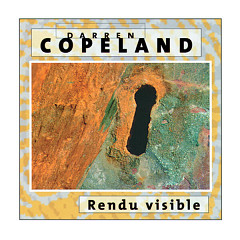
Toronto-based electroacoustic artist Darren Copeland is fond of visual analogies in his work, and uses environmental sounds exclusively — a combination that could easily come off as unappealing to these ears. Mention that you just purchased a recording of ‘environmental sounds’ to most people and they instantly conjure up a serene image of baleen whales swimming in the emerald bay of some picture-postcard faraway place, to an accompaniment of ‘Yanny’-form piano tinklings or (at best) a pleasantly bland Robert Rich-Vidna Obmana electronic wash. Granted empreintes DIGITALes will probably never put out a recording affixed with a dread sticker reading ‘file under New Age,’ it is still quite easy to convince oneself the whole environmental-sound shtick is pretty well played out. Then again, its probably just my problem. The Wire may fawn over the latest Chris Watson field-recording CD as some sorta reaffirmation of the true wonder and danger of the natural world, but as for me, I think I’d rather just listen to my refrigerator. Darren Copeland avoids the trap of ‘sound representing environment’ by manipulating sounds to create completely new and unique environments that envelop rather than sedate the listener. Rendu visible is far more reminiscent of a sonic tidal wave of Aube-an proportion than the digitized wallpaper released daily on Celestial Dilettante and other like-minded labels.
The opening Rendered Visible is the obvious recommended radio cut and also the most overtly ‘nature sound’-ing piece on this collection. It begins by utilizing fairly familiar, recognizable sounds of rain, wind, and jungle animals, layered over other less-recognizable sounds, creating a large crescendo that really blows through the listener like a late afternoon hailstorm on a July day on the high plains, particularly when played at high volume. It soon subsides just as quickly, leaving a few little shore birds to pick at debris, punctuated by subtle low tones played on an African flute by a Ghanaian musician not owned by Mickey Hart. Very nice.
The remaining tracks follow a similar pattern of building up tension through adding layers, but rely more on ‘abiotic sounds’ along the lines of wind and rain and other less ‘natural’, unrecognizable drones and hums, creating a similar but less ‘busy’ effect than the first track. Reaching for Tomorrow sounds less obviously environmental sound-related than the other pieces presented here. This ever-changing ten-minute piece of background tones punctuated by nondescript incidental noises builds more gradually than Rendered Visible but is just as intense, albeit in more a darkly subtle way. Sample any few seconds of this piece and it sounds more like an excerpt from a ‘Cold Meat Industry’ promotional compilation rather than an entry in an international acousmatic composers competition, but the overall impression is much closer to the tape music of, say Vladimir Ussachevsky than to the output of some dreary Swedish goth band.
The concluding 24-minute opus Night Camera is the sparest piece, utilizing sounds from rather familiar and ‘ordinary’ sources (wind, rain, cars passing, people talking in the distance) along with others less recognizable. It too builds through increasing sound layers to a very satisfying level of intensity at several points through the three movements. The conclusion of the piece is almost terrifying, with a distressed, ghostly human voice barely comprehensible through what sounds like a hurricane. Apart from being a great listen in its own right, Night Camera conveys the sense of wonder in experiencing the ‘music’ inherent in the ordinary world around us. While the aforementioned Mr. Watson accumulates frequent flyer miles recording birds in Costa Rica or carnivores on the Serengeti, Copeland manages to create something ten times more captivating from recordings that could very well have been made from a microphone hung outside a conservatory window. I’ll admit that field recordings in and by themselves are often quite marvelous (the most incredible single thing I heard all last year was a coal train coming to a long, gradual stop in the Nebraska badlands), but its the human touch of a composer with a sympathetic ear that can really transform the sounds of the everyday world into something truly otherworldly. Rather than providing an aural document of a specific place and time, Copeland allows the listener to render his/her own unique impression of the sounds contained herein, shaped by their individual connection to the sound world around them, a liberty that is much appreciated around these parts. Rendu visible is a subtle yet intense, familiar, yet alien aural expedition that borders on the overwhelming, and is my absolute pick-of-the litter of the empreintes DIGITALes ‘cheapie’ series thus far.