electrocd

Blog

87 results
  • 7
  • 8
  • 9
  • 10
  • 11
  • 12
  • 13
  • 14
  • 15
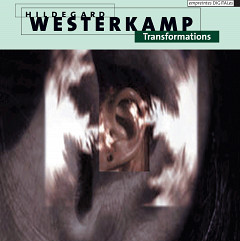
  • Transformations, Hildegard Westerkamp in eContact!

    “In Review”, Andra McCartney, eContact!, no. 1:1, February 1, 1998
    Sunday, February 1, 1998 Press
    Hildegard Westerkamp says: “I hear the soundscape as a language with which places and societies express themselves.” Her Transformations CD presents five of her soundscape compositions, reflecting work composed from 1979 to 1992, each sounding the depths of a different place, creating a different inner landscape each time I hear them. She works with the sonic and sociopolitical potentials of each place, recording, mixing, and subtly transforming sounds to heighten listeners’ awareness and appreciation of these sites. She is a skilled and careful interpreter of their languages.

    You make it with the skin of the desert night

    Cricket Voice is a musical exploration of a solo cricket song, recorded by Westerkamp at night in a Mexican desert region called the Zone of Silence. The acoustic clarity of this place frames the cricket song, accompanied by soundmaking with the spikes of cacti and other plants, and electroacoustic transformations of these sounds. This composition is as expansive as the desert, intimate as the voice of a single cricket.

    Listen to our cities

    Two of the works, A Walk Through The City, and Kits Beach Soundwalk, are both based on urban soundscapes. In the downtown core, I can become numb to the constant sounds. These works challenge me to listen, to transform, to make quiet places in the city. A A Walk Through The City takes us through Vancouver’s Skid Row area, guided by Norbert Ruebsaat’s poem of the same name. Kits Beach Soundwalk begins at Kitsilano Beach, in the heart of Vancouver, yet at the same time a border. I hear the throb of the city balanced with the tiny sounds of barnacles feeding in the lapping tide. This piece explores many borders—between dream and waking, city and country, water and land, documentary and composition. When it enters the dreamworld of high frequencies, I remember where quiet places in the city can take me.

    Soundmarks and Sitka

    Fantasie for Horns II is the earliest piece in the collection, composed from the sounds of Canadian trainhorns, foghorns, factory and boathorns, and a live part for French horn. Horns are especially evocative soundmarks that give us a sense of place. Each time I hear this piece, I remember growing up by the sea and listening to the moan of the coastal foghorns, reminding me of the awe-inspiring power and energy of the sea. The latest piece on the CD is Beneath The Forest Floor. Most of the sounds for this piece were recorded by Westerkamp in the Carmanah Valley on Vancouver Island, and the piece evokes the stillness and peace of this old-growth rainforest, home to Sitka spruce and cedar trees over a thousand years old.

    I have always found Hildegard Westerkamp’s work to be a particular source of insight and inspiration. It takes me to familiar and new places, encourages me to listen to the sounds around me, and to “transform through listening,” as Pauline Oliveros also notes about Westerkamp’s work. Her music urges me to listen to the language of the soundscape and to express my own relationship to it by working with soundscapes myself. I hope it does for you, too.

    … a particular source of insight and inspiration.

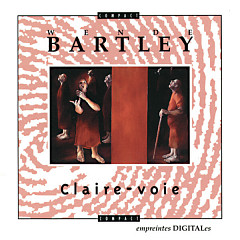
    Claire-voie in eContact!

    “In Review”, Andra McCartney, eContact!, no. 1:1, February 1, 1998
    Sunday, February 1, 1998 Press

    Claire-voie brings together four electroacoustic pieces by Wende Bartley, composed between 1985-1993. The work is characterized by Bartley’s dense texturing of instrumental, vocal, and recorded environmental sounds, as well as her exploration of the performing potential of the female voice. It is powerful and evocative work.

    Ellipsis (1989-93, 14:31) is a work for female singer and tape. Sung by mezzo-soprano Fides Krucker, this piece explores extended vocal techniques such as multiphonics, glottal stops and vocal fry, in a tripartite structure associated with the lunar phases and chronicling a three-fold story of women’s collective unconscious, which Bartley terms “The Age of Darkness,” “Creating a New Space,” and “The Age of Resonance.” (see also Hannah Bosma’s description of the piece in 1995 International Computer Music Conference Proceedings, pp. 141-142).

    The second piece, Rising Tides of Generations Lost (1985-93, 15:01), is my current favourite on the CD. It starts with whispered vowels, consonants, and syllables, moving through to spoken words and finally longer phrases that are almost buried, yet rise again through the fires that tortured and silenced women. In her description of the piece, Bartley quotes American novelist Kate Chopin: “this ‘beginning of things’ is ‘vague, tangled, chaotic, and exceedingly disturbing. How few of us ever emerge from such beginning. How many souls perish in its tumult.” Disturbing as it is, I always feel hopeful and energized as strong voices emerge clearly at the end.

    Ocean of Ages Revealed (1991, 13:21) explores the gestures of Balkan vocal music, as well as other sources, through the PODX granular synthesis system developed by Barry Truax at Simon Fraser University. This process allows composers to expand and stretch the sounds to reveal microscopic shifts and changes in a slow-moving tapestry. The piece is based on a visual image by Susan Griffin, in which we travel into the darkness of a cave, seeing images of another time etched into the walls.

    The last piece, IceBreak (1992, 14:22) evokes the world of ice melting, dissolving and transforming into water, moving through “states of rupture, isolation, introspection, passion, and infusion.” It is made of textures created from short improvisations on instruments from the Kyai Madu Sari, the Javanese court-style gamelan. The textures form rhythmic and melodic streams that echo through sound-space.

    I find in Bartley’s music a source of spiritual energy and feminist consciousness that is matched by musical and technical diversity and depth. I listen to this CD often.

    It is powerful and evocative work.

    Autour in Splendid E-Zine

    “Review”, Elliott S, Splendid E-Zine, January 26, 1998
    Monday, January 26, 1998 Press

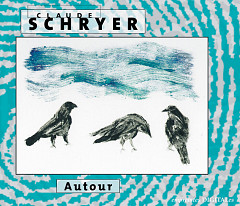
    Acoustic ecology is Claude Schryer’s art. He subscribes to idea that “artists can help design a more imaginative and balanced landscape.” With that in mind, his soundscapes echo the environment as natural sounds and urban noises are used to create some sort of aural picture. The resulting juxtapositions border between believably-untouched recordings and the surreal combination of elements carefully placed out of context and proportion.

    The tracks are generally one to two minutes in length, and each contributes to a global scheme while being a satisfying experience in itself. In fact, I often found it enjoyable to listen to a brief track and pause before moving on to the next segment. The third section of El medio ambiente acústico de México is a perfect example of Schryer’s approach. A man selling gum in the subway eventually moves into the background while the ambience then fades into a train sound. A squeaky truck, a steady beeping horn and traffic noise slowly take over. This all leads up to a firecracker pop that leaves only the sounds of breathing as a coda to the section.

    From a distance Autour may sound like a random sequence of sounds, not much different from the sonic environment that surrounds us daily. However, when one listens closely the transitions are subtle and the combination of materials is well measured. Recommened for careful headphone listening.

    Recommened for careful headphone listening.

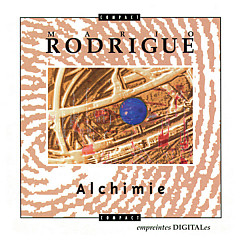
    Alchimie in Odradek

    “Kritik”, RK, Odradek, no. 3, January 3, 1998
    Saturday, January 3, 1998 Press

    Mario Rodrigue, ein kanadischer Elektroakusiker, war u.a. Schüler bei Francis Dhomont, von dessen musikalischem Denken er viel gelernt zu haben scheint. Die Spuren, welche diese Zusammenarbeit hinterlassen hat, vor allem hörbar im Sound, wie im konzepionellen Aufbau, sind jedoch nur ein Bestandteil eines großen Repertoires, das von sensiblen Naturgeräuschen, Vogelgesang, über Schritte, Stimmen, traditionelle mechanische Geräusche, bis zu Elektronik, — Radiofragmenten und symphonischen Elementen reicht, die mit viel Ernst und ebensoviel Humor verknüpft und gemischt wurden. Liquidität und Ruhe dieser Musik, vergleichbar den Arbeiten von Michel Redolfi, und die Dichte Dhomont scher Prägung sind ebenso zu finden wie die sensible Transparenz z.B. mancher natürlicher Geräusche bei einigen französischen Elektroakusikern. Rodrigue bewegt sich im fließenden Feld zwischen dem Konkreten und dem Imaginierten. Er spielt mit den Elementen, die sein Material sind, aber er verliert sich nie in diesem Spiel. Starke assoziative Verknüpfungen und Entwicklungsprozesse machen die intensive Lebendigkeit, den Witz und die Wärme dieser Arbeiten aus.

    Uber Verfremdung verwandelt sich eine Waschmaschine, in der das Leben einer ganzen Stadt zu toben scheint, in einen Helikopter, der dann aLdreht und aus dem imaginierten Bild fliegt, — um nur eines aus einer Fülle von Beispielen zu beschreiben. Rodrigue’s Zauberkino für die Ohren ist reich an Inhalten und klar und transparent in seiner musikalischen Erzählweise, was bei diesem enormen Fundus an verwendeten Geräuschen und Klängen-und der Komplexität der daraus entstandenen Arbeiten sicher nicht selbstverständlich ist. Besser kann man elektroakustische Musik kaum machen. Das informative Booklet gibt Auskunft auch über technische Details und Arbeitsweise.

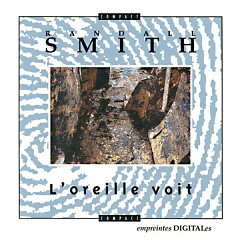
    L’oreille voit in Odradek

    “Kritik”, RK, Odradek, no. 3, January 3, 1998
    Saturday, January 3, 1998 Press

    Randall Smith entdeckte die elektroakustische Musik für sich, als er auf die Arbeit der französischen GRM (Groupe de recherches musicales) aufmerksam wurde. Im Zusammenspiel seiner eigenen musikalischen Experimente mit etwa experimentellem Film und Tanz entwickelte er Kompositionstechniken, mittels derer er visuelle und akustische Elemente in einer Klangsprache vereinte. Was über das Ohr vermittelt wird, läDt im Kopf einen imaginären Film entstehen. So auch der Titel dieser CD L’oreille voit, übersetzt Das Ohr sieht. Smith’s Musik sind filigrane Klanggeschichten, differenziert und vielschichtig gewoben, technisch hervorragend realisiert, und dabei sehr persönlich, kraftvoll und sensibel zugleich, souverän im Zugriff und immer spannend und flüssig erzählt. Hier hat ein Künstler gearbeitet, der den Klang selbst — egal welcher Art, an sich und in jedem denkbaren Kontext — wirklich liebt, und der darüber hinaus ein Meister seines Handwerks ist, der sein Material genau kennt und mit sicherem Gespür beherrscht, aber niemals vergewaltigt, und der sich mit aller Selbstverständlichkeit im Spektrum zwischen Naturgeräuschen und moderner Elektronik mühelos bewegt. Ich vernehme in diesen Klangfantasien “Gesänge” unserer Zeit, Maschinenstimmen als eine eigene Art von Natur.

    Hier wird Technik zu etwas durch und durch Lebendigem, Atmosphärischen, Emotionalem, Erzählendem, weit entfernt von rein Funktionalem. In diesen Klangerzählungen geschieht sehr viel, und gleichzeitig entsteht Raum für spontan sich entfaltende imaginäre Bilder im Kopf. Bizarre kleine Welt-MiniaNren / Miniatur-Welten, Natur und beseelte Maschine zugleich, lebendige SkulpNr, voller sich immerfort verändernder Polyrhythrnik. Geschichtenerzähler, Filmregisseur, Choreograph, Komponist, „Instrumentalist“, Randall Smith ist alles in Einem. Ich höre so individuelles Persönliches, gleichzeitig ein gutes Gespür für die Zeit, in der wir leben. Diese Musik ist voller Wärme, aber auch Schärfe, fantasievoll und klar. Stellenweise habe ich das Gefühl, verzückt einem Glasperlenspiel zuzusehen, erlebe das Klicken und Ticken und Rappeln der “ Murmeln” als ein akustisches Vexierspiel. Smith nennt Parmegiani als einen seiner musikalischen Väter, und das hört man auch. Und dennoch hat Smith eine deutlich eigene Klangsprache entwickelt. Seine Musik ist warm, natürlich, frisch, jugendlich, fast verspielt, humorvoll, aber dabei niemals oberflächlich. Randall Smith scheint den Gesang der dinghaften Welt hinter den Dingen und in ihnen selbst zu suchen. Das Ergebnis ist ein Glücksfall in der acousmatischen Musik.
  • 7
  • 8
  • 9
  • 10
  • 11
  • 12
  • 13
  • 14
  • 15