electrocd

Blog

195 results
  • 1
  • 2
  • 3
  • 4
  • 5
  • 6
  • 7
  • 8
  • 9
  • Estrapade, morceaux_de_machines in Vital

    “Review”, Frans de Waard, Vital, no. 454, December 22, 2004
    Wednesday, December 22, 2004 Press

    If I am not mistaken (and usually I am) this might be the third CD by Canada’s noise duo morceaux_de_machines, aka Erick d’Orion and A_dontigny, but here they are guested by Diane Labrosse (with whom Dontigny already made a CD), Otomo Yoshihide and Martin Tétreault. They play on some of the live tracks on this album. morceaux_de_machines are, I think, best described as a live-improv musique concrete noise outfit. They use records, cds, electronics and computers and cook up a steamy mix of cut ‘n paste sounds, taking apart the exisiting sounds (of vinyl, of cds) and putting them in this huge blender called mixing board and effects and rather go for the louder and nastier elements, than say, something smooth and soft. It was hard to tell that there were live tracks on this CD (I read the liner notes usually afterwards), but in hindsight, I think the studio pieces are a bit concetrated and denser and the live pieces something more loosely structured. There is a certain Merzbow influence to be detected here, but than of the Batztoutai with Memorial Gadgets period (late 80s Merzbow). Overall a nice work, but at over seventy-five minutes also a lenghty experience. More = more seems to be their point. Nice one anyway.

    The same Otomo Yoshihide and the same Martin Tétreault toured Europe in the springtime 2003, playing fifteen concerts in sixteen days, under which one I saw at Extrapool. Of course every concert was recorded and the results are thematically organised for release. 1. Grrr contains the noise aspects of the concerts, and to be released are 2. Tok with the more fragmented stuff and 3. Ahhh with the more smoother moments. Both Yoshihide and Tétreault play turntable and objects. As indicated this is indeed a disc full (very full at seventy four minutes) of noise. Yet, I am altogether not very sure if this was a good idea. In a concert situation the two go in one concert from loud to fragmented to soft and back again. That makes the concert by Tétreault and Yoshihide a breathtaking experience. But when they cut out, say all the noise elements of all concerts and isolate them on one CD, it’s a different thing. It may appeal to noise-fans alike, but for me (not always a noise fan) it was simply too much. I rather had one CD documentating all the various aspects of duo, the best moments of every concert.

    More = more seems to be their point.

    Estrapade, morceaux_de_machines in De Subjectivisten

    “Caleidoscoop”, Jan Willem Broek, De Subjectivisten, December 15, 2004
    Wednesday, December 15, 2004 Press

    www.actuellecd.com en www.electrocd.com herbergen beide Canadese labels voor nieuwe muziek, jazz, musique concrète, elektro-akoestische muziek, noise en experimentele muziek. De eerste omvat onder meer DAME met sublabel Ambiances Magnétiques, Victo, Squint Fucker Press en Spool. De tweede labels als empreintes DIGITALes en No Type. No Type is het grappigste label, want daarop nemen ze de genregrenzen niet zo nauw en kan je elk van bovenstaande stijlen krijgen gemengd met pop, rock, techno of hiphop. Aimé Dontigny ofwel A_dontigny en Érick d’Orion bemoeien zich graag met andere artiesten, maar vomen samen de noiseband morceaux_de_machines. Op Estrapade staat noise, opgebouwd uit groovende lagen elektro-akoestische muziek. Het klinkt moddervet en vervaarlijk. Ik eet niet vaak vlees, maar bij dit kolossale geluid klinkt het bakken van kilo’s gehakt perfect. Industrieel vormgeven en martelen met dood vlees. Ze hebben hulp uit goede huize, namelijk de draaitafel buitenbeentjes Martin Tétreault en Otomo Yoshihide. U bent gewaarschuwd (indien de hoes al niet afdoende was).

    De Canadees Martin Tétreault en de Japanner Otomo Yoshihide (ex-Ground Zero) hebben allebei in ontelbare projecten gezeten en hebben niets en niemand meer wat te bewijzen. Getuige 1. Grrr hebben ze misschien alleen nog wat aan de duivel te bewijzen. In 2003 zijn ze samen met hun draaitafels op tournee gegaan. Lange, slopende draaidagen, waarbij het publiek dat van een flinke pot noise houdt de vingers kon blijven aflikken. Acht live-opnames zijn vastgelegd op dit eerste deel van de live-trilogie. De lawaaierige improvisaties zijn meer dan indrukwekkend. Het piept, schuurt, kraakt, scratcht en blaast; het tweekoppige, kakofonische monster lijkt te spelen met vuur onder de hielen. Zeker met het volume hoog is het een groots en adembenemend hoorspel. Bewondering en prettig afgrijzen wisselen elkaar af. Als mensen nu tegen mij zeggen dat dit geen muziek is heb ik daar begrip voor. Hoewel? Deel 3, 3. Ahhh (te verschijnen in 2005), klinkt ook veelbelovend.

    Puzzles, Robert Normandeau in Le Devoir

    “Grand retour en un magnifique lieu”, François Tousignant, Le Devoir, December 7, 2004
    Tuesday, December 7, 2004 Press

    Pulsar, voici le nom de la nouvelle série que lance le défunt Rien à voir. La manifestation renoue avec les expériences de Clair de terre [produites par l’ACREQ], ces soirées d’électroacoustiques qui ont cessé en 1993, remplacées par la série des Rien à voir [produite par Réseaux]. Les événements Pulsar auront donc lieu une fois l’an, au Planétarium.

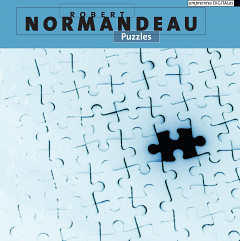
    L’inauguration s’est faite hier soir avec un concert entièrement consacré à la musique de Robert Normandeau. À part Puzzles, qui ouvrait le programme, ce sont toutes des œuvres que le compositeur a tirées des nombreuses musiques de scène qu’il a imaginées pour différentes troupes.

    Puzzles est une pièce charmante et un peu facile. Normandeau y tombe dans la rythmique à 4/4 non pas par simplicité, mais pour permettre un collage et recollage des différents événements sonores conçus. Une précision s’impose d’emblée. Tout le programme devait être lancé en DVD 5.1, mais contingences techniques et esprit perfectionniste aidants, le «produit» ne sera disponible qu’à la mi-janvier. L’avantage ce cette formule est qu’avec les nouvelles possibilités des systèmes de son de cinéma-maison, chacun aura la possibilité d’enfin pouvoir écouter, voire réinventer, l’écoute de cette musique en véritable spatialisation enfin délivrée des limites de la stéréophonie, donc d’un peu recomposer l’œuvre. On attend avec impatience cette première technologique québécoise.

    Suivait Éden, pièce narrative du parcours biographique sonorisé de Marguerite Duras. La musique est sensible, traitant des influences avec un sens juste de l’imaginaire, avec de belles vagues de transitions. Chorus, hommage aux victimes des attentats du 11 septembre, reste plus problématique: à vouloir faire du beau son, la guimauve des bons sentiments affleure et noie le message. Néanmoins, si ces deux œuvres semblent plus tièdes, il faut souligner — comme partout dans cette soirée — l’impeccable et, suprenamment, exceptionnelle tenue technologique. Oui, il y a là plus que de quoi s’émerveiller: se réjouir que le médium ne nuise plus au message en aucune façon.

    StrinGDberg nous fait pénétrer dans l’étrangeté de la perspective acoustique. Que ce soit dans les diverses densités de couches sonores, dans les jeux de mobiles des «tempos», l’esprit combinatoire des sonorités fait penser aux Couleurs, de Rimbaud comme aux Correspondances de Baudelaire. C’était du grand Normandeau.

    Qui va se surpasser en fin de concert avec Hamlet-Machine with Actors. Si, partout ailleurs, on admire le sens de la construction, l’inspiration, l’originalité, ici on se trouve devant le souffle d’un véritable chef-d’œuvre! Effets percutants, dosés et justes, violence jamais gratuite ni agressante en décibels, et une profondeur philosophique critique si actuelle et personnelle qu’on attend le disque pour mieux pénétrer tous les arcanes du grand œuvre accompli.

    Pour le reste des activités de Réseaux, on inaugurera en janvier un autre type de manifestations, baptisées Akousma, où se mêleront musiques mixtes, électroniques, technologiques, visuelles, etc. Décidément, l’acousmatique bouge beaucoup! «Avis à la population!»: après la réussite totale d’hier, il faudra suivre avec attention et passion ces nouveaux développements.

    … la construction, l’inspiration, l’originalité, ici on se trouve devant le souffle d’un véritable chef-d’œuvre!

    Robert Normandeau in Le Devoir

    “En bref: Concert et DVD au Planétarium”, Le Devoir, December 4, 2004
    Saturday, December 4, 2004 Press

    Lundi à 20h, au Planétarium de Montréal, Réseaux, producteur de «Rien à voir», inaugurera Pulsar, une nouvelle série de concerts. Au programme: Puzzles, de Robert Normandeau, dont le disque, un DVD-audio multicanal, sera lancé à la même occasion sur étiquette empreintes DIGITALes. Puzzles, le cinquième disque solo de Normandeau, puise sa source dans les musiques de scène composées pour cinq productions théâtrales mises en scène par Brigitte Haentjens de 2001 à 2003: Hamlet-Machine, Mademoiselle Julie, Antigone, L’Éden cinéma et Les Farces conjugales. Les musiques seront entendues au Planétarium dans leur version 16 pistes, mais, pour le disque, le compositeur a remixé ses compositions afin de les rendre compatibles avec le format 5.1 des cinémas maison.

    Tanakh in Pitchfork

    “Review”, Mark Richardson, Pitchfork, November 11, 2004
    Thursday, November 11, 2004 Press

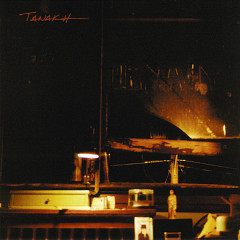
    Sometimes the impact of geography on a record is impossible to ignore, even if we don’t precisely know how much the sound has to do with the location in which it was created. That Jesse Poe’s Tanakh project was started in Richmond, Va. — my hometown — won’t mean much to most people, so outsiders will have to trust me when I say that elements of the city are captured on this self-titled double album.

    During this time in Richmond, Poe lived with several musicians in a former Masonic Temple in Church Hill, one of the city’s oldest neighborhoods. Tanakh’s HQ was called the Pyramid Institute and they made noise with whatever happened to be lying around. For instance, a broken piano found on the street was disemboweled and the wires were bolted to the walls of the space and tuned. The bowed drone of those strings provide the tonal center for this record.

    The first disc contains an almost hour-long piece that begins with a simple three-note motif before, one-by-one, various sounds slowly crawl from dark corners of the temple. Some are easy to identify (guitar, piano, short-wave radio, djembe) and many of them aren’t (the various flavors of metallic rustling may or may not come from the mounted strings), but it all coalesces into a singular sound universe that implies industry, decay, anxiety, and, possibly, evil. The second disc is just under 30 minutes and features some of the same types of sounds but with added cello and more guitar, as Mick Turner-style moments of blurred lyricism mix with the groan and wheeze. Both tracks are effective slices of dark ambience.

    This is a much different Tanakh than we’ve heard on their past two records, the second of which saw Poe moving increasingly toward a song-oriented direction. But here there’s no voice and nothing approaching a tune — just two long pieces of constantly shifting drone. It has something of a classic Alien8 sound, as these two tracks fit easily next to some of Sam Shalabi’s quieter improv releases. It’s easy for such records to devolve into a messy thicket of meaningless noise, but the players in Tanakh are generous with space and have a strong sense of balance, allowing the listener’s focus to shift gradually from one detailed and finely rendered element to the next.

    One final bit of history: The church on this hill where the album was recorded is St. John’s Episcopal, where Patrick Henry gave his “Give me liberty or give me death” speech in 1775. The church is still standing and the blocks surrounding it are filled with ancient brick homes in various states of repair, endless tangles of wrought iron, and dark, overgrown alleyways with broken cobblestone underfoot. Church Hill is, in short, one of the more shadowy and gothic places in America, and Tanakh is an excellent choice for its soundtrack.

    … Tanakh are generous with space and have a strong sense of balance

    Spells Disaster… in The Wire

    “Critical Beats”, Phillip Sherburne, The Wire, no. 249, November 1, 2004
    Monday, November 1, 2004 Press

    Those who think minimal Techno should be dark, dour and deadly serious are advised to stay far away from Spells Disaster…, Crackhaus’s second album. Even the presence of Matthew Herbert, who leads off the album by talking about his practice of sampling “accidental” sounds (the quote itself is itself sampled — ah, the irony from a press interview Herbert once gave in the Crackhaus duo’s home town of Montréal) can’t disguise the goofiness at work on Spells Disaster…. Crackhaus rhythms have always taken House music’s washing machine and propped it up at an absurd tilt, leaving each 4/4 cycle spinning with a ridiculous, lopsided swing. Here they throw a batch of bluegrass 78s into the load — hence titles like Soggy Bottom Bass and create something that could only be described as hillbilly House. Instead of Moby’s earnest anachronisms, however, Crackhaus draw from the most deliriously bent string plucks and harmonica squeals, using them as flashes of colour between their stuttering, static-laden beats.
    Those who think minimal Techno should be dark, dour and deadly serious are advised to stay far away from Spells Disaster…
  • 1
  • 2
  • 3
  • 4
  • 5
  • 6
  • 7
  • 8
  • 9