electrocd

Blog

114 results
  • 7
  • 8
  • 9
  • 10
  • 11
  • 12
  • 13
  • 14
  • 15
  • Estrapade in Music Club

    “Recensione”, Music Club, June 1, 2005
    Wednesday, June 1, 2005 Press

    Lo scetticismo regnava nella mia mente al momento di ascoltare Estrapade (termine francese con il quale, nel medioevo, si indicava una particolare forma di tortura). Scetticismo non certo derivato dal fatto che la line up di morceaux_de_machines, composta da A_dontigny ed Érick d’Orion, fosse stata per l’occasione integrata da tre saggi del suono concreto, elettronico ed elettroacustico come Otomo Yoshihide, Martin Tétreault e Diane Labrosse, quanto dal timore che il lavoro fosse indirizzato verso l’esplorazione dell’universo microscopico, finendo così per appiattire conoscenze e competenze sulla ricerca del nulla…! E invece è stata graditissima sorpresa lo scoprire (attraverso l’ascolto delle nove tracce) che l’interazione tra le diverse menti pensanti ha portato alla realizzazione di un disco di noise improvvisato assolutamente di valore, con un approccio che ha molto più in comune (al di là di quello che è poi il risultato finale) con l’hip hop, che con le avanguardie sperimentali a cui si è soliti associare simili sonorità. morceaux_de_machines e compagni (i cui interventi sono tutti stati catturati dal vivo) si sono prodigati nella creazione di forme radicali (seppur mai estreme) di rumore elettronico modulato e modulare, spesso industriale, contaminato anche da derive ritmiche drum’n’bass e da inflessioni IDM ruvide, frutto di una notevole creatività e con un costante mutare di forme musicali e di scenari esplorati, oltre che suggestionati. Molto buono.

    Estrapade, morceaux_de_machines in Cracked

    “Review”, Cracked, June 1, 2005
    Wednesday, June 1, 2005 Press

    Not at all an easy piece. Use headphones with caution. Estrapade makes you believe that there is more variety in noise than in pop music (or all harmony). The electronically produced noise ranges from wailing folklore singing to the bang and clang of a giant steel factory, from the microelectronics of neurons ticking within a small creature to being strapped to an 8-way highway overpass with heavy traffic. Not to mention the mingling noises of a handful of hobby DIY-fanatics meeting to build a small steel-structure in their basement. What you’ll learn is that there is more to frequency than just sound, that there is structure in chaos and that origins of sounds are of no interest. The lesson takes up 75 minutes, so lean back and enjoy.

    Maybe it is the air in Canada. Or the vast territory of land all around. Or maybe it is just the people, the society as a whole and in parts and the overall way of living in the big empty country that makes so many interesting music-projects possible. Apart from the tradition of Neil Young there is a lot of music interesting music there. Abstract HipHop (Ghislain Poirier), great electronica (Vitamins For You), even better epic alternative music (with Constellation and friends just too many to mention) and some noise and avant-garde noise. I guess, a sentence like the above does injustice to almost every country by being a platitude with changing names, but there has been an increased influx of avant-noise and music from Canada (and post-hardcore instrumental records) into the Cracked headquarters lately, and since we don’t accept any as our own perceptions and since these two flows come together so neatly in Estrapade I found such a statement justified. In spite of all its obvious blandness.

    Noise in itself is an interesting factor. In everyday life it is usually regarded as a nuisance, something to call the police for or to shout at your kids to stop the noise. In arts noise has become an established factor. For instance, I watched the movie One Hour Photo last week mainly for two reasons: 1) my wife wanted to see it. Which is usually reason enough to start watching with her, but most often movies on tv don’t keep my attention for long. 2) the atmospheric sounds in the background at all times. That movie was interesting in its colour-scope and pictures as well as in sound-aspects (the story itself is ruther dull, I mean, there is a lot of freaks out there and most of them are pathetic if you peel away their freaky surface. Which is true for the old straight guy in the gey suit behind the counter as well as for the dreadlocked techno-freak riding the subway). Sound in movies as sound in our everyday environment is usually disregarded or even discriminated against. Why all the longish foreplay in this review: because it was the labour of many artists to bring noise back into the light of attention with music lovers all around. Even more, to be able to call noise, even pure white noise “music” is an important progress. (Wait up for the first Merzbow-release to grace these pages in a few days ahead.) And those keep on still, though mostly unregarded and as underground as you can get.

    From the frequency-daddling noise-pitches to the droning echoes and epic atmospheres, Estrapade features a lot of high class noise variety. Also the unfriendly variety of ear-splitting noise-waves or the even more uncomfortable high frequencies that can make you physically sick if you are so inclined. A_Dontigny and Erick d’Orion, long time collaborators and the two minds behind morceaux_de_machines, like their noise mixed and in differing styles, obviously. But they never get bland, superficial or obvious about it. And they like to add a little spice and humour here and there. On the track Onanisme (what a name, makes me think of the name of their radio program: Napalm Jazz – quite a funny for serious avantgardists) they take back the stomping industrial beats from time to time to introduce a siren or the sound of wind blowing and other noises closer to the human ear than laptop glitches. The inclusion of various co-collaborators like Otomo Yoshihide, Diane Labrosse and Martin Tétreault adds to the eclecticism of the mix, by adding turntables, scratching, sampling, and ever so on.

    I could never do much with the term music concrete, except for some music standing in the room so loud and vast that the waves of sound form an almost concrete block to bang your head against. Especially in a live setting – as there are some live tracks and some studio tracks on here, you guess which is which – the experience can be very stimulating and exciting. The pathway is narrow though and a lot of times avantgard electronic noise turns into bland trickery or a circus act on the one side or to boredom galore on the other side. (Now ask which one of the two Hasswell belongs to?) The variety and dynamics of Estrapade makes the record stay on the golden path. Even those tracks that carry on for over ten minutes have enough offering to keep you interested – but people who like to listen to noise CDs are used to over-one-hour single tracks, I guess.

    As morceaux_de_machines state themselves in their small but interesting innersleeve-manifesto, theirs is “anti-music” in an violent and art-terrorist way, which waves a languish hand at sampling’s and destructionist’s long tradition in art, but they well know that there actually is no such music as anti-music (the reasoning is hidden in the paragraphs above).

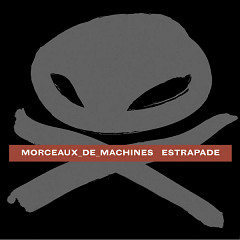
    From the frequency-daddling noise-pitches to the droning echoes and epic atmospheres, Estrapade features a lot of high class noise variety.

    Estrapade, morceaux_de_machines in Paes

    “Critica”, Rui Eduardo Paes, Paes, June 1, 2005
    Wednesday, June 1, 2005 Press

    Os canadianos Aimé Dontigny (gira-discos) e Érick d’Orion (computador) tiveram antes um projecto com o mesmo nome do programa radiofónico que mantinham na CKIA, Napalm Jazz, e se o anterior título (liberum arbitrium) da fórmula morceaux_de_machines era mais comedido do que este Estrapade, a moldura das suas acções continuava a ser o “noise” improvisado, agora elevado à centésima potência com as colaborações, em três das faixas (as únicas registadas ao vivo), de Otomo Yoshihide, Martin Tétreault e Diane Labrosse. Mais do que alguma vez aconteceu, a teatralidade das situações musicais que constroem é uma estratégia assumida, tanto assim que a própria etiqueta responsável por esta edição, a No Type, fala no “théatre de la cruauté” de Antonin Artaud para apresentar o disco, dele dizendo que é “impermeável à falsa sentimentalidade da harmonia” e “ferozmente desconstrutivo”. Decididamente, as abordagens “onkyo” e “lower case” não fazem o pleno da electrónica actual. O que aqui encontramos tem a mesma entrega e o mesmo “drive” do John Coltrane de Interstellar Space, com contribuições tanto da electroacústica “culta” como do hip-hop e do death metal. Os dois músicos falam mesmo em “maximalismo” para descrever tais procedimentos, em clara oposição ao legado minimalista que hoje marca a frente digital.

    Os dois músicos falam mesmo em “maximalismo” para descrever tais procedimentos, em clara oposição ao legado minimalista que hoje marca a frente digital.

    Puzzles in Westzeit

    “Kritik”, Klaus Hübner, Westzeit, June 1, 2005
    Wednesday, June 1, 2005 Press

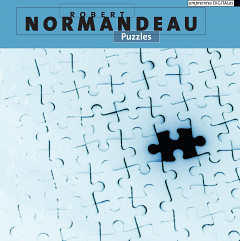
    Erst das plötzlich einsetzende Knistern, das wie Stückwerk erscheint und plötzlich ausufernde Lärmcollagen nach sich zieht. Schläge wie mit dem Dampfhammer rasen durch herzkammerflimmernde Geräusche. Puzzles versammelt fünf Stücke, die Robert Normandeau für das Theater komponierte, unter anderem für Heiner Müllers “Hamletmaschine” und “Miss Julie” von August Strindberg. Sie wurden speziell für die DVD-Audio-Produktion neu gemixt. Ausgiebig reflektieren die üppig angelegten Soundlandschaften das Charakteristische der sehr unterschiedlichen Theaterstücke. Lebensdramen und Todesfugen gleichermaßen scheinen in der Musik Normandeaus zu zerspringen. Das schäbige, perverse Lachen in Hamlet-Machine with Actors bebildert die radikale Theaterauffassung Heiner Müllers in seinen wesentlichen Strukturen. Industrie und Ästhetik scheinen da eine Symbiose eingegangen zu sein, die sich in schmerzhafter Geräuschdichte bis zur extremen Belästigung äußert.

    Puzzles in De:Bug

    “Kritik”, ASB, De:Bug, June 1, 2005
    Wednesday, June 1, 2005 Press

    Das franko-kanadische Label für Elektroakustik kommt hier mit seiner ersten DVD-Audio-Veröffentlichung, die das Material komplett jeweils in Sechs-Kanal Surround, Stereo und im MP3-Format enthält. Normandeaus siebte Veröffentlichung besteht aus fünf Theaterkompositionen für u.a. Stücke von Heiner Müller, Strindberg und Sophocles, die speziell für „Puzzles“ remixt worden sind. Die Stücke sind dementsprechend unterschiedlich, von einem kurzen vokalbasierten Track über flächige Loops zu großen digitalen Orchestern. Großes Kino fürs Ohr, glücklich derjenige, der eine Surround-Anlage besitzt. 4/5

    4/5

    Front, No Type in e/i magazine

    “Territorial Imperatives: Canada’s boldest and brightest labels…”, Tobias C van Veen, e/i magazine, no. 4, June 1, 2005
    Wednesday, June 1, 2005 Press

    […] Nothing can be farther from the canon of academic experimentation than No Type’s unique, often grassroots and utterly leftfield roster. While the label is well known for its online releases (including brilliant early work by Tomas Jirku), a slew of output as the label went to CD circa 2002 established its tenacity in the field of improvisation and composition. The admixture is found in Max Haiven and Jon Vaughn’s Front (2003), which is one of few forays in non-academic music to establish parameters of interpretation for the listener. This eruptive, somewhat spontaneous, rough, at times chaotic, other times meditabve disc is a disjointed narrative of the history of electronie music; or, the history of electronic music from the front of its cabal — its avant-garde. In live performance at Rien à voir in Montréal in 2003, Vaughn rolled down the stairs in a blanket and flashlight, then fied up an antique turntable with rope after playing slo-motion air guitar; meanwhile, Haiven scribbled on a script before the two did mixer-battle with noise and collage cut-ups, ending with an embarrassingly bad songwriter duet. It was, at once, both incredibly naïve and yet absolutely self-reflexively so. […]

    Nothing can be farther from the canon of academic experimentation than No Type’s unique, often grassroots and utterly leftfield roster.
  • 7
  • 8
  • 9
  • 10
  • 11
  • 12
  • 13
  • 14
  • 15