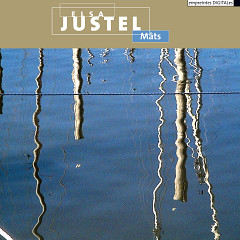
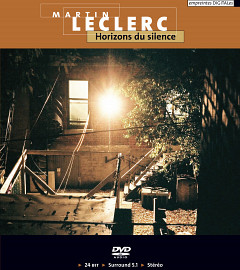
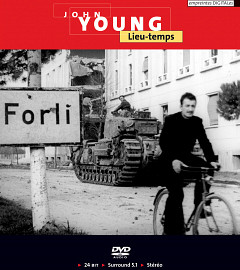
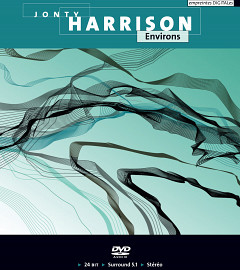
Maneggiare le releases di casa empreintes DIGITALes significa confrontarsi con alcune tra le più interessanti proposte della musica concreta contemporanea, con tutte le difficoltà del caso, e la prova specifica del francofono
Der Neuseeländer
As I float throw a pre-listening hour, just letting all the pieces on the CD play, unconsciously, without aim or 100
Track 1.
The title is explained as a Breton word, meaning ballad or lament. This is funny, since it sounds so much like a Yiddish word pronounced “kvetch”, which also has to do with lamenting, meaning someone who complains a lot
The piece hits home without any false modesty, with a bang and a bounce, but shortly the surroundings turn grainy, and then spooky, reverberant… and even rubbery. The ambience changes speedily. This is one of the effects that you can play with in free art music, but it’s not done too much.
At times I can’t decide whether I hear balloons being rubbed or bacon being fried… Small sounds — now and then extremely short instances of thin rain sprinkling across tin surfaces — makes for a certain atmosphere, which is, however, lost in some more violent event
Track 2.
I’m not sure what to make of
Track 3.
The onset is a mystical one — nature mystery
You have to give
Track 4.
This is an incredibly beautiful work, shining and squeaking with candy bar lights and sweet nothings
Track 5.
I get an ancient Australian feel in here, perhaps induced on me by the likeness of dijeridoo murmuring deep, emphatically, as black water seeps up around tree stems or crocodiles inside my imagination. Like in earlier works by
A piece like
Track 6.
Fort the first time a purely lingual progression from the start, unintelligible morphemes, male and female, tangling down like ends of old rope from the ceiling, eventually losing meaning altogether, adhering more to whistling reverberations in the shape of voices, than original voices. Guttural echoes of more real vocals spring forth like tics on the closed face of time, somebody wiping sweat from a forehead. On the backdrop of alien space sounds on distant horizons, syllables appear like Mene Mene Tekels, while sound poetic saliva spittings a la late
Yes, shreds of conversations (or monologues
Track 7.
Track 8.
To begin with you just notice a lofty, soaring and slightly plucking sound, and a certain motion not unlike the swirling spirals of cotton candy. You hear the flourishing overtone patterns of stroked piano strings and the
This is perhaps the most careful and delicate electroacoustic course of events on
I reviewed another
Of late
Track 1 (14 subtitles)
Yesterday, when I listened through this [disc] for the first time, I was quite surprised and mighty pleased, for a couple of reasons. First of all, I always enjoy a kind of art that has it in it to surprise me, to give me something that I hadn’t expected, and which made me think in directions that opened new areas of life to me. This is an ideal artistic situation, but very rare. Perhaps this revolutionary feeling in perception of art — art as the distillate of life
I believe I got my first taste of
The background of
This whole story and this set of sonorities keep mixing times passed and times present in a magic way, which we sometimes can experience in art. I recall another time, in the 1980s or 1990s, when all viable 78s were re-released on CD, bringing a temporal depth to available phonograms. I recall how I fell in love with an opera singer from the 1920s —
A very personal trait of
When I listen to this long work of more than 53 minutes, in 14 named sections, this is what I feel, this almost ghastly experience of time and history as one long NOW — and I believe this is the best way, the most honest and respectful way to experience time, to regard our fellow sentient beings, because whenever anything happens to anyone, it happens smack dab in the midst of that person’s here and now, and nothing else really happens or exists.
The swing of a magic wand gets the music going
The narrator continues his account of the developments of the war, locally around this part of Italy, by Forlì, more and more surrounded and sucked-up in
A woman talks in Italian on the backdrop of a thin piano speaking to itself in the corner of a large, desolated hall of the civil society, while one army has left and the next one hasn’t yet arrived, and time holds its breath.
The misfortune in the shape of a giant German bomb, destroying the family, is told by
Track 2.
This second and last work on
This is
To me,
Track 1.
A naturalistic swell, ocean touching shore. Heavy night, massive density. Dense masses. Roars shifting weights. Weights shifting roars. The gods scoping fluids. A sudden immersion, submersion, lowering — a dive
Rippling closeness and distant thunder. The skin-tight rippling grows on you, louder, tighter — closer, clearer — blotting paper tight. You hide with a gang of pikes in the shadow of a hull, beneath a silent wreckage, air bubbles rising, percussively
The thunder of the undertow dies away, while the close-up ripples and their sonic shadow play form a new kind of submarine ensemble, all but imperceptibly, very gradually taking effect, slowly changing things around, taking power in the rushing of wonderfully nuanced gray, brown, black and transparent fluids, in a lustful game of ever-changing pressure and bewildering motion, turning the spirit of the times around as the ocean out in the night moves over in its sleep and mumbles…
Tracks 2 — 5.
“
Track 2.
“When we moved house, we inherited a heavy garden roller with a concrete wheel and a rusting steel tyre [tire is spelled tyre in British
These are indeed rocky, rough, crude sounds, basic and bouncing, splintering
The only thing that perhaps will be hard to fit into my Lapland vision is the squeaking sound from the garden roller’s rusty wheel… A wild aspect of the close-up rock sounds is their spatiality, phasing madly
Track 3.
Yet more crudity
Track 4.
Wheezing whispers of sound, slowly growing contours and directions in an accelerating descent into a hellhole of heart-burned gravity. Everything is in a hurry
Track 5.
Bouncing, jittery bubbles, and the unlikely, cozy sensation of water scarves around your neck — the sound of close-miked rivulets like nightjars
Rain can sound like fire
Track 6.
“The everyday sounds of a suburban garden in early summer evoke more disturbing memories and imaginings as the listener drifts into semi-slumber…”
Distant airplanes beyond the cityscape provide a basic murmur of the common cardiography of existence, while the familiarity of magpies scratch calligraphic patterns in three-dimensional recollections through our close pasts. Nothing is happening in its usual pidginlike, muffled growl. This modern life is a curious mix of animalism and machinery.
To sum this CD up in a very basic way, I’d like to express my loud and clear admiration for