electrocd

Blog

44 results
  • 1
  • 2
  • 3
  • 4
  • 5
  • 6
  • 7
  • 8
  • Radiolaria in Radiohoerer

    “Release Tipp: Elektronische Spielweisen”, Radiohoerer, May 21, 2024
    Wednesday, May 22, 2024 Press

    Der modulare Synthesizer Buchla erlebt seit einiger Zeit eine Renaissance. Ana Dall’Ara-Majek hat ihn als Quelle für ihre Arbeit genutzt. Ihr Zyklus Radiolaria ist dem Leben und den Strömungen im Meer gewidmet. Dass der „Ton Steine Scherben“-Schlagzeuger Wolfgang Seidel auch elektronische Musik komponiert bzw. damit experimentiert, auch mit einem Buchla, ist mir neu und umso größer die Überraschung, hier seine Experimente zu hören. Die musikalische Nähe zu seinem Freund Conrad Schnitzler ist nicht zu überhören. Church Andrews und Matt Davies loten die Möglichkeiten des Zusammenspiels von Schlagzeug und Synthesizer aus, was stellenweise sehr populär klingt. Dennoch überwiegt der experimentelle Anteil. Ein wichtiges Element in der Musik von Ludwig Berger ist die synthetische Stimme, die uns Geschichten über das Ökosystem und das Aussterben von Arten erzählt. Seltsame Sphären erklingen.

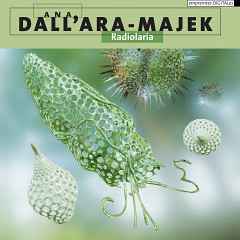
    Radiolaria ist ein Zyklus elektroakustischer Werke mit Klängen aus dem Buchla 200, dem legendären modularen Synthesizer aus den 1970er Jahren. Ich habe im Sommer 2022 während eines Aufenthalts im Elektronmusikstudion (EMS) in Stockholm (Schweden) eine Reihe von Improvisationen auf diesem Instrument aufgenommen, die ich dann als Rohmaterial verwendet habe.

    Der Zyklus basiert auf dem Leben im Meer, insbesondere dem Plankton, das aus einer großen Vielfalt mikroskopischer und makroskopischer Tier- und Pflanzenarten besteht, die von den Wasserströmungen mitgerissen werden.

    Mein Ziel mit dem Buchla 200 war es, eine Sammlung von Klangfarben“ zu schaffen, die die verschiedenen Arten des Planktons repräsentieren sollten. Die ursprüngliche Natur der modularen Synthesewellen spiegelt die Einfachheit der einzelligen Organismen in den Ozeanen wider. Ich experimentierte auch mit dem Raum, indem ich mit dem analogen AKG BX20 Federhall des Studios experimentierte, um die Bewegungen der Wellen und die allgegenwärtigen Unterwasserströmungen darzustellen.

    Die 8 Stücke des Zyklus Radiolaria wurden 2022 im Elektronmusikstudion (EMS) in Stockholm (Schweden) und 2023 im Studio Blue Spider in Montréal (Québec) realisiert. Vielen Dank an das gesamte EMS-Team. Die Realisierung dieses Werkes wurde durch den Conseil des arts et des lettres du Québec (CALQ) ermöglicht.

    … the experimental element predominates.

    Voyages in Moosikk Blog

    “Post”, Mikolaj Furmankiewicz, Moosikk Blog, April 1, 2024
    Sunday, April 21, 2024 Press

    Voyages to album z utworami brytyjskiego twórcy muzyki konkretnej i elektroakustycznej. Na materiał opisywanej płyty składają się dźwięki zarejestrowane w różnych miejscach na świecie. Są wśród nich: trzeszczące drzwi, śpiew ptaków, bijące dzwony, woda uderzająca o brzeg, przejeżdżający samochód, komunikaty wygłaszane na stacji metra, odgłosy zwierząt i natury, padający deszcz, burza, fajerwerki, przelatujący helikopter, harmider ludzki, manifestacja uliczna, czy wezwania muezinów do modlitwy. Wszystkie te rejestracje otaczającej nas rzeczywistości zostały ze sobą sprawnie połączone i wzbogacone elektroakustycznymi efektami. Wspomniane partie elektroniczne nadają tytułowym podróżom niezwykłego kolorytu. Krok po kroku podążamy śladami kompozytora-globtrotera. Ten album to indywidualna historia o podróżowaniu opowiedziana w oryginalny sposób.

    All these recordings of the reality surrounding us were efficiently combined and enriched with electroacoustic effects.

    Contemplations in Bad Alchemy

    “Kritik”, Rigobert Dittmann, Bad Alchemy, no. 123, April 1, 2024
    Friday, April 19, 2024 Press

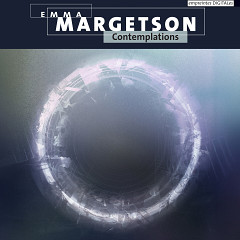
    ’Sonic Immersion: Reaching New Audiences through Sound’ war das Thema, mit dem Emma Margetson (*1993, Derby) an der University of Birmingham promoviert hat. Mit Contemplations (IMED 24189) reflektiert sie, die nun Sound Design an der University of Greenwich lehrt, die Evolution ihrer Klangkunst von 2015 bis ’22, mit dem Akzent auf dem Klang von Zeug in Raum und Zeit. Bei Tick zersplittert das Ticken eines Metronoms. Bei Abstracted Objects kramt sie mit Münzen, Zellophan, Blech. Bei Water Waves lauscht sie der Meeresbrandung. Bei Cimbaal wird in allen Nuancen Cymbalklang abgetastet. Gestört ist, wörtlich, was es ist. Bei Isochrone mischen sich Geräusche eines Fahrrads mit dem Verkehr im Hamburger Elbtunnel und Poesie des Instagram-Poeten Atticus: Life is a tunnel / not a cave / keep walking / and you will find again / the light / you left behind. Auf der Suche nach Einsicht ins innerste Selbst verwischen bei Distorted Illusions Wachen und Träumen, abstrakt und konkret. Ausgang für Sketching Froanna ist Wynd-ham Lewis’ Skizze seiner Frau mit Bleistift- und Kreidestrichen auf blauem Papier. Und Elapsing versucht sich mit ihrerseits schwindenden Erinnerungen gegen das Tempus fugit zu stemmen.

    With Contemplations, she, who now teaches sound design […], reflects on the evolution of her sound art […], with an emphasis on the sound of stuff in space and time.

    Contemplations in SilenceAndSound

    “Critique”, Roland Torres, SilenceAndSound, April 15, 2024
    Tuesday, April 16, 2024 Press

    Contemplations regroupe une série d’œuvres composée entre 2015 et 2022 par la compositrice acousmatique Emma Margetson.

    Travaillant à l’image d’un Bernard Parmegiani, à base d’objets du quotidien, l’artiste nous entraine dans un monde sonore flirtant avec une abstraction futuriste digne de Beatriz Ferreyra.

    Les atmosphères qu’elle développe, se déchirent et éclatent, pour renaitre dans des zones aux turbulences imprévisibles.

    Emma Margetson joue avec les frottements et les caresses, les frictions et les tapotements, jetés dans des tourbillons de saturations filtrées et de réalité augmentée, un peu comme si on se mettait à la hauteur des ustensiles qu’elle enregistre, filmée à la manière d’un Yasujirō Ozu.

    Contemplations révèle l’évolution de la palette sonore de l’anglaise, riche et variée, capable de dériver au milieu de field recordings voltigeurs pour atteindre des cimes d’ambient, aux relents chargées de musicalité subtile. Très fortement recommandé.

    Très fortement recommandé.

    Radiolaria in African Paper

    “Kritik”, African Paper, April 13, 2024
    Monday, April 15, 2024 Press

    Anfang Mai bringen die frankokanadischen empreintes DIGITALes das zweite Soloalbum der ebenfalls in Montréal beheimateten Komponistin und Musikerin Ana Dall’Ara-Majek heraus. Auf knapp über einer Stunde enthält Radiolaria acht als Zyklus konzipierte Stücke auf der Basis eines Buchla 200-Modulargeräts aus den 70ern, denen zwitschernde, blubbernde, brummende, zirpende Sounds keine Scheu haben, ihre Plastizität in besonderen Momenten in Richtung Lärm und kleine herausfordernde Hochtöner auszuweiten.

    Radiolaria contains eight pieces […] whose chirping, bubbling, humming, chirping sounds are not afraid to expand their plasticity in the direction of noise and small, challenging tweeters at special moments.

    Bruit noir in The Sound Projector

    “Review”, Ed Pinsent, The Sound Projector, April 2, 2024
    Wednesday, April 3, 2024 Press

    I’ll admit to a soft spot for the music of Swedish composer Åke Parmerud ever since hearing his 2015 Growl release for this label. Much of the selection on that set satisfied our unhealthy lusts for noise, metal, sampling and industrial music, even if he was doing it in a rather stilted manner. Subsequent item Nécropolis missed a few opportunities for making a truly dark occultist statement (though that was far from his intent), and then there was Grains, a nifty item which showcased earlier compositions predicated on voice experiments.

    Today’s record Bruit noir (empreintes DIGITALes IMED 22179) has such a great title it’s amazing it hasn’t been used before in noise / rock contexts — although I find there’s already a French rock duo by this name, and also a label Bruit Noir Records in Marseilles which put out a tiny number of extreme-Techno EPs. Here, Parmerud gathers together three compositions, leading off with the main event Louder Than Life from 2020-21. It’s in five “movements” much like a classical concerto, even using conventional terminology for tempos, like Largo and Presto. We’re not told much about it except that it’s dedicated to his friend Anders Blomqvist, who died in 2020. Blomqvist was a Swedish electronic composer often associated with Fylkingen, and while not exactly prolific he was held in high esteem by many; his Jaguar Revisited has proven an enduring hit since 1984 and is even shown on the telly. While Louder Than Life might not be as extreme as I was hoping for, I am getting the sense that Parmerud is expressing a deep connection with his friend, and attempting to evoke difficult emotions through this strange, layered music. He hopes we’ll listen to the entire 33 minutes in a single sitting, but also allows for each separate movement to work on its own terms and stand up to scrutiny. The Largo movement is particularly affecting, for reasons that aren’t at all clear; even more nightmarish is its neighbour Presto, which comes across as a confusing post-modern jumble of ideas, even allowing the ghosts of serialism and 12-tone composition to swim into the murky mix. It’s all very abstract, gloomy, and held together by an unfathomable structure; we might even call it “intellectual dark ambient”, though naturally Åke Parmerud has no connection to that genre and remains entirely unhampered by its clichés and stereotypical sounds.

    After that, we go back to 2013 with Raw, a piece written for a commission by the Geiger festival. Apparently the curators of this Swedish event favour “noise” music (probably because they’re based in Gothenburg), so he attempted with this composition to cater to their predilections. He decided to have a go with one of these new-fangled synth software apps, and settled on something called Skrewell from Native Instruments. The world of digital workstations is far from my personal comfort zone, but from notice boards and forums I get the impression that Skrewwell (part of the Reaktor suite of tools) is pretty chaotic — eight noise oscillators capable of modulating each other simultaneously and producing a much scarier version of the generative-synth environment which Brian Eno has made his own. Parmerud had much the same experience, and was evidently chagrined by the “uncontrollable” nature of this Skrewell. He decided to relinquish control and just go for the raw outputs of his experiments, hence the name — settling on a kind of composed-improvised work. He also has to admit he failed on the “noise” benchmark and missed the target by a mile. Raw isn’t especially raw or wild at all (Carlos Giffoni, for one, would use this kind of material as a soothing balm in his hot bath), but it’s still possessed of an eerie quality. One might almost say Parmerud were on the verge of possession by a mysterious ghost or phantom oozing out of his laptop screen.

    Also rather fascinating are the weird faceless tones we hear on Dark Matter, even though the method behind this one — searching for inaudible sounds produced by waves of energy from microwaves, computers, or lightbulbs — is old hat, having been investigated since 1996 by Disinformation, John Duncan, CM von Hausswolff, Joe Colley, Scanner, Hafler Trio, and just about anyone on the Fault in the Nothing compilation. Once again Åke Parmerud doesn’t favour a “sensationalist” approach to the subject, and there’s an open-ended quality to the quiet brooding sounds here that is quite attractive.

    … there’s an open-ended quality to the quiet brooding sounds here that is quite attractive.

  • 1
  • 2
  • 3
  • 4
  • 5
  • 6
  • 7
  • 8