electrocd
  • This website is also available in English.

Blog

2899 results
  • 142
  • 143
  • 144
  • 145
  • 146
  • 147
  • 148
  • 149
  • 150
  • Bridge in Wonderous Stories

    “Recensione”, Vincenzo Giorgio, Wonderous Stories, no. 17, April 1, 2010
    Thursday, April 1, 2010 Press

    Un gioco praticato anche dalla “clarinettista estrema” Lori Freedman che in Bridge si confronta in assoluta solitudine con sette brani a firma (tra gli altri) del già citato Scelsi (Maknongan del 1976) Franco Donatoni (Clair del 1980) e Michel Galante (Flicker che vede l’intervento esterno di Brigitte Poulin al piano).

    Études pour Kafka in De:Bug

    “Kritik”, TCB, De:Bug, no. 141, April 1, 2010
    Thursday, April 1, 2010 Press

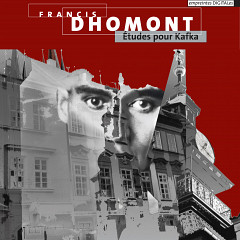
    Neues vom Mann mit der Augenklappe. Francis Dhomont, einer der ältesten lebenden Vorreiter der Elektroakustik, zeigt auch mit 83 Jahren keinerlei Ermüdungserscheinungen. Sein jüngstes Album mit drei Skizzen zu Kafka ist denn auch nur eine Auswahl von Vorarbeiten für ein monumentales Projekt über den Schriftsteller, an dem er seit zwölf Jahren arbeitet. Die drei “Etüden für Kafka“ lassen keine Altersmilde erkennen, von einer Rückbesinnung auf die tonale Musik, wie sie Musique-Concrète-Pionier Pierre Schaeffer gegen Ende seines Lebens zumindest theoretisch einforderte, will Dhomont überhaupt nichts wissen. Bei ihm regiert die Abstraktion, sein einziges Arbeitsmaterial sind weiterhin Tonbänder, bei denen man kaum erahnen kann, welchen Ursprungs die Klänge sind. Von allen Seiten flirrt und sirrt es unbehaglich. Konkret wird er allenfalls im “Brief an den Vater“, dessen Text von einem Sprecher rezitiert, dabei allerdings immer wieder verfremdet und zerstückelt wird. Die Angst des Schreibenden wird als paranoide Entfremdung des Sprechenden von seinen eigenen Worten und seiner eigenen Stimme inszeniert, ohne je plakative Effekte zu bemühen. Eine kongeniale Vertonung, die gespannt auf den Gesamtzyklus macht.

    La notte fa in Wonderous Stories

    “Stadi di Ulteriore Follia”, Vincenzo Giorgio, Wonderous Stories, no. 17, April 1, 2010
    Thursday, April 1, 2010 Press

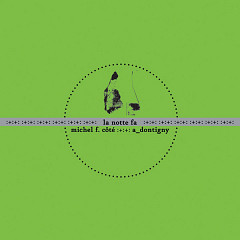
    Ne La notte fa (ovvero l’incontro tra due percussionisti (sic) “inquieti assai”, Michel F Côté e a_dontigny) viene preso in considerazione un substrato elettro-rock trasfigurato da un fitto uso di elettronica destrutturante (ad esempio Ritmi di oggetti ma anche le più soffuse Unlisted Card Number e soprattutto Paxil Origami Club) il tutto filtrato da una propensione addirittura “punk” (Bounce Dat ARN). Molto interessanti gli apporti degli ospiti Alexandre St-Onge (basso), Alexander MacSween (batteria) l’immancabile Bernard Falaise (chitarra) e soprattutto Jean René alla viola.

    La medesima etichetta (&records) pubblica Sainct Laurens di Philippe Lauzier e Pierre-Yves Martel, opera di abbacinante introspezione timbrica dove i fiati (Philippe) e gli archi (Pierre-Yves) vengono dolcemente molestati da un’elettronica diffusa e soffusa. Nascono così piccole gemme come Brazos, Adda e Alz. Tre parole sussurrate nella penombra elettroacustica.

    Andrew Lewis in The Guardian

    “Bangor New Music Festival”, Rian Evans, The Guardian, March 29, 2010
    Monday, March 29, 2010 Press

    Bangor New Music festival, held under the auspices of the university’s School of Music, celebrated its 10th anniversary with its most ambitious programme to date, and no concert signalled the event’s energy and range better than the one given by the BBC National Orchestra of Wales and featuring three firsts.

    The school boasts three notable composers – Pwyll ap Siôn, Andrew Lewis and Guto Puw – and works by them made up the challenging first half.

    Ap Siôn’s Gwales, dating from 1995, pays homage to the late William Mathias, under whose aegis music flourished at Bangor. Building on fragments quoted from Mozart’s Requiem, the work depicts a journey towards the mythical island of Gwales.

    In the first of the new pieces, Andrew Lewis also took us on a journey, this time in and out of consciousness. Number Nine Dream explored the first movement of Mahler’s Ninth Symphony through the hazy veil of the contemporary electroacoustic sound-world, making for an absorbing aural experience.

    Hologram, by Guto Puw, BBCNOW’s resident composer, exists emphatically in the present, with his ascetic approach to structure balanced by a sensuous engagement with sound. It was delivered with startling clarity by the conductor Grant Llewellyn.

    Wales is the spiritual home of the composer Adrian Williams, and the contemplative, questioning vein that its landscape has permitted him to articulate was reflected in his Cello Concerto, premiered here by Raphael Wallfisch. The concerto seeks to reconcile in its single long span an introverted, blues-inflected expressiveness with a freer, unselfconsciously flowing idiom. It was indicative of Williams’s instinctive ability to communicate directly that this was so warmly received by the audience.
    La notte fa in Hour

    “Spins”, Mike Chamberlain, Hour, March 18, 2010
    Thursday, March 18, 2010 Press

    Ritmi di oggetti, the first track on La Notte fa, is an orgy of stripped-down, fuzz-toned rhythm; the second track, Unlisted Card Number, is all textural dub ambient percussion; and the third piece, Paxil Origami Club, sounds like broken-down and refracted disco, with the flashing lights but minus the cheese. And that’s just the first third of the album. Côté and Dontigny piece together their aural constructions from fragments of pop culture with tapes and electronics, cutting up and reassembling samples from sources as diverse as Maurice Ravel, Don Cherry and Ol’ Dirty Bastard into strange and surprisingly accessible electro-dance delights.

    Côté and Dontigny piece together their aural constructions […] into strange and surprisingly accessible electro-dance delights.

    Bridge, Lori Freedman in Vital

    “Review”, Dolf Mulder, Vital, no. 722, March 15, 2010
    Monday, March 15, 2010 Press

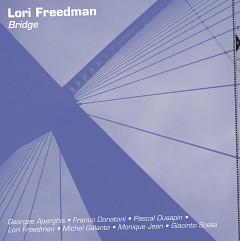
    Lori Freedman returns with a beautifully recorded solo album called Bridge. All nuances and colors of her playing can be noticed and fully enjoyed on this crystal clear recording. Freedman leads us through ten works that have her playing bass clarinet, accompanied by Brigitte Poulin (piano) on Flicker (Michel Galante). Some of them are improvisations. Others are compositions by well-known (Scelsi) and not so well-known composers like Monique Jean, Pascal Dusapin, Franco Donatoni, etc. Improvising and playing composed music are equally important for Freedman at this stage of her career and that’s why we find examples of both of them on this record. The contrasts I experienced do not exist between the improvised pieces on the one hand, and the composed ones on the other. Freedman choose very different works to interpret, offering a diverse richness and many contrasts. For instance, Clair (1980) by Donatelli plays intelligently with jazz idiom and is a pleasantly light and positive work. Scelsi’s Maknongen (1976) remains in dark and low sections that are interrupted by almost screaming outbursts. Improvisation and composition are combined in Brief Candles a work composed by Freedman. The closing piece Low Memory 3 by Monique Jean is the only electroacoustic work. The clarinet is surrounded here with sounds that range from ambient-like to very noisy eruptions.

    Lori Freedman returns with a beautifully recorded solo album…
  • 142
  • 143
  • 144
  • 145
  • 146
  • 147
  • 148
  • 149
  • 150