electrocd

Blog

2899 results
  • 313
  • 314
  • 315
  • 316
  • 317
  • 318
  • 319
  • 320
  • 321
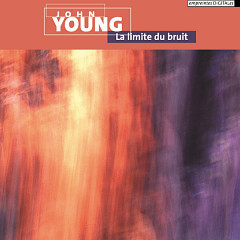
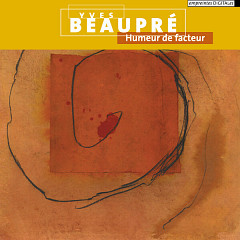
  • Humeur de facteur, La limite du bruit in Vital

    “Review”, Frans de Waard, Vital, no. 329, June 20, 2002
    Thursday, June 20, 2002 Press

    ‘The Maker’s Humour’ is the translation of the title, and in this case the maker is Yves Beaupré. Not just the maker of this CD, but he’s also a professional builder of harpsichords, spinets and virginals. In the mid eighties Yves set up a small electronic studio, partly to do research for his instrument building, but also to create music. By using sounds from the instruments he builts, plus most likely from the process of building these, Yves crafts together six fine electroaoustic pieces. From this side of the musical spectrum we usually get all of these thumbling sounds which fall over each other, but Yves Beaupré treats his sounds in a rather fresh way. By looping, filtering and pitch changing, he builts very interesting collages of sound in the finest electroaoustic tradition, that will probably appeal also to pieces blend into each other and form one large work, rather then six smaller parts.

    From New Zealand hails John Young, who studied composition with Denis Smalley and worked in the UK for a while. He uses acousmatic sounds, ie environmental sounds and processes them. Unlike Beaupré he stays more in the classical sense of processing, even when at times the unprocessed field recordings shine through it. There scratches, wind blowing in microphones, rain falling on roofs and high peeps of metal scraped on glass. In general they are nice pieces, but at times a bit too long and a more accurate mix could have been possible and things would have hold their tension much better.

    Podweek, Oeuf Korreckt in Ampersand Etcetera

    “Review”, Jeremy Keens, Ampersand Etcetera, no. 2002_8, June 20, 2002
    Thursday, June 20, 2002 Press

    Third in the first series of No Type releases following the overwhelming compilation with which they burst out of cyberspace (see 03 for the compilation, 07 for the other two albums). Oeuf Korrekt (Frédérick Blouin) creates varied techno using obsolete software (Scream Tracker, Impulse Tracker) which creates ‘a kind of sequenced, robotic music devoid of fluff, but often complex and surprising’ (David Turgeon describing the computer music pioneers on the liner notes) and this album collects an overview that David considers important, created since 1995. The liner notes accurately describe the music contained here – the software provides a crisp clean sound, simple sounding elements layered and combined to create meaty beaty big and bouncy tracks which often have a kitschy retro sound that is complex and inventive. Simple melodies remind you of Kraftwerk or YMO and other early purveyors. Longer tracks such as King of the Elephants and A Ride in Elephant City demonstrate Oeuf’s skills – they are both meditations on the thudding techno of hardcore or trance, but through varying the surrounding beats, some finely judged breaks and a sense of playfulness, maintain an interest and intelligence. The mood had been set through Get Binary a futzy melodic piece combining the synth lines with some edge and beats, followed by a slower moody murmuring in We Have Arrived. The album then traverses a number of audiostrategies. There are some fine techno pieces like Pochacco, Byte the Funk, Before Bedtime and Podweek Theme which combine bright melodies (some displaying an eastern influence) with varied beats, taken to an edgy extreme in the fast Taco Fiesta. Another longer track Resem One has more of the choppy beats and breaks, and also tunes which sound quite baroque – Oeuf has quite a nice ear – and ends with an autobahn-ish buzzing. Screw my Samples creates a base of rhythm/melody loops with fragments of different sounds with slow and squelched tones plying over, and samples are taken further in Alright Well Okay where that phrase cycles irregularly through a slow stepping beat and synths, expanding to a short narration later on. Voices appear later in Osaka Commtech Nine, obviously Japanese, looping and sticking, leading to a strongly oriental sound in the second half. The Four Channels seem to be a fairly pedestrian beat, woozy scifi synth, piano and a gritty sound paralleling a synth guitar solo, combining to create complex layers. A contrast between more ambient tones and synths sets up Ruffly as a smooth piece, which encapsulates the balances throughout the album — rhythm/melody, fast/slow, simple/complex – which keep the ears alert where many techno albums slide past. An great collection to complete this first set of releases – No Type has successfully entered non-virtual reality.

    … meaty beaty big and bouncy tracks which often have a kitschy retro sound that is complex and inventive.

    La limite du bruit in Fake

    “Kritiek”, Remco Takken, Fake, June 15, 2002
    Saturday, June 15, 2002 Press

    Krabbelend schoolkrijt, een beginnende storm of de intense ademhaling van een geschrokken medemens zijn John Youngs aanleidingen voor transparante luidsprekercomposities. Al is een zekere ambachtelijkheid af en toe hoorbaar in de elektroakoestische bewerkingen van de in Engeland wonende Nieuw-Zeelander, steeds raakt Young de kern. Het ware geluid van regen wordt bepaald door hetgeen dat natregent, weten we dankzij het prachtige Liquid Sky. Als we de regen horen kletteren, horen we eigenlijk straatstenen, bladeren, ramen of het eigen schedeldak. Weer een inzicht erbij, in verwarrende tijden als deze.

    liberum arbitrium, Podweek in Le Devoir

    “Critique”, David Cantin, Le Devoir, June 15, 2002
    Saturday, June 15, 2002 Press

    Deux nouvelles sorties pour l’étiquette montréalaise No Type, qui fait surtout dans l’électronique à risque. Formé d’Aimé Dontigny et Érick d’Orion, tous deux du collectif Napalm Jazz, morceaux_de_machines travaille un art numérique où l’improvisation se mêle au bruitisme. Sur liberum arbitrium, les compositions ressemblent à des fresques abstraites où un univers assez étrange et sombre émerge de cette matière sonore plutôt complexe. Pas toujours facile à suivre, morceaux_de_machines mise beaucoup sur les principes de superposition et d’accumulation. Tel un véritable magma de textures paradoxales, le résultat fascinera quiconque s’intéresse à une musique improvisée non orthodoxe.

    Peut-être un peu plus accessible, Frédérick Blouin, qui utilise le nom Œuf Korreckt, propose une musique de facture assez minimale et délicate. Les titres s’enchaînent sans pour autant imposer une signature originale. C’est un peu le défaut de ce disque, qui n’arrive pas véritablement à se démarquer d’une musique plus tout à fait expérimentale. Loin d’être désagréable, Œuf Korreckt aurait avantage à mieux approfondir une démarche encore à l’étape préliminaire.

    … un véritable magma de textures paradoxales…

    Cycle du son in Ici Montréal

    “Critiques”, Catherine Perrey, Ici Montréal, June 13, 2002
    Thursday, June 13, 2002 Press

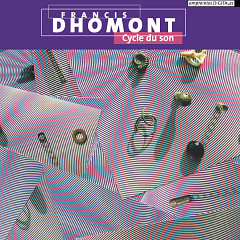
    Francis Dhomont est un électroccousticien de renom. On retrouve sur ce disque plusieurs pièces produites entre 1989 et 1998 et qui ont été publiées pour le cinquantenaire de la musique concrète. Ceux qui connaissent quelque peu l’univers de Dhomont auront un bel aperçu de son travail sur les dix dernières années. Des pièces sont devenues célèbres dans le milieu électroacoustique, on pense notamment à Objets retrouvés, AvatArsSon, ou Novars. Il est ainsi aisé de faire des ponts entre les sons, les structures, les textures et de comprendre les liens qui unissent ces différents axes, mais surtout d’effleurer la méthode Dhomont. Voyage vertigineux, plongée sonore, pour mieux nous immerger ou cœur du son.

    Voyage vertigineux, plongée sonore, pour mieux nous immerger ou coeur du son.

    Podweek, Oeuf Korreckt in Vital

    “Review”, Brian Lavelle, Vital, June 13, 2002
    Thursday, June 13, 2002 Press

    Label-owner David Turgeon makes reference to this compiling release as an ‘overview’ of the musical career of Frédérick Blouin between 1995 and the present day, and, boy, is this a seven year itch that begs to be scratched. Oeuf Korreckt’s music demonstrates for me one of the vital facets of this type of electronic composing, one that brings me back to it again and again over long periods of time: the ability to engage an unstoppable grin and send the proverbial shiver dancing up and down the spine at that moment when two fantastically simple melodic lines entangle themselves in just the right fashion, creating something which is so much greater and more joyous than the individual components themselves. Before Bedtime, with its ecstatic sequencing, is only one example of this phenomenon here and one which could justify itself at twice the length: a beautiful piece of frustratingly simple yet haunting and timeless electronica. Throughout Podweek, layers and layers of harmonic sheets of analog-sounding electronics build and fall in drawn-out simulacra of the peaks and troughs of the very sound waves that go to make up this music. There is a great variety over the space of these 15 tracks and the single disappointment for me was the beat-dominated hardcore of King of the Elephants which outstays its welcome at a gruelling 8 minutes. (Perhaps tellingly, this is the oldest by far of the pieces on the disc.) What is conjured up elsewhere, however, is a backdrop not of laptop screenshine and over-intellectualisations of sound-as-art but of hulking printed circuit boards, strobe lighting and gleaming solder. Anyone who has ever relished the more considered and adventurous residents of, say, the Warp stable, especially Black Dog in its various guises and early Autechre, will find a wealth of wonder to enjoy on Podweek.

    … engage an unstoppable grin and send the proverbial shiver dancing up and down the spine…
  • 313
  • 314
  • 315
  • 316
  • 317
  • 318
  • 319
  • 320
  • 321