electrocd

Blog

2899 results
  • 351
  • 352
  • 353
  • 354
  • 355
  • 356
  • 357
  • 358
  • 359
  • 21 situations in Incursion Music Review

    “Review”, Richard di Santo, Incursion Music Review, June 1, 2001
    Friday, June 1, 2001 Press

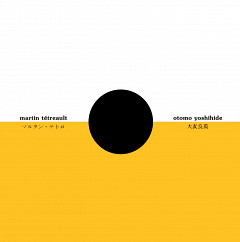
    Released in 1999, Martin Tétrault and Otomo Yoshihide’s 21 situations documents 21 short improvisations for turntables (with and without treatments on the needles and vinyl), sampler and CD. Both Tétrault and Yoshihide are quite well known for both their innovation and daring in the improvisational community, and especially so when it comes to the turntable. Recorded in 1997, these 21 short (never much longer than 4 minutes, but most between 1-2 minutes long) deal with various themes that determine their titles: cartoon, science-fiction, conflagration, chant, jungle, chaos, tension, etc. Satellite, for example, has an eerie cosmic-like sound; cartoon is playful; and chant contains a strange human-made squawking. The mood of this disc is really quite playful, and even though there are some dips into darker themes and sounds, the over-all feeling is one of spontaneous experimentalism. Scratches, scrapings, loops, sharp cut-ups and collage work, grating textures of the needles on treated vinyl, and short glimpses of what the original records may have sounded like are the elements that keep you on your toes throughout the entire recording. Keeping the tracks short is a wonderful exercise for improvisers since it enforces a constraint on their process, an artificial compulsion to compress their language down to its essential elements, charged with meaning and energy. The effects on the listener of this compressed language is another matter, though. An immensely energetic and frantic release, and in spite of the unease it causes in my temperament, it still captures by interest and curiosity.

    … the over-all feeling is one of spontaneous experimentalism.

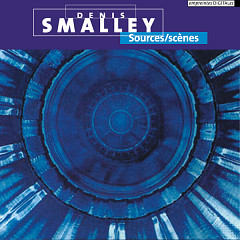
    Sources / scènes in Fat Bankroll

    “Recension”, Petter Ottosson, Fat Bankroll, May 31, 2001
    Thursday, May 31, 2001 Press

    Här har vi ett samlingsverk av en mångfalt prisbelönt elektroakustiker, född i Nya Zeeland men bosatt i England och som grädde på moset också verksam som professor i musik och chef för institutionen för musik vid London City University. Han är tydligen också fadern till begreppet “Spektromorfologi,” som används för att beskriva ljudspektrats forms förändring över tid. Japp.

    Kan då verkligen en sådan här dunderteoretiker åstadkomma något som inte bara är intressant på pappret? Faktiskt, men eftersom det är en “konstnär” som är i farten så underlättas förståelsen för musiken av att man vet hur det var tänkt och hur det är gjort. Och mycket riktigt så finns det en liten beskrivning av alla de processer och tankar som lett fram till de olika styckena på skivan.

    Skivan innehåller musik från olika epoker i Smalleys skapade, komponerade under 26 års tid. Den inleds med ett nytt stycke som heter Base Metals, som är uppbyggt på resonansljud från metallkonstruktioner gjorda av konstnären Davis Shiel. Det är helt OK och tidvis skapas typiskt otäcka, vibrerande ljud. Riktigt bra blir det inte förrän under låt två, Empty Vessels från 1997, som är baserad på resonanser som uppstått i en grupp krukor i Smalleys trädgård. Både trevligt och läskigt och komplett med ljud från passerande humlor, fåglar och flygplan.

    De två vattenbaserade delarna av Tides från 1984 passerar förbi relativt obemärkt, de går delvis i stil med Base Metals, men bär tydligare spår av datorbehandling. Det sista (och äldsta) musikstycket Pentes är konstruerat av mestadels transformerade instrumentljud, en också ljud som är helt syntetiska. Smalley lägger till detta harmonier av orgel/säckpipeljud från ett för mig okänt instrument som kallas “Northumbrian Pipes” och detta gör Pentes till det mest musikaliska stycket på skivan. Trots detta är skillnaderna i ljudbilden ganska små mellan de tidigare och senare kompositionerna, oväntat små med tanke på att det ändå skiljer 26 år mellan skivans första och sista låt.

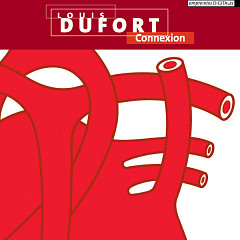
    Connexion in De:Bug

    “Kritik”, xenya, De:Bug, May 24, 2001
    Thursday, May 24, 2001 Press

    Soundscapes der imaginären Art, kaum faßbar wie die Titel selbst, und dennoch besteht da eine Verbindung, eine luftige zwar, wie die herumschwirrenden „luminous particles“ in Transit (1998), die zu einer „continuous discontinuity“ zusammengemorpht immer wieder die Klangmaterie beschneiden, „crevasses between sky and sky“ figurieren. Hierzwischen kann sich so etwas wie Übergang ereignen. Zénith (1999) ist eine „formal expansion of form“, die den Klang und seine Entwicklung von Spannung und Entladung, „rupture/catharsis“ ebenso betrifft wie das sphärische Umherschweifen der Singstimme, bis sie dann semi-phonetisch an Gestalt gewinnt. Oder ein kühles environment von Feuer und Öl spuckenden, in der Sonne glitzernden Raffinerieanlagen nahe Pointe-aux-Trembles (1996), wo die Zeit stillzustehen scheint, die große „maman machine“ beschworen wird, „amène moi“! Und die Verknüpfungen, die diese Maschine pars pro toto zwischen „elasticity/contraction“ (Décap, 2000), zwischen den vier Plateaus vollzieht, bleibt zwar unmerklich, kaum sichtbar, aber es funktioniert. 3/5

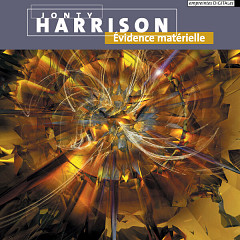
    Évidence matérielle, Jonty Harrison in Le Devoir

    “Trois aspects du bonheur”, François Tousignant, Le Devoir, May 19, 2001
    Saturday, May 19, 2001 Press

    Il faut bien que je vous parle de ce disque pour deux choses. La première s’impose: la beauté de la musique. Jonty Harrison est un très grand compositeur et cette sorte de portrait nous emmène dans tellement d’univers variés qu’on s’étonne de la puissance d’imagination dont est capable l’espèce humaine. Ici, le critique a tout dit et laisse la place à votre bon vouloir d’entendre en vous le recommandant à tout le moins chaudement, même aux rébarbatifs à l’acousmatique.

    La seconde est une vraie farce, de celles qu’on ne commet qu’avec la plus complète sincérité. J’ose donc ici une sorte d’impudique confidence. En entendant Klang (œuvre magnifique), je n’ai pu m’empêcher de penser à des cloches japonaises du temple. Je maintiens: c’en est vraiment le son. Mais une amie m’a dit se retrouver dans sa cuisine et ses casseroles en entendant cela. Quelle honte: je croyais à plus de noblesse et pourtant oui: ce sont des casseroles: je fus berné et m’en confesse sans modestie.

    Jamais batterie de cuisine ne fut si résonnante et riche de potentialité. Et, effectivement, la poésie sonore s’enrichit de cette vision qui trouve sa source dans le hasard du quotidien; Cage avait raison de dire que la musique, dans le fond est plus dans l’oreille de celui qui écoute que dans celle de celui la fait. Il y a toujours un impondérable quelque part que l’artiste transforme et qui — Jonty Harrison — devient révélateur. On voudrait bien des mots pour dire cela. Heureusement il y a mieux, à savoir la musique. C’est plus que suffisant.

    … un très grand compositeur… on s’étonne de la puissance d’imagination dont est capable l’espèce humaine.

    Connexion, Évidence matérielle, Traces, Sources / scènes in Skug

    “Kritik”, Wolfgang Fuchs, Skug, no. 47, May 9, 2001
    Wednesday, May 9, 2001 Press

    Elektroakustik sagen die Einen, Ambient die Anderen. Schwammige Begriffe, die aber doch das Spektrum des kanadischen Labels empreintes DIGITALes gut beschreiben. Verzeiht uns die Schubladen.

    Wenn ich die Gemeinsamkeiten, oder besser die Parallelen der mir vorliegenden Veröffentlichungen auf empreintes DIGITALes beschreiben müsste, so könnte das mit der Umschreibung »Walk In The Park« eventuell gelingen. Gemeint ist damit der Verweis auf Brian Enos Parkbank-Aufnahmesessions, in denen dieser nicht unbekannte Vertreter der sogenannten Ambientmusik – unter welchem Aspekt hier Ambient beleuchtet wird, sei der Unvollständigkeit halber mal ausgelassen – Ausschnitte aus dem täglichen Treiben im Central Park mit seinem Aufnahmegerät konservierte und einer nachträglichen Studie unterzog, in deren Verlauf er jeder Klangprobe einen Wiedererkennungswert abringen konnte.

    Bei Louis Dufort und Denis Smalley werden Bahnhöfe, Industrieanlagen und Flugplatzeinflugschneisen in den Klangraum aufgenommen bzw. dieser um jene Komponenten erweitert. Dieses konkrete Material wird aber nicht nur in zitathaften Einsätzen einem musikalischen Prozess zugeführt, sondern aus seinem ursprünglichen Rahmen herausgerissen, um mehr oder weniger manipuliert und veredelt in die Chronologie der aufgezeichneten Geschehnisse rückgeführt zu werden. Daraus ergeben sich abgeschlossene Klangreisen mit durchaus vertrauten Spannungsbögen – man stelle sich etwa eine spätnächtliche U-Bahnfahrt vom Wiener Stephansplatz mit Linienwechsel nach Floridsdorf vor –, die ein passives Hören (Klangtapete) sehr gut abblocken können.

    Kompositorisch strenger und vielleicht auch arithmetischer gehen die Labelkollegen Adrian Moore und Jonty Harrison mit ihrem elektroakustischen Hantieren vor. Der 32-jährige Moore, ehemaliger Student bei Jonty Harrison an der Universität von Birmingham, gliedert seine Werke auf»Traces«grob in drei Klassen: »those verging towards the abstract«, »those focusing upon re-hearing natural sound-objects« –»Study in Ink«ist das Ergebnis einer musikalischen Studie eines Markerstiftes auf einer Tafel und die Auswirkungen des Austrocknens dieses Stiftes auf dessen Klangverhalten – und »the radiogenic«. Letztgenannter Kategorie weist Moore sein Stück»Sieve«zu, in dem er das eingesetzte Material von Information, Sound und Bedeutung in Bezug auf den Verwendungszweck zu entkoppeln versucht. »If one forces listening at the wrong moment, the clarity of the listening experience changes and something ‘musical’ can sometimes be heard”. Auch bei Jonty Harrisons»Évidence matérielle«steht der Interpretationsfreiraum für den Hörer in einem interessanten Verhältnis zu den vom Musiker intentierten Assoziationsketten. Manche Passagen klingen nach Herumirren auf Straßen zur Rushhour, aus unterschiedlichen Positionen betrachtet. Hinter den Kulissen schöpft Harrison jedoch aus einem umfangreichen Fundus an Tools, etwa aus Holz und Metall im Spannungsfeld zu rein elektronischem Instrumentarium.

    Dieses gekonnte Reduzieren auf die akustischen Ereignisse an sich und das damit einhergehende Fördern und Fordern des Hörens macht das mittlerweile elf Jahre alte Label empreintes DIGITALes zu einer wichtigen Plattform für zeitgenössische Elektroakustik.

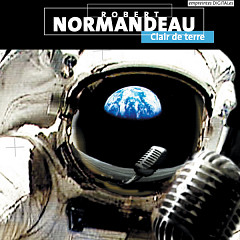
    Clair de terre in The Irish Times

    “Review: Sonorities Festival of Contemporary Music”, Martin Adams, The Irish Times, May 8, 2001
    Tuesday, May 8, 2001 Press

    The four days of the Sonorities Festival of Contemporary Music offered a hectic round of musical and other events. There were nine concerts between Thursday night’s (which was reviewed in this newspaper on Saturday) and the final concert on Sunday afternoon, plus a steady round of research presentations, discussion groups and lectures. The last included an appetising overview by Síle O’Modhrain of the Massachusetts Institute of Technology’s plans for its Dublin-based offshoot, MediaLab Europe.

    One major loss was the cancellation of Sunday night’s concert by the Lotus String Quartet (and their subsequent one in Dún Laoghaire) because of the illness of a player. They were to give the première of Kevin O’Connell’s String Quartet, plus important 20th-century works.

    So the weekend was dominated by electroacoustic music, largely because the festival was hosting the annual conference of Sonic Arts Network, a British-based concert, education and information resource with a worldwide membership, plus affiliated institutions. SAN’s mission to develop the relationship between technology and music was reflected in an impressive array of electronic gadgetry and inventiveness at each of its concerts.

    Technology’s temptations are not easily resisted; nor is its diversity easily controlled. Sound creation and reproduction have developed enormously. Axioms of what art should be have lost their power. This is a world of true and idealistic anarchy, where each work seeks to define its own terms.

    The most emphatic affirmations of that kind tended to have a message. For example, Richard Whitelaw’s Urban Odysseys 2 uses the voices of homeless young people in collage with natural and artificial sound; Nikos Stavropoulos’s New Order applies similar techniques to speak of globalisation and Americanisation. Their emphasis excludes interpretation. Other collages of everyday sound, such as Robert Mackay’s Postcards of the Summer and John Levack Drever’s Phonographies of Glasgow, leave things more open.

    Some of the electroacoustic works were more obviously musical, albeit with metaphorical undertones. Iain McCurdy’s Collapse “focuses upon the gestural characteristics of various materials under stress and strain”, and Peter Manning’s In Memoriam CPR evokes the Canadian Pacific Railway, yet neatly side-steps depiction. They typified Alistair MacDonald’s observation in the programme note for his own The Tincture of Physical Things, that “much electroacoustic music tries to perform a sort of alchemy… to change the nature of “ordinary” materials.’

    Apart from a concert of jazz improvisations, only six of the 33 works played from Friday to Sunday used “ordinary” instruments. Examples were Michael Clarke’s Prism, which filters trumpet notes through a battery of spatially separated microphones and loudspeakers, and Rodrigo Sigal’s Tolerance II for tape and cello, an absorbing exploration of contrasting yet coexisting sonorities. But the highlight among these pieces was Phases by the Argentine Horacio Vaggione (b. 1943). Its language was a blast from 30 years past; but its tension between pre-recorded sound and the natural sonorities of piano and clarinet — wellplayed by Philip Mead and Linda Merrick — had a concerto-like focus which rendered irrelevant any concerns on that account.

    For electroacoustic music, the search for order within an infinite range of possibilities seems inescapable. Some composers succumbed to technology’s temptations, and the gestural language was sometimes too reminiscent of composers as far back as Varèse. But it seems significant that most pieces lasted between nine and 15 minutes, and that so many differing works should have large-scale patterns in common: closure initiated by a late recall of the opening, ABA structures with variation or compression in the last section, recurrence of distinctive events, etc.

    Nothing suggested a resolution of these issues more than the music of the conference’s guest composer, Robert Normandeau. Born in Québec City in 1955, Normandeau seeks to define syntax and meaning, often by borrowing concepts from cinema — colour, framing, closeup, and so on. He commands the medium through total craftsmanship, an acute and critical ear, material precisely fitted to its purpose and a control of time and unfolding ideas which is almost symphonic. Erinyes, commissioned by the Sonorities Festival, left the impression of complete integrity and of things to be discovered on repeated hearing. Clair de terre was more demanding. One of the most telling points about its enormous variety was that the 35 minutes it lasted felt more like 20.

    … total craftsmanship, an acute and critical ear, material precisely fitted to its purpose and a control of time and unfolding ideas which is almost symphonic.
  • 351
  • 352
  • 353
  • 354
  • 355
  • 356
  • 357
  • 358
  • 359