electrocd
  • This website is also available in English.

Blog

2899 results
  • 429
  • 430
  • 431
  • 432
  • 433
  • 434
  • 435
  • 436
  • 437
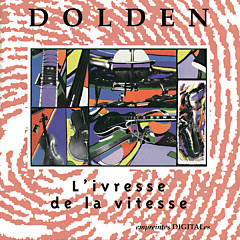
  • L’ivresse de la vitesse, L’ivresse de la vitesse 1, L’ivresse de la vitesse 2 in Computer Music Journal

    “Review”, Rick Bidlack, Computer Music Journal, no. 20:4, December 1, 1996
    Sunday, December 1, 1996 Press

    Mr. Dolden has something that is rare and worth preserving: a unique and original point of view. He has sufficient craft and means to realize his point of view, and the results, for the most part, are compelling, and often quite beautiful. His manipulations of sound mass alone probably deserve their own chapter in electronic music texts of the next millennium. But there is a pervasive sense that he is rendered deaf by his own discourse, and that particular directions of the music’s flow have been chosen for discursive rather than musical reasons. For example, “…it is well known to any consumer of media music that in order to be considered artistic you have to have an African percussionist. (program notes)” And therefore, for no other reason, we have manifold layers of hand percussion. Are you being facetious, Mr. Dolden? I can’t tell, and it’s gratuitous either way. But let’s ignore that for now, and concentrate on the music. With the exception of the last work, Veils, which predates the others in this collection by seven or eight years, there is a unified aesthetic and technical approach that finds its best analogy in the huge, thick paintings of the German artist Anselm Kiefer. Layers upon layers upon layers of sound produce an aural canvas in which individual details, if they are audible at all, are rendered inconsequential in the context of the huge gestures that emerge from the composite mass. This is not to say that Paul Dolden’s sound masses wallow in some amorphous homogeneity; rather, he is able to imbue each with a well articulated persona. Thus, in the best of the pieces for solo instrument and tape, a seeeing is created which one hears as a kind of extrapolation (a very long extrapolation) of the historical/social context of the solo instrument. For the cello piece, Physics of Seduction. Invocation #3, with its beautifully voiced C-major chords, the serting is the 19th-century cello concerto. For the saxophone piece, Revenge of the Repressed. Resonance #2, the setting alternates between swing jazz and the music of the French composers who explored the new instrument between approximately 1850 and 1910. For the electric guitar piece, Physics of Seduction. Invocation #1, the setting is ehe extended rock jam session from the late 1960s and early 1970s.

    The inclusion of the three-part work Veils in this collection is interesting because it affords us a glimpse into the evolution of Paul Dolden’s sound mass technitque. If the later works are Kiefer, then Veils is protoKeifer, tempered by a healthy dose of Rothko. Veils is about gradual transitions from one timbre/chord to another, and the masses that comprise it are not heard as masses at all, but as completely homogeneous entities. So, even though all the pieces on these two CDs employ the technique of superimposing hundreds of tracks of source recordings in the creation of the sound mass, the sustained nature of the source materials for Veils sharply distinguishes it from the much more active sources for the later pieces. To my mind, however, this work is far and away the most interesting of the four pieces for tape alone in this collection. Perhaps this is because it was apparently motivated by purely musical reasons (at least according to the program notes) — it is completely unencrusted by programmatic subtexts.

    I should mention that all of the source materials for the pieces on these CDs are completely acoustic. There is no synthetic material, and extremely little processing. M. Dolden’s reliance on the computer is primarily for its editing capabilities and its ability to mix and bounce tracks hundreds of times without adding significant amounes of noise. Like any technique taken to a logical extreme, this use of the computer transcends the multi-tracking effects possible in the traditional analog studio. To wonder whether or not it qualifies as “computer music” is to miss the point.

    … there is a unified aesthetic and technical approach that finds its best analogy in the huge, thick paintings of the German artist Anselm Kiefer.

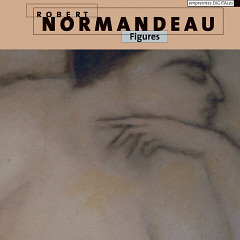
    Figures, Robert Normandeau in Le Musicien

    “Robert Normandeau remporte le Golden Nica”, Le Musicien, no. 8:6, November 1, 1996
    Friday, November 1, 1996 Press

    Le compositeur montréalais Robert Normandeau a remporté le prix Golden Nica au concours international Prix Ars Electronica 96 qui avait lieu le 4 septembre dernier à Linz, en Autriche.

    Cet honneur lui a été décerné pour sa pièce Le renard et la rose, une œuvre acousmatique (musique électroacoustique sur bande) composée en 1995. La pièce est une suite composée à partir de la musique commandée pour une adaptation radiophonique du conte Le petit prince d’Antoine de Saint-Exupéry et des voix des comédien(nes) et animateurs(trices) qui ont collaboré à l’enregistrement de l’adaptation radiophonique.

    Il est à noter que la pièce de Robert Normandeau était en compétition contre 287 autres compositions.

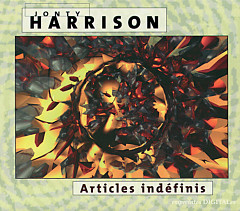
    Articles indéfinis, Jonty Harrison in Le Devoir

    “C’est le temps des récoltes”, François Tousignant, Le Devoir, October 19, 1996
    Saturday, October 19, 1996 Press

    Amateurs de découvertes, vous allez être servis. L’insolite, l’original et le neuf sont ici au rendez-vous avec la plus grande efficacité et l’art dans ce qu’il a de plus attirant et gratifiant. Le Britannique Jonty Harrison nous emmène en voyage comme seul sait le faire un électroacousticien de haute-voltige. Murmures de cloches, bulles synthétiques, dialogues des sons de tout genres se répercutant d’un haut-parleur à l’autre, sont les artifices de son langage. C’est le degré un de la séduction, celui qui force la deuxième écoute. Alors, on entre dans un univers qui titille le cerveau, chatouille l’oreille, fascine le cœur et ravit l’auditeur.

    Naturellement, il ne s’agit pas de musique d’atmosphère; il est question de sonorités mises en forme (et parfois déformées, quel bonheur) dans ce qu’elles ont de plus subtil et ténu. Le compositeur s’intéresse à une texture, à une couleur, la manipule, la fait voyager, lui associe quelques objets sonores qui la mettent en relief, lui font parcourir un itinéraire original et qui révèle un sens à la fois ludique et intelligent.

    … et ainsi de suite… en est un bel exemple; pendant les vingt minutes de cette «suite», aucun moment d’ennui ni méme de lassitude. Si vous voulez apprivoiser la musique sur bande, c’est par là qu’il vous faut commencer. Harrison n’agresse pas, il séduit, et le charme britannique est irrésistible, vous le savez bien.

    L’univers sonore est volontairement restreint. Cela permet de se repérer plus facilement et surtout de suivre le processus ou, plus justement, la surprise dans l’évolution des processus. Il ne faut pas confondre cette notion avec celle de procédé. Le procédé ennuie par sa répétitivité et la prévisibilité même avec laquelle un événement qui se voudrait surprise; le processus, lui, permet d’établir un réseau et de s’en écarter pour créer la véritable surprise, même nuancée et fine, et stimuler l’attention, donc, en musique, l’émotion.

    Cette petite collection de perles rares arrive comme un bain de fraîcheur dans un univers qui parfois semble uniformément morne. C’est qu’au lieu de faire une démonstration savante de son esthétique, le compositeur s’adresse d’abord au côté inquisiteur de l’oreille, l’oreille qui cherche, curieuse. Et qui trouve! C’est cela le plus beau.

    Petite anecdote cocasse et humoristique: on indique que ce disque est «produit au Québec, made in Canada». Comprenne ce qu’il veut qui le pourra.

    L’insolite, l’original et le neuf sont ici au rendez-vous avec la plus grande efficacité et l’art dans ce qu’il a de plus attirant et gratifiant.

    Articles indéfinis in Revue & Corrigée

    “Critique”, Jérôme Noetinger, Revue & Corrigée, no. 29, September 1, 1996
    Sunday, September 1, 1996 Press

    Du plaisir, il y en a à l’écoute des pièces du compositeur anglais Jonty Harrison. Rebondissements et jaillissements en tout genre caractérisent les événements sonores ici présents. On pense parfois au Parmegiani de De natura sonorum par la confrontation de différentes textures sonores. Jonty Harrison travaille aussi sur l’ambiguïté de la source sonore, l’aller-retour permanent entre le son pur et sa source, l’anecdote. On regrettera cependant certains systématismes de composition.

    Rebondissements et jaillissements en tout genre…

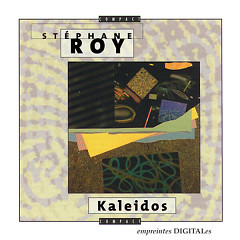
    Kaleidos in Revue & Corrigée

    “Critique”, Jérôme Noetinger, Revue & Corrigée, no. 29, September 1, 1996
    Sunday, September 1, 1996 Press

    Compositeur québécois primé dans de nombreux concours, Stéphane Roy présente quatre pièces dans la collection «Compact-Compact» (courte durée (environ 40’) à prix réduit). Mimetismo pour guitare et bande est marquante par le mariage parfait de l’instrument et de la bande, une fusion totale, au même titre, mais dans une esthétique différente, que la pièce de Gilles Gobeil Associations Libres avec René Lussier à la guitare. Les 3 autres pièces pour bande évoquent plutôt des contrées étranges parcourues par des ondes de choc et diverses couleurs rayonnantes.

    … des ondes de choc et diverses couleurs rayonnantes.

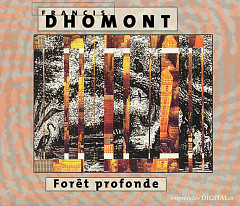
    Forêt profonde, Francis Dhomont in Contact!

    Francis Dhomont In Concert”, Stéphane Roy, Contact!, no. 10:1, September 1, 1996
    Sunday, September 1, 1996 Press

    A superb concert took place at Montréal’s Usine C last Saturday June 8. Organized by ACREQ, this concert of music by Francis Dhomont was one of the most beautiful acousmatic music events I have attended in a long time. Thanks to the excellent acoustics of this new hall, to the high quality of the sound projection system and to the large number of speakers, the details of this outstanding music were, I believe, faithfully rendered.

    In the program were three acoustmatic works: Lettre de Sarajevo, Nocturne à Combray and a recast and augmented version of Forêt profonde.

    The first piece, Lettre de Sarajevo, is an acousmatic drama commissioned by the “Futura 96” Festival of Acousmatic Art in France. This work’s complex texture, composed of a rich tangle of layers that successively come to the fore before being overtaken by other soundtracks, creates an atmosphere of constant anxiety. I recognized here the characteristic sound colors, the deep sounds, sometimes guttural, used in many of Dhomont’s works. But this style of composing in large sections, in long shapes that move along until their natural end, appears to me unusual for his work, at least for the works from his “Quebec period”. Without the ruptures, the sudden interruptions, the dramatic stops or the alternating tensions and releases, Lettre de Sarajevo is dominated by constant, uninterrupted tension, and the silences between sections form so many shadow zones where the drama of the preceding sequences still resonate. Lettre de Sarajevo is a beautiful, dark and inexorable work, a tranquil cry, unceasing as it reflects the drama that endures even as the memory fades.

    From another era and another sensibility, Nocturne à Combray is a radiophonic piece commissioned by Radio–Canada and is based on excerpts from Marcel Proust’s Du côté de chez Swann. Lost time is forever, and dream blends with reality. In Nocturne à Combray, the sonic material is allusive and dreamlike, dotted with nostalgic quotations (of illusory time recovered?) that evoke several errant recitals by musical instruments of the past. The work is often punctuated by fugitive images of beings and things remembered by a half–conscious narrator in the grip of an agitated sleep. The setting of the voice approaches that of earlier works by Francis Dhomont but here, it seems to me, it is more luminous so wedded to the contemplative nature of the text. This setting, generally stable and well established, is defined at the start of the piece by a melody of spatial relationships and timbres that suddenly transforms words into colorations and different spaces. At certain times, a counterpoint of voices fed by an echo lightly veils the intelligibility of the words a little like those stubbornly resonated in a mind that vacillates between wakefulness and sleep. To each their own reading of In Search of Lost Time, I certainly discovered in Nocturne à Combray a poetic, Proustian atmosphere.

    Once upon a time in a deep, dark forest… Forêt profonde, an acousmatic drama based on the Psychoanalysis of Fairytales by Bruno Bettelheim, is a work in thirteen sections and forms, with Sous le regard d’un soleil noir (composed over thirteen years), a diptych that the composer entitles Cycle des profondeurs. Those apparently innocent stories that bathed our childhoods are really trees that hid from us the mysterious roots of the forest, the deep roots the soul of Francis Dhomont probes in his psychoanalytical reading of fairy tales. This composition superimposes a rich counterpoint of voices, texts and languages. At the heart of its gripping sonic material, illustrations successively more mysterious and consoling, building like a fairy tale, we hear thirteen episodes march by keeping us spellbound.

    Francis Dhomont plays in Forêt profonde with archetypes, not just the ones the narration brings (death, happiness, courage, fear and so on), but as well those that can be invoked by the underlying sounds. So the archetype of comforting and appeasement, suggested by tender lullabies, is brusquely broken by the tragic and anguished character of unstable morphologies. This work enchanted me, bewitched by certain enigmatic passages that show at what point the art of sounds does know how to explain the unexplainable. “What’s going on?”, murmurs an anxious, strange voice at the start of the work. An undeniable reality hides behind the words that then wants to reassure the child, “It’s nothing, my dear. Try to sleep…” So life turns us aside with certain comforts about the morbid thought of our next disappearance.

    Didactic comments here and there throughout the work perhaps don’t make for unanimity (a narrator cites Bettelheim on occasion) but, to my mind, it gives the work an extra dimension by drawing attention to the unconscious significance of fairy tales.

    To sum up, I say Forêt profonde is a gripping and beautiful work that, I believe, will complement the success of Sous le regard d’un soleil noir. Both works will soon be released on the empreintes DIGITALes label.

    The concert projection by the composer did justice to the quality of these works. At times I would have appreciated higher sound levels, particularly during Forêt profonde, but I know the listening situation probably varied a lot depending on where you were sitting in the hall. I can only congratulate ACREQ for having organized an acousmatic concert of such a high quality, especially since such events are all too rare in Montréal these days.

    Stéphane Roy (English translation by Frank Koustrup)

    Stéphane Roy royst@ere.uMontréal.ca is a composer. His pieces have been performed in many European and American countries, and he has won many national and international compositions. A PhD in Music composition, he is presently teaching auditory perception at the University of Montréal.

    … one of the most beautiful acousmatic music events…
  • 429
  • 430
  • 431
  • 432
  • 433
  • 434
  • 435
  • 436
  • 437