Sauter au contenu principal
electrocd

Aussi dans le blogue

32 résultats
  • 1
  • 2
  • 3
  • 4
  • 5
  • 6
  • Figures dans Bad Alchemy

    «Alles Wahre ist artikuliert», Stefan Hetzel, Bad Alchemy, 1 février 2000
    mardi 1 février 2000 Presse

    Robert Normandeau, ein gutaussehender franko-kanadischer Mittvierziger, arrangiert in der faszinierenden ca. viertelstündigen Kompositon Le renard et la rose von 1995 Klangfragmente der menschlichen Stimme in suggestiver und eingängiger Weise, so dass tatsachlich ein markantes, ästhetisch überzeugendes “Ohrenkino” entsteht. Normandeau “re-musikalisiert” seine bruitistischen Bauteile, tiefe Stimmfrequenzen dienen als ostinate Bassfiguren, geräuschhafle als perkussiver Akzentsetzer, solche mit bestimmter Tonhöhe als Melodietöne etc. Weniger überzeugend erscheint mir die Verbindung aus Zuspielband und live gespieltem Piano (eher zurückhaltend angesichts des “akusmatischen” walls of sound, Pianist Jacques Drouin) im Stück Figures de rhétorique von 1997. Das Klavier “hör”’ lediglich auf die Impulse vom Band (ausschließlich Extrapolationen von Flügel-Sounds) und reagiert quasi-improvisatorisch darauf. Es entsteht keine wirklich zwingende Einheit zwischen Konserve und Live-lnstrument. Eher hat man den leicht unangenehmen Eindruck, der Flügel spiele dem Tape “hinterher”, ohne es doch je einholen zu können. Die Kommunikation verläuft gänzlich einseitig. Venture (1998) enthält ein Stück musikalischer Autobiografie Normandeau und besteht größtenteils aus de-kontextualisierten Fragmenten von Musik der 6Ts-Band “The Ventures” (Klein-Roberts erste Stereoplatte stammte von den Ventures). Als guter Konkreter belässt es Normandeau natürlich nicht beim Zitieren, sondern ist à la recherche du sons perdues. Archétypes sonores nennt er diese und scheint tatsächlich, an ihre Existenz zu glauben! Es wundert mich nicht, dass ich einige der gefundenen Klang-Archetypen schon kannte: sie kommen (in ähnlicher Form) auf der Pink-Floyd-LP Ummagumma vor. Mit knapp 20 Minuten erscheint mir Venture etwas zu lang. Ellipse (1999) schließlich ist nach ähnlichen Prinzipien erstellt wie Figures de rhétorique, doch ersetzt Gitarrist Arturo Parra den Konzertpianisten. Außerdem handelt es sich um ein reines Tonbandstück, was der Kohärenz des Ganzen sehr zugutekommt. Nach Le renard et la rose das stärkste Stück der CD. Der Hörer taucht in einen akusmatischen Gitarrenkorpus voller dekonstruierter Partikel ein, wird Ohrenzeuge einer monströsen Aufblähung des klassischen Saiteninstruments zum kosmischen noise generator. Figures eignet sich für den interessierten Hörer gut als Einstieg in die Welt der Elektroakustischen Musik. Bei allem Technizismus bewahrt Normandeau Musiksprache nämlich eine gewisse Verbindlichkeit und Verläßlichkeit (man könnte fast von “Glätte” sprechen), die es aural beginners leichter machen mag, sich auf dieses Sub-Genre einzulassen. Meine grundsätzlichen Vorbehalte gegen eine geräuschmusikalische Ästhetik erhalte ich aufrecht (siehe oben).

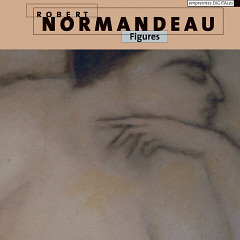
    Figures dans Enoff

    «Discos», Marco Aurelio Bevià, Enoff, 1 février 2000
    mardi 1 février 2000 Presse

    Este compositor y música canadiense, fundador de la Communauté électroacoustique canadienne (CÉC) y miembro de Association pour la création et recherche électroacoustiques du Québec (ACREQ), es uno de los más prolíficos de empreintes DIGITALes en cuanto a trabajos editados en dicho sello discográfico. Cada uno de sus compactos recoge varias obras electroacústicas que en su primera escucha pueden parecerle al neófito como muy distintas entre sí; eclecticismo aparente que se presta a lo erróneo.

    Si en Figures, uno de us últimos discos, era capaz de jugar con los sampleos de rock progresivo (Venture) y forzar collages onomatopéyicos (Le renard et la rose) — una constante en la obra de Normandeau —, en la pieza de Jeu (Lieux inouïs [IMED 9802]) vuelve a hacer hincapié en lo vocal, creando coro mediante loops de un solo tono para conseguir unas polifonías tan monolíticas como las que musicaron el viaje iniciatico de Bowman (Lux Æterna’s Ligeti); si bien mucho más fragmentadas y cortas, menos épicas, pero igualmente místicas. De hecho, la inspiración religiosa es otro de los puntos en común con Pierre Henry, cuya obra es para Robert Normandeau un punto de partida para su rutina de trabajo. En Rumeurs (Place de Ransbeck) (Lieux inouïs) o en Tangram, queda patente su deuda con el compositor francés hasta el extremo de hermanarlas con una pieza clásica de la electroacúsitca como Noire à soixante. Pero si Henry es el punto de partida y un aislacionismo electroacústico en clave ambient, repleto de efectos y por lo tanto mucho más asequible al gran público, el final; los ritmos programados son el camino, como así se evidencia en Éclats de voix (Tangram [IMED 9920]), donde la música industrial y la contemporánea comparten una misma partitura.

    … uno de us últimos discos…

    Figures dans Hurly Burly

    «Discos», Esteban Lago, Hurly Burly, no 12, 1 janvier 2000
    samedi 1 janvier 2000 Presse

    A new work by this Canadian electroacoustic muslc composer who proposes, in this occasion through Figures, a skilled and adapted listening to diverse sonic itineraries of strident contents and a marked inclination in favour of metallic colouring and static plasticity with fugues orientated tomards stimuli. as long as the volume permits this work to reach us in optimum conditions.

    Figures dans Prospective

    «Review», Lucca Mattila, Prospective, 1 janvier 2000
    samedi 1 janvier 2000 Presse

    Robert Normandeau is one of the leading composers of electroacoustic music in Canada. His aim in composing is to create a ‘cinema for the ear’ in which meaning as well as sound become elements which elaborate his works. Figures comprises of four works, each different in concepts and methods of sound sculpting, yet more or less entangied with the theme of the whole record, “figures”. Normandeau usually bases his works on human voice, acoustic instruments, tapes, field recordings and as in one of the most interesting pieces on the record, Venture where he exclusively uses fragments of the recordings of a 60’s progressive rock band called The Ventures which Normandeau states as one of his earliest influences. The compositions on Figures might strike you as abstract even absurd at first yet the more you give them some fair dedication, the more they expose of their meaning and charm. Especially in Venture, where the progressive sounds of yesteryear clash with the contemporary sounds of progress, the result becomes truly interesting. The album ends with a piece entitled Ellipse, which is a duet of an acoustic guitar and electroacoustics and totally disregarding its intended meaning, it somehow made me wonder about the actual meaning of music today. Anyway, Figures will not offer anything for those not interested in anything ‘arty farty’ (no offense), but perhaps even someone (like me) into a bit more experimental industrial sounds might find this interesting… Test your limits! 8/10

    Figures dans Earwaves

    «Review», Dwight Loop, Earwaves, 31 décembre 1999
    vendredi 31 décembre 1999 Presse

    Marvelous electroacoustic music from one of the masters of our time. Highly recommended, very unique sounds. A contemporary of Francis Dhomont and Québec resident.

    Highly recommended, very unique sounds.

    Figures dans Planet of Sound

    «Critique», Olivier Lamm, Planet of Sound , no 14, 1 décembre 1999
    mercredi 1 décembre 1999 Presse

    […]Enfin soulignons la sortie du nouvel opus du québécois Robert Normandeau, chez les non moins québécois d’empreintes DIGITALes. De la musique concrète au sens classique, mais survoltée et supersonique, à la manière de son compatriote Paul Dolden. Un disque qui donne le tournis (Ellipse), qu’il utilise du piano et des bandes (Figures de rhétorique) ou des vieux disques de rock (Venture — que tous les fans de Pluramon feraient bien d’écouter).

  • 1
  • 2
  • 3
  • 4
  • 5
  • 6