Sauter au contenu principal
electrocd
  • This website is also available in English.

Blogue

201 résultats
  • 15
  • 16
  • 17
  • 18
  • 19
  • 20
  • 21
  • 22
  • 23
  • Évidence matérielle dans Re:mote Induction

    «Review», Peter Morrison, Re:mote Induction, 17 juin 2001
    dimanche 17 juin 2001 Presse

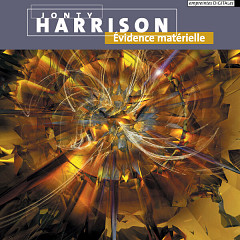
    Évidence materielle comes in one of the nicest card sleeves I’ve seen in some time, an outer slip sleeve with folded inlays. One inlay holds the CD nestled within the other one, which unfolds to reveal notes for each of the tracks included here in both French and English. There being 5 tracks all over 9 minutes in length, tending towards a 16 minute average — the pieces for the most part being sound works, summing up the artist’s acousmatic journey.

    Klang starts with chiming bell tones, a scrape of metal surface. Very tonal sound, but also in its construction playing +ve sound (strike) against -ve (stop). In some ways this becomes more pronounced as it expands into an exploration of chromatic percussion. Hints of electronic click and moment start to creep in, pulsing contrast to what has gone before, taking on a more synthetic form in the process. At times also more clangorous, though returning to chiming with a long exhalation — teasing out conclusion.

    With Sorties, voices echo in the gallery space, mixing with the constant motion of visitors. Dull echo of distant voices and struggling children. Clacks build into a more train like sound, the perceived gallery perhaps a large and busy train station. Emphasis changes as we follow our audio narrator — the progress along corridors, through doors and outside. Across gravel and pitter-patter of xylophone accompaniment. Sound disorients so that we have motion that suggests the interior of a car, but environmental impressions of something else. Arriving there is a chapping of a door, back step glance — is anyone home anyway? Chap again and electronic simulation opens the door, creak and the real door opens. Just in time as the rain comes from nowhere and thunder rumbles. Impressions continue, mixing with the hints of electronics and chimes that have an almost background role. The environmental weight of these pieces reminds me of Bexar Bexar, the last composition I heard along the same lines. Concluding in more of a sound extract.

    Surface Tension mixes a tumbling, awkward toy sound with an expansive wire swirl and a static glitch field. This allows a simpler construct than the previous piece, a narrower wavelength. But still a kinetic feel that balances in some way definitions of sound and noise. Hints of tones that suggest “music” flit through the back spaces. Again rain is present here, but only a passing in continuation.

    Splintering falls somewhere between percussive clacks and the tumbles of Surface Tension. A moment we hear a buzz of bee, reminding of Sorties. Scrape and tumble dominate — feeling more active than Surface Tension in sound forms, but still as contained. Crackle, snackle, fizz, plunge and ongoing tumble. The fire continues its crackle against an electric hum, surprising us with a moment of music snatched from elsewhere. The crackle grows, the wood popping — the fire almost becomes the patter of rain. Though manipulation lies ahead as does reprise.

    Blip. Gathering bubble. Plip and ripple. Fluid sounds expand in Streams, their tones offering suggestion of other sounds and perhaps of manipulation. Storm gathers, the windy lash of a jet, the flash of an oar through the choppy sea. Gravel tones lead away, departure. Then reprise the plip, adding gurgle and wallowing in tanks connected through piping. Rushing passage, and again manip. — leading to a crackle, pitter patter on the outside. Sudden over layering — ideas of sound bustling frenetically, then sliding off just as easy. Small sounds, clicks and taps, join to become familiar patterns within the context of this release.

    … one of the nicest card sleeves I’ve seen in some time…

    Sources / scènes dans Outsight

    «Review», Tom Schulte, Outsight, 10 juin 2001
    dimanche 10 juin 2001 Presse

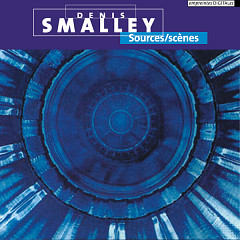
    Smalley employs subtle, base sound types in his compositions. Be it “metals,” “empty vessels” or “tides” as on this CD, these become the primary textures for his minimalist canvas. This monophonic minimalism creates bare, stark, alien environments where the listener sends forth an ear as a curious and eager explorer always to return with newfound discoveries. (4/5)

    … bare, stark, alien environments

    Traces dans Outsight

    «Review», Tom Schulte, Outsight, 10 juin 2001
    dimanche 10 juin 2001 Presse

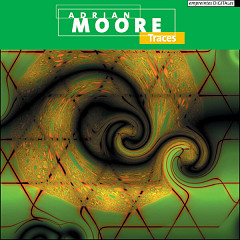
    For Adrian Moore the microphone is a microscope. He takes us to the minuscule “trace,” collaged together in an otherworldly patchwork for our exploration. Natural, commonplace sound objects become abstract art run through the Moore mind and studio. The sound of a marker pen is the sole source used for Study in Ink. But, after the transformation this simple act undergoes an apotheosis to the chirping of birds at play in imagined, digital worlds. (3,5/5)

    For Adrian Moore the microphone is a microscope.

    Évidence matérielle dans Outsight

    «Review», Tom Schulte, Outsight, 10 juin 2001
    dimanche 10 juin 2001 Presse

    Jonty Harrison is an artist that gets close to a fundamental isolate of sound and constructs an entire piece from it. This sound art is especially intimate, as if, as on Klang, the listener was diminished in size and experiencing first hand and on equal scale the sonic and mechanic effects of earthenware casseroles opening and closing. Elsewhere on Évidence matérielle liquids and splintering wood rise up to meet us, creating new sound worlds from the mundane physical event. (4/5)

    … creating new sound worlds from the mundane physical event.

    Présence II dans Computer Music Journal

    «Review», Patricia Lynn Dirks, Computer Music Journal, no 25:2, 1 juin 2001
    vendredi 1 juin 2001 Presse

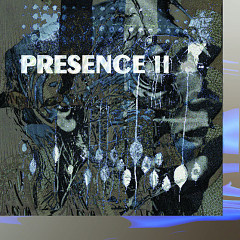
    Présence II is an appropriate title for the Canadian Electroacoustic Community (CEC)/Productions Electro Productions (PeP) latest two compact disc set of electroacoustic compositions. By definition, “presence” is the state of being present (such as the listener’s physical presence) or a person or thing that is present (as there is a presence in the listening room when hearing this music). Présence II is an international collection of works from 13 countries: Argentina, Belgium, Brazil, Canada, Denmark, England, Finland, France, Germany, Korea, Spain, Taiwan, and USA. It is the second self-funded CD project of CEC/PeP and features a total of 34 compositions by 32 composers. The first noticeable characteristic of this collection is the variety: works that deal with text and voice, the use and creation of new electronic sounds, rhythmic variations and soundscapes, and a single acoustic source exploration. Works on Présence II range in duration anywhere from 0:37 to 12:36.

    La beauté indiscrète d’une note violette (1995) by Brazilian composer Jorge Antunes is the opening track of the first disc. The entire composition is an electroacoustic exploration and transformation of a single pitch, E. The fascinating timbral changes of octave material with the juxtaposition of a sung vocal sound on “no” make for an interesting work. Mr. Antunes bases this composition on his theory of Chromophonique, in which octaves of this particular pitch correspond to the color violet. Other works of the collection that were created from a single sound-source exploration include Gordon Fitzell’s Zipper Music II (1998) and Jørgen Teller’s H a e i o u y æ ø å pt. 2 (ex.). Mr. Teller’s excerpt is also a composition based on a single idea, in this case human laughter. He uses a more rhythmic approach through the juxtaposition of sound loops to accomplish his single-source exploration. There is something for every listener’s musical tastes on Présence II. While compositions that are relatively short in duration but definitely not in content make up the majority of the works, a few of them are excerpts from larger electroacoustic compositions. These include Hans Tutschku’s densely processed soundscape, extrémités lointaines (ex.) (1998), Dugal McKinnon’s sporadic electronic conversation of sounds, Horizont im Ohr (ex.) (1998), Martin Gotfrit’s timbral exploration of filtration, A Palaver with Procrustes (ex.) (1998), and Adrian Moore’s fast paced, vocally playful Soundbodies: Bodypart (1998). According to Mr. Moore, his featured excerpt is representative of a 55-min composition/installation/ collaboration for two singers, dancers, video, and electronic sounds entitled Soundbodies. Although Canadian composer Yves Gigon’s Éphémère (1997) is not an excerpt, it was created from a larger sound sculpture. This is a colorful composition both in the sonic material presented and the effective spatialization used to draw the sounds into a three-dimensional realm. Jef Chippewa’s DUO (1997– 1998) uses the acoustic sounds of a saxophone in playful communication with a synthesizer. The sonic illusions and transformations of original material along with impressive aural sound placement make for a very effective composition.

    If your time is limited, there are even shorter works, such as Ian Chuprun’s word play, Reading Allowed (PA 11) (1998) and Jean Routhier’s pop-based Stereotyped Latter-Day Opinion (1999). The briefest composition on Présence II is Chris Wind’s to be led (1993), a 37- sec whimsical version of a waltz. Mr. Chuprun’s composition was written for the Birmingham ElectroAcoustic Sound Theatre (BEAST) Web site. It uses spoken phrases playfully processed to sound as if created with early computer music techniques. In keeping with the theme—electroacoustic works that employ the use of text and voice—British composer Alastair Bannerman’s manipulation and treatment of a young voice in his work, In th’air or th’earth (1997, revised 1998–1999) immediately summons up aural images of Karlheinz Stockhausen’s well-known Gesang der Jünglinge (1956). In this composition, the text, both sung and spoken, comes from Shakespeare’s play The Tempest. This is a well-composed and stimulating composition. Steve Bradley’s “volalle melodie vi to trot” / “fowl melody to trot” (1999) also employs text and voice. The spoken text in this composition is made to sound like an old phonograph recording juxtaposed with the voices of children at play. The treatment of word play in this work is reminiscent of compositions by Annette Vande Gorne as featured on her 1998 Impalpables, created with poet Werner Lambersy.

    Présence II contains a number of works by composers who have received international recognition for their compositional achievements. It is also important to note that there are a fair number of women composers included in this collection. Chin- Chin Chen’s Points of No Return (1997) features a unique sound world highlighted by her placement of silence and subtle repetition, at times creating a drone-like background. This composition won First Prize in the Concorso Internazionale Luigi Russolo in Varese, Italy. One of my favorite works is Sylvi MacCormac’s Spirit Wheels: Journey (part 1 of a puppet opera) (1997). The way in which she uses the processed pennywhistle motif to enclose her composition produces a definite sense of arrival by the end. It is this, combined with the processing effects used on the spoken and sung voices, and the lyrical lines, that create a satisfying listening experience. If you are in the mood for a more acoustic realm, then Canadian composer Diana McIntosh’s Climb to Camp One (1989) will be to your liking. It is performed entirely on an amplified piano featuring the ambient sounds of the piano’s strings. This is combined with a rhythmic flare and a splash of vocal interjections to produce an entertaining, storytelling work. Pascale Trudel’s Ce n’est pas ici (1999) also features familiar acoustic material. In this case, sounds such as crackling fire, voices, thunder, and various other snippets of nature are presented on their own or juxtaposed, stimulating remembrances of sounds one might hear over a lifetime. Moving back into what is more commonly thought of as electroacoustic music, Belgian composer Annette Vande Gorne’s Amoroso: Vox Alia, 2e mouvement (1998) is a calming composition, a sonic study based on a Gregorian chant, highlighting the melodic, rhythmic, and timbral transformations of the voice.

    Présence II definitely features a wide variety of compositional styles. For a taste of nostalgia, there is Argentinean composer Martin Alejandro Fumarola’s ARGOS (1988) and SET IN (1994). The first was created with a Yamaha DX7 and a reel-to-reel tape recorder, and the second with a Yamaha TG7 tone generator and a sequencing program. For more pop-based sounds incorporated into a composition, there is Finnish composer Antti Saario’s BSide (1998), whereas water sounds play an active role in Canadian composer Dave Solursh’s composition, We (1998). Effective use of aural placement of sounds can be heard in Mr. Chuprun’s journey of electronic sounds in To many moments passed (1998), which highlight this work’s rich sonic colors. Near the end of the second disc is Todor Todoroff’s serene employment of voice and breath sounds in Voices Part I (version stéréo) (1997). Daniel Zimbaldo’s meditative tapestry of electronic transformations rounds out this remarkable collection with Au-delà du miroir (1998).

    Kudos to the composers, producers, and anyone else involved in deciding the order that each extraordinary work appears on Présence II. I strongly believe that the organization of pieces of music (be it a concert, a recording, or a radio broadcast) is in itself a work of music on a macrocosmic level. In general, both discs of the set feature works that are complementary to one another when listened to in the order presented, creating a relaxing, calming listening experience. Présence II is a great sonic escape from the daily bombardment of sound stresses such as traffic, construction, and neighborhood activity. This is an excellent collection of current electroacoustic music, giving a presence of its own to the existing repertoire. For those who might be interested, Présence II is available for free with every CEC membership.

    Présence II is a great sonic escape from the daily bombardment of sound stresses such as traffic, construction, and neighborhood activity.

    Figures dans Computer Music Journal

    «Review», Douglas Geers, Computer Music Journal, no 25:2, 1 juin 2001
    vendredi 1 juin 2001 Presse

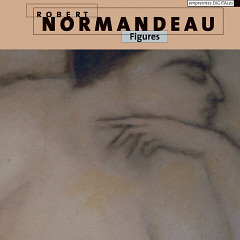
    Robert Normandeau’s recent compact disc, Figures, presents four of his acousmatic compositions from the latter half of the 1990s, documenting his continuing investigations of the medium and its stylistic evolution. The results of these explorations are more focused and less physical than his earlier work, yet for the most part they clearly retain Mr. Normandeau’s distinctive compositional fingerprint.

    Although the liner notes speak of the composer’s ideal of a “cinema for the ear,” these works contain a noticeably smaller number of “concrète” source sounds than his pieces of the 1980s, with more focus on playing with and sonically developing the material he does utilize. Thus, although the “cinema” ideas and elements are still present, they are less literal than in his earlier works.

    The four pieces on Figures are arranged chronologically (quite convenient for a reviewer!) and span the years 1995–1999. The first, Le renard et la rose (1995), employs as its source material elements from the music and voices for a radio production of Antoine de Saint-Exupéry’s The Little Prince which Mr. Normandeau scored. The piece begins wonderfully. First, a cascade of laughing voices erupts from nowhere. Then, after about five seconds, it is suddenly replaced by a churning pulsed texture of vocal ostinati, taken in part if not entirely from the initial laughing sounds. The result is simultaneously artificial and primal, and quite intriguing. These ostinati are quite prominent during the work’s first section, where they die away, return, and evolve many times.

    Le renard et la rose is structured in five sections, and each of these has its own distinct sound and types of activity. Primary among the activities are pulsed rhythms, as percussive patterns are repeatedly employed to propel the music throughout the piece.

    Overall I am struck by two things in this composition. First is Mr. Normandeau’s impressive sense of pacing. He seems to be constantly pushing the piece forward, sometimes forcefully, sometimes gently. But even in its moments of repose, this music does not sit still. When its ostinato engine is shut off the sonic environment is still fluid. To me, this work is a “short” 14:45.

    The second striking element, as in many of this composer’s works, is his talent at choosing and sculpting materials. Nearly every sound has a bite to it, a sense of physicality and place. The “place” here, however, is not as literal as in earlier works, in which Mr. Normandeau would actually include recordings of subway stations, children in the park, the seashore, and so forth. In Le renard et la rose and the other works on this CD, I sense that the individual sounds are abstractions that retain enough qualities to point to their origins—original sounds or sets of sounds which often never appear themselves. While Mr. Normandeau has been processing sounds for years, his newer pieces atomize the source sounds more. Meanwhile, he makes less effort to perceptually tie unprocessed sounds to their processed relatives. Combining these well-defined sonic scenes and colors with the work’s swirling activity, the listener has much to enjoy.

    The second piece, Figures de rhétorique (1997), is quite different from Le renard et la rose and is not quite so successful. It is scored for tape and piano, and in this recording the piano part is played by Jacques Drouin

    Mr. Normandeau states in his liner notes that he constructed the music in four movements, creating structure by utilizing devices of rhetoric. He categorizes these speech-types into “figures of meaning (hyperbole, litotes, metaphor, oxymoron, parable, and pleonasm), words (alliteration, embellishment, and rhyme), thought (allegory, apologue, bombast, irony, and tautology), and construction (antithesis, ellipsis, repetition, and reticence).” Although the piece is sectional I could not identify specific rhetorical devices while listening—I assume that the composer would not mind this. Mr. Normandeau also limited the source materials for the tape part to sounds of the piano, which seems reasonable. However, the sound world which he creates in Figures de rhétorique does not seem nearly as vibrant and intriguing as the rich palette of sound colors he created for Le renard et la rose. It sounds as if he began with a limited set of sounds and then allowed them to remain rather static throughout the piece. He does explore several varied sonic environments, but within each of these the sounds themselves as well as the gestures they create don’t vary much. Possibly these repeating gestures represent specific rhetorical figures?

    It could be that the composer purposely left space in the tape part for the piano to fill. The piano part was evidently written after the tape part, which makes this seem natural. However, if this is the case, then he overestimated how much the piano would dominate the soundscape. I think that both the tape and piano parts in this piece would benefit from more variation in their materials and the treatment of these.

    Venture, the third work on the disc, definitely does not suffer from a poverty of material. Named after the rock group The Ventures, this tape piece was composed using numerous moments from progressive rock songs of the 1960s and 1970s. Sadly, I am not as well-versed in this genre as the composer, but I have heard enough Emerson, Lake & Palmer (ELP), King Crimson, and Yes to identify with his endeavor and recognize more than a few tiny moments from the quotations. Essentially, Mr. Normandeau’s idea is that many of these songs served “as sonic archetypes for an entire generation of composers, my generation…” This work is his tribute to that music.

    Beyond the reason for its composition and origin of its materials, Venture stands as a rather satisfying piece of music. Mr. Normandeau begins with a set of intriguing sonic materials that he colors often beyond recognition using signal processing. With this arsenal, he sculpts a twisting, slippery world of acousmatic music that lasts for nearly 20 minutes without losing much freshness.

    The collection ends with Ellipse (1999). This tape piece was commissioned by guitarist Arturo Parra and shares most of its material with the composer’s guitar and tape piece, L’envers du temps (1998, 2000), also written for Mr. Parra. Ellipse begins with an agitated polyrhythmic texture of noises taken from the classical guitar, derived from strumming and scraping strings, knocking on wood, turning tuning pegs, and so on. The first 2.5 minutes of the piece feel very physical and have an itchy, insect-like energy. After this, the music segues into a bath of harmonic textures only to quickly return to the first material, this time overlaid with more and even stranger sounds. Once again, as the work progresses, the sense of pacing gives it a catand- mouse energy that is quite enthralling.

    As he did in Le renard et la rose, Mr. Normandeau uses rhythmic activity to retain a sense of energy throughout most of Ellipse. However, in the latter piece these sounds are less frequently organized into pulsed polyrhythmic stretches. Instead, the inner rhythmic activities of a variety of tapping, strumming, and scraping sounds overlay each other without always creating a composite organization. Ellipse also seems to possess more regularity in its progression of ideas than the earlier piece. There are no “jump cuts” between sections. Instead, the materials are consistently dovetailed, allowing elements to fall from the texture and resurface repeatedly, appearing in a new context each time.

    Overall, the pieces on this CD, as well as many of Mr. Normandeau’s other works, succeed best when he allows them to be (or at least seem to be) a bit out of control. This is not to say that I only like the busy sections of the music; rather, that I enjoy his music when it seems to roam, seems to have its own purpose, when it takes chances and allows itself to be quirky. For instance, I love the tag endings he added to both Venture and Ellipse — short, throwaway moments that risk silliness, but work to my ears. Mr. Normandeau’s best work involves a sonic kaleidoscope, a tour of musical places, a sort of spelunking through sounds more than a cinema of the ear. Thus, even though these recent pieces feature fewer real-world sounds than his earlier works, they still have highly dramatic profiles. On this CD, only Figures de rhétorique fails to conjure the feeling of three dimensional adventure. His music is usually not about economy of material, but in this piece he attempts a quite strict control. Unfortunately, the material he chooses and what he does with it do not work out so well. However, his other successes clearly outweigh this aberration.

    In the end, what I appreciate about Mr. Normandeau’s work is that his music generally seems to have no pretentions, even at its most symphonic. He is willing to let his guard down, to be funny, to admit that he used to listen to ELP all the time — and that maybe sometimes he still does! (I have to admit that I smiled when I caught his references, especially the bits of The BeatlesRevolution #9.) Yet the real success is that his music grabs me. And I like that.

    Yet the real success is that his music grabs me. And I like that.
  • 15
  • 16
  • 17
  • 18
  • 19
  • 20
  • 21
  • 22
  • 23