Sauter au contenu principal
electrocd

Blogue

201 résultats
  • 18
  • 19
  • 20
  • 21
  • 22
  • 23
  • 24
  • 25
  • 26
  • Traces dans Westzeit

    «Kritik», Klaus Hübner, Westzeit, 1 mai 2001
    mardi 1 mai 2001 Presse

    Wiedergehörte Naturgeräusche sind ein wesentlicher Bestandteil der Audioarbeit des Hochschullehrers (Sheffield University) Adrian Moore. Eine rein akademisch ge-prägtes Soundscapeding ist trotzdem nicht zu enwrarten. Der Zutritt zum Werk erfordert einiges an Toleranz, denn es ist nicht jedermanns Sache, vor den Boxen zu sitzen und nur knarzende Geräusche natürlichen Geräuschen (Tierlaute, Vogelstimmen, Glocken, Straßenverkehr), die Moore elektronisch durch ein Sieb schickte und aus dem neuen Material eine Klangcollage intensivster Masse machte. Er selbst bezeichnet dieses Stück als einen Vorschlag: Damit umgehen und Rückschlüsse ziehen sollte der Hörer selbst.

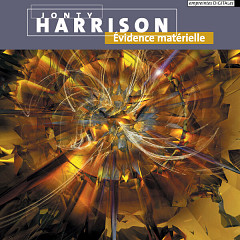
    Évidence matérielle dans Heimdallr

    «Critique», Stéphane Fivaz, Heimdallr, 1 mai 2001
    mardi 1 mai 2001 Presse

    Voilà une nouvelle réalisation du label canadien empreintes DIGITALes, spécialisé dans l’électroacoustique, qui ne va pas être aussi facile d’accès que les précedentes. Pourtant aucun des sons figurant dans cet album ne nous est inconnu. Jonty Harrison les a puisés en parcourant une rue, la rue Schaeffer, d’un côté comme de l’autre du trottoir, ou en s’installant dans une cuisine, dans une forêt, près d’une source d’eau, et a saisi au vol tous les sons qui l’intéressaient et l’intriguaient. On se plaît à reconnaître la source de cette banque sonore impressionnante, dans divers bruits très communs et banaux, auxquels on ne préte souvent pas attention, ou pas assez… Ce n’est qu’après avoir récolté tous ces sons que le travail de composition intervient, cherchant une entité sonore compatible avec l’ensemble, rendant cet amas diversifié et hétéroclite en une masse homogène et cohérente. Des paroles éparpillées, des casseroles, des freins, des voitures, des barres d’aluminium, des tiges de métal, des gouttes d’eau, etc… Tous ces sons que l’on ne pourra plus entendre de la même façon après avoir prété une oreille attentive à ce disque. Un travail impressionnant et fort intéressant!

    Un travail impressionnant et fort intéressant!

    Sources / scènes dans Incursion Music Review

    «Review», Richard di Santo, Incursion Music Review, no 026, 29 avril 2001
    dimanche 29 avril 2001 Presse

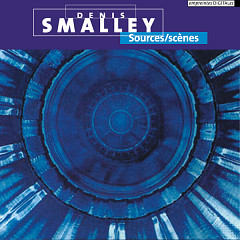
    In what is referred to collectively as the British Connection, empreintes DIGITALes recently released these three discs featuring the works of three prominent electroacoustic composers from the UK. […] Lastly, electroacoustic pioneer Denis Smalley’s Sources/scènes documents five acousmatic compositions realised between 1974 and 2000, thus covering over 25 years of electroacoustic research and composition. The first three pieces (Base Metals, Empty Vessels and Tides) are exercises in utilising single sound sources (metal, garden pots and water respectively). The final piece, Pentes (meaning slopes, inclines, ascents), is an early composition from 1974. It begins as a bustling synthetic landscape of bizarre sounds, cut-ups and explosive clusters; and yet it suddenly shifts into a quiet movement, where a drone gives way to a haunting melody on the Northumbrian pipes, and leaves everything quiet and still. Smalley’s disc probably represents the most dynamic of the three reviewed here; the sounds open up before your senses, become tangible, and carry with them not only an incredible momentum but very strong moods as well. Missing from many acousmatic compositions is the presence of mood, making suggestions and appealing to the listener-spectator’s emotions as well as his senses or his academic interests in sonic structures. Smalley writes in his liner notes that “quite noticeable in all these works is the almost complete absence of a human presence in the sonic fabric: the listener-spectator is left to observe and experience the scenes and spaces, alone.” However, this statement by no means excludes the importance of the listener’s response, rather it emphasises and elevates its importance. He further writes: “between and beyond the loudspeakers, virtual, metaphorical worlds approach and encroach in sonic flow, and are revealed for imaginative contemplation.” Sources/scènes comes recommended for the adventurous.

    … recommended for the adventurous.

    Traces dans Incursion Music Review

    «Review», Richard di Santo, Incursion Music Review, no 026, 29 avril 2001
    dimanche 29 avril 2001 Presse

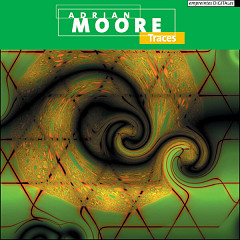
    In what is referred to collectively as the British Connection, empreintes DIGITALes recently released these three discs featuring the works of three prominent electroacoustic composers from the UK. […] Adrian Moore’s Traces, documenting five electroacoustic compositions realised between 1994 and 1997, offers “a search for the hidden, both within the piece and within the sound”. In his liner notes, Moore rightly points out that “it is this hidden property in certain sounds that still excites the ear”. And so in each of these five pieces Moore dives right into his sound sources and opens them up for our perception and participation. In Study in Ink, for example, Moore takes his single sound source of a marker on whiteboard and creates a remarkable soundworld, filling me with wonder at his electroacoustic magic. In another example of Moore’s sonic ingenuity, Sieve is a “radiogenic” work dealing with natural sounds and the electronic manipulation of these sounds; all manner of found sounds (bird calls, rainfall, etc.), become a part of this hyper-collage, which is teeming with activity and minute noises. Excellent work, and an overall intriguing record.

    Excellent work, and an overall intriguing record.

    Évidence matérielle dans Incursion Music Review

    «Review», Richard di Santo, Incursion Music Review, no 026, 29 avril 2001
    dimanche 29 avril 2001 Presse

    In what is referred to collectively as the British Connection, empreintes DIGITALes recently released these three discs featuring the works of three prominent electroacoustic composers from the UK. Jonty Harrison’s Évidence matérielle is dominated by movement and concrete sounds. Never is there a standstill moment in these compositions, realised between 1982 and 1999. From the “klanging” of two earthenware casserole dishes to the sounds of wood splinters and turbulent streams of water, Harrison’s acousmatic works emphasise sounds in their pure states, assessing both sound “for what it is” as well as sound “for what it tells”. His compositions are intense and offer an exhaustive (and exhausting!) look at his particular sound sources (water, wood, earthenware pots, etc.). The only exception is on Sorties (1995), in which which he takes a step back in order to capture crowds, street scenes, urban movement. And yet still I get the sense that these are a series of aural snapshots; Harrison seems to quickly move his gear from one location to another, as if in a frantic state of mind, or as if he were chasing faeries or trying to capture something as obscure as phlogiston. His sound palette is indeed stunning (the sound engineering really shines on this release), but this particular restlessness in the compositions, the business and incessant activity of sounds, makes me a little uneasy and keeps me from embracing this record more fully.

    His sound palette is indeed stunning…

    Les méandres du rêve dans AllMusic

    «Review», François Couture, AllMusic, 27 avril 2001
    vendredi 27 avril 2001 Presse

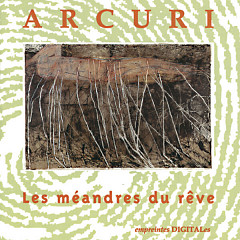
    Serge Arcuri’s Les méandres du rêve is an untypical release for the musique concrète label empreintes DIGITALes. Although the composer works with concrete sounds and creates tape music, his approach also includes lots of recorded keyboard parts and performed instruments. The resulting music belongs as much to mixed electroacoustics music as to new-age instrumental music. The first five pieces on this CD form a cycle, Les méandres du rêve (Dream’s Meanders), the musical part of a creation which also included choreography and scenography. After a short prelude, the listener dives head first into Arcuri’s dreamy world. La porte des sables, based on Tahar Ben Jelloun’s novel The Sand Child, includes electroacoustic sounds, oboe, English horn, and MIDI percussion. References to Arabic sonorities turn this piece into something a lot more evocative (and engaging) than what could be expected. If Murmure comes closer to a standard tape piece, Errances (for tape, oboe and harp) and Lueurs (for tape, French horn and percussion) cross over many genres, from 20th century classical to synthesizer music, both of them beautiful musical dreams. To complete the program, Arcuri added Résurgence and Chronaxie for tape and percussion), two earlier pieces. The first one is a traditional tape piece without any distinctive qualities, while the second consists of his first experience in mixed composition. Percussionist Trevor Tureski appears on a total of three tracks, but even when he does not contribute the music remains very rhythmical. Les méandres du rêve is not your average tape music album and will appeal more to synthesizer-based instrumental music lovers than musique concrète purists.

  • 18
  • 19
  • 20
  • 21
  • 22
  • 23
  • 24
  • 25
  • 26