Sauter au contenu principal
electrocd

Blogue

201 résultats
  • 5
  • 6
  • 7
  • 8
  • 9
  • 10
  • 11
  • 12
  • 13
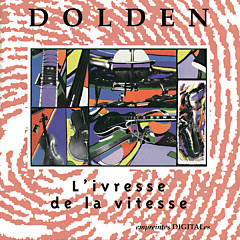
  • L’ivresse de la vitesse, L’ivresse de la vitesse 1, L’ivresse de la vitesse 2 dans The Kitchener-Waterloo Record

    «Review», Colleen Johnston, The Kitchener-Waterloo Record, 23 septembre 2001
    dimanche 23 septembre 2001 Presse

    Vancouver native, Montréal-based Dolden’s L’ivresse de la vitesse (Drunk on Speed) proved as tantalizing as its title. Completed in 1993, this work came out of the electronic studio, and like the pump of an electric guitar at a rock concert, left listeners with the sort of buoyant exhaustion of having been there when something socially significant took place.

    … like the pump of an electric guitar at a rock concert…

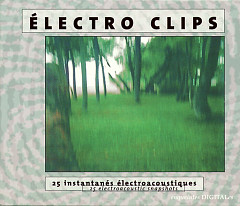
    Électro clips dans AllMusic

    «Review», François Couture, AllMusic, 23 septembre 2001
    dimanche 23 septembre 2001 Presse

    In many of its aspects, electroacoustic music follows a logic similar to classical music. In terms of duration, composers of both realms tend to favor length over conciseness, developing ideas in cycles or architectural compositions. Jean-François Denis and Claude Schryer, the two artistic directors of empreintes DIGITALes in 1990, gambled on the short attention span of the public and commissioned three-minute pieces to 25 composers. The resulting CD, Électro clips was one of the label’s first releases and stayed among its best sellers for many years. Moreover, the idea of a disc offering short works (songs, so to speak) by as many artists as possible was picked up by other labels in the field. About half of the composers represented here would record a full-length album for empreintes DIGITALes. Established names like Francis Dhomont and Hildegard Westerkamp touch elbows with newcomers like Stéphane Roy, Zack Settel, and Gilles Gobeil whose Associations libres provides one of the disc’s highlights. The palette of styles runs wild, from acousmatics to textbook musique concrète (John Oswald’s simple yet so charming Bell Speeds) to process-generated computer music (Daniel Scheidt). Highlights and curiosities include the aforementioned Oswald track (outside his plunderphonics, his electroacoustic works have rarely been released), John Oliver’s Marimba Dismembered, Roxanne Turcotte’s Minisérie (much stronger than her solo album), and a rare piece by Jean-François Denis, better known for his efforts to promote electroacoustic music in Montréal. In 1990, Électro clips gave a good snapshot of the genre’s community of composers, Canadian and abroad, but it also ages well.

    The palette of styles runs wild, from acousmatics to textbook musique concrète to process-generated computer music.

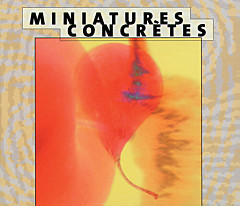
    Miniatures concrètes dans AllMusic

    «Review», François Couture, AllMusic, 23 septembre 2001
    dimanche 23 septembre 2001 Presse

    Seven years after the release of Électro clips by the same record label, and flat on the 50th anniversary of musique concrète, empreintes DIGITALes released Miniatures concrètes, its second collection of three-minute works. Big names are cruelly absent this time, leaving only lesser-known composers in the roaster. Most were in their late 30s/early 40s, an up-and-coming age in the field of electroacoustic music. Some, like Jacques Tremblay and Ned Bouhalassa, were about to have their “big break” — solo albums released by the same label — while others would continue to go unnoticed. Yet, the average quality level is higher than on the previous CD, an impression probably resulting from a more focused, homogeneous approach (for example, there is no computer music this time). What is good about shorts like these is that good ideas don’t get exhausted, while bad ones don’t last too long. Highlights include Mark Wingate’s Pufferfish, Elainie LilliosAu deuxième étage (“On the Second Floor”), the almost ambient Aquaéra 1 by Stephan Dunkelman, and Ios Smolders’ playfully enigmatic Manga pour l’oreille (“Manga for the Ear”). Stand-out tracks are not as striking as the ones in Électro clips, and Miniatures concrètes does not hold the same historical importance (its vision of a short electroacoustic piece having been copied a few times since the 1990 CD), but it provides a more satisfying listening experience.

    … a more focused, homogeneous approach…

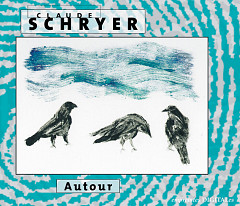
    Autour dans AllMusic

    «Review», François Couture, AllMusic, 13 septembre 2001
    jeudi 13 septembre 2001 Presse

    Autour (“Around”) focuses on Claude Schryer’s environmental compositions and concept of acoustic ecology. The first three works are presented as suites of short (generally under three minutes) vignettes made of orchestrated, unaltered sounds that recreate soundscapes. The idea is to convey a poetic image of a specific location through the use of its original sonic environments. Sounds are not electronically transformed (as in acousmatic music). The resulting music invites the listener to recreate the movies fitting these soundtracks. Musique de l’Odyssée sonore is a reworking of Schryer’s soundtrack for Louis Ricard’s movie Odyssée Sonore. El medio ambiente acústico de México is presented as a “soundwalk” in the streets of Mexico. The exotic setting makes this piece stand out. In Vancouver Soundscape Revisited, Schryer uses the recordings of the World Soundscape Project. The seven resulting fragments lack a general cohesion to be really interesting. The last piece on this CD is its highlight, not necessarily because of its artistic beauty, but for its originality and ambition. Autour d’une Musique portuaire stems from Musique Portuaire pour Sirènes et Cloches (“Harbor Music for Horns and Bells”), an environmental composition scored for six boats, two trains, and the bells from the Notre-Dame Basilica in Montréal. The premiere performance was recorded by Radio-Canada. Schryer and radio producer Hélène Prévost devised improvisational options for Jean Derome (baritone saxophone), Tom Walsh (trombone), and the composer (bass clarinet), recorded in a studio and gracefully mixed in the harbor symphony.

    … vignettes made of orchestrated, unaltered sounds that recreate soundscapes.

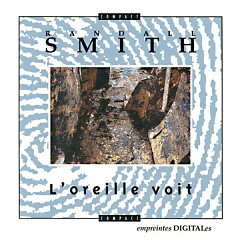
    L’oreille voit dans AllMusic

    «Review», François Couture, AllMusic, 13 septembre 2001
    jeudi 13 septembre 2001 Presse

    L’oreille voit (“The Ear Sees”) was Randall Smith’s first CD. Released in 1994, it gathers works created between 1988 and 1994. His constructions include a lot of movement, something that translates into the titles of works like La volière (“The Aviary”), Ruptures (“Breaks”), and Counterblast. This sense of movement gives life to the compositions in a way similar to what can be found in Francis Dhomont’s works: ample, calculated gestures of swirls and crescendos that lead somewhere (as opposed to Gilles Gobeil’s escalators that stop in their tracks). L’oreille voit begins with the composer’s recently finished La volière, where the human voice is used to simulate bird sounds. The wide dynamics and intriguing sources make for a fascinating listening experience. Then we gradually move back in time down to the 1988 The Face of the Waters, which paradoxically contains anything but water sounds. Very playful, it imitates water or conveys the idea of it by using a sonic vocabulary reminiscent of the candor that marked the early days of musique concrète (Pierre Henry’s early pieces, particularly): bedsprings, glasses, light bulbs, squeaky doors, etc. Smith’s subsequent works, especially the ones for tape and instrument, will tend to be denser and more satisfying, but this first crop reveals a composer who, although remaining firmly anchored in academic electroacoustics, eschews its too frequent pretentiousness and approches the art form with innocence and the intention to have fun.

    … approches the art form with innocence and the intention to have fun.
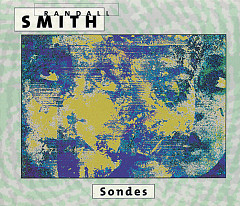
    Sondes dans AllMusic

    «Review», François Couture, AllMusic, 13 septembre 2001
    jeudi 13 septembre 2001 Presse

    This second solo CD by Randall Smith shows him taking a leap from acousmatic tape music to mixed electroacoustics. The innocence and refreshing candor found in L’oreille voit have slightly receded to make room for denser works. That is not to say he lost his power of evocation. On the contrary, the pieces on Sondes tend to be closer to his ideal of “cinema for the ear” while offering more refined compositions. InsideOut still contains a lot of playfulness. Its basic materials are limited to five samples, five notes produced by four different instruments: flute (C4), violin (G#4), clarinet (D#4), and double bass (Bb2, A2). Extensively transformed, these fragments were reassembled following classical techniques. The result is fascinating and has nothing to do with your usual Baroque etude. Movement is still at the center of Smith’s vision, with or without a real instrument to support the tape. Elastic Rebound and Continental Rift (the latter for tape and cello) were inspired by geological concepts. But the real highlights are Liquid Fragments 1, where the double bass and the alto flute play with (distorted) mirror images of themselves, and Convergence, a piece commissioned and performed by virtuoso and champion of new accordion music Joseph Petric. The latter deconstructs traditional forms of accordion music like polka and tango and fits them into a very entertaining carnivalesque setting. Smith’s music is not particularly original, but its joie de vivre and sense of purpose are highly contagious. Recommended.

    … its joie de vivre and sense of purpose are highly contagious. Recommended.
  • 5
  • 6
  • 7
  • 8
  • 9
  • 10
  • 11
  • 12
  • 13