Sauter au contenu principal
electrocd

Blogue

267 résultats
  • 12
  • 13
  • 14
  • 15
  • 16
  • 17
  • 18
  • 19
  • 20
  • 14 septembre 2002: Création nord-américaine de La perle et l’oubli de Gilles Gobeil

    mercredi 10 juillet 2002 En concert

    Libre interprétation d’un texte gnostique du 3e siècle intitulé L’hymne de la perle, La perle et l’oubli est une composition de Gilles Gobeil pour ondes Martenot et bande qui sera présentée en création nord-américaine par le Vancouver New Music Society le 14 septembre 2002. Créée à Köln (Allemagne) lors d’un concert de la WDR3 au Stadtgarten le 7 janvier 2002, la pièce met en vedette l’ondiste Suzanne Binet-Audet.

    30 ans de création à Bourges

    mardi 9 juillet 2002 Général

    «595 œuvres de 205 compositeurs de 35 pays ont été créées entre 1970 et 2001 dans les studios de l’IMEB.» C’est ainsi que l’Institut de musique électroacoustique de Bourges (IMEB, anciennement le GMEB) annonce enfin la commercialisation grand public de deux coffrets regroupant 30 années de création (1970-2000) dans ses studios à raison d’une œuvre par année. Par exemple, 1989 est représentée par Jeu de Robert Normandeau, 1979 par Barry Truax, 1981 par Micheline Coulombe Saint-Marcoux et 1986 par Yves Daoust.

    Cache 2001 dans Splendid E-Zine

    «Review», Luke Martin, Splendid E-Zine, 8 juillet 2002
    lundi 8 juillet 2002 Presse

    Cache 2001 is a compilation disc with a difference. Rather than many labels’ “here’s some of our artists and their friends” approaches, this disc is a collection of works that were submitted to the Canadian Electroacoustic Community for inclusion in their JTTP project and competition. Moreover, they’re the cream of submissions, having been winnowed by an international jury that met via the web to decide what was worth including. This is, truly, cutting-edge stuff.

    The music on offer here is superbly atmospheric. Nicolas Basque’s album-opener has some Atari-sounding beats that give an impression of time blurred, before giving way to what sounds like a flock of angry ducks. Guillaume Coutu-Dumont’s Arianne Secret is a soundtrack to a whispering gallery: half-heard whispers and a hissing suggesting a kettle or an overworked boiler create spy-images and mystery that’s matched by the remainder of the track’s Neubautenesque circular noisemaking. Robin Davies’ contribution sounds like a psychotic’s version of Pink Floyd’s Alan’s Psychedelic Breakfast — all Angel Heart menace and running-on-stones urgency. This is just a sample — the rest of the compositions are equally accomplished, making it hard to choose between them. Indeed, Cache 2001 has a sense of flow that’s unexpected in a compilation format.

    Each piece is at least four minutes long, so there’s plenty of time to be absorbed into the worlds they create. For the most part, the subtlety and just-off-station tuning that seems present in some other artists’ works is present here. There are hints of things unsaid, vaguely-machinistic sounds that echo across landscapes with steam-pressed tension. As a portrait of modern life, the disc is terrifying, with only Martin Marier’s Matmos-like Avec ou sans parapluie lightening the mood.

    What makes Cache 2001 more enthralling is the idea that all of the works here were, initially, designed for performance, not recording. The pieces were composed with live, concert-hall renditions in mind, and it’s intriguing to imagine exactly how some of these pieces would be played in public, without recourse to extensive preparation time and cut-and-paste technological solutions. This, perhaps, is what sets the pieces here apart from other electroacoustic or experimental discs I’ve heard: there’s no sense of chopping-for-chopping’s-sake. It’s natural, no matter how stuttered the tracks may become through evolution, whatever’s here makes sense.

    If you’re looking to see where the next generation of electroacoustic composers are headed, then Cache 2001 is your disc. The possibilities suggested by this material are breathtaking.

    The possibilities suggested by this material are breathtaking.

    Obstacle dans Vital

    «Review», MR, Vital, 4 juillet 2002
    jeudi 4 juillet 2002 Presse

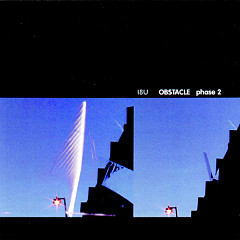
    Obstacle Phase 2 is actually a work of sound, video and animation, but this CD only presents the sound part. One long track of flowing, mostly dark sounds, with an occasional rhythm. The piece evolves quite slowly and has an ambient feel, but on close listening, one can hear subtle things that are not very ambient at all. Despite the dark sounds, the piece doesn’t have a gloomy atmosphere, it has a pretty concrete character. That’s what sets it apart from regular ambient. The rhythmic elements are very minimal, so there is no danger whatsoever of the track becoming flat or cheesy. The slow development of the work does not cause loss of attenttion, on the contrary: the tension is kept so well, that the whole piece is very captivating. I’m very sorry I missed the performance with the visuals, because if that was anywhere as good as this, it must have been a great show.

    … the tension is kept so well, that the whole piece is very captivating.

    The Freest of Radicals dans Desiderata

    «Review», B Wildered, Desiderata, no 11, 1 juillet 2002
    lundi 1 juillet 2002 Presse

    “Bait” disk: rumbling low end drones from Le Chien Borgne, which I found pleasing, and drawn in to the gently grinding noises contained within. James Schidlowsky’s Radio Collision seems like the logical progression on the previous piece. Nz-style drones swell & throb, with some scraping interjections. Tomas Jirku uses a pretty much unchanging relatively conventional beat with some sounds going on in the background, not enuff to pique my interest. Speech.Fake contrasts that with a piece of separated, more minimalistic audio artifact sounds that does a good job of impelling consideration on its own terms. Relatively quiet, and compellingly arranged, with lots of space between the sounds, with a nice somewhat louder part near the end. Julie Rousse mixes bell-tones, digital pops & more layers of sound to create an off-kilter feeling, and adding some surprising movements, very nice. The salvaged sound aesthetic continues with Eucci, with torn pieces of mangled sources juxtaposed to find another askew place. I am enjoying the somewhat abstact direction of this disk, continued by the almost out-of-control short piece of distortion by Viratone Ballad. Magali Babin contributes a piece with recognizeable dropping small objects and metal resonances, which I find oddly comforting and familiar by now. Some broken beats & ringing hi end tones by Camp, which seemed somewhat minor in this context. Claudia Bonarelli also uses fractured beats, and seems pretty tame in comparison to the earlier sound experiments. Ja_dijiste brings in an scratchy vinyls sound and other sources that skirt around the edge of expectations. A quiet, unsettling, insistently emerging mix. Next is Napalm Jazz, who raise stakes with an aggressive electronic assault. An enjoyable and well-placed contrast with its instrumental ensemble approach in the midst of this disk. Backstreet Noise sounds like someone working next door, so it is like they are playing on your wall, with the possibility of them or their tools emerging thru the room boundaries seems imminent. The use of muffled, distorted shards of voices adds to this effect. A joint piece by N.Kra & Em follows, evoking the leakage of otherworldy properties thru the hole opened previously. They’re here… Will they notice us? Jon Vaughn steps up to defend the gates with a peeling sheets of noise supported by a frontal rhythm. Gets a little same-y after awhile, after a promisingly threatening start. Interesting buildup from playfully busted up sonic debris to a strong rhythm by 833-45, monolithic rather than monotonous, and broken up by the more abstract, possibly found sounds. An unexpected instrumental piece by Kanovanik, using a conventional combo sound which doesn’t really seem to fit here. This would be the answer to the “which of these is not like the others” singsong query. It is a modestly tuneful jazz-imprv-y sounding tune, but why? Idmonster continues in the “band” mode with a bass guitar-heavy piece with backwards guitar, that again, seems lost or misplaced on this comp. V. V. ends the disk with a live-sounding piece comprised of percussive events, what sounds like a sheet-metal being bowed, small chimes, and progressing into unrecognizeability and sheer sound, with a “room” sound apparent during the quiet parts, overcome by cascades of white noise during the louder movements.

    “Switch” disk: was impressed with the brief piece by Kalx, a rousing whit-ish noisey piece. Then depressed abruptly by the idm beats of Oeuf Korreckt, which was good, for idm, if u like that kind of thing. Sluts On Tape were an editing amalgamation that was darker and more varied… Loved the last 50 seconds or so. Octopus Inc bring it back to a more abstract setting, with what sounded like highly edited acoustic events. An intriguing piece, makes me curious for more (time to go download some mp3s?)… Alphacat realigns the stream to beats, with much reverby ambience circulating around the thumpisms, very atmospheric. Books On Tape present a piece with beats, but they are made out of pretty noisy sounds, and they keep things moving. I can imagine someone trying to dance to this, but… Good luck. A complex arrangement, with some somewhat predictable pacing. Someone passing by just said “pretty psychedelic music there” as morceaux_de_machines’ piece erupted from the speakers. Good stuff, hard to breathe, tho, its so densely packed… Claustrophobic. Hmm, and I have their full-length on tap for review next issue. Amazing piece, dense, metallic, onrushing, voices murmering things I am not sure I want to understand. Then we get to Martindx, an appropriately-placed respite of a piece which nonetheless takes us into a levitating plane, using common-sounding elements in a very peculiar and effective style- another winner. Dick Richards brings us back to earth with a less warped perspective on digital-sounding composition. Small sounds abound, placed repetitiously and layered intricately. Very subtle & effective… Chris Degiere was a kind of nondescript broken beats piece. Headphone Science continues the well-paced sequencing with its deliberate, somber, constrasts of slow tones and slippery rhythmic crunchies… Mmm, tasty, pass the milk. The interestingly named Gimp Gadget Oscillation are next with 6 minutes of modest mid-range beats. Themoonstealingproject… a little difficulty, I have to set aside a poor interpersonal experience with this guy… Mostly backwards sounds with some strange lo-fi loops off in the periphery, doesn’t really go anywhere for me. Time-stretched sonic mini-diorama from Diablatomica, very minimalistic, makes you listen for the slight variations, very nice, a standout. Kalx returns with another, more beat-oriented piece, which I found less striking than Soundtest which opened this disk. Infoslut comes in with a piece incorporated some serious sequencing, resulting in a majestic electronic orchestral arc-ing effect. After a 20 second pause (to set it apart?) N.Kra concludes the disk with a relentlessly concussive percussion & distorted sequences that were reminiscent of (a perhaps drived from?) the preset demos in cheap keyboards. Is Metroid a video game?

    Mmm, tasty, pass the milk.

    Chemin de fer dans Desiderata

    «Earpeace: Audio Review», B Wildered, Desiderata, no 11, 1 juillet 2002
    lundi 1 juillet 2002 Presse

    This CD consists of a series of compositions created by handling various found metallic objects and recording the results, then “extracting” the results thru the “anvil or forge” of the studio. The results are akin, yet different from, the work of Seth Nihil, in that you are brought into an interior environment. As if your ear were pressed up against the objects and hearing their resonance as they are stroked, struck, used as sound and electrical conductors in various ways. Which makes for a very intimate audio setting, not immediately accessible as “music”… It is more of an artificial ambience, a created introjected universe.

    Now the question becomes is this of value to you as a listener, to spend your time listening either intently or distractedly to these scrapings, buzzings, etc. I would have to presuppose that you have listened to a lot of recordings, and have become bored with various regurgitations of pop muzak formuli, & have embarked on a search for new ways to appreciate the possible worlds of organized sounds. If so, there are very few more original and thoughtfully-considered works than this one. The 6th track, L’entonnoir, stood out in its building of heavy motive-type sounds which resolved into a small rolling trickle. The collaboration Jogging dans la maison hantée appears to represent a step in the microsound electronic motif i have become somewhat familiar with, in its electronic chirps & extended heavily-reverbed metallic sounds, and its more extreme dynamics. “Pluie de homards” concludes this cd with a caustic, cutting series of sounds, effectively building to a tangled jungle of a resolution.

    … there are very few more original and thoughtfully-considered works than this one.
  • 12
  • 13
  • 14
  • 15
  • 16
  • 17
  • 18
  • 19
  • 20