Sauter au contenu principal
electrocd

Blogue

267 résultats
  • 22
  • 23
  • 24
  • 25
  • 26
  • 27
  • 28
  • 29
  • 30
  • 2 – 7 juin 2002: morceaux_de_machines: lancement et concert

    jeudi 23 mai 2002 En concert

    morceaux_de_machines et Oeuf Korreckt, deux formations électroniques, lancent leurs albums sur étiquette No Type ce dimanche 2 juin 2002 au Kookening Kafé (Québec) lors d’un 5 à 7 amical. Par ailleurs, les résidents de Montréal pourront apprécier la fougue de morceaux_de_machines l’après-midi du vendredi 7 juin 2002 lors de leur concert en plein-air, en compagnie du bédéiste Guy Boutin, lors des célébrations annuelles sur l’avenue du Mont-Royal.

    Cycle du son dans Vital

    «Review», Frans de Waard, Vital, 23 mai 2002
    jeudi 23 mai 2002 Presse

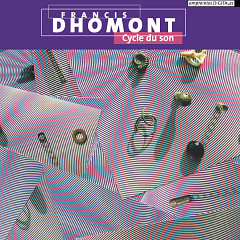
    Canadian composer Francis Dhomont, whose previous work has been released by the same label, thought it to be about time to pay hommage to 50 years of musique concrète. That is around 1998, because three out of four works were composed then and it has been then 50 years ago that Pierre Schaeffer composed his first work using daily sound material (a.o. derived from sounds from trains in his Cinq études de bruits (Five Etudes of Noise)). Dhomont harks back to the same sound materials for all four pieces as Schaeffer used. Of course through the use of the new techniques it all sounds very different. Whereas the original “Five Etudes” last 15 minutes or so, this CD takes up 50 or so minutes. In Novars Dhomont samples the sounds of Schaeffer and plays around with them, either by time stretching, filtering, looping etc. And this is what’s going on in the three other pieces as well. Dhomont has a very classical approach to the material, his approach is not very different or new then from most of the other composers on empreintes DIGITALes. Much reverb, oscillators and filters transform the sound in tumbling parts that fall over each other. Not a bad thing, but in every sense, classical.

    The Freest of Radicals, No Type dans Earpollution

    «Review», Mark Teppo, Earpollution, 20 mai 2002
    lundi 20 mai 2002 Presse

    It begins with a distant rumbling, like an earthmover firing up its large engines on the other side of the hill, the ground shaking slightly as the pistons start to move. This is Le Chien Borgne’s offering to the first No Type CD. Titled rho < 1 (rho a > rho), it drifts and rumbles, squeaks and threatens to have some rhythm, but never really becomes anything other than an environment. Welcome to the inscrutable sound of No Type.

    Founded in October of 1998, No Type was a child of the Internet — its product only available as downloadable MP3 files — and it trafficked in the digital. Over the next half-decade, No Type created a venue for aspiring digital artists to link their sounds and music with an eager digitally-aware audience. They did glitch; they did click ’n cut; they did microwave; they did electroacoustic; they did minimal techno; they did experiments with radio transmissions bounced off satellites; they found more life in the little “1” and “0” than anyone thought there could be. And to celebrate: they’ve gone physical.

    Teaming up with DIFFUSION i MéDIA, No Type is now releasing CDs — honest to goodness put it in your car stereo and think your car is about to fall about from the sounds that are coming out of your speakers kind of real discs. They’re starting you off with a two-CD set that encapsulates where No Type has been. Or, more appropriately, what sort of boundaries they don’t bother keeping to.

    The Freest of Radicals offers 36 tracks across the two discs and has a little something for everyone. It starts with the beatless atmosphere of Le Chien Borgne, wanders into a chamber where Tomas Jirku demonstrates his minimal techno rhythms for you. Speech.fake explores the realm of micro-tonal glitch with their clinically titled An Objection That is Immaterial After the Fact. Julie Rousse offers a very 4’33” sort of vision with her Une à six idées improvisées. Viratone Ballad breaks in on Eucci with their track, ouet3c-warm, making me think for a minute and 48 seconds that something in either my spleen or my speakers has ruptured. Napalm Jazz and Backstreet Noise deliver two tracks that perfectly fit their names. Oeuf Korreckt finds a way to generate a near pop song from a piece of outdated machinery, further demonstrating that sound and music can be found anywhere. Dick Richards does Berlin style minimal dub though he thoroughly coats his tweaks and notes with yet another layer of water dub before stuttering everything back at you. Chris Degiere demonstrates how random and chaotic generative systems have more appeal than anything found on a recent Autechre album. Speaking of IDM, Headphone Science’s Without Paper Basics is as good as anything off Warp or Rephlex in the last year. Alphacat offers Waveporn which is a soundtrack to a six minute film of modest neu-electro machine dance porn.

    It’s adventurous and experimental, and if you have the least curiosity as to what is being done in the realm of digital music, you should snap up this collection. Some of it makes me move, some of it make me flinch, some of it I can’t really hear over the sound of my computer or the traffic on the road outside, some of it makes me wonder if my stereo is about to explode and some of it makes me wonder what color the inside of a melody would have, but all of it makes me wonder how and why music can be heard. And, I think, that is all David Turgeon intended when he founded No Type back in 1998: to challenge our understanding of what is music and what is sound. He and the artists represented by The Freest of Radicals are not working to make pop songs, they are endeavoring to make you stop and consider what you hear.

    And, for the love of static in your speakers, get yourself to their website. There are only 155 minutes of sound on these two discs. Hundreds more minutes await you at notype.com.

    … a two-CD set that encapsulates where No Type has been. Or… what sort of boundaries they don’t bother keeping to.

    liberum arbitrium, morceaux_de_machines dans Ampersand Etcetera

    «Review», Jeremy Keens, Ampersand Etcetera, no 2002_7, 20 mai 2002
    lundi 20 mai 2002 Presse

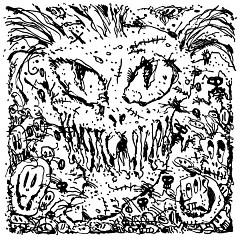
    The evil face embedded in the doodlish ghoulish cover illustration by Guy Boutin juxtaposed with Sophie Dowse gentle watercolours on the inner sleeve is somewhat suggestive of direction, and is furthered by the Anthony Burgess quote (which is the only part of the extensive liner notes in English) about “two kingdoms… the eternal and luminous one of the divine lord’s own making, and the noisome stinking pit of pain and horror… of god’s enemy.” Within those notes “fragilité… construction de tension… danger… source des textures” all support the impression gained from the cover and delivered by the music.

    Aimé Dontigny and Érick d’Orion, morceaux_de_machines, create some of the hardest ambient-noise I’ve heard recently, teetering between the pit of despond and the beautiful city. I thought cut-up would be the end of me – there is an on-going click-pop “melody” which sounds like the soundtrack to a sci-fi battle with choppy cd/tape samples below (either some rap of just aggressive people). As it continues, there is a surprising melodic aspect and a shattered stability. The disconcert continues in multivisión espacial with more rapid pops shoots bloops plips and more over samples, which sound like jazz with guitar flute etc. As time passes the aural assault continues, sharp needles of sounds, more noises, and eventually the surface noises become a merged buzz of sounds, brief dropouts, voices in there, to a quieter final minute.

    When you think it will all be overwhelming, lo-fi soundscape eases the impact a little, with lighter whizzy surfaces over piano and sax, again easing to a quieter end. Or spencer’s percussive bursts melded with loose-cable crackle, all echoed slower and quite visceral. Voice pulses enter, it builds and distorts, and then there is a reverbed voice briefly talking to us (an unexpected directness) before a big layered end. And we are caught quite unaware by the lightness of prime shake: gentle pips and burrs, like a computer control room, soft rhythms and crackles, a distant tone melody: the crackle builds, it is all dense restraint into a percussive end.

    métal scrap is well named as a scraping melody weaves through crackles drums and building noises over a soft solid bed, joined by a voice – possibly Hitler or a Dada-esque speech, hard to say – solid and directed. The squeaks clicks and soft tone pulses that open rothko are almost pastoral, electro-frogs, a slow echo-drum running through and slight increased density and pace, the samply-jump behind providing subtle noise, a little more desperate to the end before a crackle-pop fade. The final track digisex swings back to the more oppositional strategy, here a degraded distant pop sample provides some vocals and a rhythm, the bleeps and peeps over increase, subsumed by a soft and rumbly futz – a sort of bolero – and all breaks down again in the last minutes.

    The beginning of this album threw me onto the back foot, and seemed all noise and aggression, but as I listened through it and on replay I actually warmed to it. m_d_m do achieve the straddling of the inferno and paradise suggested in the notes, creating a surprising and satisfying combination of electro-noise with subtler elements weaving through. Intriguing.

    morceaux_de_machines create some of the hardest ambient-noise I’ve heard recently… a surprising and satisfying combination of electro-noise with subtler elements weaving through. Intriguing.

    Chemin de fer, Magali Babin dans Ampersand Etcetera

    «Review», Jeremy Keens, Ampersand Etcetera, no 2002_7, 20 mai 2002
    lundi 20 mai 2002 Presse

    Following the No Type compilation, three new disks from the real world collaboration between David Turgeon and DIFFUSION i MéDIA arrived at Ampersand Etc.

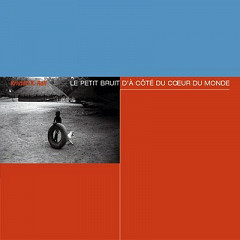
    Magali Babin improvises her sounds on “metallic instruments and objects, which [she has] made, recycled or reinvented,” which go beyond the tin things pictured on the cover, as the notes also mention “a rather small electrical object… guitar pick up,” the mike placement has also had an important impact, as has “the studio work.” However, created originally for a radio show, the pieces here demonstrate the range of her constructions.

    It opens with a more tentative, less structured piece that like many improv albums, tests the listener straight off. Triturations is an amalgam of shimmers pops scrapes twangs voicey-noises shakes subtleties and crackles that twists and changes adding thuds and winds in a complex electroacoustic weave of sounds of unusual colour and timbre. Petit jardin is more straightforward, alternating periods of a strumming with the sound of pebbles dropped in a bowl, with an overall chime, adding a scooping sound near the end. With my french, La corde is appropriately named – scraping and some plucking of a stretched wire accompanied by a percussive thud that sometimes sounds like a ruler being twanged. Monsieur et madame Watt has two components: an electronic buzz with becomes a wave and then a pulse over which there is a light percussive rumbling and scrabble. A tapping rolling scrape in E sounds like the microphone was inside a pipe being played, gradually speeding up, and into the big rolling percussion of L’entonnoir that forms a full-on assault over droning base and light playful tappings over. Jogging dans la maison hantée – was composed with Alain Chenier and Mario Gauthier (from the radio station): sighs and clicks run through as little noises explode over – scrapey rumble, high wail, rubbing noises – that ebb and flow returning wit stretched decay for a little big finale.

    Dramatic flourishes of tapping and a fast rubbing increase in volume and speed in Ma tribu, eventually pulsating. And then the finale, Pluie de homards (which has been mixed with an Ian Nagoski piece apparently) a fabulous conclusion, verging on electro-noise as big hollow resonances whoosh over a light crackling clatter. And nicely completes the trajectory the album has created from its more finely grained opening.

    An unusual and engrossing album. As you read the reviews of the others that make up this first batch from IMNT, it will be obvious that David Turgeon has maintained the unique eclecticism that made/makes the on-line label so fascinating. I hope that there is enough interest in the real world to allow the label to continue this musical exploration. For those in the know, the IMNT releases are packaged in the same card sleeves that are a little like upmarket cigarette packets. This allows for some interesting artwork and extensive liner notes, and maintains the tradition.

    An unusual and engrossing album.
  • 22
  • 23
  • 24
  • 25
  • 26
  • 27
  • 28
  • 29
  • 30