Sauter au contenu principal
electrocd

Blogue

267 résultats
  • 1
  • 2
  • 3
  • 4
  • 5
  • 6
  • 7
  • 8
  • 9
  • Podweek dans Splendid E-Zine

    «Review», Luke Martin, Splendid E-Zine, 3 novembre 2002
    dimanche 3 novembre 2002 Presse

    Podweek is a collection of tracks culled from the highly-personal output of Frédérick Blouin (aka Quebec’s Oeuf Korreckt). Though the disc covers a number of years — 1995-2001 — the uniformity of feel is surprising. There are no dodgy recordings, no unevenness of production; it’s pretty much quality all the way. Of course, when you’re in the realm of tracking, the limits of the sound generation devices — though it’s not explicitly stated, Oeuf Korreckt could be banging this stuff out on a supercharged (and superannuated) Atari ST — become obvious in terms of the tonal palette. Indeed, the album’s opener, Get Binary, could’ve be a GoldenShower release; it’s top-heavy on the chunky Atari sounding palette, and immediately puts one in mind of hours of retro gaming fun. But there’s something more in the mix across this selection of tracks than just a canny ear for good ol’ sounds. Screw my Samples comes closest to the Aphex Twin’s neck of the woods — delightful marimba or glass harmonica sounds over a frenetic drumbeat. However, the end of the tune sees it rapidly accelerate away with a fantastically meaty repeating organ riff; surprising, as are many of the tunes here, inasmuch as it’s an interesting escape from the box that one imagines is set up by any of the tunes in their first couple of minutes. Blouin’s style is that of the escapologist. We Have Arrived is perhaps an example of what Oeuf Korreckt does best: very simple, almost reflexive percussion, with a long-plucked bass-sound behind it, overlaid with organ that veers almost into the realm of cheese… but not quite. The effect is amazingly creepy; we’re in Future Sound Of London territory, perhaps, but with more paranoia. This is pretty much as good as the disc gets — it’s more of this sort of thing that’s craved. Forget rave-ups; the ambience speaks more effusively of Blouin’s talent than anything else on the disc, though that could be largely because it’s the newest thing here. If that is the case, whatever comes out next should be jaw-dropping. As a retrospective, Podweek is dazzling. The mix of big-booted dance, creepy ambience and cheese-grinned sunrise choruses is enough to wet anyone’s appetite for more. Get into it; it’s warm, it’s retro, and it makes you want to hunt down some tracking software for yourself. It’s that good.

    The mix of big-booted dance, creepy ambience and cheese-grinned sunrise choruses is enough to wet anyone’s appetite for more. Get into it; it’s warm…

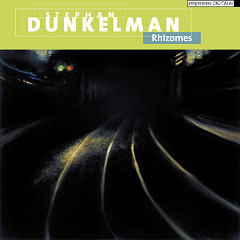
    Rhizomes dans Les Cahiers de l’ACME

    «Critique», Roald Baudoux, Les Cahiers de l’ACME, no 210, 1 novembre 2002
    vendredi 1 novembre 2002 Presse

    Voici le premier CD monographique de ce compositeur dont le parcours discret mérite pourtant bien qu’on s’y intéresse. En effet, des plus anciennes aux plus récentes, les compositions présentes sur ce CD sont issues d’une pensée musicale qui allie à l’utilisation intelligente du temps une utilisation non moins intelligente de l’espace. Si les matériologies sont multiples et originales, leur utilisation est toujours au service du discours musical, discours dynamique et articulé, notamment au travers d’un important travail d’écriture par montage. Est-ce des multiples collaborations du compositeur avec des chorégraphes qu’est née cette dynamique du discours ou bien est-ce cette dynamique qui a permis de telles collaborations? Peu importe puisqu’on retiendra que ces compositions ne comportent que peu de temps morts et que le geste y est omniprésent. Et cela dans un grand équilibre, sans jamais tomber dans le pathos ou l’emphase inutiles.

    … un grand équilibre, sans jamais tomber dans le pathos ou l’emphase inutiles.

    Présence III dans SAN Diffusion

    «Review», Richard Bowers, SAN Diffusion, 1 novembre 2002
    vendredi 1 novembre 2002 Presse

    Présence III is also about absence: the 29 snapshots on this two-disc set can only give a flavour of any one artist’s oeuvre and one piece per artist (with the exception of the two from Martin Alejandro Fumarola) does not guide the ear to the absent works. While the sleeve notes make the justifiable claim that the pieces ‘give evidence to the breadth and depth of artistic practice within our community’, the problem, for me, lies in the process of selecting examples which best represent this breadth and depth.

    The pieces are arranged on the discs in alphabetical order by the composers’ surnames, creating arbitrary collisions of style and genre. That’s no bad thing as it resulted in the happy accident of Kristi Allik’s Machine Symphony being presented first. This extract forms a slow arc of granular accelerandos and drones using material derived from machine noises. It’s familiar territory and there are no aural surprises but, despite the clumsy fade-out, the track forms a solid prelude to the rest of the disc.

    James Bentley’s double exposure has a greater range. Here is a more flamboyant display of sonic fireworks: cracklings, buzzings, bursts of white noise circling the head, snatches of speech: all mostly locked in place by a whistling continuum. However, there is a pervading sense of arbitrariness which tends to irritate rather than astonish — although there are some exquisite sounds here.

    James Caldwell’s Mechanism II is similarly arbitrary in terms of its perceivable structure: slow accumulated chords are played out in shiny synthetic timbres punctuated with plucked string sounds. The sustained notes are swung gently around the head while the plucks give some gestural cues to an otherwise lifeless piece. Although it operates within a sharply defined sound-world, it really does sound like it’s been scored for a bad made-for-TV thriller.

    So I held my breath for Grant Chu Covell’s Octet with Puzzle which also had, to my ear, a predominance of rather weary synthesised sounds. However, these sounds were offset with segments of speech and a shifting, overlapping pattern of recorded (?) percussion which is really quite engaging. The piece has a lively character — a refreshing change from the all-too-familiar reliance on sustained drones — and is quite daring in a field where changing timbres slowly is a predominate mode of expression. However, I felt a need for greater richness in the pitched tones – a richness hard to achieve using classical synthesis methods.

    Rhythm forms the strongest motivating force in the excerpt from Thomas Gerwin’s Fontaine de Vaucluse. One of the sounds, which were recorded at the spring of one of the deepest sources on Earth, is aggressively looped to form a snare-like pulse undulating in counterpoint to other loops of water noises. The effect is of an unstoppable engine and forms, in some respects, an inversion of Allik’s piece where machinery is made to take on the flow of natural phenomena.

    Disc 2 opens with Mirror of Time – so called because of the forward/retrograde rhythmic patterning deployed. A nice piece which may benefit from being transcribed for chamber ensemble as the sounds largely emulate (sampled or synthesised?) natural instruments with little or no modification. Oboe, bassoon, piano, pitched and unpitched percussion, plucked strings are all present playing repeated staccato notes in varying registers. A bright, cataclysmic moment in the middle slowly dissolves into the sparseness with which the work opened. A simple, taut argument.

    After Adrian Moore’s sinewy assault on my loudspeakers complete with its audacious interjection of sampled accordion playing, Rick Nance’s thoroughgoing investigation of ‘various shapes and masses of different metals… as they radiated summer heat into a block of frozen carbon dioxide’ presents some scintillating sounds, leaving me with a desire to know more about the techniques: his website gives away little of his alchemy.

    The problem of making synthesised tones engaging can be neatly side-stepped by working with acoustic instruments, live or recorded, additively or reductively. Richard Zvonar and Robert Black do just that with Massif for solo double bass and multi-channel recorded basses. A slow crescendo of buzzing, bowed strings builds to a frenzy, until the tension drops to allow for cascades of pizzicato to come to the fore, then builds to another peak. At around six minutes we are offered some layered cadenza-like passages, with their promise of virtuosity, which congeal to a terrifying roar and chatter, as if the entire animal kingdom had been sent into panic. It seems never to end until a faintly nostalgic, floating, singing passage brings this extraordinary piece to a close. At times I was reminded of why I once enjoyed Xenakis’s music with its massed strings playing glissando, but parts of Massif offers more – possibly because it is less restrained, less bound by its own conventions: a really satisfying close to this compilation.

    As for the ‘breadth and depth’, this compilation gives a flavour of the range of styles one might encounter in the world of electroacoustic music and it presents us with various degrees of adherence to the language of ‘conventional music’. As such it is a good taster but I would have liked to have heard fewer artists presenting more pieces. Nevertheless, there is much to enjoy on these two discs.


    liberum arbitrium dans Desiderata

    «Review», B Wildered, Desiderata, no 12, 1 novembre 2002
    vendredi 1 novembre 2002 Presse

    At first, comes off as a busy sounding cd combining lots of noisy electronics and various samplings of voices and what sounds like acoustic instruments. Everything sounds broken up and jammed in together, without much mixing or blending on the first 4 tracks. Suddenly, with track 5 (prime shake), the sounds seem to resolve & form a more coherent depiction of a moving landscape in sound. Quite a difference, with direction and less broken up elements cluttering jumbled edges of the parts. Instead, a streaming rush of bits of semi-obscured events passing thru, similar to audio sources fading in and out of range of a moving persons hearing. A tendency towards a slightly more sparse mix allows the sounds to reveal themselves better. A diverse cd which is impressive on the more developed pieces, and seemingly lost in the scatter on others.

    Rhizomes dans AllMusic

    «Review», François Couture, AllMusic, 1 novembre 2002
    vendredi 1 novembre 2002 Presse

    Rhizomes summarizes Stephan Dunkelman’s 1990s. Most of the seven works included on this CD were already available on a number of compilation albums (Aquaéra 1 on empreintes DIGITALes’ own Miniatures concrètes). Presented together, they form an interesting solo album. The key word to describe Dunkelman’s music is “movement.” He has worked extensively with choreographers and some of these pieces stem from music for dance. There is grace and fluidity in the stereo crisscrosses, the leaps and splits of his sounds. In that regard, Rituellipses is exemplary. Ample without aiming at grandeur, it impressively coordinates the dance of a number of “characters” in a movement that draws from a certain conception of serialism and ritualism, all to great effect. Dreamlike Shudder in an Airstream Part 1: For a Crumpled Woman, encountered at half point in the course of this hour of music, brings an element of disturbance. Its title already hints at something darker or oppressive. The piece is more cluttered and looms menacingly over the listener. The closing Thru, Above and Between approaches radio work (or hörspiel) from a purely musical point of view. Consciously evacuating any possible literary thinking, Dunkelman tries to come back to the essence of “cinema for the ear,” developing a narrative that will not translate into words but makes sense to the listener nonetheless. Through these pieces, the influence of Annette Vande Gorne rarely goes away — in the choice and use of concrete sounds, in the musical flow — but is well integrated to Dunkelman’s style. Academic but warm and with many fascinating facets, this album is definitely worth your time.

    … warm and with many fascinating facets, this album is definitely worth your time.

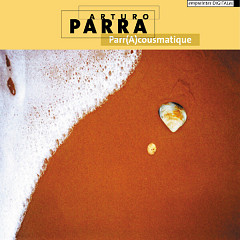
    Parr(A)cousmatique dans AllMusic

    «Review», François Couture, AllMusic, 1 novembre 2002
    vendredi 1 novembre 2002 Presse

    Simply put, this is a great project, well conceived and marvelously concretized. Arturo Parra, an excellent classical guitarist specialized in the modern repertoire, has commissioned electroacoustic pieces from four of Quebec’s most renown acousmatic composers: Stéphane Roy, Francis Dhomont, Gilles Gobeil and Robert Normandeau. Each work had to stand on its own (and some have been released on other CDs), but Parra also composed four pieces for guitar and tape using them. The eight pieces (tape only and mixed) were premiered at FIMAV 1998 as the program Parr(A)cousmatique. Four years later the label empreintes DIGITALes released Parra’s four mixed works plus a fifth piece composed with Mauricio Bejarano following the same method. The guitarist has managed to respect the spirit and idiosyncrasies of each composer while giving the cycle its own identity. The pure, untreated sound of the classical guitar could have felt like it was just pasted over the tape part. On the contrary, Parra’s playing creates a fully-integrated contrast with the electroacoustics. He uses extended techniques without banning the instrument’s (and his own) Spanish heritage. La basilique fantôme (with Roy) opens with flashes of typical guitar virtuosity that establish the setting of the whole cycle. That piece and L’envers du temps (with Normandeau) provide the best moments. In the latter, the guitarist elaborates a stunning discourse, a song that parallels a rich tape drone. Highly recommended to enthusiasts of electroacoustic music and contemporary acoustic guitar alike.

    Highly recommended to enthusiasts of electroacoustic music and contemporary acoustic guitar alike.
  • 1
  • 2
  • 3
  • 4
  • 5
  • 6
  • 7
  • 8
  • 9