Sauter au contenu principal
electrocd

Blogue

268 résultats
  • 18
  • 19
  • 20
  • 21
  • 22
  • 23
  • 24
  • 25
  • 26
  • Aparanthesi dans Touching Extremes

    «Review», Massimo Ricci, Touching Extremes, 25 août 2003
    lundi 25 août 2003 Presse

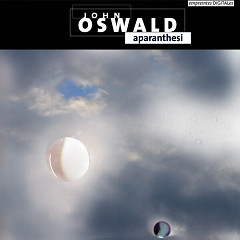
    It’s useful thinking about the extreme contrasts in John Oswald’s output. Famous for his “Plunderphonics,” a multidimensional musical-genre kind of studio schizophrenia; concretely active as a sax improviser in various new music settings. Yet in Aparanthesi the Canadian composer stretches forms, lights and dynamics out of a single pitch, forcing ears to be constantly in full-receptivity mode and tuning any event to that ‘big note’: a piano chord, a thunderstorm, frequencies that bats would hear better than humans. This concept is fully described and discussed by the author in the CD booklet, which I encourage you to read carefully; what remains to be said is that this is music at the highest depth and introspection levels: its ‘one’ note is at the same time a signal, a promise, a mirror room, an expectation, a blood pulse, those small signs our body transmits at night when silence surrounding us becomes unbearable. Listening to this record is like watching the sun complete its cycle through the day: firm-looking, it actually moves and radiates incessantly and — before disappearing under the horizon — it reminds you another day has passed by and you’re still another little point in that universe you thought you were the centre of. A major milestone in acousmatics history, this work confirms there’s no need to talk too much to get to the point. Yes — you need SILENCE to listen to Aparanthesi.

    A major milestone in acousmatics history…

    Hey Typical!, Front, Bleak 1999, No Type dans Le Devoir

    «Musiques émergentes — Non conforme et fier de l’être», David Cantin, Le Devoir, 23 août 2003
    samedi 23 août 2003 Presse

    De l’électronique au rock expérimental, un portrait des sorties importantes et attendues

    Encore cet automne, les musiques émergentes retiennent l’attention. La scène indépendante québécoise se démarque et revendique plus que jamais sa différence face à l’industrie dominante. À quoi peut-on s’attendre au cours des prochains mois? Quels seront les artistes ainsi que les albums à surveiller? De l’électronique au rock expérimental, on dresse un portrait des sorties importantes et attendues.

    Chez No Type, on ne peut tout simplement pas passer à côté du Bleak 1999 de Tomas Jirku dans le genre IDM sombre et minimal. On a aussi hâte d’entendre l’électronique délinquante de Books on Tape, de même que les recherches plus pointues du duo Front (Jon Vaughn et Max Haiven).

    … on ne peut tout simplement pas passer à côté du Bleak 1999 de Tomas Jirku

    Bleak 1999 dans Vital

    «Review», Frans de Waard, Vital, no 385, 20 août 2003
    mercredi 20 août 2003 Presse

    By now the name Tomas Jirku is a well respected one in the field of minimal dance music. His previous 12”s have a strong dance floor sensibility and his concerts are hilarious. His CDs so far showed a more austere side of his work, more intended for home listening. They too use rhythms to quite an extended but are more minimal, working more indepth on sound and colour. Yet, with his new album Bleak 1999 he goes a bit further. The rhythms found here are not just ‘acid’ or ‘techno’ rhythms, but very straight forward bangs with little to none variation. Each of the sixteen tracks here have some sort of rhythm, but they merely carry the piece. The icing on each cake comes from a likewise sober use of synthesized sounds and processed radio transmissions. A somewhat distant, yet quite atmospheric sound is displayed here. Music that seems to be intended to be played at that point of the day when day turns into night: shimmering twilight music, with the lights just turned on, driving by an abandonned industrial site. Maybe a black and white movie, rather then a coloured one. It should be a bit cloudy during that day. Tracks flow into each other here, thus to emphasize the drive by nature of the music. Music that is made in solitude and should be listened in soltitude. Maybe it’s a far cry from Jirku’s partymode, but at least it’s also something to show that he is not a flat character. I guess it’s an album that will upset some of his listeners, but more of the same is always less. To the reasons why it took so long to release it (the title indicates rightly that it was recorded in 1999), I can only guess, but it’s good to see it out, at last.

    … intended to be played at that point of the day when day turns into night: shimmering twilight music…

    Sings the Blues dans Vital

    «Review», Frans de Waard, Vital, no 385, 20 août 2003
    mercredi 20 août 2003 Presse

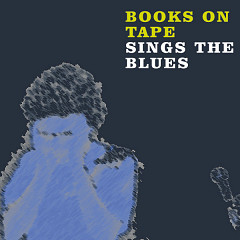
    In a short time span, this is the third release by Books on Tape (see also Vital Weekly 361 and 376), the solo project of Todd Drootin, who once more takes his punk attitude to the sampler and cooks up a nice meal of hip hop, punk and techno. Whereas the recent 10” was maybe a bit long, the balance here is right. The sixteen tracks are one long driving energy force of energetic pieces that breath the speed of punk, but takes it’s sampled sources from anywhere in history of music — jazz, blues, techno — but without sounding like that at all. Despite the title, Books on Tape may sing a lot of tunes, but definetely not the blues. Maybe it’s a more raw version of Moby at times. Freshly aggressive, raw and untamed. Quite an enjoyable effort.

    Freshly aggressive, raw and untamed. Quite an enjoyable effort.

    My Malady dans Vital

    «Review», Frans de Waard, Vital, no 385, 20 août 2003
    mercredi 20 août 2003 Presse

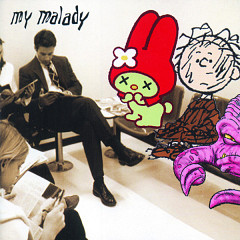
    I must admit I feared the worst, when I read the press blurb raving about ‘a wide range of chaotic sounds together into one sweeping smorgasbord of interpretations of disease and dysfunction’. It’s not that I dislike noise, even when it took me four years to hear all fifty Merzbow CDs that are in the Merzbox. Occassionally I even play a Whitehouse record, MB or Ramleh. But much of the noise music that is made by others are just a repetition of archetypes put forward by those I just mentioned and do not add something new. So when I got through this lengthy compilation of no-less then thirty-three tracks by as many artists, I can safely say: noise music is alive and maybe even kicking (despite it’s disease?). It has become an umbrella for many sub-genres, feedback inspired noise, guitar noise, dark ambient, plunderphonics and in some cases even techno oriented. Quite a pleasent trip. Not to mention the many unknown bands here, like Bomb20, Burmese, Iran, Persona, Mixel Pixel, Spin Laden, Cussycat, Berkowitz Lake & Dahmer (yes, some of these people have nice band names too) or Travis Bickle’s Mohawk. Prime noise makers — that is people who have gained a following already of their own — include Illusion Of Safety, V/VM, Zipperspy or The Evolution Control Committee. It’s the variety of music that makes it quite enjoyable. Short tracks, from various angles of noise (and related — he hastened to say) make this quite a vivid compilation.

    It’s the variety of music that makes it quite enjoyable.

    All Your Dreams Are Meaningless dans Splendid E-Zine

    «Review», Walt Miller, Splendid E-Zine, 14 août 2003
    jeudi 14 août 2003 Presse

    Working tirelessly on the fringes of Canada’s music scene, Coin Gutter is emerging as one of the northwest’s premiere experimental outfits. All your dreams are meaningless’s uncompromising opener — featuring an immediate blast of cold, harsh noise — dares you to concur. Lift With the Knees, which first saw light in 2001 as a 36-and-a-half-minute EP, jumps from Merzbow brutality to Lull isolationism to Mille Plateau granulation within the first ten minutes. By the time this Vancouver duo (Emma Hendrix and Graeme Scott) brings in the second movement (tick tock rhythms and creeping crescendos of industrial ambience), you’ll have realized that these two ambient/concrete composers have something special going. Actually, Coin Gutter tours quite a bit throughout Canada, so it’s reasonable they can craft such tight, eclectic arrangements so seamlessly. What’s surprising is that Lift With the Knees is hardly the best track on the disc.

    One contender is Lullaby, which, with a twisted interpretation of its title, features an operatic performance of female singer and piano arrangement that we’ll assume has been lifted out of obscurity. Coin Gutter dissects it in glitch fashion, pitching things down, stuttering it, distorting it and layering it upon itself into a sudden maddening mash. Occasionally the two roast it with hot white noise like kids pulling wings off of butterflies, and you share in their delighted grins.

    Terminal is another standout. The source material, masked by room effects and distortion, could be a choral hymn with organ accompaniment, but who knows? Transformed into a wall of sound, with tones and voices escaping the maelstrom, it’s powerful and borderline spiritual.

    My favorite, Timewise, was recorded in 2000, before even Lift With the Knees. Featuring vocal narration by Tara Nelson and thick howling drones that you can cut with a knife, the track packs enough mesmeric punch to paralyze a bull, while emitting delicate pain and melancholy. Snippets of Nelson saying “He’s gone” and “She’s crying; She always wanted to go inside” send this one into profound hopelessness… but in a good way.

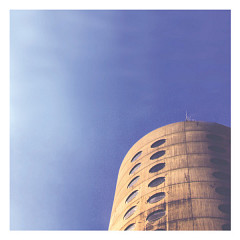
    All your dreams are meaningless is one of the most exciting electroacoustic soundtracks I’ve heard in a while. I’m all for guys making a racket, but when I can see past the molested sine waves into something of depth, something that touches me in areas outside of adrenaline, I’m suddenly taking notes. It’s said that the inspiration of this release stems from Bauhaus architects; the round building featured on the packaging seems to back this up. (What was that Thelonious Monk quote, again?) For my next fix of oblique conceptual audio, I’ll be keeping eyes peeled for more Coin Gutter.

    … Coin Gutter is emerging as one of the northwest’s premiere experimental outfits.
  • 18
  • 19
  • 20
  • 21
  • 22
  • 23
  • 24
  • 25
  • 26