Sauter au contenu principal
electrocd

Blogue

268 résultats
  • 33
  • 34
  • 35
  • 36
  • 37
  • 38
  • 39
  • 40
  • 41
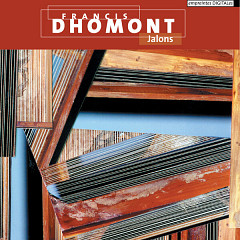
  • Jalons dans Sonoloco Record Reviews

    «Review», Ingvar Loco Nordin, Sonoloco Record Reviews, 23 avril 2003
    mercredi 23 avril 2003 Presse

    When Francis Dhomont (1926) delivers a new CD for the connoisseurs of electroacoustics to savor, I feel almost ashamed to try to write about it. That is how much respect I have for this Gentleman of Sounds, and that is also why I decided to also include his own comments in this text. He is a true Maestro of the ordering of sonic events if ever there was one, a diligent Poet of Auditory Mirages, and what he’s done up till now is awesome if you take the time to search it out. He’s like a generous emperor handing out his valuable gifts to the people who gather around him in the courtyard, and yet he is such a soft-spoken, low-keyed man, unpretentious, unassuming, still hanging with the youngsters of the crowd, though he is getting old, if you’re into the counting of years; two years Stockhausen’s senior, three years Ferrari’s. In a slightly altered Dylan quote, he stays forever young.

    This CD filled to the rim presents some very interesting works.

    Dhomont explains that the title of the collection — Jalons (Milestones) — draws its meaning from the surveying of the landscape of his oeuvre over a period of 15 years, from 1985 to 2001. Track one is called Vol d’Arondes (1999, rev. 2001), and is dedicated to Annette Vande Gorne. Dhomont’s comments:“Provence. A summer evening, the window open wide on a slowly darkening sky. Through this deep, blemishless blue, the flight of swallows: a strident, constantly changing feeding dance. The delicious night continues to fall. There are the sounds of the village preparing for the night festival; the echoes reach me. A jet begins its descent into Marignanne […]”

    How significant this quote from Dhomont is of his musical thinking and his musical methods, opening the soundscape on a vision, an intuitive encompassment of a situation, a moment and a place which come together in an atmosphere, a floating, passing space-time reflection of an I and a Thou that become irretrievably organic parts of each other, in a total, sensual perception of that nightfall moment in a man’s life, that completely concentrated, yet turned-away, absentminded stillness at the window, fresh air from the fields.

    Those swallows streaking through the sky in kamikaze calligraphy; the backdrop of so much human introspection in summery landscapes, from pre-history through the Medieval European paintings to our present day electroacoustics and those empty-eyed moments in micro breaks at the computer keyboard…

    Francis Dhomont’s delicate accuracy with his brush of many sounds somehow equals one of the earliest, perhaps, sound paintings ever done, by August Strindberg in his book Röda Rummet, albeit just in words, of his view over Stockholm one May evening of 1879.

    The introductory passage of Vol d’Arondes is more of a statement of summer nights than anything else, the bee swarm audio soaring, the gleamings of secrets passing in a flash, the spiraling motion of time — and the blackbird with its unparalleled song of melancholy, first heard in spring, and later in an introspective shadow-song of premonitions of Death in late summer…

    Dhomont’s elastic sounds around the bird of melancholy are wrapped in transparent, gluey layers, eventually masking the blackbird in a mass of sonic layers, which, however, retains the melancholy of the disappearing, orange-beaked featherling.

    Rhythmical events emerge with the sounds of crickets, envisioning the dance of the Unseen over at the other side of the field, blocked from vision other than the inner. They seem to drink, dance and have magically fun over in that half hidden dimension of the obscurity of those than not many believe in…

    Grainy events fall like flaky shreds of war all around your listening. Murky, jerky, springy jesters of sound start a havoc of short-lived comments left and right, at times overtaken by swells of more high-pitched attacks from beyond. Crunchy bits of white get caught in the action, and overtone conversations tower on high. A murmur out of the clay of seafloors tremble for a while, until we rise in the salty air of makeshift seagulls dancing on the winds of imagined oceans deep in someone’s hazy memories… Giant trees break and fall, or is this the crackle of war or New Years, or perhaps a sports game of sorts… I can’t make out what the sudden roars of an audience indicates; perhaps no more than an ingredient of sound…

    Distant modal ringing, like hazescape-bells from sunken or dim-dimensioned cathedrals, paint a sky of bronze for silvery insect trajectories while tin forests in the mist harbor floating shadows of dubious origin…

    Creaking watchmaker pinions beat a jerky time, out of simultaneity, chronology bending and bulging; the dream disappears like a cat’s tail behind the door…

    Track 2 is En cuerdas (In The Strings) (1998), for Arturo Parra. Dhomont’s comments:“[…] [En cuerdas] is the version for solo tape of Sol y sombra… l’espace des spectres, a work for guitar and tape that was co-written with Parra. The composition heard here is completely independent from that work. Its sonic environment nevertheless remains one of strings […] made virtual, transformed by computer processes and multiplied by electroacoustic writing.”

    Out of a deafening beginning, out of shape, emerges — transpires — an open space with moving objects, slowing down, leaning towards the walls, then falling out into the room, in a maze of movements across the floor; a sonorous ballet without cause, but with complex results inside the listener’s perception. Fluids are apparent, and electrically charged dynamisms… It gets more intense, events flapping around the walls like pigeons desperate for open skies and naked trees, as the hovering power of a generator shapes a mighty electromagnetic force field of layered, horizontal sounds; layer upon layer of timbres on which small spurs of tonal color vibrate, energetically… Echoes of a long-gone barrel organ push and pull at the electroacoustic film, which holds it captured, the thin, elastic surface of electronic force reflecting starlight out of the bottomless pit of space.

    A tractor-beam pulls a spaceship across the galaxy, and the first Anemone Hepatica (Blue Anemone) opens its youthful and age-old petal face to the sky in the shade of a rune stone from the times of the Vikings. April washes around the living!

    The whiplash of acoustic guitars start getting decipherable towards the end of the piece, and I sense erotic fandango references and spurs of foot-stomping flamenco incitements, but also more closed-in, self-centered guitarisms of a style addressed by the likes of John McLaughlin and the Mahavishnu Orchestra, if I know what I mean…

    At the end the stringed audio hints at the glorious creativity of Ernesto Diaz-Infante over in California; one of the most prolific figures of modern music.

    Les moirures du temps (1999-2000) to the composers and founders of Réseaux: Jean-François Denis, Gilles Gobeil and Robert Normandeau, is the third presentation on the CD Jalons. Dhomont’s comments:“In the same way the that the eye perceives the changing play of light on various shapes and textures of a given color, the ear picks out the sparkles and shimmers that the minute variations of related sounds can produce. Instead of changes in space, changes in time. This is further pointed out by an anecdotal element, a sign of the passage of time that punctuates the sound stream in three places: the beginning, the middle and the end. Certain characteristics, techniques and types of sound were selected: harmonic timbre, accumulation, percussion/resonance, movement and dynamic contrast — the very things that give sound context and make it shimmer.

    After the sudden beginning; rustle of metallic percussion and a gearing-up subway train… footsteps in a resonant space, from right to left, and… gone… as dry peas are poured on a kitchen table, a whisk rotated inside a saucepan — or simply sounds that may evoke such secular visions…

    There is a wave motion at work inside this music, but inconspicuous, hardly noticeable, unless you… notice it, because it is hidden inside, behind all these minute fractions of sound that build the musical range of colors, but the wave goes through all of this, make it bob up and down as the wave itself keeps moving in sinus progressions… or maybe it’s better to say that there is a breathing going on in this fabric of sounds, an act of inhaling and exhaling, of groups of events approaching, only to recede again.

    There is a chapel attention in here, a space of some holiness, in which gold dust is soaring on the vibrations of magic bells, touched by rays of light from the day outside…

    Small, bending, wobbling shapes of beauty float like soap bubbles through the music; sounds are dispersed in an act of weightless hovering… and the subway train, again gearing up, returns for a short instance like a recurring refrain mantra…

    The steps reappear, only to disappear once more, making me wonder whether all that I hear — this myriad of details of sound, shaping such beauty and such a soaring motion — is simply — or maybe not so simply… — the idling mind of a drunkard resting in the stench of urine and leftovers in a dark corner of a subway station.

    Rune Lindblad, Swedish pioneer of electronic music and textsound composition, had a revelation during similar circumstances in the early 1950s, when he woke up in a park in Gothenburg, hung over after an artist party the night before, as the maze of impressions of an awakening city through sound and light, as he was rising towards consciousness, gave him the incentive to start working with sound! Of course; a longshot, but one of numerous ways you can associate and fantasize in this Dhomont music. Normality is an elastic concept, as I just heard a CNN reporter in Baghdad state…

    Since this kind of music in most instances is absolute music, the experiences and frame of reference of each listener rub against the body of the work and produce individual visions. This music produces as many visions as there are listeners — and I am just one of those listeners, taking my time to jot down what comes to mind when listening. It is, in a way, like a shrink session!

    Slices of tilting planes of metallic percussion reflect the light of sound into different aspects of the mind, as unfathomable halls of imagination spread sky-high and horizon-wide, harboring the many shades of light of life… and at the end the concrete situation in the subway station is repeated, but the steps now come from left, disappearing at right…

    Track 4 is Studio de nuit (1992). It is a short piece of just 3 minutes. Dhomont’s comments:“Here we surprise the acousmotrope (by analogy with the heliotrope, that which turns towards hearing) engaged in his rituals and his creations, in a half-real, half-dreamed moment of nocturnal composition for Figures de la nuit, a work for radio commissioned by David Olds for the program Transfigured Night on CKLN-FM in Toronto. Along with the voice of the artist we hear (in order of vocal appearance) those of Laurie Radford, Pierre Daboval, Justice Olsson, Marie Pelletier, Jean-François Denis and Pierre Louet.

    The sound of the setting up of the tape-recorder, old style, reel-to-reel, in a starting position, opens this little item, voices rushing by in fast rewind. This gives me an impression of a clean environment with lots of technology, clean shirts, subdued colors, a refined atmosphere, a gathering of assorted friends, an exclusive cadre of artists and studio windows on a control room… but that is just the environment for the little experiments of this sound painting, which, indeed, rolling back on itself in a conversational reflection on the art utilized, in English and French, sort of talks out of itself about itself, relishing and taking joy in its own sonic illustrations; birds, swooping events, flashing references, parts and bits of statements about sonic art, a few tries a history, but mostly just the games of sound art playboys finger-tipping the edges of their enormous possibilities, relaxing me in my armchair at night as spring spreads its bleak evening light out there among the thrushes… a gleaming trifle of art coloring a passing moment, like a gush of wind lifting your curtain by the window, letting the garden fragrances in…

    Lettre de Sarajevo (1995 — 1996) to victims everywhere: dispossessed, sacrificed, forgotten comes at position 5 on the CD. Dhomont’s comments:“What can be said about Sarajevo that has not already been said? Faced with a deluge of triumphant cynicism, I was unable to content myself with the formal, esthetic games that are so dear to the composer. And so, naively, I wanted to speak about the horror and the shame. The title came to me, sudden and obvious: “Letter,” which can tell of the magnitude of the disaster and which at the same time can send a cry in the desert of nations; “Sarajevo,” because this city, like all too many others, symbolizes the tragic incoherency of the return to barbarity in our age. It is a pessimistic report that, six years later, recent events give no sign of refuting.

    As can be expected, this work kicks off in a dark tremor, in a gesture of murky downward drifts, like a dark silhouette in rain and wind bending down towards the soil, conveying the hopelessness found in the woodcut Sorg (Sorrow) by Rune Lindblad.

    The dark, tumbling unrest continues, in a vision of the dark ages, of the Great Death, the plague, passing through a Medieval Europe, the mighty Horseman treading every lane and every street of every village, leaving a trace of blood and corpses and putrefaction behind, surrounded by mourners and desperate love-makers… and the Horseman came to Sarajevo in the 1990s to stay a long time, pitching camp at the market place, the whiplashes of sniper fire taking out children playing and old men walking in their thoughts… The music is fittingly downtrodden, murky, ominous, seeping through the duration like poisonous gas at a World War I battlefield, killing through the trenches…

    The ringing of bells, tiny and bigger, fill an aftermath of war with introspection and retrospect, with remorse and soul-searching, since war lives in each one of us, which is why it can ravage our societies like fierce firestorms; it glows in our minds, and we make it happen, we fuel the fire, we are the Horsemen… for we are all mixtures of Hitler and Mother Teresa… The sound of Francis Dhomont’s Lettre de Sarajevo are eerie, like cold gusts of air that make you wrap your scarf tighter around your neck as you journey through life… Dhomont‘s dark painting achieves sounds that bring Hieronymous Bosch’s terrible visions to life inside the listener… and World War II bombers cross the Channel, April 2003 B2 bombers approach Baghdad… as the threat hangs over Syria and its not yet looted museums like a Damocles sword…

    Track 6 is Un autre Printemps (2000), for Uli A. and Antonio V. Dhomont’s comments:“In composing this music for film I had to follow rules that differ from those of non-identical music: there were thematic directions that had to be respected, constraints that were imposed by the material (Vivaldi, the viola, a dog, the sound of a stream, naturalism) and by the timing, allusions and references that had to be incorporated, and so on. Un autre Printemps does, of course, echo Vivaldi’s famous concerto, which forms the thread that runs through the film. But the thread wanders, changes and is recycled. The important place accorded the movement of water and its mutations corresponds to the metaphor of the effusiveness of spring that is so present on the screen. But here the sound of nature questions the nature of sound. This approach to finding the beauty in sound as a means of organizing and structuring it reminds me of when I carved wood to earn my living, drawing my inspiration from form inherent in it. I tried in both cases to reconcile will and chance, conception and perception, and nature and artifice. With a dark thud and a splash we’re in a Vivaldi sphere with strings and crow and dog — and water, running water, wind through trees (aspens?) and a brook, frogs, airy landscapes… and a close-up brook trickling; then high-pitch dream-streaks through the ether, one characteristic of water taken on a soloist joyride, speed-freaking through the audioscope.

    The sounds whirl and flake, in and out of the music; the music in and out of the dreamscape, Vivaldi’s red hair entangled in strings through the centuries; Malcolm Goldstein fiddlings fragmented in hasty sprays of string sounds, bits and pieces of violin atmospheres splintering like freshly cut wood at a settler’s cabin in 19th century Minnesota, in Vilhelm Moberg’s Chisago… and it whirls and sails around the listener; a renaissance dance, lightly trodden in absentminded daydreams of summer… rays of sunlight pouring down through leafy crowns, reflecting off of fairies’ wings…

    Drôles d’oiseaux (1985-1986, 2001), for Françoise Barrière, Christian Clozier, Jean-Claude Leduc and Valia and Patrick Lemoine, is number 7. Dhomont’s comments:“Fifteen years after I composed this purely electronic work — the only one I ever produced — I exhume it, as a curiosity. But a more poetic image was guiding me, that of the forest as a magical symbol of our unconscious. This was my first foray into the deep forest that I had already been thinking about; in it a few reminders of that first effort can still be found.”

    A whirring as of insects, but electronic ones; the turning of a shortwave dial, but not crude like in Stockhausen’s Kurzwellen, but rather smoothly elastic, dynamo humming, trembling along in a layer of brown currents, little figurines of glaring gestures signaling above the surface of the forth-welling progression of events.

    Even in this non-concrete piece of electronic music Dhomont’s musique concrète poesis permeates the sound, in electric mimicries of insect level life under the microscope; a minuscule world of unnoticed movements on the underside of leaves of grass; those micro worlds of daily life, springing to full size life in Dhomont’s electronics!

    These circuits are inhabited by birds and insects in virtual existences. We observe a mix of entomology and electronic circuitry, chirps and sparks and welling sinus waves… Fluttering, chattering rhythms sound like a recording I once heard of a feverishly rotating super nova way out in deep space, moving around its axis at an unbelievable speed. I try to imagine this super nova in black space, emitting this rhythmic message through the rainforest of birds and monkeys of Dhomont’s Drôles d’oiseaux… and its like nothing I have ever heard before. Sometimes the atmosphere densifies into super-charged force fields, and then it thins out into a glittering, shimmering haze of ornithology! It makes me wish Dhomont had given pure electronics some more attention than he has. This is one of the most compelling electronic works I’ve come across, devastatingly creative, bursting with sonic ideas that come at you in high-speed beauty!

    The last piece is very short. It’s L’électro (1990) for Marie Pelletier. Dhomont’s comments:“This piece is a little vocal game, resolutely optimistic, about the ineffable beauty of electroacoustic music. It is also a brief stylistic exercise that mixes fragments of ancient voices with the voice of Marie Pelletier in order to recapture the spirit of Puzzle, a 2’10” clip realized in 1975. Twenty-eight years ago — how time flies!

    Yes, a sure sound-poetic smile out of the corner of Dhomont the Jester’s mouth, a graffiti of vocals descending lightly like confetti over a Park Avenue parade, delivered with the humor and benevolence that is a second nature to this Poet of Sounds!

    He is a true Maestro of the ordering of sonic events if ever there was one, a diligent Poet of Auditory Mirages…

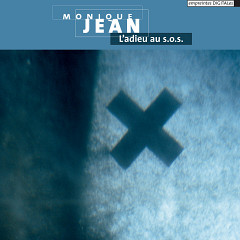
    L’adieu au s.o.s. dans Sonoloco Record Reviews

    «Review», Ingvar Loco Nordin, Sonoloco Record Reviews, 23 avril 2003
    mercredi 23 avril 2003 Presse

    Monique Jean (1960) is a pupil of Francis Dhomont, residing in Montréal. Further more, she has been involved in video, experimental film, dance and installations. She has been a participant in several international music competitions and festivals.

    Track 1 is 13’13 pour voix défigurées (13’13” for Disfigured Voices) (1997) Jean:“A work about helplessness and confusion in the face of destruction: that of the individual […]. We hear voices that cross temporalities, that appear suddenly like interferences, and that intrude to a greater and greater extent until they become omnipresent.[…] Texts by Hélène Cixous, in Beethoven à jamais (Des femmes — Antoinette Fouque, Paris 1993) and by Alejo Carpentier, in Varèse vivant (Le nouveau commerce, Paris 1980). […] The processed voices of Sylvio Archambault, Emmanuel Madan, Pascale Malaterre, Marie-France Marcotte and Alain Pelletier.”

    An ambient space opens in the first acousmatic bar, placing the I in an uncertain sub terra, perhaps in a subway, or maybe in a hall of mighty machines, or, perhaps, in a limbo of the soul, traveling a painful void between here and there, floating in that state which some call the Purgatory, some the Bardo state, in vivid but distorted memories of past lives, coming at the traveler in shapes of scarecrows from the unconscious, as she is groping for the light.

    Certainly the fragments of voices call your attention, grainy, cut-up, and later elastically extended, stretched in a temporal wizardry wherein linear time has ceased, opening up a total NOW; now in all directions, now back, now forth, now left, now right, now up, now down… even in memories; now… and it becomes unbearable when the realization hits that all places are HERE, all times NOW… and remorse builds walls of sorrow around the I, produces poison (or medicine) of sorrow that rises through the veins and arteries like the sap of aspens… as you have to be your own judge and jury at the gaze of eternity…

    The voices float about like the forlorn spirits of Hieronymous Bosch paintings, and consolation is just a faint vibration at the horizon of a winter’s day. I keep getting the vision of someone unconscious on a sickbed, hearing all these voices from all walks of life soaring like a flock of seagulls around her existence, which is about to enter the spiritual realm, leaving the weight of an unnecessary body behind in the hospital like a pile of debris…

    The frightful atmosphere that Monique Jean creates starts leveling out with three minutes to go, into dynamo sounds, a deep timbre of clay and electricity, of rock bottom and fluent time, at last instilling in the listener, in the I, a kind of foreboding hope of a continuation into light, or maybe into new lives, as the thin layer of oxygen circumvent the third planet in a faint display of blue… and remorse and sorrow start to thin out like the active components of homeopathy, remaining just as a lingering frequency of the rainbow colors of life.

    Track 2 is called Danse de l’enfant esseulée (Dance of the Forsaken Child) (1999) Jean:“The form of this work develops around the idea of the stoppage of time. Or, more precisely, its suspension. These suspended states are of two types; that of ‘I’ve lost my footing,’ thus of falling, of a lack of air, of being engulfed in an unknown substance, and also that of a momentary pause on a sound, as much filled with tension as are points of suspension, inconclusive.”

    I don’t know what to make of the title; perhaps a reference to that inward absentmindedness of total concentration that is so typical of a child playing. Maybe the work deals with the mental environment to which the forsaken child resorts — in dead serious play! — when the world is too lonely, and maybe these sounds inside Monique Jean’s work enact the sonic equivalents of the hard emotions that a child in those straits experiences; that bottomless desolation in the face of the whole, unfathomable universe and its parsimonious 2 degrees Kelvin… (The true loneliness of Man)

    Starting on a searching, resounding contact call of a repeated, fumbling note on a surface of gliding noise and howling high pitches far off, a scraping motion moves past as a tighter, closer, louder machine tool expression pan right, left, right in slow sweeps as the sounding space is filled-up and overwhelmed with density…

    I get the notion of heavy weights under stark pressure gliding slowly down a slightly tilted plane, ice and rocks and mud in havoc…; a mineral feeling. There are a lot of dark, gray and brown sounds, 3:31 suddenly phasing out into something else; a thinned out sweeping, as from planes very high up or winds around K2, heard from base camp, but in these environments inward, distant bell-like timbres are introduced, again moving me into a dreamscape audio which may lead me anywhere…; to Shangri-La or Ground Zero Manhattan, who knows… or to the true nature of the spirit of someone, perhaps an overthrown autocrat from Tikrit… who also was a child, in the 1930s and 40s… as was — in the 1890s and the early 20th century — the son of Alois Schicklgruber and Klara Pölzl, who was mistreated and spiritually forsaken, and who turned the whole world over from his loneliness in the face of the universe… and so I start to get a different perspective on Monique Jean’s work Danse de l’enfant esseulée, as I understand World War II and recent events around Babylon as, indeed, the Dance of Forsaken Children — and the music takes on a much more serious guise than I had anticipated, envisioning the high walls of darkness surrounding the empty place at the core of hearts of forsaken children…

    Himalayan winds and elves’ bells are mixed in a soaring tenderness, eventually pitched-bent down, but moving on persistently, gathering momentum and power, as I se Abrams tanks in my vision of sounds, birds fluttering, flying up, fleeing to the sides, the horizon blanked out in sand storms and dark thoughts, the bells still ringing faintly inside our hearts… as ingenious, beautiful Medieval mosaics open up for us to tread on, into the palaces, up the staircases, into the abandoned halls of dreams of the Forsaken Child of Tikrit…

    Figures du temps (Figures of Time) (1998-1999) at track 3 comes in three sections, (tracks 3, 4 & 5) titled un haut-parleur dans le désert (a loudspeaker in the desert), … et les déchets qu’on brûle (and the garbage we burn), and a farewell to S.O.S., Jean:“What to do with the real? How to create an aesthetic space that rejects amnesia?

    Crossroads and collisions of individual events and of public events. A suite that attempts to deal with “the individual human life, small, poor, defenseless but magnificent”, as Tadeusz Kantor said. “It is only in this human life that truth, sanctity and grandeur are maintained today. We must save them from destruction and oblivion, save them from all the powers of this world”.

    Media flow, poetry/resistance, disappearance of Morse code: February 1999. In … et les déchets qu’on brûle the texts are by Denise Desautels, taken from Cimetières: la rage muette (Éditions Dazibao, Montréal 1995), with the processed voices of Marie-France Marcotte, Angèle Laberge, Marc Mercier, and contrabass improvisations by Joëlle Léandre.

    The loudspeaker in the desert emits vibrations of audio into the emptiness of a barren landscape… or is Monique Jean trying to picture the voice of someone calling in the desert? I think she is, considering the philosophical or psychoanalytic material I’ve deciphered so far on this CD. Yes, maybe she concentrates on the outcast, the vulnerable, like she did with the forsaken child, in this piece dealing with the situation of not being heard, not being seen, not being taken seriously (a trait also of the forsaken child), but just passed-by, like the Invisible Child of Tove Jansson’s novel. Surely it has to do with communications, anyway, echoing for unhearing ears, and the intense transmission of feverish voices through telephone lines, carrying urgent messages that dissolve in the vast ocean of someone’s indifference, or simply bounces off of the armor of someone’s back, off the back of someone’s turned away attitude, someone abandoning the urgency of a fellow earthling… who in the end always is… yourself, because at the end of all roads you meet up with… yourself, realizing that YOU were the person calling in the desert, and YOU were the turned-away one, and you will have to deal with this, in your Karma, in your Bardo… come to terms with this, to go on in lighter lives down the path of eternity…

    The music hits hard-on with a bang, sending rays of timbres all around, long stretching layers onto which Jean pours grainy and sharp details of glassy fragments, like grains of sand on a newspaper on the ground, drifting in the wind, alternately hiding and revealing letters, shaping new messages out of the print… sending random impulses into the brains of the perceivers, written in sand by wind…

    The violence of this messaging eases out in a peaceful section in which a pitch slowly rises on a breath of a dreamed being, and the voices start falling forward through the telephone lines, passing the poles at the speed of light; a flickering experience that is imperceptible to humans… but still real…

    In the second part of this piece a thudding, unstable element (an avalanche of sound) surrounds and bathes the voices that rise in fragments of sentences, morphemes floating in a violent scenery, like feverish hallucinations inside a machine hall cruelty, down the bent-in force of an interstellar star crusher, a black hole of discontinued or never even started communication, a dark, trembling halt of hope, the bridges across the forests of November burning in an altered reminiscence of Stig Dagerman’s poem of desolation, Birgitta Suite…

    The Léandre contrabass, emerging in squeaking utterances, sounding more like a Malcolm Goldstein violin than a double bass, coiling in the dusty heat, in and out between more tangible lumps of audio, mix in with vox humana spurs, all in a confusing bewilderment, in a soundscape which leaves a lot to interpretation… but in an atmosphere of late, very late, perhaps forlorn, civilizations, wherein all real communication has broken down into shreds of sentences flying like torn streamers in the wind of Tibetan mountain passes… as the murmur of thoughts deep down someone’s mind come across like the soaring mumble of the monks in Dharmsala, in front of the Buddha of Compassion; Avalokiteshvara…

    The last section of Figures du tempsa farewell to S.O.S. — opens in glassy vulnerabilities; shrill, thin sounds of glass and sand, allowing for the code of Morse in bell-like shrillness, bell-signals dispersed unevenly across the sounding space, distantly roaring audio wailing like permutated ambulances through downtown circuitries of ghost towns, panning slowly back and forth, painting the scene for harsher, more brutal sounds scraping and beating against our perception, triggering all sorts of dark associations, eventually echoing in clay timbres of brown and black, which in turn recede, leaving naked Morse code behind to talk to no one… as time munches away behind the passing NOW, leaving behind precisely… nothing — and I may have to rethink my position in time…

    I hear the creaking of wooden ships daring dark waters, I hear thoughts of the crews of doomed space shuttles touching on the periphery of home planet atmosphere; existence ripping apart like torn newspapers, down the middle; oh Avalokiteshvara…

    The ambulance mimicries inside the veil of sounds take on wolf-like qualities, and I think of the wandering flocks of outcasts hiding in the northern forests, pray to human societies’ ill-based fears and prejudice… A ripping, tearing sensation pans back and forth through my head as I listen to the last minutes of Figures du temps, winding down through rumbling glaciers and massive mudflows, through ringing glass timbres in gluey expansions, as the final seconds are left to the lonely Morse messages astray in background static…

    The final piece, on track 6, is low Memory #2 (2001); a work for acoustic instruments as well as electronics; bass flute and piccolo. Claire Marchand plays the acoustic instruments. Jean:“An encounter between instrumental sound as immediacy and individuality, with voluntarily restrained sonorities, and electroacoustic sounds, with dense and profound sonorities and movement, as an overture to the otherness at the very heart of sonic structure.”

    With a deep rumble, well suited for mighty sub-woofers, the piece starts, rhythmically, persuasive, in a Necropolis setting of darkness and stale air, like inside a forgotten tomb of an Egyptian pyramid.

    The blowing sounds of the flutes, closely miked, amplified, remind me some of Stockhausen and his treatment of flutes, in magnificent displays by Kathinka Pasveer diligence, in, for example, Kathinkas Gesang, which is a bardo state guidance through death to life, like I feel this music is too, though nothing at all is said about this in the booklet.

    Monique Jean handles her auditory material in the manner of a true maestro of sound, and I am delighted at making her acquaintance through this startling CD. She really arrives at the otherness at the core of sound, and this is much more than just an overture to that, like she humbly restrains her description to in her text about the work. Instead, this piece opens up large, dark spaces inside our minds, which we will fill with the significance and mysteries of our own lives, the many that have passed and the many that will come, sensed from our present life, from which we have magnificent possibilities of enlightenment, and I believe, like, for example, Arthur Schopenhauer and Karlheinz Stockhausen, that the vibrations of sound can transform us into enchanted realms of consciousness.

    Monique Jean handles her auditory material in the manner of a true maestro of sound…

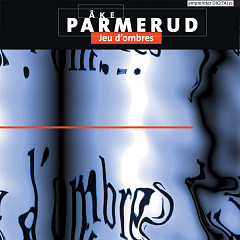
    Jeu d’ombres dans Sonoloco Record Reviews

    «Review», Ingvar Loco Nordin, Sonoloco Record Reviews, 23 avril 2003
    mercredi 23 avril 2003 Presse

    Åke Parmerud (b. 1953) is one of the most successful Swedish composers of electroacoustics, and I believe he is the first one of Swedish descent that I have reviewed in this particular setting. That is rightly so. Ever since I began investing some interest in the elusive art of sound painting, Parmerud has been an obvious name.

    When I see the pictures that Parmerud has chosen for his presentation at empreintes DIGITALes and at his homepage, I get this not quite comfortable feeling of a poser; one who enjoys putting on a style, appearing like in an old oil painting of some upper class poet of the 19th century, almost like some pictures you often see of another important composer from Sweden; Sven-David Sandström, who likes appearing in pictures clothed in leather and shady lightings… and I get to think of Oscar Wilde, Charles Baudelaire or Percy Bysshe Shelley! Well, have a look yourself! In the studio picture Parmerud seems to show off his work environment, again… posing. However, then again, why not? Painting with colors of sound is a kind of show indeed, a kind of shadow play, a sort of hide-and-seek, and it really is a slim, trendy form of art — so I don’t mind the posing attitude at all. It can even be refreshing, taking some of the seriousness out of the idiom; a seriousness which I myself, I must admit, ever so often indulge myself in, which you can see from my recent review of Monique Jean’s new CD… What I really want to say is that there is plenty room for all of us, from extremely shy artists like Hanna Hartman in Berlin who hardly wants to let on any biographical notes or photos at all, to the gallant posing knight Åke Parmerud

    A short bio: Åke Parmerud tried his luck at photography in the early 1970s. He went on to studies at SAMUS Teacher Education College until 1975. He also attended studies at The Department of Musicology in Gothenburg, which proved decisive. He got into tampering with synthesizers (the early, crude forms) and the art of reel-to-reel. He crossed the barrier of attitude between Gothenburg and Stockholm (a peculiar cultural difference is still highly present between the West and the East of Sweden…) and approached EMS (The Electronic Music Studio of Stockholm, now The Institute for Electroacoustic Music, and the renowned and always energetic institution Fylkingen, where Parmerud got access to sophisticated equipment. As he developed his skills, he initiated a research project into the development of software for computerized composition. He also went into teaching at the Department of Musicology in Gothenburg. Of course, it was in Gothenburg that he was acquainted with the electronic music pioneer Rune Lindblad, who also taught at the Department of Musicology. Lindblad was a very original person, who never cared about trends and fashions of art, but kept his own thinking intact. He was a great inspirer, especially as a spiritual example. He gave artistic incentives to the younger generations of artists all the way up to his untimely death of arthritis in 1991. Lindblad published, among other things, a book called 20-talet (the Twenties), about music, art, poetry and film in the twenties of Europe. I was lucky enough to get to know Rune Lindblad in his later years, and received most of his oeuvre on tape copies from him. Much of the most interesting stuff he did remains to be released, but this spring of 2003 the Swedish label Elektron issues a beautiful double-CD which is the most representative release of Lindblad material so far. Lindblad was also gifted in the field of visual arts, producing paintings, drawings, woodcuts etcetera. No doubt Lindblad’s presence had a great meaning to Åke Parmerud and other Swedish sound artists on the West Coast, who later proved successful, like Rolf Enström. He was never considered quite housebroken though, so to say, in the more classy halls of electroacoustics of which, ironically, Åke Parmerud later would be one of the most diligent and sophisticated examples. During his younger years Parmerud played rock music and Afro-American music. It was, however, through his prolific production of electroacoustic multi-media works and the sophisticated abstract art of pure electroacoustic composition that he became known far and wide. I have some of his earlier music on vinyls, which shows that he’s been around a while — and he is still just as active and innovative as ever. A sign of his importance may be the fact that he indeed is the most rewarded composer of electroacoustics since his 1978 work Proximities, which won him the 1st Prize at the Bourges Competitions, regrettably before they started releasing the winners on yearly CDs, commencing in 1984, when another important electroacoustician from Sweden — Tommy Zwedberg — was awarded a prize for his Hanging for an old Swedish lyre (stråkharpa) and electronics (A European instrument akin to stråkharpa is the Welsh crwth). Since then, Åke Parmerud has been represented a number of times on these Bourges Competition CDs, like in 1988 with two works; Repulse and Yan, in 1994 with Kren and in 2002 with Närheter. There is an important difference, though, between Parmerud and the other Swedish modern composers of electroacoustics that I’ve mentioned — Zwedberg and Enström —, and that is the more polished, restrained impression that Parmerud’s music conveys, diverging quite a bit from Zwedberg’s and Enström’s more wild, rugged, jagged musics. It’s a matter of taste which of the two tendencies you prefer.

    Track 1 here is Strings & Shadows (1993) for harp and tape, with Sofia Asunción playing the harp.

    Parmerud: “In Strings & Shadows the strings of the harp act like gates that let out a variety of other sounds that flow in a constant stream of transformations. These timbral shadows are complemented with mirroring of the harp, using a variety of synthesized string sounds. There is however also another kind of musical shadow present: a short melodic fragment from Stothart’s film score of Queen Christina (1933) can be heard in a slightly distorted mirror-image of the harp in the middle section of the piece (at 5:10 — 5:18 and 7:18 — 7:26). The poetic vision of the piece is an image of an old dying actress, drawn into a last flowing sequence of dance through the shadows of her past, while death slowly appears as her partner in the last pas de deux.”

    Yes, this comes across like butterfly chamber lyricism… dancing, swirling delicacy through glaring reflections off of leaves of grass, dandelion seeds carried across the meadow… a soaring presence of elves and fairies somewhere inside the tingling sensations, inside the summer hypnosis timbres… At first the harp appears naked of any electronic enhancement or guise, and you could be fooled into thinking this is going to be a straight chamber piece. The manipulations, in fact, never twist things seriously out of the grip of consciousness, so the chamber aspect remains throughout, even though, as you could read from Parmerud’s own description, a diligent electroacoustic craftsmanship is applied, of course obvious to the listener, but still very fastidious and discriminating, applying just the right touch to inch events just precisely across the line to enchantedness… but with a strong, concrete memory of the so-called reality retained in the music; sort of like half-dreaming just before going to sleep, the weight of your body resting comfortably in its gravity while thoughts soar on the verge of dreams like humming-birds in front of colorful flowers… an impressionist painting hung in time… and sometimes sudden gusts of wind move through your hair…

    Stringquartett (1988) is second. Parmerud: “As one of the instrument combinations that has proven to be a real survivor through music history, the string quartet has fascinated me since a long time. I realized that there was little or nothing that I could do to create anything remotely resembling true originality in the sense of bringing new ideas to the form. However, moving the whole concept to another platform gave me the inspiration needed to unfold some visions of how to treat the formal and aural aspects of this specific string combination. Today Stringquartett, as a tape composition, may be regarded as a bit crude, based, as it is, on a sampling technology, which at the time was state of the art, but today may be viewed as antique. But the structure and energy of the piece still gives it an edge that I like.

    For sure Parmerud has no reason to excuse himself for including Stringquartett on this CD. It is a very exciting work, the result of an ingenious and certainly stubborn and probably long work in the studio.

    The music is made up of real string sounds by way of sampling and manipulation, distributed in combinations and juxtapositions, rhythmizations and layerings and the whole array of fluent hands on handicraft creativity, resulting in a varied, electronic chamber show-off which is extremely enjoyable, rocking and rolling, thudding and bumping on down the line like a group of swaying, staggering cartoon figures in disarray and a happy, wholesome dismay… You name it, we like it! Parmerud manages to build an overarching atmosphere out of this bits-and-pieces composition, making the details fit very well into the bigger scheme of things, and this is true artistry. Most people would back off from a feat like that. Parmerud delivers a sublime piece of musical art! This is in fact one of Parmerud’s pieces that I enjoy the most. The crudeness that he admits just makes it the more attracting to me, since I sometimes have a hard time with the all too polished. There are stretches inside this jagged music that appear melancholic, reminiscent, reflecting a 19th century of old and its ideals, in loving memory, so to say. Some fragmented feelings from those days still live in this sampling serenity, much to my amazement. There is a soft hand at work inside the sometimes wild shuffling of string quartet slices.

    Renaissance (1994) is the next work. Parmerud: “Having lived and worked with electronic instruments over a period of twenty years, my attention was lately drawn to the tendency of retrospect interest in old analog synthesizers. These instruments represent to me not only a different quality of sound, but also a different mode of composing. Digital systems have a greater flexibility in terms of time and spectral control on a point-to-point basis. Analog systems, on the other hand, offer a way to create complex structures with a direct, physical control, coupled with a unique, raw quality of sound lacking in digital instruments. I have felt an urge to work with old instruments for some time, and the invitation from GRM (Paris) to make a piece gave me the opportunity to explore a renaissance of the analog in the digital domain. The piece is based on sounds from a Serge modular synthesizer and some additional sounds from renaissance instruments like drums, lute, krumhorns and viola da gamba.”

    Here comes Parmerud with his own statement about the polished versus the unpolished, thus more alive, sound that is so obvious when you compare newer works with older ones. However, when the composer is aware of this all too tight cleanliness, he has measures at hand, which will add some crudeness, some life. Parmerud knows this very well, and though it seems to me as if he enjoys the soaring exactitude of new tools, he doesn’t fool himself when it comes to artistic results.

    With a silent, slowly breathing pulse of a rolling drum, the piece begins, the character of the music edging over into soft, fluttering and accelerating brown and gray sounds, sometimes on the verge of violet. The events and goings-on in the work are many, shifting almost faster than you can hear, or at least keep account of — but the intense feeling of motion in the spatiality of the sound world is almost tangible, elastically exhaling and inhaling shapes of sounds, contours of fleeing figures down the years of Shakespeare… Layers are stretched out on top of each other, or perhaps better envisioned as tainted glass windows slid in behind each other in a kaleidoscope of color and light; here: sound! The layers of tainted glass of sound keep shifting their positions, and new, unexpected discoveries of perception move up your auditory nerves, setting magnificent stage casts alight inside the halls of your imagination, grotesque shapes falling across the walls, like the wild shadows of shipyard workers welding.

    Retur (1992-93) for saxophone quartet and tape holds position 4 on Åke Parmerud’s CD. The Stockholm Saxophone Quartet appears with Parmerud’s tape.

    Parmerud: “The melodic and harmonic structure of Retur (Return) is based on some transcribed phrases from s saxophone solo by the legendary American musician Charlie Parker. As one composition in a series of pieces concerned with my relation to music historical artifacts — Alias (1990) and Renaissance (1994) are two other examples from the same series — Retur is a kind of musical letter, written on the paper of time and actually addressed to the sender of the original creation (Parker)

    Indeed, the beginning has you stroll through the outer halls of some jazz shrine — perhaps Nalen in Stockholm, where Charlie Parker indeed did play — as you hear the sounds of an intense session echo, the volume increasing as you approach the performance space. At last your right up the stage, and the music is transformed into the dreamy recollections of Åke Parmerud, as he takes the ingredients of be-bop and lures the jazzman on a inwardly spiraling sojourn that Mr. Parker would hardly have dreamed of. Throughout the electronic treatments Parmerud retains some kind of jazz soul, and the saxophone is readily recognizable most of the time. I think anyone would think more of jazz than of electroacoustics when hearing this, proving the diligence with which Parmerud takes care of the artifacts he chose for his composition. A comparison might be made with Jean Schwarz’s electroacoustics, since he has a great affinity for jazz and jazz instruments. Maybe Schwarz is more heavily electroacoustic in his views, but there are works by him wherein the instruments of jazz take much of the command in their own right too. Obviously, Parmerud holds the object of attention — Charlie Parker — in high artistic esteem.

    Les flûtes en feu (Flutes on Fire) sits at track 5. Parmerud:Les flûtes en feu (Flutes on Fire) is based on the concept of the composer as an alchemist. With the use of computers and modern studio facilities, the composer of acousmatic music or sonic art, is able to treat the acoustic material as if it was a substance with a constantly redefineable morphology. In the piece the basic sonic substance is some simple sounds of flutes. There is also another element recurring throughout the composition: a short metallic sound, reminiscent of the sledge hitting the anvil that signals the presence of a force that is about to change the shape of things. Finally, in the end of the piece, the sound of fire, representing the catalyzing process of the four elements present as the basis of all alchemy, briefly enters the sonic stage to confirm the process that has been taking place.”

    Silently the atmosphere spreads like incense, slowly through the ambient space, until a presence is determined by some metallic object — be it virtual or real — being struck. The motion of sounds increase in whirls and gallant gestures of shiny progressions, like ghosts wandering the outskirts of the mind, the jagged shapes of ominous half-dreams surrounding the horseback ride in Schubert’s Erlkönig… (…der Vater mit seinem Kind…) Eventually a sound reminiscent of a coin spinning on a kitchen table (but not speeding up before the end), pitched down and beautified, violent in a restrained way, compresses the air like the passing of an express train through a tunnel, lights flickering by as you swallow and swallow to even out the pressure (anyone who has approached Stockholm on the rail from the south knows what I’m talking about!) Sometimes I feel I hear echoes of rhythms of voices, outlines of morphemes taken so far off that you can only smell the scent of a vanishing meaning… An intense activity is going on up front, while more extended sweeps fan out on the horizon of events… At one instance an elephant trunk of a slow-down is breaking one lineage of sound to a halt in a downward trajectory, but the sound world around keeps on keeping on, later in quite silent, erotic preoccupations, violet feelings on silk and satin; old dreams of Erik XIV soaring through the Halls of Morpheus and the outer courtyard of Amnesia… With three minutes to go tiny specks of sounds trickle like grains of dust on aluminum foil, as transparent layers of alarm sounds screech through orbiting vessels. Owl howls resound through moonlit spruce forests under the Milky Way. In the intensity of some unaccounted for presence — a hiker treading the realms of insects in the night? — sounds flee in all directions from a gravitational center on the path of the intruder, and the last whimper of a sound disappears under an uprooted tree…

    The last piece is Repulse (1990). Parmerud:Repulse (Repulsion) was composed with the material that became outcast in the process of creating Isola, a mixed work for chamber orchestra and tape commissioned by the Asko Ensemble from the Netherlands. Repulse can be regarded as the first piece in which I explored multiple layering of textural processes. Up to five simultaneous layers of sound from time to time create a dense sound image, although transparent at all times due to techniques such as spatial simulation, frequency displacement and clear texture identity.

    Repulse was released in the 1980s on one of the first major Swedish CD releases of electroacoustic music, the double CD Electroacoustic Music in Sweden, Phono Suecia PS CD 41; up till this day one of the best compilations of electroacoustics ever to surface.

    This immediately hits home with an industrial, heavy rhythm that draws on rock n’ roll as well as noise, but it soon evolves into more austere, knitwitbit gestures of audio, turning in on itself like musical arthritis, tearing at itself in a clockwork of deconstruction, which eventually lands in a world beyond accounted-for perceptions, where pain is followed by beauty, stillness and a morpheus floating, around which glossy flakes of audio fall like remnants of flown-into high-rises of latter day Babylon… I even get a feeling of grainy remnants of Finnish or Polis harpsichords (Jukka Tiensuu or Elisabeth Chojnacka); a shredded experience of gleaming gleanings into proud antecedentia! Ah, Parmerud paints a mouthful of toothache, and the pain out of the oral cavity comes at you like a dragon’s breath… and you hide in the fern; that fresh forest fragrance surrounded by that root canal affliction, slowly spiraling your sense of self like a galaxy majestically through the void of space…

    Parmerud delivers a sublime piece of musical art!

    Jalons dans AllMusic

    «Review», François Couture, AllMusic, 23 avril 2003
    mercredi 23 avril 2003 Presse

    Unlike most of Francis Dhomont’s previous album (including Forêt profonde and Cycle du son, his last two), Jalons is not comprised of a single cycle — it’s not even a theme-related collection. The composer’s talent for telling a tale through sound and voice manipulation was crucial to the impact some of his earlier records made (Sous le regard d’un soleil noir, Forêt profonde again). One needs to approach Jalons differently. Well sequenced, thanks to a succession of long (11 to 15 minutes) and short pieces, it still isn’t the captivating, immersive listening experience its predecessors provided. Furthermore, Dhomont’s followers will most likely already have one or two of these pieces, as many first appeared on compilation albums. And yet, Dhomont remains a first-rate storyteller and all the pieces included here deserve a place on one of his solo discs, even though they somehow fell through the cracks of earlier projects. In addition to their avian titles, Vol d’Arondes (1999) and Drôles d’oiseaux (1985-1986) have been revised in 2001. The first shares base elements with the second, a rare example of exclusively electronic music by Dhomont (it was also a first exploration of the “forest” theme developed in his masterpiece already mentioned twice in this review). En cuerdas uses classical guitar sounds contributed by Arturo Parra. A self-standing piece, it also exists in a re-written form as a tape-and-guitar concerto (see Arturo Parra’s album Parr(a)cousmatique). The best work in this set is Lettre de Sarajevo, a moving piece on “the horror and the shame” (quote the liner notes) that represented the Yugoslavian war in the mid-’90s. Only Dhomont — and maybe two or three more composers from within the academic sphere — could have broken out of concerns of plasticity and esthetics to tackle a political issue and come up with music so profoundly human.

    Only Dhomont could have broken out of concerns of plasticity and esthetics to tackle a political issue and come up with music so profoundly human.

    L’adieu au s.o.s. dans AllMusic

    «Review», François Couture, AllMusic, 23 avril 2003
    mercredi 23 avril 2003 Presse

    There are few women in the world of academic electroacoustics. Monique Jean is obviously acutely aware of that and she uses her position to push forward the work of other women (instrumentalists, authors) and occasionally tackle women-related issues. Her first solo album culls pieces composed between 1997 and 2001. 13’13 pour voix défigurées (13’13” for Defaced Voices) puts the words of Hélène Cixous into the mouths of five actors. Their voices are treated and choreographed into an acousmatic ballet that evokes the music of Francis Dhomont (with whom Jean has studied) but never reaches his level of warmth, remaining an object of cold estheticism. The same cannot be said about Danse de l’enfant esseulée (Dance of the Lonely Child). Voiceless, this piece shows again the strong influence of Dhomont in the way sounds move in the stereo field. Here, childish movements are not only academic transpositions, they vibrate in their own dimension, especially near the end of the piece where a mock-waltz is sketched. Figures du temps is very different, both in form and in sound. A triptych, it pairs elements of communication with a sense of disappearance, loss. In the first part, the voice of a news anchor repeats endlessly thestory of Algerian rape victims abandoned by their families in the name of honor. The second movement pairs words by Denise Desautels with the treated improvisations of bassist Joëlle Léandre (Marie Trudeau, once of Wondeur Brass and Justine, also supplies electric bass and stick samples on most of the other pieces). low Memory #2, a work for bassflute, piccolo and four-channel tape, concludes the set, featuring flutist Claire Marchand. Jean’s music doesn’t always escape the traps of academic composition, but when it does it develops its own personality and manages to touch both the heart and the intellect. French-deaf listeners will miss someof its impact, but not all of it.

    … manages to touch both the heart and the intellect.

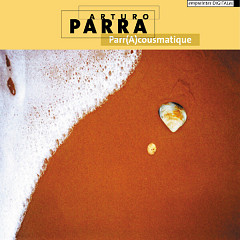
    Parr(A)cousmatique dans Sodapop

    «Recensione», Andrea Ferraris, Sodapop, 20 avril 2003
    dimanche 20 avril 2003 Presse

    La confezione di questo CD è splendida: digipack con inlay card stampata su cartoncino, veste grafica super-lusso che ricorda molto le confezioni della Ambiances Magnétiques o delle uscite distribuite dalla DAME. No, non è un caso, infatti la empreintes DIGITALes è canadese e con buona probabilità Arturo Parra fa parte dello stesso roster sperimental-classico-contemporaneo (qualcuno dice sperimentzione “erudita”?) al quale appartengono anche molti musicisti delle altre due etichette canadesi. Parr(A)cousmatique è concepito come un lavoro per chitarra e nastro magnetico, la cui composizione e realizzazione si è sviluppata nell’arco di alcuni anni. Il risultato è davero sorprendente, la chitarra di Parra varia tecnica e gusto nel corso delle diverse composizioni, passando dalle sonorità latine di Sol y sombra… L’espace des spectres e La basilique fantôme alle atmosfere avanguardistiche di Soledad. Il risltato finale potrebbe ricordare vagamente un CD di studi chitarristici contemporanei, sporcato da dei fondi di musica “concreta” (il disco è distribuito da ReR, Staalplaat e Metamkine mica per nulla). Nonostante i dieci minuti abbondanti che rappresentano la durata media delle composizioni potrebbero far pensare tutt’altro, Parr(A)cousmatique non annoia, fa invece venir voglia di avventurarsi in ulteriori ascolti, la capacità di Parra di sacrificare il suo “mostruoso” (i virtuosismi su questo disco pur essendo contenuti, si sprecano) bagaglio tecnico a favore della qualità di ogni singola traccia ed il gusto con cui sono state composte alcune delle basi (soprattutto quelle di Francis Dhomont e Stephane Roy) sono molto elevate. Se avete voglia di “tradizionale-non troppo tradizionale”, Parra potrebbe essere il vostro uomo.

    La confezione di questo CD è splendida…
  • 33
  • 34
  • 35
  • 36
  • 37
  • 38
  • 39
  • 40
  • 41