Sauter au contenu principal
electrocd

Blogue

272 résultats
  • 7
  • 8
  • 9
  • 10
  • 11
  • 12
  • 13
  • 14
  • 15
  • Radio Roadmovies dans Splendid E-Zine

    «Review», Brett McCallon, Splendid E-Zine, 5 juillet 2004
    lundi 5 juillet 2004 Presse

    Surely it’s some sort of serendipitous combination of Canadian grant money and Splendid’s strong north-of-the-border label ties, but a dramatic preponderance of the most interesting experimental/electronic/noise-based work I’ve heard over my three-year tenure here has come from Montréal. Perhaps francophone Canadians, reacting to their province’s uneasy relationship with the rest of Canada, have converted discomfort into art. Perhaps it’s just something in the water. In any case, from the post-rock stylings of the Constellation roster to the very strangest soundscapes that issue from the empreintes DIGITALes folks, the work that comes out of this region is so intriguing as to make other areas’ artists seem deficient in both vision and their willingness to venture forth, assuming the audience will follow.

    Still, that public funding thing alluded to above can’t be overemphasized. In this case, two talented young artists/documentarians set out on a several-month-long trek across a wide swath of Canada, recording anything that piqued their interest. The result is this stunning two-disc set of field recordings and manipulated aural scenes, each of which conveys both a sense of narrative and a sense of the multifaceted nature of a geographically huge nation’s life. While each is a coherent artistic statement on its own, the two together are so complementary that it’s hard to imagine the one without the other.

    The first disc, “The Little Man In The Ear” (or, more mellifluously, Le Petit homme dans l’oreille), is the more manipulated-sounding of the two; the artists’ fingerprints are deliberately left all over certain sections, while others seem untouched from their original recordings. The prime example of the former comes during a visit to a carriage race: the announcer’s voice is sampled and manipulated as heavily as in any techno track, albeit sans the driving beat. As it swirls from one speaker to the other, the race’s sense of circular motion is recaptured and reimagined in the listener’s ear. It’s quite a trick, and a virtuoso production performance. At other points, sounds that had previously been presented in close to what I assume was their natural setting are subtly reintroduced in such a way as to give the listener both a sense of ongoing travel, and of the interconnectedness of things. For example, a track that begins with crickets chirping fades into people walking across gravel and eventually incorporates a barely-discernible conversation, then picks up each of the two previously added sounds once again, making you feel as if you’ve traveled some distance to visit with the speaking men, who have then graciously walked back with you to your point of origin.

    The latter disc, “Surface Documents” [Documents de surface], is approached somewhat differently. While the first disc appears to have been designed to be played on a radio program, the second seems more like a collection of compelling sounds that didn’t quite fit into the theme of the first. Therefore, this disc acts more as a roving, narrative-free travelogue that glances over the entire map, chooses a theme, and then touches down everywhere that that theme might apply. For example, one of the longer sections intermixes the sounds of water interacting with various surfaces at various volumes, blending the sounds of waterways that may have been thousands of miles apart into a single beautiful piece.

    If you can’t afford to take a few months and explore the backroads of Canada, I suggest that you take a couple of hours and let two people who clearly know their way around clue you in to the way life sounds in their country.

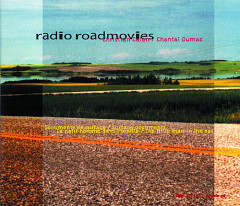
    … let two people who clearly know their way around clue you in to the way life sounds in their country.
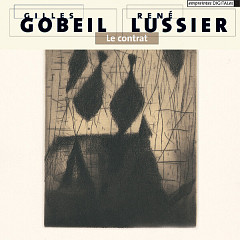
    Le contrat dans Splendid E-Zine

    «Review», Allan Harrison, Splendid E-Zine, 2 juillet 2004
    vendredi 2 juillet 2004 Presse

    Seven years ago, experimental composers Gilles Gobeil and René Lussier etched out an informal contract to collaborate on a work inspired by Goethe ’s Faust, to be composed in sync with the structure of the poem. In the seven years this project took to complete, the duo cultivated a painstakingly slow work ethic which, combined with their ravenous perfectionism, allowed the project to undergo a number of conceptual divergences. Goethe took more than 30 years to write Faust, making Gobeil and Lussier’s seven-year effort seem comparatively speedy. And in what have their prolonged efforts resulted? A truly baffling musical/sonic odyssey that incorporates spasmodic guitar jerks, aeroplane noises, bangs, rattles, reverberated voices and long, long moments of static silence — a sonic experiment that nestles itself in the listener’s anticipatory space and just sort of hovers there.

    Consisting primarily of protracted inertia interspersed with swiftly swelling blasts of noise, Le contrat will test your patience as much as it rewards it. La nuit la plus longue (The Longest Night), for example, is a twelve minute onslaught of jet blasts, distorted voices, eerily subtle strings, quiet gasps, reverberated bangs, pan flutes, altered church bells and other unnameable found-sounds, spliced into a piece that nests itself in the memory as a fractured, elongated hum. When the sounds finally arrive, however, Gobeil and Lussier create a genuine sonic tension that occasionally verges on anarchy. About ten minutes into “The Longest Night”, a cloud of hissing noise gathers (appropriating what sounds like a choir of mutants), and then a giddy piano sample is pitch-altered, bashed and stitched into a crescendo-heavy explosion of maddening sonic chaos, coming to settle on some truly wonky-sounding church bells. Indeed, Gobeil and Lussier’s propensity for sudden explosions of noise often seems to mirror the manipulative shock-tactics of cinema horror: once a sense of placidity is established, it’s quickly blown apart. On Le cabinet d’étude, a solemn, sporadic strum of nylon guitar is paired with the sound of meowing cats and some truly horrifying, guttural growls.

    Heavy-going stuff, and not for the weak-hearted, Le contrat might seem like a manipulative venture into silence/noise dynamism, but Gobeil and Lussier’s unerring commitment to the form makes for a stealthy, undeniably intense listening experience.

    Heavy-going stuff, and not for the weak-hearted… a stealthy, undeniably intense listening experience.

    Fractures dans The WholeNote

    «Review», Darren Copeland, The WholeNote, no 9:10, 1 juillet 2004
    jeudi 1 juillet 2004 Presse

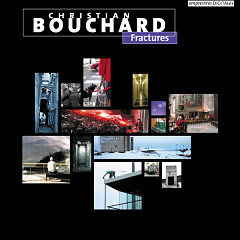
    Christian Bouchard moves fluidly between lush spacious environments and agitated, rough, edgy punctuations. By doing so, he makes an alliance with soundscape composition, glitch, and acousmatic art. His choices to distort sounds or to magnify normally discarded recorded artifacts are offset by his imagination for colour and his feeling for the inherent nuances of sounds manipulated from environmental sources. In summary, the worlds of glitch and a filmic acousmatic sense go hand in hand in his sensibilities. There is not a conscious attempt to construct narrative in his works like in the Gotfrit CD that I reviewed last month. However, images and vestiges of stories do peer out from time to time, products I think more of the inherent associative qualities of environmental sounds than of a conscious attempt to construct the sense of a storyline in his music. Bouchard’s early works on the CD maintain a compactness and economy that I appreciate more than in his later and more longer-form works. But then again, the use of conceptual structural models in these earlier works, such as the portrait of a soundscape from the point of view of a parking meter, is more appealing to my ears these days than the looser and more meandering structures that are more common in acousmatic art. In closing, Bouchard has a nice edge and grit to his music that I think will appeal to listeners looking for something new.

    … he makes an alliance with soundscape composition, glitch, and acousmatic art.

    Traces dans Modisti

    «Review», Modisti, 30 juin 2004
    mercredi 30 juin 2004 Presse

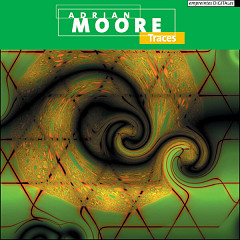
    Materials distributed in various areas according to the methods used abstraction processes emerged from concrète materials taken to different degrees. The link between the various pieces comes from the studio techniques used, which bestow a continuity to the pieces. Kinetic based poetics, in perspective with a sonic plane akin to compute imagery or analogue image digitalization.

    Seuil de silences dans Touching Extremes

    «Review», Massimo Ricci, Touching Extremes, 27 juin 2004
    dimanche 27 juin 2004 Presse

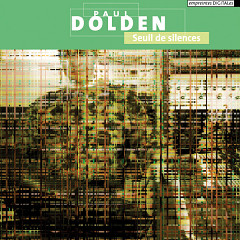
    One of the most talented acousmatic composers on today’s scene, Canadian Paul Dolden shows his assembling skills in this collection of new and reworked pieces where hundreds of tracks are painstakingly crafted to form castles of imposingly powerful modulations, droning substrata of nuclear fissions and strange concoctions of melody and soundquaking strokes. Dolden pulls all his strings with almost maniacal attention to the completion of every movement until its full development, thereby coasting the shores of contemporary computer music while mixing the whole with bits of irony a la Zappa/Synclavier era, only with a little more redundance — which is probably what the author wanted in the first place. Imaginary giant orchestras are thus able to shake buildings and ears — yet the best moments are the ones where slow spirals of oblique undertows cut a slice of perfection off the picture, bringing that necessary sense of undistinguishable anxiety that’s the moving force of the record.

    … hundreds of tracks are painstakingly crafted to form castles of imposingly powerful modulations…
  • 7
  • 8
  • 9
  • 10
  • 11
  • 12
  • 13
  • 14
  • 15