Sauter au contenu principal
electrocd

Blogue

195 résultats
  • 25
  • 26
  • 27
  • 28
  • 29
  • 30
  • 31
  • 32
  • 33
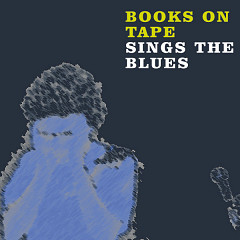
  • Sings the Blues dans Cracked

    «Review», Cracked, 1 janvier 2004
    jeudi 1 janvier 2004 Presse

    Fine second album by LA-electronica artist Books on Tape. The digipak with the Blue Note-design brings you sixteen straight forward electronic instrumentals that range from laidback experimental hip hop to sleazy porn-grooves and everything in between. Sometimes the music is as superficial as a can of tuna, then he adds some experimental flavour, effects and samples to keep me happy. Strange sense of humour for sure, but also a multi-layered, ever-changing example of a completely uninhibited attitude towards music, by someone who might say that “to rock” is the most important thing and who may think that “hyperactive” is a compliment. Well, if you look at it that way, he is right.

    Being compared to Timbaland, Aphex Twin and Sonic Youth within one paragraph must be hard to swallow for any artist. It so happened to Todd Drootin aka Books on Tape. Had to be someone who only listened into Sings the Blues half-assed and with his mind set on finding some astounding and purchase-inducing comparisons. Or maybe this writer-person only read the thanks-list of Books on Tape in this record, which actually does name Sonic Youth and Timbaland (but not Aphex Twin), as well as Talking Heads, Pavement, Albert Ayler, Public Enemy, The Fall, Art Ensemble of Chicago, Neil Young, Mike Patton, The Pixies and David Bowie, plus some others. But not because these people are making music that is somewhere and partly found also in Sings the Blues — a foolish notion that will always end in one of two extremes: every song / track is different from any other song / track or all music is one and the same, but I’d strongly advise to keep zen-philosophy out of electronic music as much as possible. There is one characteristic combining these artists mentioned, and that is their attitude towards making music. All of them followed their own vision and tried and kept on trying to produce something new and unique. Insofar it is a good idea to take them as mentors and idols for any aspiring musician. Two questions have to be asked, though: Why is there not a single artists from the electronic genre in the thanks list? And does Books on Tape produce something new and unique?

    I’ll skip the first question for pure low-brow-journalism and get right to the more important one concerning the musical progress and artistical content of Books on Tape. The answer is, yes, there is something about Sings the Blues that is new and striking, but at a lot of times the tracks also seem a little unfinished or not quite ready yet. Todd Drootin obviously enjoys to mix intricate atmospheres around driving beats with spliced samples and then pours some blatantly stupid keyboard-melodies over it. So he might start a track with some glitches and clicks of the finest making, then hit you in the neck with a keyboard line that might come straight from Giorgo Moroder only to start a 160bpm-weirdo-rhythm over that all, complete with drum’n’bass-licks and -fills here and there. Then he bangs you around the head with that for several minutes and calls it Death In the Sex Shop. He does that over and over again on Sings the Blues without ever really repeating himself. It reminds me of painting something beautiful very realistically, then pouring red paint over it and then sticking a glimmering star with as a tag to the upper right corner.

    Most of the time Books on Tape rocks like the Seventies did. His humour and straight-forwardness are definitely advantages, especially when playing live and, for once, this is an electronic act I’d like to see live. He might bring the sweatiness and rockbeats of live-guitar-bands back to the dancefloors, so DJs might be interested in this record, so they can scrap a little of the atmosphere for their sets. I am quite sure, that Todd Drootin wants to become famous and beloved, a rock-star in a sense, but I only judge from the exhaustive thanks-list, the screaming info-sheet and the stadium-compatible beats of this record. A big step for a laptop-musician in any perspective. Personally, I prefer the more laidback and relaxed tracks, that are a little more experimental and use strange sounds and settings, rather than the straight forward rockers. So I’d rather listen to tracks such as Republic Of (my highlight). But all in all, Sings the Blues is an interesting record to be used on various occasions, by people who are not easily distracted by conflicting sounds and styles.

    Strange sense of humour […] a multi-layered, ever-changing example of a completely uninhibited attitude towards music…

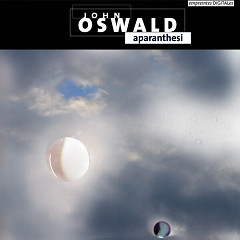
    Aparanthesi dans Rer Megacorp

    «Review», Chris Cutler, Rer Megacorp, 1 janvier 2004
    jeudi 1 janvier 2004 Presse

    (Excuse the length of the review. Summary: Buy it.)

    As in his short piece Klangfarbenprobe for the Re Records quarterly many years ago, John here explores in two 30 minute pieces how much variety and structure is obtainable from a single pitch. Western ears are indoctrinated to listen through pitch, to find binding narratives in melody, harmony and their variations, the rest at best is secondary, at worst just colour. The reason so much Baroque music translates so easily to different instruments, including heavy metal guitar, is because it’s the notes that really count. The notes and their ratios and their relationships. Harmony was considered part of a scared mathematics and the relations between pitches expressed absolute, fundamental cosmic realities. Pure music, the music of the spheres related directly to the Platonic forms, the unchanging verities that we can approach but never grasp. That’s why it is the form that matters, the pattern behind the notes, and not the temporary body in which these are clothed. In the age of the Manufacturer and the Usurer — the age of Beethoven and after — while holding to the spiritual in theory, music was progressively seduced by the material. Orchestration came to matter more and more. And once sound recording was invented, the materiality of sound itself became an unegotiable fact. Varese, pre-eminently, relegated notes to a secondary position in his work, pursuing timbre, dynamic, mass, spatiality and contrast, but generally, all the way through to the late 1950s, especially under the sway of post serialism, notes continued to hold their own, even though their grip was slipping. That decade, however, saw two radical responses that recognised and between them reified the dilemma: In the left corner, John Cage shifted his attention to rhythm — which is the organisation of time and which, significantly, is made equally of sound and silence — for him pitch was just material to be poured into structured time; it could be anything — let the sounds be themselves; while, for La Monte Young, in the right corner, pitch became absolutely supreme. John Oswald follows neither route but approaches the problem from a completely different perspective. His work, initially closer to Schönberg’s famous short orchestra piece and Varese’s explorations into dynamic, timbre and spatiality goes beyond these to an exploration of what happens when pitch becomes informationally redundant — or transparent — forcing other qualities of sound to be heard through it, and making thereby what is always missing or suppressed significant. By this simple device — the most original things are always this obvious and one wonders how come it took so long to reach them — the answer is, as always, that it takes a different kind of thinking to see the obvious. By this simple device of removing tonal data by levelling it, John is able to accentuate and make essential parts of hearing we take for granted and, when in art mode, largely ignore. He takes acoustic space, natural and un-natural sound, the outside world and the discourse of music — and by merging and flattening them arrives at strikingly unfamiliar listening aesthetic.

    Of course, John’s work with recordings has always been about listening — as well as to a certain extent about perspective, and both concerns are strongly represented here. His method of work involves gradually tuning every sound to a single pitch (an A). There are 10 audible octaves and so 10 degrees of this pitch with which to work. Two human performers are featured, a piano tuner and a cellist, the rest of the material is derived from a library of recorded sounds built up over time — pure sine tones, orchestral instruments playing A’s, voices, environmental sounds: birds, weather, animals, insects, spaces — and so on. It is all — naturally or un-naturally — pitched to an A. This is the material. The second crucial technique employed throughout this piece is morphing: that is, gradually blending one thing into another. A note becomes a storm becomes a flock of birds — think of some of Trevor Wishart’s extraordinary work in this area, except that here the pitch is uniform and the blend can, if desired, be almost imperceptible. A change of object or event becomes simply one of timbres and detail; to morph is effectively to crossfade very slowly. Sounds may gradually turn into one another, or be sunk inside one another like harmonics, to create shifting banks of timbres. An entire aviary of birds winds up at A and A becomes the aether in which they, and everything else, moves.

    Because of the variety of sources and the individual recording of them, spatiality moves to the fore; there is much work here with soundscape, interior and exteriority, distance and shape. Such work with scale and reflection and with the sounds of weather and nature inevitably invokes a visual response, and John often speaks in narrative and visual terms in his interview, “it’s raining in the piano,” “a conical clarinet curls into a french horn and then straightens out into a didgeridoo,” “like a giant hummingbird” &c. But because the pitch is constant, our hearing is focused in an entirely unfamiliar way. He quotes Stockhausen’s comparison between the filmic model of seeing a variety of things under a constant light as opposed to seeing the same thing continually under differing lights. Perspective, space and scale permeate this work, in a way I can not refer to any other work. In one section all 88 notes of the piano sound as an A. And how are we to hear this? John in his excellent and comprehensive accompanying interview points out that this could usefully be described as a shift in scale: the piano notes do not change, but the size of the piano does; the lowest note on the keyboard sounding the A would be strung in a 10-inch concert grand, the highest in one over 100 feet long. This is in some ways analogous to the effect of light speeds on length and time: the light is moving at a constant speed while objects shrink and elongate and time stretches and expands.

    There are two versions of the piece on this CD, which is an indispensable work. Not merely a piece of music — or a parade of organised sounds — but a meditation on listening.

    … an indispensable work. Not merely a piece of music… but a meditation on listening.

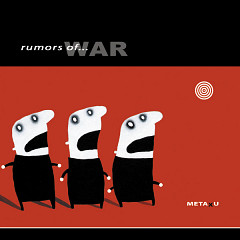
    Rumors of War dans Blow Up

    «Recensione», Dionisio Capuano, Blow Up, no 68, 1 janvier 2004
    jeudi 1 janvier 2004 Presse

    Differente la’rischiosa operazione di Maurizio Martusciello e Filippo Paolini, in apparenza didascalica: fare musica’sulla’guerra. E’noto che trumors’ non significa trumore’bensì diceria.’voce che corre’e in tal maniera si procede, sviluppando sì un calendario storico di eventi — i titoli dei dodici pezzi sono tutti date e luoghi: 28061914 Sarajevo, 07121941 Pearl Harbour e così via… naturalmente c’è scivolosissimo, anche 11092001 New York — ma preferendo dare un sguardo ‘laterale’ all’umanità violata, velando quasi di pietas certi — eventi — quelli in cui più mostruoso appare il baratro. La costruzione del suono è attenta, il digital processing non teme di giungere alle soglie melodia né di tentare la descrizione emotiva: un blip cinico scandisce il tempo che sta per finire, I’innalzarsi della frequenza di un’onda simula l’approssimarsi di un aereo, alla fine un improwiso risucchio d’antimateria, come lo spegnersi in un lampo del tubo catodico (11092001 New York). Si rimane a distanza dalI’orrore, impossibile awicinarsi di più, tuttavia — anzi, proprio in ragione di quest’atteggiamento — i due italiani realizzano un lavoro che, per onestà intellettuale e ‘misura compositiva’, costituisce un importante esempio di ‘elettronica civile’.

    Front dans Blow Up

    «Recensione», Dionisio Capuano, Blow Up, no 68, 1 janvier 2004
    jeudi 1 janvier 2004 Presse

    La No Type di David Turgeon — ingegno multiforme, grafico, programmatore in Perl, ironico agitatore delle nuove avanguardie scapigliate — è una delle ‘case’ più oltranziste nell’area sperimentale nordamericana. Tra le ultime uscite (nel recente passato vanno ricordati i Book On Tapes e il cd a firma A Dontigny — Diane Labrosse) si annoverano un ponderoso compact canadese ed una produzione di nostri connazionali. I giovanissimi Haiven e Vaughn la danno di cut up-fluxus in trentatré segmenti, scombinando e ricombinando materiali di varia indistinguibile provenienza. Si possono individuare tre approcci alla manipolazione sonora. Un ‘taglia-e-cuci’ veloce ed informale, simile per effetto allo scorrere veloce e ‘brutista’ della sintonia di una radio. Poi un dar di spatola noise in maniera più omogenea e quindi un segmento iperminimalista che ricorda la scuola statunitense anni ’70-’80. Non necessariamente in quest’ordine, né in rigida sequenza. Vi prospettiamo adesso una scelta critico-concettuale variabile che va dall’improperio ontologico e strutturato alia concorde e sorridente accettazione di giudizi già scritti: “Contrariamente a molti lavon contemporanei, Front è una, composizione di 73 minuti che determina niente meno che un confronto tra la vostra percezione del mondo e il mondo stesso! Qual è stata l’ultima volta che avete realmentefatto esperienza di arte?

    … scombinando e ricombinando materiali di varia indistinguibile provenienza…

    Sings the Blues dans Chicken-head Records

    «Review», Foghorn, Chicken-head Records, no 9, 1 janvier 2004
    jeudi 1 janvier 2004 Presse

    Books on Tape was recently nominated for an award in the L.A. Weekly in the uncategorizable category. Although it didn’t win (many publications called it a robbery), it stands alone on top of the electronic heap. The brainchild of Books on Tape, Todd Drootin, composed, performed and recorded all the music contained on this disc. Upon first listening, I was absolutely floored by what I heard. Uncategorizable is a complete understatement! Comprised of complete electronics, this disc takes you on an unexplainable ride into everywhere and nowhere all at once. There are so many sounds and noises throughout you have got to wonder how this one guy came up with all this and put it together the way he did. This definitely is not for everyone and is definitely not hardcore by any stretch, but it’s uniqueness is one of the main reasons I like it. Nine Inch Nails and Pavement fans take notice! There is a new electronic project on the block that is above and beyond anything you might have heard, and it’s name is Books on Tape.

    Uncategorizable is a complete understatement!

    Rumors of War dans AllMusic

    «Review», François Couture, AllMusic, 1 janvier 2004
    jeudi 1 janvier 2004 Presse

    Metaxu’s first album [Metaxu, 2001, Plate Lunch] is disappointing, but their second [Rumors of War, 2003, No Type] is a very different affair. The claustrophobic electro-glitch of the 2000 eponymous CD has transformed into a lush set of romantic sample-based constructions. Obviously, the main theme is war. The 12 tracks are titled after key 20th-century historical events of a belligerent nature, from Sarajevo, June 28, 1914 to New York, September 11, 2001. Throughout the album, the music expresses melancholia, mourning and sadness as filtered through the prism of romanticism. Samples of piano and guitar motifs, chants, orchestral music, historical speeches and intimate voices have been assembled to create strongly evocative tracks. Compared to the dryness of the first album, Rumors of War is downright a crowd pleaser. The sound palette is varied and rich. The electronic textures are used as an accompaniment to the sampled instruments, preserving a certain warmth and a “song” structure. One thinks much more of Tibor Szemzö’s emotional evocations of past memories than of any member of the experimental ambient community (the label’s press release is prone to mention Fennesz and Ekkehard Ehlers, but Metaxu’s music is here even easier to absorb). And despite the fact that some followers of Maurizio Martusciello (one half of Metaxu) since his departure from the group Ossatura will be quite surprised by the accessibility of this music, the project is a success. Each piece proposes a historical reading open to interpretation, a precise evocation of the event, and a powerful emotional charge. Highlights include: the quiet fragmented electronics in Hiroshima; the delicate water sounds providing the basis for Falkland; and the Arabic melody heard in the distance at the beginning of New York, a hint to the fact that this event would have as big (if not bigger) an impact on the population of the Middle-East than on Americans — and there is no other way to describe the finale of that piece than to say that it literally collapses on itself. Recommended.

    … the project is a success. Recommended.
  • 25
  • 26
  • 27
  • 28
  • 29
  • 30
  • 31
  • 32
  • 33