Sauter au contenu principal
electrocd
  • This website is also available in English.

Blogue

195 résultats
  • 25
  • 26
  • 27
  • 28
  • 29
  • 30
  • 31
  • 32
  • 33
  • Aparanthesi dans The Wire

    «Soundcheck Review», Julian Cowley, The Wire, no 239, 1 janvier 2004
    jeudi 1 janvier 2004 Presse

    In the notes he supplies to shed light on these two versions of Aparanthesi, Canadian sound alchemist John Oswald enthuses over A, the single pitch used to make the piece, and he talks excitedly of the relevant frequencies measured in Hertz. Yet there’s nothing abstract about this remarkable music. On the contrary it engages with some of the countless potential incarnations of that pitch, from a thunderstorm rumbling across a prairie to Joan Jeanrenaud’s Intensely focused sounding of a cello.

    The opening A is a monolithic chord, an Ayers Rock (aka Uluru) of an A. Like that Australian landmark, it then appears to change colour in response to changing light and atmospheric conditions. Oswald’s material undergoes more extensive and fundamental change however. Mass, texture, shape, dynamics alter too as one embodiment morphs into another. A piano tuner at work melts into the weather, a foghorn bellows, rain falls, a mosquito whirrs, sine tones drone, an aviary of birds emerges from a low hum, and miraculously flocks to A. Oswald recalls how, as he morphed the sound of wind instruments, he imagined “the physicality of the instrument transforming, so a conical clarinet would curl into a French horn for instance, and then straighten out into a didgeridoo.”

    Aparanthesi could be approached as a philosophical investigation of identity and correspondence, or as a meticulously crafted guide to the intricacies of listening. But those options might be unnecessarily arid. High levels of technical skill and fine judgment are invariably accompanied in Oswald’s music by a clearcut sense of dramatic possibilities, and an awareness of tensions that give form to sonic events and radiate from them to involve his audience in active relationships with evolving structures of sound. Even in a piece that gravitates continually and predictably to a single pitch, strange things happen that spark unexpected images and open up unfamiliar spaces. His generous commentary elucidates but doesn’t even begin to exhaust the fascinating metamorphic drama Oswald has discovered in A.

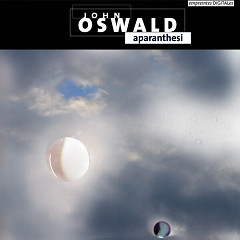
    … a philosophical investigation of identity and correspondence… a meticulously crafted guide to the intricacies of listening.

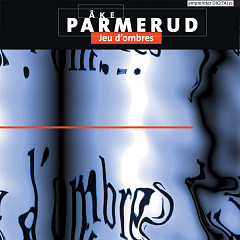
    Jeu d’ombres dans JazzoSphère

    «Critique», Sabine Moig, JazzoSphère, 1 janvier 2004
    jeudi 1 janvier 2004 Presse

    Åke Parmerud s’est engagé dans la voie des musiques instrumentales et électroacoustiques depuis la fin des années 70. Son travail, reconnu par les professionnels, les critiques et le public est omniprésent dans les arts visuels tels que le multimédia, la vidéo, le cinéma, la danse ou le théâtre. Dans Jeu d’ombres, le musicien suédois nous présente quelques-unes des créations réalisées au cours de ces dernières années, le plus souvent sur commande. Quelles que soient les techniques de création utilisées pou ces différentes pièces, Åke Parmerud est guidé avant tout par le désir d’offrir une musique singulière, inventive et ouvrant des espaces à des introspections futures. Entre souvenance, réécriture et mouvance vers des ailleurs à explorer les pièces s’ouvrent à nous: libre alors à chacun d’y puiser la force et l’élan qui le guideront vers un plaisir d’écoute épuré et originel.

    … une musique singulière, inventive et ouvrant des espaces à des introspections futures.

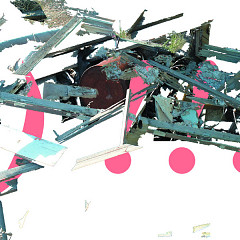
    Front dans AllMusic

    «Review», François Couture, AllMusic, 1 janvier 2004
    jeudi 1 janvier 2004 Presse

    Front is rich, dense, multi-directional, and very challenging. But is it good? Honestly, this reviewer doesn’t know. Even after a handful of listens, its code remains unbroken, its meaning evasive, its structure oblique, its intentions obscure. A collaboration between Max Haiven (Nova Scotia, Canada) and Jon Vaughn (Saskatchewan, Canada), two conceptual electronica artists, Front is a continuous 73-minute collage work indexed in 33 arbitrary tracks. A sound art buffet, it includes harsh electronics, ambient textures, electroacoustic manipulations, sampling, fragments of guitar tunes, advertisements, pop attempts, and who knows what else. An LP skipping maniacally can lead to a lengthy episode of organ chords or a comical keyboard interlude or a fast-paced collage of harsh fragments. You never know what will come up next — but the problem is, at some point during these 73 minutes, you stop caring or trying to guess what could come up next. The flow of the piece is overwhelming. Its chaotic unfolding obviously hides a deeper structure — it is not gratuitous, you can feel it, it has to be following its own logic — but this structure is very well hidden. You don’t come out of Front with the impression of having wasted over an hour of your time, but you do get the feeling that you missed on something. And this impression only becomes stronger with every listen. This reviewer found himself questioning every shift, every turn, and being unable to find a single convincing answer. So if Front doesn’t provide an enjoyable listen, it sure provides a stimulating one.

    … it sure provides a stimulating [listening].
  • 25
  • 26
  • 27
  • 28
  • 29
  • 30
  • 31
  • 32
  • 33