Sauter au contenu principal
electrocd

Blogue

272 résultats
  • 36
  • 37
  • 38
  • 39
  • 40
  • 41
  • 42
  • 43
  • 44
  • Sings the Blues dans Stylus Magazine

    «Review», Neslon L, Stylus Magazine, 1 février 2004
    dimanche 1 février 2004 Presse

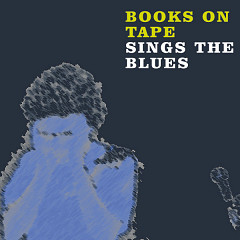
    Todd Drootin a.k.a. Books on Tape has offered up some of his best work yet on Sings the Blues. Todd’s production on this album is the type of beautiful sorrow that keeps you listening, although not all of the songs are emotional; Books on Tape is a great mixture of hype tracks and heartfelt beats. The second song, Republic Of, is a perfect example of the blues element of the album. Books on Tape is a producer, and although there is no singing on the album, it is still tremendously entertaining; Books on Tape can tell a story in a song without even using words. With his past catalogue of work, it seems Books on Tape will leave his mark as one of the great producers. Track four is a lot more hyped up, but the title She’s Dead To Me suggests the emotions he is trying to communicate. The ninth track Circus Animal Battle Rap (instrumental), also an instrumental, offers comic relief in the form of a circus seal sample amidst a hot beat. This is a great album from start to finish.

    This is a great album from start to finish.

    Sings the Blues, Books on Tape dans Magnet

    «Review», Rich Juzwiak, Magnet, 1 février 2004
    dimanche 1 février 2004 Presse

    Todd Drootin (a.k.a. Books on Tape) also wants to rock. The difference is, he knows how. Nothing sums him up better than the Pixies sticker on the side of his mixer. His rollicking approach to IDM deconstructs live guitar and bass loops via injections of white noise and hyper- distorted beats. Simultaneously gorgeous, fun and ear-splitting. Sings the Blues feels as important as drill’n’bass masterworks by Aphex Twin, Squarepusher and µ-ziq, only it trades animosity for swagger. The album’s title is a big lie: infrequent vocals are hacked to bits and fuzzed out like the rest of it.

    Sings the Blues feels as important as drill’n’bass masterworks by Aphex Twin, Squarepusher and µ-ziq…

    Bleak 1999 dans Cracked

    «Review», Cracked, 1 février 2004
    dimanche 1 février 2004 Presse

    A beautiful piece of refined electronica, subtlety and minimalism sprinkled with almost human warmth. Delightful and tasty, and apt for all times and moments because of its delirious lightness. The Canadian Tomas Jirku has added another fine gem to his (eclectic) ever-growing discography. No Type, an obviously underrated label, has added another fine release to its just as eclectic catalogue. (Entries on this website have included Claudia Bonarelli and Books on Tape.) And I am feeling all warm and mellow from the inside, glowing with contentedness all over. I think I finally found out, what makes a recording of electronic music in the most primary sense appealing to me: warmth. A special, soft and comforting warmth that encompasses the mind and the heart with full and rich sounds, and I don’t even care from which side of the sonic spectre they come from or what their special wave form is. If an artist manages to create an atmosphere of organic or even human appeal, that is what I am looking for. And then it is quite obvious for me to say that this special record is “my favourite electronica record” right now. Very much like Vitamins For You at the end of last year, that is going to be a record that will stay close to my stereo for quite some time and even finally make it into a kind of top list or best-of collection at the end of the year (even though I always have mixed feelings and opinions towards top lists and such, but in the end, it is something I like to read myself, so I guess I’ll provide one as well). Switch back to the music.

    It all oscillates around a steady, almost monotonous bass-drum-beat that is quite muffled, like listening to your loved one’s heartbeat by putting your ear on his or her chest. Instead of being disturbed or puzzled by irritant gurgling and burping noises from within the intestines (a thing as natural as it comes), Tomas Jirku adds various layers of synthetic sounds and warm keyboards on top of that beat, which is sometimes broken into a echoing purring sound or a beautiful reverbing bass-wave, at other times starts the funky groove typically of minimal electro (e.g. on the track Glyburide). The number of layers and the variations and dynamics of the tracks differ from very minimal and sparse arrangements, which are rather at the beginning of Bleak 1999 to expanded and constructed tracks such as Input fluid in the middle of the record. Melodic lines span slowly but steadily over longish tracks, like watching clouds move or shadows crawl across a wall. At times he reduces the sonic scape provided to a clinical environment, with some white noise or radio static in the back and a peeping of a life-support-machine in the foreground, added with some human samples (check the grand Li) or backwards-looping human voices to more radio-static and erratic keyboards (check the disturbing beginning of 04.1.93). To me, those “intermissions” are quite as important as the “proper tracks”, because they put the “life” into the whole CD. They add the spice and distraction to make an album of what otherwise might be just a collection of tracks. Is that another metaphor for dailylife?

    The most impeccable and intriguing feature of Bleak 1999 is the overall atmosphere of melancholia and nostalgia, like computers dreaming of a better world (less text-processing and email, more calculations on medical research and poetry). The title of the record will lead you astray in more than one way. At least I can find no bleakness on these tracks. There is a tendency towards monotony, but that has become a positive feature in the last years in electronic music and in my life in the last three months. The vibrating fundament of a life according to habits and customs is sparked by monotony, though it is more trendy to call it minimal. The tempo of the beats stays well within the realm of a calm human heartbeat or the tracks of a slow moving underground, both with synthie-drones plucked into your ears. The dynamic tension of beats drawing against and with glimmering synthie-sounds and manufactured (or would it be more appropriate to call them processed) spheres of sound, without overtly being destroyed – Bleak 1999 moves in circles of passion that is subdued by the cost of love, life and labour. Definitely a stayer with meaningful layers still to be discovered. The only remaining mysteries are those of the year in the title of the record and the titles of the tracks themselves – ranging from a simple T or R via chemical elements Ca or formulas LiCO3 to names of chemicals or enzymes Clindamycin to drugs or medicine Haloperidol to one track called Psychosis. Maybe Tomas Jirku is just a student of biochemistry or medicine in his spare time the same way other people are architects or communication-designers and spend their free time producing electronic music. That is just as well. At times, I am sure, that electronic music can use all the input and influences from the real world it can get.

    Delightful and tasty, and apt for all times and moments…

    Bleak 1999 dans De:Bug

    «Kritik», bleed, De:Bug, 1 février 2004
    dimanche 1 février 2004 Presse

    Eine ziemliche Überraschung für alle Tomas Jirku Fans dürfte diese Platte sein, denn sie ist sehr dark und voller Radiogeräusche, gruselig dunkel fast an manchen Stellen, rauschig rauschig, morbide, manchmal nah an Raster Noton und dann wieder fast industriell. Ich gebe zu, ich bin selten in der Stimmung, mitrsoetwas anzuhören, auch wenn es immer noch eine Basis von Minimalismus hat, aber ich vermute, in Zuständen, in denen man nicht einschlafen kann und am liebsten ans Sterben denkt, könnte das gehen. 3/5

    Rumors of War dans Grooves

    «Review», Greg Clow, Grooves, no 12, 1 février 2004
    dimanche 1 février 2004 Presse

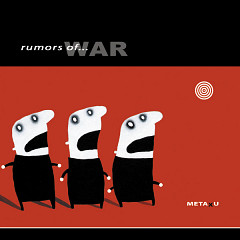
    When you release a record called Rumors of War and name all of the tracks after some of the most horrific battles, tragedies, and massacres of the last century — ranging from 28061914 Sarajevo through 11092001 New York — it’s pretty obvious that you’re not out to offer listeners something light and cheerful. That’s not to say that this second album by Italy’s Metaxu is a completely dark and depressing collection, as there are moments when the duo’s glitchy and orchestral-tinged ambience exhibits a fragile and bittersweet beauty that seems to hold a vague sense of hope, but there is definitely an inescapable air of melancholy running through most of the dozen tracks.

    Notable pieces include 25031999 Belgrade, which features a minimal piano melody and string samples layered over a backdrop of subtle pops and clicks, and 01091939 Warsaw, where Metaxu lays down a sound-bed of humming static and a quiet drone loop, weaves in some mournful violins, and closes with a segment of a ghostly sounding radio broadcast announcing Britain’s declaration of war on Germany. But the most affecting segment of all may be the ode to the World Trade Center disaster. This six-minute piece starts with a high-pitched beacon tone over a rumbling ambient backdrop that becomes louder as the track progresses. By the final 30 seconds, the sound eerily resembles that of a roaring jet engine that becomes more and more intense, leading to a sudden bang and then one final, futile tone.

    Taken in the context of the thoughts and images of September 11th that remain fresh in most people’s minds, it’s a truly chilling composition, and, like the rest of the disc, it’s a reminder that despite its synthetic and mechanical origins, great electronic music can convey messages and emotions just as well as more traditional musical forms.

    … a truly chilling composition and […] a reminder that despite its synthetic and mechanical origins, great electronic music can convey messages and emotions…

    Sings the Blues dans Grooves

    «Review», Rob Geary, Grooves, no 12, 1 février 2004
    dimanche 1 février 2004 Presse

    Books on Tape covers a lot of ground, but of course what he doesn’t do is sing the blues. Todd Drootin’s live shows have been dubbed something like laptop punk for his infectious energy. On record it’s Drootin versus his record collection, dicing samples into bits you can nearly recognize but can’t quite. While Akufen takes a similar approach into herky-jerky house, Books on Tape winds up with something like sinister downtempo that retains some of the warmth and texture of its sources. Break Sings the Blues into single tracks, and they could fit on any number of compilations, where they would be standout tracks.

    Frisson works backward strings and low-resolution bass into a dub quagmire that would sound at home on ~scape; She’s Dead To Me becomes a spastic flute and drumtaps workout that sounds a bit like T Raumschmiere’s menacing funk. What keeps Sings the Blues together is Drootin’s grasp of structure and the sense of unrealized possibility left in his sounds: The Crucial sets ominous piano against a short, piercing horn phrase that could have turned sweet or sinister with the next notes — we’ll never know.

    Books on Tape winds up with something like sinister downtempo that retains some of the warmth and texture of its sources.
  • 36
  • 37
  • 38
  • 39
  • 40
  • 41
  • 42
  • 43
  • 44