Sauter au contenu principal
electrocd

Blogue

272 résultats
  • 2
  • 3
  • 4
  • 5
  • 6
  • 7
  • 8
  • 9
  • 10
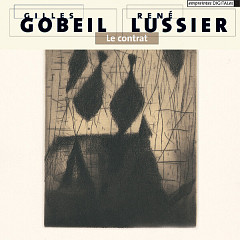
  • Le contrat, Migrations dans Funprox

    «Review», TD, Funprox, 20 septembre 2004
    lundi 20 septembre 2004 Presse

    empreintes DIGITALes simply keeps bombarding the world with their high-quality releases of old and new electroacoustic composers. Le contrat by Gilles Gobeil and René Lussier, and Migrations by Stéphane Roy are the latest in an ever-growing series that documents the ever expanding history of mainly French and Canadian compositions in the field of musique concrète.

    Le contrat is a work that uses elements from classical music, contemporary electronic music and sampling techniques. Gobeil and Lussier present a CD filled with spooky and often distant soundcapes that are interluded with samples of spoken work, sudden bursts of orchestral music and recurring hints of rock music and noise. This almost ‘punky’ combination is very strange but somehow works quite well, although I must add that this makes this CD not very suitable for a classification such as ‘easy listening’.

    Migrations by Stéphane Roy is a lot less eclectic and focuses more on orchestral manipulations and concrete recordings. Layers of processed ‘classical’ instruments build up to a dramatic intensity that reminds me of the works of Francis Dhomont. Roy also uses spoken word, in a way that is very atmospheric and subtle. Constant drifting soundscapes are used to create an exciting piece of work that begs for your attention.

    Again empreintes DIGITALes delivers two excellent and challenging pieces of work.

    … two excellent and challenging pieces of work.

    27 novembre 2004: Le GRM débute sa 27e saison de concerts

    jeudi 16 septembre 2004 En concert

    Le premier concert du 27e cycle acousmatique Multiphonies, Akousma 1, sera présenté à Paris (France) le 27 novembre 2004 dans la Salle Olivier Messiaen de la Maison de Radio France par le Groupe de recherches musicales (Ina-GRM (Groupe de recherches musicales)) et sera consacré au GRM des années 70 avec une présentation d’œuvres de Guy Reibel, Ivo Malec, Jean Schwarz, François Bayle et particulièrement les compositions Pour en finir avec le pouvoir d’Orphée (1972) de Bernard Parmegiani et Requiem (1973) de Michel Chion.

    Bleak 1999 dans Funprox

    «Review», TD, Funprox, 13 septembre 2004
    lundi 13 septembre 2004 Presse

    Surprisingly the new CD by Tomas Jirku was released on a sidelabel of the electroacoustic label empreintes DIGITALes. Jirku is known for his previous releases on labels such as Intr_version (the label of Mitchell Akiyama) and Substractif (the alien8 sidelabel). Apparently empreintes DIGITALes created the new label to release more ‘poppy’ music.

    Bleak 1999 contains a mixture of moody ambient drones and electronic beats that sometimes remind of the idm/glitch music of Akiyama or Noto and sometimes of old acid techno from Detroit. Minimal beats pound into the infinite while synthetic drones pass by. An occasional hint of a dubby bassline and a glitchy click here and there keeps your mind in this century instead of floating back to the early nineties.

    It is a mix between nostalgic sounds that remind of the early techno of Underground Resistance and Polygon Window and the more modern sounds of Chain Reaction, Raster Noton and the like. This mix between styles is really appealing and Bleak 1999 is a therefore a very nice album without edges.

    This mix between styles is really appealing… a very nice album without edges.

    18 septembre 2004: Fort présente son Safari dans le noir

    lundi 13 septembre 2004 En concert

    À la fois une grande installation sonore et un concert où les sons de la nature et les événements nocturnes forment une vaste symphonie, Safari dans le noir de Bernard Fort sera présentée les 17 et 18 septembre 2004 dans le parc de la Villa Gillet (Lyon, France). Dans ce safari acousmatique, l’auditeur parcourt un immense paysage sonore à l’aide de sa lampe de poche. Issu de nombreuses années d’enregistrement sur le terrain en France et en Europe, les sons, tous enregistrés la nuit, proviennent principalement d’insectes, de batraciens, d’oiseaux et de mammifères.
  • 2
  • 3
  • 4
  • 5
  • 6
  • 7
  • 8
  • 9
  • 10