Sauter au contenu principal
electrocd

Blogue

115 résultats
  • 1
  • 2
  • 3
  • 4
  • 5
  • 6
  • 7
  • 8
  • 9
  • Les arbres dans Octopus

    «Oursins chroniques», Laurent Catala, Octopus, 1 octobre 2008
    mercredi 1 octobre 2008 Presse

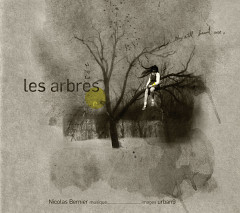
    C’est dans un climat d’étrange transfiguration qui n’est pas sans rappeler les ambiances floues, autant mystérieuses que nostalgiques, du Grand Meaulnes d’Alain Fournier que se tisse la collaboration noueuse entre le musicien Nicolas Bernier et l’artiste visuel Urban9 qui sert de cadre à ce disque. Élève de Robert Normandeau et de Jean Piché, et par là même dépositaire d’une certaine tradition acousmatique québécoise, Nicolas Bernier articule textures travaillées (provenant pour l’essentiel de sonorités instrumentales et acoustiques retravaillées électroniquement) et sens minimaliste contemplatif pour asseoir un paysage musical sensitif, appliqué et mélancolique, évoluant finement au gré des interventions prolixes du compositeur jusqu’à atteindre les rivages d’une musique de chambre isolationniste et trouble sur le paradoxal final // Ouverture. Une œuvre empreinte d’un certain spleen, comme le souligne encore davantage les illustrations photographiques années 30 et les dessins paysagers mortifères d’Urban9.

    Nicolas Bernier articule textures travaillées […] et sens minimaliste contemplatif pour asseoir un paysage musical sensitif, appliqué et mélancolique…

    Les arbres dans Ondefixe

    «Critique», Benoît Richard, Ondefixe, 1 octobre 2008
    mercredi 1 octobre 2008 Presse

    Connu pour ses créations à caractère expérimental, le canadien Nicolas Bernier s’associe ici avec le graphiste Urban9 pour donner vie à une œuvre construite conjointement et mutuellement à partir du travail de chacun. Un travail d’improvisation qui débouche aujourd’hui sur le CD Les arbres.

    Au programme 6 compositions qui chacune trouve une correspondance avec une carte postale livrée avec le disque. Une manière de plus de faire coïncider le son et l’image. Dans les compos de Nicolas Bernier mêlant sonorités électroniques et sonorités acoustiques on découvre un univers riche et foisonnant, où chaque ambiance semble travailler jusqu’à l’extrême, histoire de faire ressortir le maximum d’impressions, d’images, de ressentis chez l’auditeur.

    Expérimental dans la forme et dans l’idée, mais très facile à écouter, Les arbres dévoile des harmonies profondes, où le son du piano, de l’accordéon, de la guitare et du vibraphone viennent se frotter en permanence aux triturations sonores du canadien. Ce qui donne un assemblage sonore très moderne dans sa conception, étonnant. Une manière, pourquoi pas, de découvrir et se familiariser avec la musique électroacoustique.

    … on découvre un univers riche et foisonnant, où chaque ambiance semble travailler jusqu’à l’extrême, histoire de faire ressortir le maximum d’impressions, d’images, de ressentis chez l’auditeur.

    Trois songes dans JazzoSphère

    «Critique», Sabine Moig, JazzoSphère, no 35, 1 octobre 2008
    mercredi 1 octobre 2008 Presse

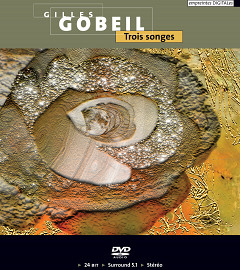
    Décrites volontiers comme du «cinéma pour l’oreille», les compositions de Gilles Gobeil nous ouvrent à des univers singuliers touchant à l’ésotérique et au mystique. Les trois pièces ou songes de cet album, écrites lors de résidences au Zemtrum für Kunst und Medientechnologie (ZKM) à Karlsruhe en Allemagne, présentent la particularité, comme nombre de ses compositions, de prendre leur source et leur inspiration dans des œuvres littéraires. Donnant vie au livre de Jacques Lacarrière Les hommes ivres de Dieu, proposant une musique à la troisième partie de La divine comédie de Dante ou bien invoquant des scènes du scénario Hoffmanniana d’Andreï Tarkovsky, les pièces possèdent une trame unique, convient aux découvertes, suggèrent des paysages ou des contrées ou nous attirent vers un univers fait de songes. La musique de Gilles Gobeil surprend par ses qualités de suggestion, ses évocations réussies et ses interpellations fécondes. Nourries des musiques du passé qu’il réinvestit, ses pièces possèdent un réel pouvoir hypnotique. Entre spiritualité, terreurs diaboliques, doutes existentiels, erreurs ou errances humaines, le tableau dépeint par Gilles Gobeil imprime nos sens comme par magie.

    … les pièces possèdent une trame unique, convient aux découvertes, suggèrent des paysages ou des contrées ou nous attirent vers un univers fait de songes.

    Matériaux composés dans Sonoloco Record Reviews

    «Review», Ingvar Loco Nordin, Sonoloco Record Reviews, 1 octobre 2008
    mercredi 1 octobre 2008 Presse

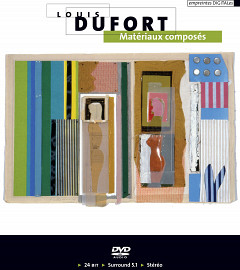
    Louis Dufort (1970) resides in Montréal, Canada. He began his artistic career in electroacoustics, but widened his preferences considerably by and by, encompassing mixed media and multimedia, catching the eye of Montréal-based organizations and ensembles such as Société de musique contemporaine du Québec, Quasar, Quatuor Bozzini, Chants libres and others. Dufort also cooperates with Compagnie Marie Chouinard; a dance company that he has worked with since 1996. Louis Dufort teaches at the Conservatoire de Montréal.

    Track 1. Grain de sable (A Grain of Sand) (2004-05) [14:35]

    While Louis Dufort had this piece in the works, the great tsunami hit Asia. He explains how he watched the news reports from Thailand and especially Phuket, and how the footage inspired sonic allegories in him, eventually coming together in the misfortune of drowning. For a number of reasons he did not want to use this theme directly, for fear of being considered morbid, but he approached drowning dreamily, to try to achieve “the state of ultimate being that comes right before you lose consciousness according to drowning survivors”.

    Grain de sable makes its appearance without tone or pitch, without any substantial rhythm — but with a gesture of dry and indeed… grainy noises, well defined individually, i.e., not like sand poured out of a bucket across a table or similar gushes of tiny fragments, but more like the flapping of a small bird’s wings out of the grass, or a sower’s sideways sweeps of seeds.

    The complete dryness is spaced with more ambience, turning this two-dimensional sonic world suddenly three-dimensional, and thus, considering the timeline, four-dimensional! It’s still comfortably dry, but all of a sudden I detect an almost indiscernible upward glissando of electronically beautified and treated moments, at about 38 seconds into audibility.

    Roundabout here we pass through a curious realm of pressurized and depressurized sensations, like traveling on a fast train in and out of tunnels.

    The first signs of metallic traces come at about 1:28, lending this graphite drawing some bronze glimmer, exciting the impression considerably. It’s amazing how a small change can mean a lot if you have very little. This also sharpens your perception, so I like these kinds of experiences; these stretches of ascetic aesthetics.

    Darker thumps and rumbles open up for possible distant thunder, but experienced from inside a paper bag. The real spacious sensation that comes with thunder in the sky is detracted, leaving just some embarrassed cough kind of thunder, if you can imagine…

    Cookie jar noises arrive with old-time clockwork springs let loose. Things change, but still within the framework of dryness and non-musicality, so to say… Metallic friction is also introduced, and by now I feel I can enjoy a richness of sounds, having gotten used to the meagerness of the beginnings.

    Some much deeper and possibly wider resonances are introduced; perhaps sampled off a streetcar or a subway, but cut-up the sound poetry way and redistributed sideways. The sonic milieu has gotten quite much richer and denser; gone are the peppercorn sonics.

    At 03:17 the scenery changes dramatically, with sea birds (?) and children’s voices and the guarded introduction of serene and beautiful gamelan sounds, and some strings! A lucid atmosphere in which a lofty melody sings synthesizer like, with glassy percussion ringing in pearlbeads, takes the listener by the hand into an enchanted area where dreams reside, yours and others’.

    The concrete facts of real music after such a long time of dry ascetics almost bring tears to my eyes: how beautiful life can be!

    Dufort lets some of his dry birdwing-flapping graphite draw two-dimensionals into this suddenly colorful 3D music — and then, surprisingly; a dark, humming, brooding and very real vibration grabs hold, moving decisively and relentlessly like sewer pipes under a city, or like the ureters between kidneys and bladders inside the meat of humans. Here the music gets rhythm, a lot of rhythm, in vibrations of various frequencies and pitches, turning techno, like some of the pumping New York circuits of Maestro Technoician Larry Kucharz!

    This, however, is cut short in a jiffy, right off, crevassing and dumping you into a dreamy, flowing, floating world of seaweed and popping sea horses — maybe that dreamy state in the drowning process that Dufort mentioned. This has a slow, drifting beauty about it, containing loose, wide percussive agents, the afterglow of which spreads like restful thoughts through your mind; like waves of energy through matter. Sheer beauty.

    For a while these tumbling, percussive and resounding blocks of audio move like debris in a whirlwind, like furniture around the room in Alice in Wonderland — or like the chairs and tables in the dining room of M/S Estonia on that fateful September night 1994. It’s beautiful and breathless, and possibly a gate into the Bardo of Afterlife.

    By way of my personal frames of reference, which I cannot negate, I get associations to the ruined Outback pianos and pianolas of Ross Bolleter in works like Nallan Void and Piano Dreaming, because I feel I can detect the strings of a piano in these submerged sections. The resounding roar of a Bösendorfer Imperial floating down the abyss like a flake of soot in a forest fire influences the atmosphere in a pensive direction. Gravity is always on, but has its counteracting forces.

    Delicate, brittle ingenuities of sound rattle like spinning coins on a marble floor, accelerating like the call of a Phylloscopus sibilatrix in May Scandinavia.

    Dark, brute, rumbling and rolling noises break existence as we know it apart inside Louis Dufort’s imagination, turning everything into humus, the way entropy has it, but entropy too has its counteracting opposites, in the self-organizing power of the Universe, as can be studied in Paul Davies’ book The Cosmic Blueprint. This is a huge, star-crushing machine, though; envisioning the end of ends, and I suddenly recall the stark reality of the instigator of this work: the tsunami of 2004. I had a couple of friends who were in Phuket, and they told me how they narrowly escaped, and right afterwards ran around outside turning bodies on the ground around to try to find their daughter, who was missing. They told me that all dead bodies lay face down; all of them, bodies everywhere, faces into the mud. After a while they found their daughter alive, already working with a rescue team.

    Cut-up shreds of voices are spread inside the turmoil of this music that slowly takes on an angelic, soaring and grainy, otherworldly guise, serene in spite of its retained roughness. The minute gaps between the vocal shreds grow wider, as the layer of sound grows ever thinner, relating the lack of oxygen inside the drownings’ brains, which opens empty spaces in their visual fields and lack of morphemes in their last sentences uttered, their last thoughts thought…

    Track 2. Matério_* (2006) [8:00]

    Dufort explains that this bit is the first section of a three-piece cycle. It’s experimenting with sound matter, he says — but maybe there is something I don’t understand here, or maybe he is too theoretical because there’s nothing much to say, but better instead to listen, so that’s what I do.

    The first seconds might be a closely miked person trying to find a comfortable position in an armchair, which creaks a little, and the clothes — extremely miked — make noises when rubbed against the leather of the armchair — who knows… I get a very close feeling anyway, leather and flannel and the wood of the chair frame right in my face!

    Noises of small friction incidents appear clean and clear, the way they never could without some electronic treatment. These noises in the “real” world are always accompanied and diluted by ambience and extraneous noises, whereas, in this electronic environment, it’s possible to sort them out and present them all by themselves. This is a fascinating aspect of electronic sound art that I don’t hear much discussed. I realize this is what makes this Dufort passage of Matério_* sound so alien, though it’s just a closely miked every-day scenario.

    Just as closely miked water sounds — like the lap of small waves under a city bridge in Stockholm (the way Bill Fontana picked up the sounds from that city through thirteen microphones in different places, mixing them live and broadcasting them through the Swedish Broadcasting Corporation back in October 1986) — are inexplicably mixed into this dry setting — so I think Dufort is treating the sounds he uses here as sounds per se; anonymous sounds, chosen for their character, and not at all for the associations they might bring about. It is almost impossible, though, to rid yourself of involuntary associative thought patterns on hearing distinctive sounds. You’ve got to un-learn a whole life of sonic experiences.

    Dry, thin sounds follow, so dry, so thin that they might give the impression of spider webs in the wind on some bird protection isle in a Scandinavian lake in fall, reacting with this swish to the low sunlight hitting it…

    This incredibly diluted thinness eventually grows much denser, until you feel some kind of sonic violence closing in, when the gray thinness transforms rapidly into a black rumble on the sonic horizon, which, nonetheless transports some grainy shreds in its might, only to recede into another form of thinness, albeit much denser than the earlier one, like hard rain on a sidewalk or a microphone thrown into a fire — or the constant firing of neurons in your brain…

    Dufort paints this changing sonorous space with a minimum of means, soundwise, which makes it all the more startling. The listeners, more than most times, are Dufort’s co-composers, as his music is recreated in their brains.

    The sharp and gray flow of faceless events begin to take on contours, as you start to be able to discern individual flakes of noise, but they’re still moving too fast and densely for you to make any clear sense of them. They flicker!

    After a brief silence, there is a clear increase of ambience; a short echo around the motions inside this secret affair. Soon Dufort opens the gate for more variation, letting the jingle and jangle of possible hinges screech, and a face full of open air gusts at you. A sense of melody and instruments appear for the first time; high pitch tones above a slow commotion way below: cardboard boxes tumbling out of some unknown predicament, while deeper layers of a droning property make things even more beautiful, reminding me some of Matthias Kaul’s graceful gallery recordings of his hurdy-gurdy in the wind, or the imagination of how Sir Francis Drake’s left-behind harp atop a cliff in New Albion in 1579 was affected by changes in temperature and humidity as the Westerleys played upon it, in ever-changing tonalities.

    The semi-dark drone picks up some volume as it extends, while the tumbling of cardboard boxes slowly shifts into the clashing of waves on a rocky coastline. A flock of seagulls fly up and flutter about erratically on the agitated winds. This is a soundscape of the highest order.

    The sonic resources, which have been rich for a while, fall back into the earlier, more meager state, with uncolored graphite figures moving against a fall horizon of zero weather. In some meteorological circumstances, everything is erased in a kind of gray-out. Dufort approaches these states sometimes, sharpening the perception of the listener, putting him in sketch mode, looking for that single line that changes everything, that suddenly means everything: that curvature that you wouldn’t even notice in more ample conditions.

    For a while there, I can’t make up my mind — perhaps I shouldn’t, and perhaps it’s wrong of me to even try — whether the sounds I hear are rolling thunder between mountain sides, or the closely miked flapping of a warbler’s wings… Sound art!

    In a sudden spacious openness — the ambience falling away to all sides — small, chinking entities spread like mechanical bugs, rendering the music a sci-fi fragrance. This open space is quickly filled with growing and multi-mixed sonorities, which in the final end dissipate on a pleasurable jingling downdraft.

    Track 3. Enfant d’obus (Bomb Child) (2007) [10:02]

    For this piece, Dufort presents a child’s drawing, and nothing else. The sounds are taken from a section for voice and tape from the opera L’archange (2005).

    The piece hits it off with a splintering, fracturing event; material objects — perhaps made of glass, ceramics of similar matter — falling apart and dropping from tables and shelves, like in an earthquake, although you can’t hear the earthquake. Suddenly I recall another work, which has nothing to do with tremors of the earth, but with heavy-duty lovemaking in a kitchen, all kinds of kitchenware flying around. I’m thinking about Katharina Riese’s Ein Hörspiel über die Liebe from 1991. It’s similar to this section of Louis Dufort’s Enfant d’obus, in that you can’t hear the cause of all this turmoil; the earthquake (in my fantasy) in Enfant d’obus; the lovers in Ein Hörspiel über die Liebe. This makes listening a peculiar experience, and quite interesting. Dufort works like this sometimes. It’s like those isolated and cleaned-off noises in the beginning of this Audio DVD.

    Various kinds of vessels — bottles, tubes, cans etcetera — of different sizes, keep toppling over, emitting their toppled-over sounds. I see brown cough-medicine bottles and various laboratory equipment of glass rolling about. The resulting undetermined percussive sonorities are very beautiful, pleasing to the ear.

    Half a minute into the piece Dufort spins glowing, gluey extensions into this percussive event, like spiraling, tense bands of adhesive tape through a swarm of mosquitoes, and the environment starts ringing with the most wonderful, bulging bronze-reflection audio. Like serene gold-teeth smiles, the afterglow of tinkling attacks (the attacks not audible) wring the moment out of phase, causing this peculiar suspension in space and time that only the very best of electroacoustic art can conjure up out of the hidden world of air compressions.

    In this instance, the music takes on a kind of mirrored guise of a chamber ensemble of sorts, playing moonlight serenities from inside a giant aquarium, as reflections of reflections distance you from the source material, to the point that you doubt its worldly existence, but in your cerebral cortex, as pure waves of electro-magnetism. Beauty in motion!

    A couple of sharp, short bowings of a string instrument — a cello, I think — set a number of empty tin cans in motion down an alley, Fritz the Cat style! Commotion stirs, for a while, in a hoquetus with calm abidings, never letting the listener get really used to anything…

    The metal workshop hammering of giant tools mix with a sound that could come from a frying pan with hot grease left on the stove, perhaps with eggs crushed to be fried.

    At 5:26 real live voices appear, surprising you quite a bit, while the serene jingling audio bands twirl and spiral in the background. Chocolate coins wrapped in golden tinfoil fall around the voices, turning the light of day into vibrant hues of yellowish timbres, from a distance looking like the maple leaves of fall across the terrain.

    The piece is concluded in sounds of a slowly diminishing shower of bronze reflections, Stockhausen’s Paiste tam-tams in a forest meadow…

    Track 4. Matério_** (2006) [9:00]

    A lion’s roar in a papier maché guise; can that be imagined? — with a kilo sand in the throat, to add hoarseness and a grouchy temper! That’s just for starters (and I’m talking about seconds), for that sandy papier maché lion shuts up right away, in a landscape of gently floating metallic timbres, gold and bronze — or in a Gujarati goldsmith’s workshop, small metal objects dropping all over the sturdy table with its rough wooden surface (or is it a John Cage getting tired of preparations, brushing all his in-between-the-strings objects aside, looking for asceticism or whiskey…)

    A couple of seconds of gravel and mud coming down a mountainside introduce a sonic area where people with buckets collect pebbles and sand. Musical drones, like British World War II bombers, appear through this anonymous day’s work. It’s amazing how well these sounds — though worlds apart in the world… — go together in Dufort’s composition; these abrupt, splintering sounds of rock and shovels, and these brownish, extending, forceful Lancaster drones.

    A new ingredient takes hold: the art of pausing, the noble art of silence — but intertwined with more landslides down Lapland Unna Räita steepnesses! Once again Dufort practices the pure electronic fix of isolation of sounds, isolation of events, because these landslides, distributed within silence, are more pure than any landslide I’ve ever heard, roaring through the turnstile of silences with no attachments of surrounding sonic debris.

    After an unusually extended slide, Dufort begins to cut up and spatially distribute short shreds of noise within silence, very effective — anonymous fragments of audio appearing anywhere, simultaneously creating a scenery in utter havoc.

    Darker nuances brood below and beyond the clay-in-the-face sonorities, and you feel like you’re inside some kind of heavy machinery, munching away at rocks and gravel — and I also recall some recordings that late Henri Chopin made, with the microphone down his throat, picking up the slithering of saliva and the rushing noises of the breath; life’s raw prerequisites!

    When Dufort inserts sections with honeydew spirals and bronze plaque reflections, they seem all the more shiny and glary in these gray gravel pit pneumatics.

    This piece is a gravel harp composition, no doubt about that; a conveyor belt candidezza of the Mesabi Iron Range!

    Track 5. Gen_3 (2007) [8:56]

    Louis Dufort makes a connection to one of my favorite modern composers in this work; Francis Dhomont of Canada/France. Dufort capitalizes some on Dhomont’s work Novars in Gen_3. He notices in his introduction that Dhomont’s Novars contains one quote from Pierre Schaeffer and another from Guillaume de Machaut. He uses the same quotes, now in their 3rd generation: thus the title.

    This work might be the most “musical” so far on this fastidious DVD, allowing for some almost instrumental passages, though the composer can’t refrain from some misty haze and some wind through foliage, and some sand getting between your teeth, just like in a sandstorm that caught me in my Chevy Nova on the roadside outside Phoenix once upon a time. Debris is also provided, albeit in more scarce projections: shreds of this and that, falling throughout the composition, without slowing anything down. It’s a pleasant composition to travel, but also perhaps the most anonymous and least challenging on the disc.

    Track 6. Matério_*** (2007) [9:48]

    The third and last Matério entry is spinning in the laser light. A series of short, crackling and crunching dry splinters of audio begin the piece. Absolutely no timbres here; just completely dried-out artifacts, disintegrating into smoky dust as soon as you touch them. After half a minute an ambience begins to build up, so cautiously that is seems like an auditive mirage at first; just a faint pressure over your tympanic membranes, indicating space. There is no space whatsoever in this piece to begin with. It’s two-dimensional. As that first half minute has passed, a space begins to distend, like the inside of balloon being inflated. Simultaneously, the whirling sonic debris picks up some loose remnants of timbre, like the surface of children’s voices, peeled off and sucked up in the gusts of smoke and dust.

    Then, as close to out of nowhere as you can get, appearing almost imperceptibly, a thin streak of harmonics slants past perception, leaving a lucid trail of glowing sonorities. Short spurs of sounds, too even and organized not to stem from a human’s workshop, appear like stage spots turned on and off in various locations. After a very short while those sonic apparitions of orderliness take on an entomological character, like were they short clips out of recordings of insect wings, amplified and slowed-down, the way Rune Lindblad did in a more acute way in his Attack III.

    As buckets are sprayed with water (not filled with a splashing hose!) — this is just my imaginative imagery! — the sound of an organ or a harmonium soar in a yarn-like extension of multicolored harmonics inside the sonic room.

    The spraying of water increases, and as it stops, a brushing noise is presented, like someone rubbing down and cleaning a stainless sink on a morning of a day off… With the pouring out of dirty water, a strong shower of sharp sonorities shines and blinds, like a truck traveling the nocturnal Songlines of the Australian Outback, its bobbing headlights disturbing indigenous philosophers who know that the body always knows best.

    A strong, close crumpling of paper doesn’t altogether drown the upset voices of a flock of geese and some doggies barking dutifully. Ensemble-like tonalities rise comfortably in an atmosphere of wind and open fields with oaks scattered through my childhood. The brushing — perhaps someone cleaning the hull of a sailing boat — appears here and there, while the possible ensemble releases stretch after stretch of droning pitches, reminiscent of some early Gavin Bryars music on ECM.

    The sonorities tighten and come together in a strange communion with a jumble of cardboard boxes tumbling, and long breaths of celestial audio build a backdrop for zippers being zipped and the continued but well-spaced boat hull brushing.

    A growing number of dark fields of motion through a gray mist make you aware of weights and densities, of approaching danger — all in the realm of audicity. I think of ice and mud, of beautiful and scary places I’ve trekked in Lapland, on the verge of the Kebnepakte Glacier, for example, where everything was black and gray and wild and relentless, just like this section of Louis Dufort’s Matério_***. I saw the holes in the snow and ice where rocks had fallen off the Knife’s Edge Glacier. This part of the music sort of recreates the falling and tumbling of those rocks, from on high.

    I enjoy Dufort’s refusal to act ingratiatingly or cringingly. He sketches this barren land with his lead pencil, not taking the weight off anyone, in his take it or leave it art. This music is ice and soil and mist and geological forces; redistribution of rocks and mud.

    The final minutes of windy foliage and chirping birds, and the distant hum of a city, indicates a park — Hyde Park, perhaps, or Central Park -: a strange soundscape in view of the geological music that preceded it — but this order of things casts a different kind of light on the human situation; some hardcore reality…

    Track 7. Hi_Res (2005) [13:37]

    Louis Dufort about Hi_Res:

    Hi_Res investigates a technology fetish, the one often featured in B-series science-fiction movies. At the basis of Hi_Res is a text — a short excerpt from the user manual for the Motor Mix MIDI controller — read by Canadian composer Darren Copeland. In a sense, this assumed awkwardness highlights the absurd importance [that] technology has taken in art. So I admit it: there is a kitsch side to this piece, and it is peppered with irony.”

    Scanning the piece at first for Darren Copeland’s reading, I can tell you it is clothed in the filtered plight and beyondness of one of God’s messengers appearing in a hovering dream, or in the “cloud” of information so often referred to these days, regarding all that info that you keep somewhere else, on somebody else’s server and not on your local hard drive, freely accessible from your desk or iPhone or whatever gadget is in play for the moment. It’s quite enchanting to feel this voice slowly running down your perception like thick honey down your chin. It’s erotic, in a distant, yet close absentmindedness.

    But let’s rewind and take it from the start!

    Motion, sweeping gestures round the hemisphere; the seeping sound of oxygen leaking out of a tube under pressure — and then cut-up shreds of a woman’s singing voice, in turn succeeded by a swinging-round-the-room small sounds venture. Beautiful Brian Eno Thursday Afternoon softnesses, polished to an uncanny non-frictional surface of hovering spheres, reflecting the world at large — white summer clouds over the Lakelands — precede the first rendering of permuted speech, disguised into this spherical evenness of reflections, way beyond any Here or Now, yet dreamily present, lurking in the back of your mind, flashing past your optic angle like a reflection from a window swinging in the wind across the street; a housewife reaching out. A kind of breathlessness. Incredibly beautiful. “I was Dave Bowman; that feeling…

    This senseless beauty gives way to more female vocal cut-ups and a flurriness of sound, like were you surrounded by autumn leaves flying up around you, when you’re hunting for mushrooms. A repetitious little vocalism becomes a wordless mantra. The leaves of fall and the female voice similarly colored, carried by a little whirlwind that whisks through the moment. Splintering icicles or a string of Manhattan glass beads resound, unseasonably.

    The lion part of the audio merges with the present moment and begins a swirling, one-level motion, around and around, in a sawmill environment, where the barely sensed — but still discerned — saw blades of an old and basic trade sing through the wood. The flurriness is gone, lost in a repetitious Now. Out of this halt of Time a hidden melody tight with dark and semi-dark timbres appears, in which a sense of a voice can be recognized. I could dwell in this moment of beauty a long time, but I’m not allowed that pleasure, because Dufort lifts his paintbrush again, and new aspects of sound arise.

    A bopping, popping, thudding techno joke relieves the preceding breathlessness beauty, in a sarcastic Larry Kucharz reverence. The voice of God’s dreamy messenger behind the filter of time is sensed in a storm of Kucharz techno beats and tornado-dancing debris over Wichita Falls.

    A lighter, glassy timbre, mixing bands of sweet candy light with small dancing spheres of temporal statements fall in and out of vision, in and out of audibility, in an expression of silent pauses and reappearances of sound. Even here I think what we hear is constructed on the voice of narrator Darren Copeland, but way beyond any vocal recognition; just a rhythm or a line of language retained: no voice, no words.

    Yet another repetitious female vocalism drowns in a storm on the plains; a storm which passes and opens the Midwest through a hippie curtain of beads of glass tingling; La Monte Young crouching by his cabin, the winds through the cracks in the walls whistling in just intonation…

    An incredible, completely unjustifiable (love it!) moment of just a couple — if even that! — of seconds is thrown in: a sudden ambience of a town or a village, perhaps the engine of a car, a pretty closely recorded voice of a schoolchild, birds chirping in trees, someone zipping his jacket — and that’s it for that insertion! Then something else! Abruptly!

    What follows — though it surely has nothing to do with that — could well be a permuted recording of the clattering commotion of a big institutional kitchen in a hospital or a school, the collective sounds of that scene retained in a certain rhythm that you recognize from those kinds of places, and that certain ambience: all those people in white coats busy working; shining stainless steel, the echoes of voices and porcelain.

    A percussive event follows, like wind chimes or a Westernized gamelan ensemble, wonderful timbres and tingling sensations; small changes in air-pressure. Silence — and a new kind of voice, almost unconscious behind the filter of time and disguised in a dusty realm, appearing out of nowhere, ceasing into a question never answered…

    Dufort paints this changing sonorous space with a minimum of means, soundwise, which makes it all the more startling.

    Trois songes dans Sonoloco Record Reviews

    «Review», Ingvar Loco Nordin, Sonoloco Record Reviews, 28 septembre 2008
    dimanche 28 septembre 2008 Presse

    Gilles Gobeil (1954) is one of the most well-known composers in the realm of modern acousmatique; a term which nowadays might indicate a more sophisticated and artistic/intellectual form of sound art than, say, the term musique concrète or the even more general terms electronic or electroacoustic music. In my mind, Gilles Gobeil’s acousmatique has a lot in common with modern abstract visual art, and he is one of the foremost representatives of the cinéma-pour-l’oreille strand of contemporary sound art. In short, his music is a highly developed and refined form of electroacoustic music, and he is widely acknowledged for this, through numerous awards in different parts of the world. Not only is his sonic art deeply interwoven with modern visual art, but also with written such, since literary works have inspired him on several compositional occasions.

    Given Gobeil’s great fame throughout the electroacoustic society, I’ll head right into the music of this DVD, cutting the biographic background info short.

    Track 1 — 4. Ombres, espaces, silences… / Vol de rêve / Descente au tombeau / La nuit / Vision (2005) [23:00]

    The history behind this composition — or this set of compositions — is rather original. Gobeil states in his introduction in the booklet that he aimed at revisiting early polyphonic music, merging the universe of intervals and chords with the greater universe of noises, with the intention of letting modified fragments of early Western music appear in this noise. Gobeil also names the so-called Desert Fathers; hermits from the first centuries after Christ, who believed that the human destiny could only be figured out outside society. Gobeil explains that he has attempted to describe the life of these hermits through a number of tableaux sonore.

    The four parts are presented in one, seamless stretch.

    The music starts ever so slightly, like the stirring vibrations of dawn through the first bleak light hovering in the east, while a slight, short murmur hiding like an ominous warning below the horizon introduces a serious atmosphere.

    Small sounds in the immediate vicinity startles your perception, as if you are lying in a tent in a beach forest as the new day rustles through the dry leaves of the forest floor, insects moving erratically and fast through their miniature worlds.

    The wind picks up, and I feel like I’m not far from the ocean, the gray-white sounds of wind transforming into the gray-black might of oceanic force against a rocky shore. A sudden scream from pre-history — I glimpse some sort of lizard — opens up a wilder sonic space, out of which a flock of birds flap violently, while time dips in a downward glissandi of a Jean-Claude Risset kind, the seconds extending into a gluey halt, the way you sometimes feel in your dreams that you cannot move, cannot move your legs, precisely when you have to flee…

    Gilles Gobeil paints semi-transparent sonorities in wide, faint nuances around a lofty realm, in which shutters and hatches are closed and opened, shifting the feeling of atmospheric pressure and ambience, from large, all but endless spaces to small, enclosed, claustrophobic enclosures and back again to vertiginous voids. Even though you can’t define the motion, there is a violent sense of speed built into this music. I get reminded of one time in 1972 when I was riding a car with a friend of mine from Damascus in Syria to Baghdad in Iraq, 900 kilometers across the empty desert, sometimes feeling that the car stood perfectly still, though we proceeded at high speed, or sensing that we shot right up into the sky, though the road was level. I get these distorted sensations right inside Gobeil’s music in this piece. The dynamics are staggering, as is the scope of pitches, from the darkest murmur, almost experienced more like infrasound; like vibrations through your body, than as audible sound, up to sharp, wheezing treble layers that rise above the hearing of humans, reflecting back as peculiar interferences through the audible bands.

    Grainy, percussive ingredients are strewn through this eternity, like a mixture of gray gravel and tiny bronze spheres, emitting sonorities the likes of atomic jitter watched through scanning electron microscopes. Heavy forces are at play, riddled with nuances and sonic details that flash by in whirlwinds of quantum mechanic contradictions. Orchestra tuttis extend through this process engineering recasting, like reminders of the social life of reality’s physical musicians; now ghostly reminiscences in the back of some read-only-memory stashed away among rusty left-overs in an abandoned 20th century factory on the Baltic coast.

    Later I feel the vibrancy of early 20th century concertos through the filter of time, more hinted at through glimmering drones than actually identified, as if being heard and watched through thick, uneven glass, or through an aquarium; that odd feeling of familiar unreality that permeates some dreams. The correct components are there, flickering in and out of view, but they come in a reordered guise, just remotely reminiscent of their composed origins, though still familiar in this worrying way.

    The grainiest growl of monks’ chants soars like sandpaper audio, extended beyond the aptitude of man, and far into the soundspace, like those unwanted vibrations from an engine showing the first signs of mechanical failure while you’re speeding steadily down a highway in West Texas, the heat of day about to shift into the chill of night.

    As faint barrels roll around a desolate and flat space under a wide sky (like, in a more myopic perspective, empty, opened tin cans through a dark back alley), an orchestral drone appears like a streak of light across a valley, as the combined movements of Sun and Earth open a crack between the summits for the rays to shoot through. The moment grows, only to dissipate and dissolve into the general fabric of sound, just like individual lives sink into life in general and life as a principle, as enough time goes by. Vestiges of a large number of murmuring voices dance like shadows on the brink of perception, deep inside the fabric, on the edge of time. A thundering magnificence of tonal colors wash over you, as from the holy spaces of a thousand domes at dusk, the way God may perceive the essence of piety from his Everywhere.

    Gilles Gobeil achieves delicate drones that soar past, winding and unwinding before your perception, seemingly containing vague elements from chanting Tibetan monks and Gregorian chant, as well as fragrances of sound from undefined Western ensembles throughout the history of composed music — but in no obvious way, only perceived through the imagination and the frames of reference of the listener. This is the great thing about this wonderful music: it’s utterly suggestive!

    The forces slowly grow into a mangling, star-crushing time machine, which lets no fragment of matter escape its transmutation, in an Einsteinean matter-energy-matter flip-flop through space-time, talley-ho! The original question mark is still firmly attached to existence, and no answer is even remotely available, as the interstellar and intrastellar forces slowly recede into themselves, back into that whimper of energy, that faint vibration at the core of everything. Gobeil opens his hands like a deity of sorts and lets the most magnificent and pure chords hover like purple evening light above a restless world of weary souls. We’re about 9 minutes and 40 seconds into the composition. Beauty is allowed complete dominance for a while. It feels like a simple, introverted musical gesture of trust and confidence, rising out of a lonely organ somewhere deep inside a huge space; perhaps an empty cathedral with only a few candles burning.

    However, even this soaring beauty is but a passing moment, as echoes of vicious friction are heard from inside the musical darkness of some huge construction; perhaps a brooding, crenellated fairytale castle wherein giant wheels of stone grind against each other, emitting this unpleasant sound. This is precisely the moment when voices are heard without any reservation; real voices, perhaps some kind of plainchant choir — and we’ve never gotten this close to apparent humanity in this, up till now, very abstract composition, but the voices are heard from a good distance. Bells from a tower make the moment even more real — but as you are lulled into relaxation and a sense of familiarity and cultural security, a large whammo scares you out of your wits! This is almost not fair, Mr. Gobeil! It’s like Maxwell’s silver hammer across your head! Chaos breaks out. I hear large masses of people in a rage rushing across a field, and the music becomes very cinematic; a mass scene from one of those mega movies, for example Ben Hur (Charlton Heston) (1959), or The Ten Commandments (Charlton Heston, Yul Brynner) (1956). Thousands of hooves!

    Close snippets of dry insect wings and ghost movie echoes of werewolves enhance the cinematic atmosphere — but these creepy factors seem more comic than ominous, as if Gobeil makes squirmish comments on horror traditions!

    The composer clamps horror sounds together into tight and dense slabs of ill will, as time rushes past at an unnatural velocity. Whole mountainsides of karmic debris come off and completely fill the valleys with consequences.

    Once again the human factor arises, as footsteps occur and approach, in a sharp, piercing cricket concertino.

    This does not last, for dark, murmuring sounds come at you, on a backdrop of squeaky, jingling metal audio and forlorn distress calls from out of the likeness of Stockhausen’s most formidable ring modulators. A natural environment is mimicked with birdcalls and rustling wind flurries, soon to give way to pure imagination, dispersed on glowing brass synthesis and the honey dew essences of many centuries of ecclesiastical choral art. As the piece draws to its conclusion, it soars slowly and gradually into an enchanted liturgical realm of small brass bells and jingle jangle New Age sonorities, star shine across endless fields of glittering snow, the cold air biting your cheeks, and then… silence.

    Track 5. Entre les deux rives du printemps (2006) [18:08]

    This is a free adaptation — as Gobeil has it — of Dante Alighieri’s Divine Comedy, part III.

    And I with vision new rekindled me,
    Such that no light whatever is so pure
    But that mine eyes were fortified against it.
    And light I saw in fashion of a river
    Fulvid with its effulgence, ‘twixt two banks
    Depicted with an admirable Spring

    (Paradise, XXX-58)

    I’ll be darned if I don’t recognize the fluttering of birds’ wings from the previous piece, right at the outset of this Danteism! A slow, calm breath moves like an oceanic swell, punctuated by sturdy combination beats, shiny, varnished hardwood and bicycle bells involved: loud with rounded corners — very tidy but forceful, annual rings to be counted. Sweet, pleasant sounds, high up in the pitches, move in complicated patterns through the listening space, while a child calls for someone through the breeze of events. An engine kicks in with covered-up howling of cables, perhaps hoisting an elevator or managing some factory machinery. The haze of environmental sounds functions like a mist that hides the origin of much of what is happening and heard. This could be some kind of automated process, perhaps conveyor belts at an airport, transporting bags and suitcases and the odd guitar or cello, well packed into their covers. Not much here, however, direct my associations towards Paradise, Dante’s or anybody’s…

    The horn — or so it first seems — from a car or a truck, which blasts away surprisingly — or is it an Indian oboe (shehnai)? — is immediately followed by a thump and a heavy weight dropping right through the floor of this sonic dimension, in turn cushioned by a resonant afterglow of the most pleasant, fondling kind, soft as satin, forgiving like the green moss of a spruce forest in Scandinavia. Yes, deep inside this forest in the music, in a hidden-away meadow where sunlight reaches, I see/hear a shimmer of elves dancing lightly around a moss-laden rock that the inland ice left ten thousand years ago: the most brittle and transparent paired with the heavy and distinct. With a little imagination I can hear the timbres of elves’ voices mixing with the sunlight in transcendental song from a realm of light and good intentions. Gilles Gobeil shows here that he is a master of beauty, while also evoking a sense of mystery in the listener. The gradual appearance of water sounds, as if from a small rivulet, enhances the sense of short, blinding reflections throughout this otherworldliness, while also, through its naturalistic potency, bringing you into this secret fairytale realm in a concrete sense; opening this world up to you: allowing you to step into the world of The Others…

    All of a sudden the scenery changes; the atmosphere shifts, as the wind picks up and the sky in the music darkens, perhaps even making a change of seasons, into fall. The sounds evoke reminiscences in me, from late fall canoeing trips in the Swedish District of Sodermanland, on the Lake Baven water system, biding my time on a shore littered with pine cones, whitecaps on the waves, the wind battering my face. Of course Gobeil pushes the envelope, pulls this whole scene into an extension that slowly but surely transforms the scenery into its unreal successor, by way of a creaking pine tree that just continues to creak and creak louder by the second. This must be Creak Creek!

    Right off this stops, as you continue your path by sheer inertia, finding yourself in a singing bowl timbre that involves dark nuances as well as the winding, multi-faceted high pitch drone of the singing bowl type…

    A dramatic rise of intensity loses itself in a crash and a bang — which allows for a silence in which church bells toll, in the finest of French electroacoustic traditions, instituted by the likes of Jean-Claude Risset and Luc Ferrari, indicating small, Mediterranean towns with sunny, cobbled town squares and red roses climbing the espaliers: the milieu of writers like J M G le Clézio.

    Reality soars in a thermal for a while in Entre les deux rives du printemps, talking in the shape of sea gulls rising in spirals over the terrain like unselfish thoughts, in a pure state of absentmindedness, like a song of painlessness and freedom from gravity. Stockhausen smiles in a hand-written letter and tells me about Bardo Thödol.

    A new atmosphere opens with an increasing, indefinable truckload of audio, presenting speed and fast motion, like the trailing white fumes of a jetliner across the sky, past those thin, high veils of summer clouds. Thunderous incidents distress this scenery, time after time, but in the background an angelic choir sings beyond matters of life and death. Things slow down and dissipate for a few seconds, in which pigeons speak in muffled pigeon matters. The pigeons, however, are obliterated by a whole year of steel business noise packed into a few seconds of unendurable noise; looping mill, steel works and blast furnace in one venomous breath!

    Follows a most peculiar section with a low-pitched murmur, on which the voices of playing school children dance like sunlight across the sea. The time-filtered glare of a Dutch barrel-organ — remotely like the dreamy organ of Gilius van Bergeijk’s Over de Dood en de Tijd — seeps into the sound space, like the light of a candle through a town in ruins at the close of a war which still rumbles in the distance.

    The chorale property of this organ(ic) sonority grows in volume and intensity, eventually dominating the space, albeit soon dissipating into the fairytale realm again, with small, prickly and rustling sounds appearing up close and a thumping, dark resonance of the Heart of the Matter rising out of clay and soil.

    Yet another utterly strange — but pleasant! — stretch of sounds appear; the rhythmic hammering of the steel rail as a train travels through time, faintly detected through a whimpering, velvety electronic hum seasoned with the barks of distant dogs.

    The high-pitch friction of crickets fill the air, until one of those Gobeil bangs — like a violently banged-shut hatch — cuts things short, only to introduce something else, this time with ingredients like modulated and permuted plain-chant and a most beautiful, winding, soaring blend of pleasant electronic overtones assembled into a gluey, rubbery drone. The music — especially those hazy vocals — sound as if they come from distantly placed loudspeakers up in the corners under the ceiling in some huge, dusty factory hall. There are many veiling distances in this music.

    The commotion at the level of the factory floor intensifies, until cut short with a Gobeil hatch, where after the sole significance rests with the very distant roar of some kind of aircraft, long ago and far away. A softspun electronic drone, pitched semi-high, fills the area with a rising, purple mist, in which a child calls for Mama, and other children are appearing like dots of spirit in empty space.

    Towards the end of this piece, in a receding rumble, the sounds all die down and dissolve pleasantly and gradually into their end state; that of silence…

    Track 6. Le miror triste (2007) [13:42]

    Gilles Gobeil states that this music is freely adapted from “a few scenes from an unshot scenario” by Andrey Tarkovsky (1932 — 1986). What does this mean? Has Gobeil read a screenplay that became nothing of, or is this published somewhere for anyone to read? Tarkovsky is one of my favorite film directors, and just his name in this introduction by Gobeil raises my eyebrow and my interest! I find the answer searching the web, where information has it that Tarkovsky’s last — and unfinished — project was Hoffmanniana, based on a screenplay he published in 1976, dealing with the hard life of composer and writer E T A Hoffmann (1776 — 1822).

    I’m getting used to this behavior now; a distant sound growing in volume and closeness, eventually exploding in your face, followed by serenity. This is the opening of Gobeil’s last entry on this Audio DVD. I sort of wake up into an environment. It rains hard, and the sky is thundering. The call of a roebuck imitates the bloody insanity of a werewolf. Metallic electronic sonorities fall like garlands around you, promising something else than this unpleasant place in the rain of the 19th century.

    A whirlwind — a worldwind! — of stormy air and indigenous sounds sweep through the streets of Gilles Gobeil’s score, store signs squeaking, as he sits by his desk in Canada, his head in his hand, the leather-bound volumes in the bookshelves ‘round the room humming inwardly.

    After all hell breaks loose and dissipates, the weak-minded humming of a man lost in time is heard. Supposedly this man is Ernst Theodor Amadeus Hoffmann. Growling noises, like sniffling wild boars, grub around the feet of the lonely man, or it could be that he came upon a sleeping and snoring giant in a beech forest in a novel he planned to write.

    A crescendo involving children and some kind of carriage carries over into a beach scenery with wading birds calling, as electronic strangeness fills in the cracks of perception with pure imagination, the wader calls transforming into embroidered birds forever locked in a tapestry above the sofa bed in a rural kitchen of the 19th century.

    Gobeil successfully mixes natural, naturalistic sounds with his electronic weaving. Somebody’s footsteps — Hoffmann’s? — through gravel and wheezing, humming electronics picture a man at the brink, his head charged with the electricity of his persistent thoughts.

    A thin bell tolls twice, in all peacefulness, until the most brutal whammo hits your head again, this time with the inclusion of a mad werewolf scream. The period is indicated quite clearly by some Beethovenish bars (Hoffmann was born six years after Beethoven, and died five years before him).

    Fresh water sounds, as if someone cups his hand and drinks out of a stream, are heard very close, while electronic hum permeates the surroundings, the totality of the sound picture eventually wringed and bent out of shape, only to be let loose in another sonic direction, after a while assembled into a brownish drone speckled with tolling bells and flurries of birds and the century’s paraphernalia, all vaguely exposed. Hoffmann wraps his dark coat tighter around himself; the stooping figure against the wind, like the man pictured in Rune Lindblad’s erasure Vandring i regn (Walk in Rain) (1962).

    No solution is in view, but the life of E T A Hoffmann continues in Gilles Gobeil’s glimmering sequences, which extend and contract down the duration of the score. Supersensual tonalities hover in some kind of liturgical setting; swifts diving in kamikaze calligraphy around the church tower. Velvet hope resounds in a soaring and light-hearted drone that counteracts distress, as waves roll in across the shore under a white lighthouse up on a cliff. The last sonic surprise is a small bird that flies up in front of you out of the dry leaves of the beech forest.

    Gilles Gobeil has once again cast light on the noble art of acousmatique. Merci, Maestro!

    Gilles Gobeil has once again cast light on the noble art of acousmatique. Merci, Maestro!
  • 1
  • 2
  • 3
  • 4
  • 5
  • 6
  • 7
  • 8
  • 9