Sauter au contenu principal
electrocd

Blogue

44 résultats
  • 1
  • 2
  • 3
  • 4
  • 5
  • 6
  • 7
  • 8
  • Remembering Japan dans The Sound Projector

    «Review», Ed Pinsent, The Sound Projector, 1 avril 2024
    mardi 2 avril 2024 Presse

    Hans Tutschku is the German composer whose Firmament (2015) release for this label we quite enjoyed, especially Issho Ni with its mosaic-like assemblage of voices from around the world making a very optimistic and utopian “global unity” statement in sound.

    Today’s record Remembering Japan (empreintes DIGITALes IMED 22180) is an hour-long suite presented in five separate parts. It might not be so directly idealistic as Issho Ni, but it does represent the composer’s attempt to engage with Asian culture and communicate with its society, while still pursuing his own compositional interests. He stayed there for three months in 2014, not only working and improvising with other musicians, but also capturing a goodly bundle of field recordings in his basket. It’s interesting that he didn’t draw any lines — nature, culture, religion, ceremony, and daily life in Japan were all of equal interest to him, and this is reflected in the broad sweep of the record. On each of the five parts, which all carry subtitles, he’s attempting a different electroacoustic experiment; Expansion for instance works with large open spaces and vast distances, while Abstraction is more focussed on making transformations to the sounds, sometimes leaning towards “extreme forms” as he calls it. At all times he’s trying to move us through time and space, bringing together these remote and separated parts of the continent and looking for overlapping conceptual areas that join things together. Some of the keywords of interest in his text include “calm”, “dreaming”, and “peaceful” — but, as the listener will find, the peaceful mood is very often disrupted and troubled.

    Abstraction is probably the most exciting piece for rock music and extreme noise fans — it sits in the very centre of the suite, uses a lot of rapid edits and fast-moving rhythms, and generally seeks to tap into the essence of what I can only assume is the pulsating energy of Japanese life. Yet it still feels oddly distant and detached, as if Tutschku wasn’t especially moved or affected by what he saw. There’s not much trace of humanity, or even animal life, in these fragmented glimpses. Quite different, and in some ways more successful, is the lengthy Suspension piece which follows, where without reflecting anything specific about the country, the composer proposes to record his impressions in what, for him, is intended as an oasis of calm. Interestingly in this case, “calm” doesn’t equate to a completely untroubled state of mind, and the contrasting tones do generate mild sensations of apprehension and uncertainty. Barely a single recognisable sound source to be found on this Suspension; his electroacoustic changes have been particularly profound, and the piece may be a very strong example of what he regards as key to his working method, using the notions of “memory” and “space” as the way he will structure the work.

    In short, it seems the word “Remembering” in the title is doing most of the heavy lifting; perhaps this record is more about Tutschku’s internal mental workings than about the country of Japan.

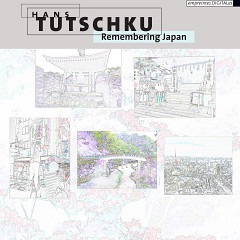
    … it does represent the composer’s attempt to engage with Asian culture and communicate with its society, while still pursuing his own compositional interests.

    Docu-fictions dans The Sound Projector

    «Review», Ed Pinsent, The Sound Projector, 31 mars 2024
    mardi 2 avril 2024 Presse

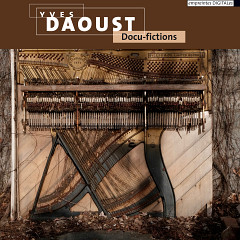
    From Québec, here’s Yves Daoust with Docu-fictions (IMED 22182) — an essential release which I recommend. This fellow worked in France for a time and studied composition with Gilbert Amy, who produced the memorable Une saison en enfer.

    I don’t pretend to understand that part of his method that allows him to keep “nature” and “culture” separate within the same piece, running parallel to each other in some way, but it sounds ingenious, and here are perhaps some examples of how he puts it into practice. He also steeps himself in the juices of life, and has a genuine interest in humanity; the first two pieces here are versions of his Lily piece (an acousmatic rendition, and a mixed version). Lily was a courtesan and a friend of his; she spilled out the details of her colourful life before his microphone with no shame or restraint, and he recorded the results, making them into this work; on top of the real-life Lily, he added the voice of an actress, who reacted to Lily and added her own feelings and comments. Wish I understood spoken French better than I do; it all sounds pretty steamy and fruity. But also more importantly very real and heartfelt. Daoust interjects a few treatments and editorial gestures, but he’s being true to the voice of his friend. The mixed version from a few years later adds an accordion (played by Joseph Petric, no less) and a violin, and this one’s even more orgasmic with its heavy breathing and there’s more than a whiff of Pigalle sleaze in the mix. Great!

    Another gem here is Impromptu 2 from 1995 — that’s right, keyboards and piano layered in with traffic sounds and sirens. The music they’re playing has all been derived from a certain Chopin composition, we are informed; Yves Daoust speaks of the “agitation… abundant energy… tension” which got his creative fluids bubbling. He’s not kidding. Players Poulin and Cronkite do a fantastic job with their crisp, urgent percussive pecks on their 88s, but adding the sounds of the street has been a master-stroke. If only more phonographer and field-recording types could make such bold use of their material.

    I’m also staggered by Calme chaos, a daring work from 2011-12, making a very profound comment about modern culture. Daoust perceives culture is in a state of crisis; there’s too much of it these days, we seem to have access to more of it than ever before, and yet “we seem to be outside the continuity, in total disarray”. Perhaps we can’t make sense of the past any more; perhaps we simply can’t tell good art from bad art. The composer doesn’t simply describe the situation, but re-enacts it through composition, using an entire orchestra to make his statement — alongside the pre-recorded tapes. The taped voices (automatic writing, samples, spoken gibberish, and a “flurry of traits”) represent the “chaos” side, while the orchestra do their best to hold on to the past, and try to bring meaning to the muddled information. 17:11 mins of sheer tension result, both exhilarating and fascinating; I’m not sure if it proposes a solution to the crisis, but it certainly presents it in a clear and elegant manner — we’ve rarely heard such controlled chaos. Other composers have battled with this popular theme — one recent instance was Pierre Alexandre Tremblay on this same label with his Newsfeed — but Yves Daoust is I think one of the first to have approached it from the starting point that we’re doing too much “archiving” these days, and he works hard to probe the gap between past and present, highlighting how our collective cultural amnesia is now spreading like a mental illness. Excellent work!

    Excellent work!

    Lointain intérieur dans Bandcamp Daily

    «The Best Contemporary Classical Music on Bandcamp: April 2024», Peter Margasak, Bandcamp Daily, 1 avril 2024
    lundi 1 avril 2024 Presse

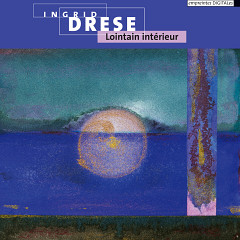
    From reading the liner notes that Belgian electroacoustic composer Ingrid Drese wrote for the four works on this new album, it’s clear that she creates abstract movies with sound, most derived in some way from poetic sources. The collection opens with Pérégrinations d’une petite sphère happée par le temps, a 2020 piece inspired by Henri Michaux’s poem Afterwards, which Drese translates as “an entanglement of voices, of pathways. A cloth of musical motifs enlightened by a trumpet-like sound, the spark of which, in time, fades to hide within the me.” Each of these dynamic works can trigger all sorts of images and synaesthetic visions, as our imaginations supply phantasmagorias for each work, as abstract sounds and shapes billow, drift, and collide. The composer doesn’t try to obfuscate her methods. She notes the number of loudspeakers and technical parameters she employed for the piece Treize virgule huit. The title touches on the age of the universe (“thirteen point eight” billion years) and the music reads like a truncated soundtrack for that epic history. It’s amorphous enough that a listener can easily fabricate their own narrative according to these richly textured, shape-shifting swirls, eddies, explosions, and percolations.

    … richly textured, shape-shifting swirls, eddies, explosions, and percolations.

    Espaces lointains dans Bandcamp Daily

    «The Best Field Recordings on Bandcamp: March 2024», Matthew Blackwell, Bandcamp Daily, 28 mars 2024
    jeudi 28 mars 2024 Presse

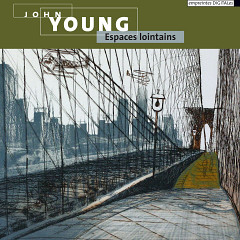
    “Daddy, did you notice any sort of… sound when you were down there?” asks a little girl at the beginning of Hidden Spaces. It seems that all John Young does is notice sound, and in the most unexpected places. The aforementioned track combines field recordings from Lake Åsunden in Sweden, an escalator in Montréal, and a pig sty in Dobbiaco, Italy. Arioso is based around recordings of crickets and pedestrian crossing signals in Oberlin, Ohio, while Sweet Anticipation captures street preachers in New York City. It doesn’t matter so much where Young finds his sounds, though, as he builds alien digital worlds around them anyway. Identifiable sources are quick to fade away into an electronic tableau only to suddenly reappear, creating an engrossing tension between the familiar and the strange.

    Identifiable sources are quick to fade away into an electronic tableau only to suddenly reappear, creating an engrossing tension between the familiar and the strange.

    Contemplations dans Radiohoerer

    «Release Tipp: Emma Margetson / empreintes DIGITALes», Radiohoerer, 21 mars 2024
    jeudi 21 mars 2024 Presse

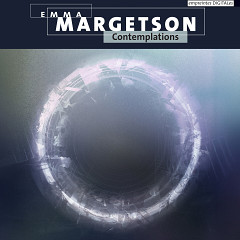
    Absolut atemberaubend! Ausgelöst durch ihre jüngste Veröffentlichung Contemplations begann ich das Werk von Emma Margetson zu entdecken und es hält viele neue Hörerlebnisse für uns bereit. Die mehrfach ausgezeichnete akusmatische Komponistin und Klangkünstlerin eröffnet uns mit ihren mehrkanaligen Kompositionen auf beeindruckende Weise neue Hörräume.

    Emma Margetson ist eine akusmatische Komponistin und Klangkünstlerin, die zwischen London und Birmingham (England, UK) lebt und arbeitet. Ihr Schaffen umfasst akusmatische Komposition, Klangkunst, akusmatische Performance-Interpretation und gelegentlich auch Live-Improvisation elektronischer Musik. Zu ihren Forschungsinteressen gehören Klangverbreitung und Verräumlichung, ortsspezifische Arbeiten, Klangspaziergänge und Installationen, Publikumsentwicklung und — einbindung sowie Community-Musik.

    Ihre Musik wurde in Konzerten und Festivals international anerkannt und aufgeführt und erhielt eine besondere Erwähnung im Biennalen Akusmatischen Kompositionswettbewerb Métamorphoses (Belgien, 2020), den Excellence in Sound Art & Sound Design Preis im Rahmen des klingt gut! Young Artist Award (Deutschland, 2018) und einen ersten Preis ex æquo in der Space of Sound Spatialization Performance Competition (Belgien, 2019). Sie hat eine Reihe von Aufträgen und Kooperationen erhalten, unter anderem vom Royal Observatory (Royal Museums Greenwich), The Barber Institute of Fine Arts und der Ikon Gallery. Emma Margetson ist Dozentin für Musik und Klang und Programmleiterin des Studiengangs Master of Arts Music and Sound Design an der University of Greenwich (England, UK). Außerdem ist sie Co-Direktorin der Konzertreihe des Loudspeaker Orchestra. Ihre Arbeit ist bei verschiedenen Plattenfirmen erhältlich, darunter empreintes DIGITALes, Obs, Sonos Localia und Urban Arts Berlin.

    Schon lange nicht mehr hat mich eine Komponistin so in ihren Bann gezogen. Es ist verblüffend und aufregend, ihre Klänge zu hören… „… es klingt, als würde man Metall zum Atmen bringen“, so beschreibt es ein Zuhörer. Nehmt also Contemplations als Ausgangspunkt und ich verspreche euch spannende Hörabenteuer. Auf Soundcloud finden wir auch binaurale Versionen ihrer Kompositionen und diese haben es in sich.

    Absolument époustouflant!
  • 1
  • 2
  • 3
  • 4
  • 5
  • 6
  • 7
  • 8