Sauter au contenu principal
electrocd
  • This website is also available in English.

Blogue

2899 résultats
  • 334
  • 335
  • 336
  • 337
  • 338
  • 339
  • 340
  • 341
  • 342
  • Clair de terre dans Blow Up

    «Altrisuoni in breve», Daniela Cascella, Blow Up, no 43, 1 décembre 2001
    samedi 1 décembre 2001 Presse

    accademico facendo attenzione alle suggestioni di contesti ad esso estranei. Malina fa dello shakuhachi lo strumento attomo a cui ruota una suggestiva composizione di silenzi e dolci frasi melodiche. Erinyes è un lavoro sulle voce ispirato a “Elettra” di Sofocle. Nella mitologia greca le Erinni punivano i delitti tormentando i colpevoli con un rumore assordante: il brano crea una dimensione claustrofobica congelando e reiterando singoli frammenti vocali ordinati su diversi toni e altezze. Clair de terre presenta tredici movimenti nei quali si succede una varietà ben amalgamata di soluzioni sonore con inaspettati e graditi risvolti ritmici e noise. (7/10)

    7

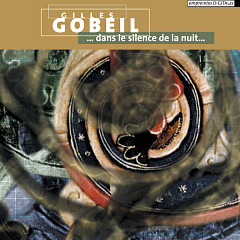
    … dans le silence de la nuit… dans The WholeNote

    «Review», Darren Copeland, The WholeNote, no 7:4, 1 décembre 2001
    samedi 1 décembre 2001 Presse

    The four works on this CD are each strongly compelling and immaculately produced. The production standards of recording and mixing are very high and put to effective compositional use, which is essential in any electroacoustic work. There is also a carefully conceived unity of materials and gestures that give the works a strong structural foundation.

    Over that solid technical basis, Gobeil sets out to create a drama of suspended tension and release using long building climaxes, quick jump cut edits, and eerie drones and lingering silences. However, these benchmarks of his dramatic language are used so frequently from piece to piece that their desired impact is unjustly compromised by predictability. Gobeil’s unity of style and materials is so complete and unvaried that even the three diverse literary points of inspiration used for the works (Marcel Proust, HG Wells, and Jules Verne) fail to yield the potential variants in style, materials and form.

    On a concert program including works by other composers, Gobeil’s music can stand beyond the rest and lead the listener on a hair-raising journey. But heard one after another in succession the impact is marginal. Therefore, I recommend listening to this CD in small concentrated doses separated by time and experience.

    … a drama of suspended tension and release using long building climaxes, quick jump cut edits, and eerie drones and lingering silences.

    Clair de terre dans Jade

    «Chronique», Julien Jaffré, Jade, 1 décembre 2001
    samedi 1 décembre 2001 Presse

    On a souvent perçu en certains astrophysiciens des poètes qui s’ignoraient. Robert Normandeau crée ici des structures cinématiques fortes, acousmatiques par essence dont la puissance narrative matérialise des images fortes dans notre esprit.

    C’est aussi le travail de recomposition d’un fait (les pas d’Homme sur la lune) partiel, une interprétation possible reconstruite par déduction, à la manière des historiens ou des astrophysiciens (notamment ce jeune Français qui cherchait à signifier par calcul les émissions sonores d’un trou noir.) Une démarche où le tâtonnement et la remise en question sont indissociables. Du cinéma pour l’oreille cher à Jérôme Noetinger, de l’acousmatie proche de ce qu’en entend François Bayle, pour un travail sérieux et amusé qui tient davantage de l’archivage sonore (la musique de Normandeau évoquant tantôt des musiques rituelles indiennes, tantôt des ambiances sombres à la Hermann) que d’un album classique, au bon sens du terme. Un assemblage sonore limpide qui oscille avec vivacité entre séquences stridentes et plages d’accalmie qui nous plongent avec plus ou moins de facilité dans un état second. Robert Normandeau a reçu de nombreux prix.

    Un assemblage sonore limpide qui oscille avec vivacité entre séquences stridentes et plages d’accalmie…

    … dans le silence de la nuit… dans Jade

    «Chronique», Julien Jaffré, Jade, 1 décembre 2001
    samedi 1 décembre 2001 Presse

    Gilles Gobeil, né il y a 47 ans à Sorel, est de cette génération qui a suivi les premiers tâtonnements de la musique concrète en France, avec Ferrari, Schaeffer ou Henry, les premières expériences à grande échelle de sleeping et de musique répétitive (Riley, La Monte Young, Conrad) et d’acousmatie (Bayle). Ses expériences ont accompagné sa scolarité et ses études universitaires (tout autant que les Beach Boys, d’ailleurs…). Sa réussite auprès de ses pairs (prix Ars Electronica, diverses récompenses), ses participations à de nombreux collectifs (GRM, groupe de musique électroacoustique de Bourges) ont construit la personnalité de sa musique et son style. Un voyage onirique en quatre étapes qui puise ici son inspiration largement dans la littérature contemporaine (de Proust à Jules Verne, de Thomas Moore à HG Wells). Des visions dépressives ou nostalgiques, oniriques ou anticipatives de voyages, qu’ils soient intérieurs ou géographiques. L’atmosphère générale de l’album ne prête pas à rire, climat de tension permanente où l’on pense par moment à l’album de Faust et sa B.O. du Nosferatu de Murnau où aux ambiances de Morcook ou Lovecraft… l’utilisation d’ondes Martenot et de rupture violente comme sur un de ces précédents albums La mécanique des ruptures n’y étant pas étrangère. Une belle invitation au pays des rêves sombres.

    Une belle invitation au pays des rêves sombres.

    Clair de terre dans Ampersand Etcetera

    «Review», Jeremy Keens, Ampersand Etcetera, no 2001_20, 1 décembre 2001
    samedi 1 décembre 2001 Presse

    Normandeau’s album is less punctuated, somewhat academic in origin, and yet more lyrical: the first two tracks use mono-sources (voice, flute) while the third is an “exercise”. The opening Malina is based solely on shakuhachi as played by Claire Marchand, and presents the sound largely uncompromised — some stretched to drones, some editing — but presented in is captivating simplicity.

    With Erinyes Normandeau uses the voice as his instrument: taking recitation from a production of Sophocles’ Electra for which he composed the music, he uses a treatment known as “freezing” to extract voice sounds. He has then orchestrated and structured them into a dramatic piece. Shifting between tonal stretched voices and short looped fragments, chants and ululations, rapid, slow and fragmentary passages, he has created a percussive musical piece that draws you in and holds you — changing pace and tone subtly, without unnecessary underlining, ending with an extended strangled cry. It reminded me somewhat of parts of Roger Doyle’s Babel.

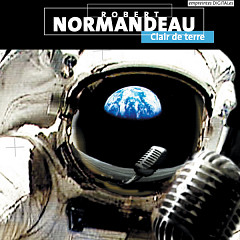
    Clair de terre combines electroacoustic and cinema — each of its 12 parts represents a cinematographic technique (“Narrow frame” “Rhythmic editing”) and relates it to a musical technique. After a spacey Overture (Ouverture) — the piece was stimulated by the famous photo of the earth from space — with a launch, swirling tones and beats, computer squiggles and blips; each part is structured as a “soundspace, an object’s sound, the sound of a musical instrument, and vocal onomatopoeias“ (Erinyes is part of the onomatopoeia series). The parts are not presented sequentially, however, but combined in short and subtle pieces, for example, the shakuhachi plays its tones over chattering base in Primary and secondary colours (Couleurs primaires et secondaires), a train runs through Camera mobility (Mobilité des plans), a squeaking door, electric guitar chords and so on, concluding with Wide frame (open space) (Cadre large (espace ouvert)) where pipes lead a melody before some percussive punctuating finales. Each of these movements is a marvellous miniature of about 3 minutes duration, based on excellent choice of sound sources, that combine to create a dense and complex work. At times the links are obvious (the cutting in Rhythmic editing (Montage rythmique), the sound palette in Primary colours (Couleurs ternaires), Dazzling’s (Clarté (éblouissement)) fireworks) others take more consideration — but it develops into something well beyond an academic exercise. A fascinating conclusion to a very approachable album.

    Each of these movements is a marvellous miniature […] that combine to create a dense and complex work.

    … dans le silence de la nuit… dans Ampersand Etcetera

    «Review», Jeremy Keens, Ampersand Etcetera, no 2001_20, 1 décembre 2001
    samedi 1 décembre 2001 Presse

    The four tracks on Gobeil’s disk have been well received in competitions around the globe, and are each based around narrative — personal or literary. One of the difficulties of this form of music, other than the complexity in trying to describe it, is the piercing punctuation — a tendency to signal the start or end of passages by loud, aggressive noises (a subcategory of the overall interest in wild volume changes). Gobeil uses this dramatic underlining extensively — which can get annoying, but does give the disk a unity, as some of the sounds (door slamming, bangs) are used across the tracks.

    Derrière la porte la plus éloignée… combines and manipulates sounds from a trip to Italy into an abstraction: a throb, breathing, violin and whirlys /bang/ a susurrus, train, tones, violin, dripping water increasing, throbbing /bang/ walking, drips and horn getting loud /loud passage/ trains (probably) seguing into tones / rhythmic elements, walking, talking, tones, increasing breathing, ringing noises build into a big visceral accretion of sound, then a little ringing and fade. A dense dreamlike Italy. The punctuation is even stronger in Projet Proust where sentences from the opening of the novel are read, accompanied by light electroacoustics, then followed by concretions which are probably related to the text, the punctuation playing the role of a full-stop at the end of an auditory sentence. Some sounds are domestic — a kitchen, with water running, a choir in a church, insects or a train — while others are tones, whistles, crackles and bangs. The piece flows smoothly, and complements my own memories of those early sections — balancing the comfortable domestic with Marcel’s night fears.

    Following the literary theme, Point de passage is a version of WellsTime Machine and again matches my memory. Throughout there is a rhythm and tone from machinery, mainly steam, reflecting the steam age that produced the novel. The piece swings between an active mechanical period with knocking and sirens into a more lyrical central section, chatterings and vents, soft tones, rainfall and flutes, and finally another noisey building of buzzing machines and jackhammers, rising and falling to a slammed conclusion. Nuit cendre adapts Verne’s Journey To The Centre Of The Earth and isn’t at all like Rick Wakeman! It swoops between quiet subterranean rumbles or slow drones and tones into bangings and dense bellringing or distressed voices, sounds rising and falling like stalagmites and stalactites, excitement and awe at the underground landscape. Complex and difficult works, these 4 pieces create a strong sense of place and narrative, and deserved the awards they won.

    … these 4 pieces create a strong sense of place and narrative…
  • 334
  • 335
  • 336
  • 337
  • 338
  • 339
  • 340
  • 341
  • 342