Sauter au contenu principal
electrocd
  • This website is also available in English.

Blogue

2899 résultats
  • 374
  • 375
  • 376
  • 377
  • 378
  • 379
  • 380
  • 381
  • 382
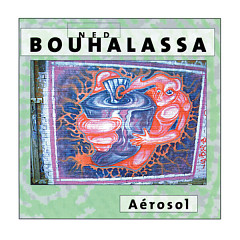
  • Aérosol dans Incursion Music Review

    «Review», Richard di Santo, Incursion Music Review, no 012, 24 septembre 2000
    dimanche 24 septembre 2000 Presse

    Acousmatic composer Ned Bouhalassa, born in France but now making his home in Montréal, has been active in the promotion and production of electroacoustic music for a number of years. Aérosol presents various works composed and recorded from 1990 through 1998, and comes packaged with liner notes on each piece by Bouhalassa himself. Sponge-like, Bouhalassa absorbs elements from a diverse array of influences (cinema, visual art, techno, environmental recordings…). His music is full of difference and variety. Each sound playfully moves through the stereo spectrum (an aeroplane in the sky, the buzzing of insects, the crackles of a digital landscape), and it’s unlikely you’ll ever hear the same sound twice. Each of these compositions take on their own themes and compositional techniques. The first, Jets, explores the idea of an automated sound projection, where sound is perceived as moving “in an almost intuitive manner.” Constamment (autoportrait) is a selfportrait expressing the artist’s anomalous memory and his state of mind on turning 37. Clearly evident in this piece is Bouhalassa’s love of techno music, for occasionally a thumping bass or a rhythmic interlude will force itself into the otherwise abstract sound environment. The next piece, Attraction, attempts to express any number of attractions in life and in art. Recordings of acoustic sources were put through the hoops of digital processing and traditional musique concrète techniques. The final piece is my favourite here. Bouffée délirante (Maddening Exhalation) is described as “an attempt to realize what has been coined ‘cinema for the ear’”. There is, as is characteristic of all these compositions, a complex array of sound sources and moods. But what I like most about this piece is the way it jumps suddenly from one “scene” to another; a smooth intonation (from a cello? a violin?) will suddenly be cut and move into a whole new sound structure, only to return back again, clumsily, at a later moment. Bouhalassa calls this a “jump-cut gesture”; these interruptions are like film montage for the ears, breaking up the narrative or moving it along. There are no words, but the sounds tell a story all on their own. This is music to provoke your imagination and make your ears tingle with excitement.

    This is music to provoke your imagination and make your ears tingle with excitement.

    Connexion dans Ici Montréal

    «Critique», Catherine Perrey, Ici Montréal, no 4:1, 21 septembre 2000
    jeudi 21 septembre 2000 Presse

    Louis Dufort est un touche-à-tout très talentueux. Passionné de musique électronique, il s’intéresse aussi au cinéma, à la peinture et à la danse contemporaine. La dernière de l’album [Connexion], Décap, est d’ailleurs fondée sur des travaux musicaux composés pour la Compagnie Marie Chouinard. Ici, point de longues plages planantes, mais un montage serré, rythmé et une utilisation pertinente des échantillonnages vocaux (dont la voix de dame Chouinard). Du mouvement, de l’allant. Bref de l’électroacoustique habitée et invitante. 8,5/10

    Du mouvement, de l’allant. Bref de l’électroacoustique habitée et invitante.
    8,5

    Sondes dans Splendid E-Zine

    «Reviews», George Zahora, Splendid E-Zine, 4 septembre 2000
    lundi 4 septembre 2000 Presse

    I don’t pretend to know a whole lot about electroacoustic music. I’ve picked some stuff up over the last few years, but I still lack the appropriate perspective — I can’t help approaching and assessing electroacoustic compositions on the basis of conventions better suited to rock music. Though many works within the genre have far more to do with mathematics and sculpture than with songwriting, I continue to look for the music.

    When you’re talking about a composition that sounds like loose change falling out of someone’s pocket and onto a multi-tiered metal scaffold, or a song made up of oddly-spaced taps on a series of fine-tuned cabinet doors, it’s easy to understand why pop music fans don’t gravitate to this stuff. Deprived of the recognizable verse/chorus/verse structure they savor, they’re looking for spectacle. That’s why Sondes is a good bet — both for newcomers to electroacoustic composition, and for old hands bored by bland, self-indulgent works.

    Smith writes for a combination of acoustic instruments and found-sound tapes, creating mixed electroacoustic music. He makes use of instruments with distinctive voices — double bass, cello, alto flute and even accordion — and pairs them with truly striking sound effects. From the first seconds of InsideOut, which delivers a veritable “Dolby jolt,” you’ll realize that this is an album for active listeners — and for headphone fans. InsideOut is a fever-dream of sickness, referencing everything from horror-movie stringwork to feverish bodily operations. Elderly melodies are reanimated and forced to clatter across the soundscape, frightened onward by bursts of percussion. Despite a wealth of activity over several movements, the piece ends where it began, its energy nullified like an interrupted dream.

    Less frenetic, Liquid Fragments 1 uses double bass and alto flute to envision music as experienced from inside the human body. It is full of activity, but somehow detached; we recognize the transition from calm to motion, and can almost identify the cause, but we lack the perspective required to understand it.

    Elastic Rebound and Continental Rift are small scale sonic metaphors for grand-scale events, addressing the infinitely slow negotiations of geographic masses in a sped-up, confrontational style. The latter work makes liberal use of cello, including a series of striking classical references at its midpoint.

    The Unmoved Centre is a conversation between sounds. The listener will hear an aural community come together as disparate musical and mechanical sources are woven into a dance of call and response, tiny movements negotiating for position within a greater sonic whole. Headphones, closed eyes and darkness will pay off nicely here.

    Finally, the striking Convergence co-opts the accordion — an instrument, as Smith states in his notes on the piece, “commonly associated with fun, dance, drinking and local cultural events.” Though filled with moments of dissonance, the piece also bubbles with carnival-style musical humor, dispensing fragmented polkas that encourage the listener to dance amid the confusion. Though its focus occasionally descends to music-box mechanical details, Convergence remains fascinating, and sounds like an afternoon spent sharing hallucinogens with Astor Piazzolla.

    Though it has its obtuse moments, most listeners will find Sondes to be a thoroughly vibrant and exciting journey, bubbling over with brain-tickling energy. Smith’s source material is rich in texture and subtlety, and you’ll experience great joy in discovering the finer details in his work.

    Can a pop song enthall you like this? I doubt it.

    … truly striking… thoroughly vibrant and exciting journey…

    Moment dans Heimdallr

    «Critique», Stéphane Fivaz, Heimdallr, 1 septembre 2000
    vendredi 1 septembre 2000 Presse

    Hans Tutschku a commencé a étudié le piano très tôt déjà, pour ensuite étudier les compositions électroacoustiques à Dresden et à La Haye. Il a donné plusieurs concerts avec son ensemble Intuitive Musik Weimar et a enseigné dans diverses universités, comme Sao Paulo, Singapore ou Budapest. Il enseigne actuellement à l’Ircam. Ses travaux s’apparente à une réelle approche et étude des sons acoustiques les plus divers. Un travail intransigeant et intelligent, où chaque sonorité est soumise à discussion. La provenance des sons se situe dans la rue, les églises, les villes…etc. Un travail important sur la parole est effectué, en prenant plusieurs couches successives d’un poème, renforçant sons sens intrinsèque, agrémenté de sons caractéristiques s’y rapportant (… erinnerung…). Chaque échantillon sonore constitue la base d’un important travail sur les sons, qui une fois structurés, apparaissent sous un nouveau visage magnifié. L’importance de la voix humaine et des percussions prend toute son ampleur sur Die zerschlagene Stimme, où chacun des deux éléments se superposent pour ne donner qu’un. Sieben Stufen reprend un poème de Georg Trakl. Verfall, enregistré en deux langues et structuré sur la construction et la destruction du texte par couche superposées.

    Un excellent travail pour quiconque prend le temps et la résolution de s’investir intellectuellement dans un travail intense sur les sonorités communes nous entourant. Vous n’écouterez plus tous ces sons de la même façon…

    Une œuvre intelligente et recommandée dans le domaine de l’électroacoustique.

    Une œuvre intelligente et recommandée…

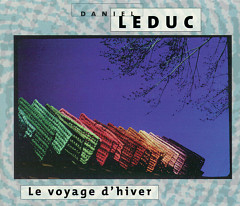
    Le voyage d’hiver dans Musicworks

    «Review», Robert Reigle, Musicworks, no 78, 1 septembre 2000
    vendredi 1 septembre 2000 Presse

    Glenn Gould, in an article accompanying the LP The Well-Tempered Synthesizer, wrote that Wendy Carlos’ prime motivation for synthesizing baroque music was to utilize “the available technology to actualize previously idealized aspects of the world of Bach.” Judging by the name of the CD label and the composer’s choice of Wilhelm Muller’s set of poems, Die Winterreise, one might expect that Daniel Leduc uses technology to “actualize” Schubert’s famous setting for male voice and piano. Indeed, another living composer, Hans Zender, wrote a new realization of Die Winterreise a few years ago. Leduc, however, sets himself a different task: to use ‘soundscape’ for metaphorically illustrating both the poetry of the title work and the themes of the other pieces on the disc. He does not refer to Schubert in the liner notes, although he follows Schubert, rather than Müller’s, ordering of the poems.

    What we have, then, are twenty-four miniature sonic evocations of the short poems, followed by a coda. In most of the settings the voice recites the poetry clearly, but, as Leduc intended, it always “gives way to the sound landscape.” Thus, the voice is occasionally covered up unintelligible, or heavily processed (as in traks 14-16, 21, and 23-24). The actor Erwin Potitt recites the poems beautifully. Leduc treats each poem as a distinct musical entity, with the music ending. pausing fading, or cutting off abruptly. He illustrates frequently and carrefully words referring to sounds. The wind mentioned in the first line of the second poem is incorporated into the music accompanying the first poem. Most of the soundscape illustrations, however, are synchronized with the poems, making the contradictions all the more interesting.

    For example, [track 8] On the River (Auf dem Flusse) asks in its first sentence why the loud river became quiet, but Leduc presents water noises through most of the piece, saving the quiet section for the end. Similarly, he introduces recordings of songbirds (which Müller does not mention in the poem entitled The Crow (Die Krähe [track 16]) to contrast bleak electronic imitations of crows. The songbirds serve as a bridge, despite the pause between the two pieces, to the next poem, Last Hope (Letzte Hoffnung) [track 17].

    For this listener, three of the settings stood out from the others. [Track 9] Looking Back (Rückblick) effectively collages together different types of sounds; Rast consists of slowmoving electronic sounds and filtered noise, with high-pitched repetitive sounds reminiscent of Ryoji Ikeda’s work; and The Signpost (Die Post) creates, with its quiet, blurred sounds, a feeling of ambiguity similar to that heard in some of Nono’s electronic music.

    The remaining three works also consist of miniatures, with the longest section clocking in at 4:19. The opening piece, which won the Public Radio Award, is titled Impressionistic answer given by Josef K. to a French tourist walking by the railway station at the end of a winter’s evening (Réponse impressionniste donnée par Josef K. lors d’une fin de soirée hivernale à une touriste française qui passait en face de la gare). Another short work, Traverser les grandes eaux, was inspired by a phrase from the I Ching. A longer piece, Troposphère, consists of four works named after different types of clouds.

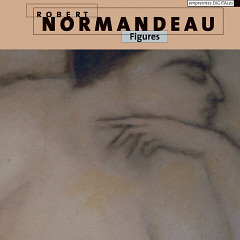
    Figures dans Musicworks

    «Review», Robert Reigle, Musicworks, no 78, 1 septembre 2000
    vendredi 1 septembre 2000 Presse

    “HAAAaaa, ha ha ha,” laugh the electronicallv modified voices at the beginning of Le renard et la rose (the fox and the rose), the opening track of Figures. Normandeau calls this part of the piece “Babbling and Rhythm.” As evident from my bumbling attempt above, it is difficult to transcribe such simple and important things as different types of laughter. We use twenty or thirty thousand words to exactly specify all types of complex thoughts, but when it comes to sound we don t even have a universal transcription system. Musicians are, rightly or wrongly, the only ones given permission (and responsibility) to convey specific meanings through sound alone, without the aid of words. On this disc, Normandeau specifically deals with onotnatopoeia, rhetoric and figures of speech. His refined ear is the perfect mediator in wedding linguistic concerns with sophisticated electronic music.

    Like all four works recorded here, Le renard et la rose has multiple layers of reference: 1) the title itself; 2) Saint-Exupéry’s The Little Prince; 3) two earlier compositions that are part of the same cycle; 4) vocal onomatopœia; and 5) five states or feelings “experienced in adulthood.” The composer bases the work “exclusively on the use of the voice.” It is a rich tapestry usually built of dense electronic layers of sound, and covers a lot of territory in its fifteen minutes.

    Figures de rhétorique (Figures of Speech) is a fourteen-minute work for tape and piano. Like Nono during the composition of … sofferte onde serene …, Normandeau worked with the pianist while writing the piece, and engaged Jacques Drouin’s interpretation to such an extent that he calls the recording “his (Drouin’s) version.” In contrast to Nono’s piece, Figures de rhétorique has a much more energetic feeling, but the melding of the electronics with the live piano sound is integrated just as seamlessly and beautifully.

    Guitarist Arturo Parra’s contribution to Ellipse (Ellipsis) is less clear. Parra commissioned this work, and it sounds as though Normandeau used recordings of his guitar playing as the basis for the electronic sound. Ellipse, it seems, was originally intended as the tape part of a guitar and tape duet, but the composer now treats it as a purely acousmatic piece without live accompaniment, separate but related to the tape used in the guitar and tape piece, L’envers du temps. Ellipse, the composer points out, “is the art of not saying everything, of omitting words… and of then allowing… the listener to fill in the blanks.”

    The one piece on the disc that does not refer to linguistic matters is Venture. This work is named after the rock group The Ventures, and Normandeau built his electronic piece from fragments of rock music from the ’60s and ’70s. As with his modification of actors’ voices in Le renard et la rose, the composer completely alters the source sounds, leaving only occasional snippets recognizable. Although Venture is based on rock music, the isochronous rhythms that define that genre are virtually absent from the piece.

    This is a fine disc. Le renard et la rose won the Golden Nica award at the 1996 Ars Electronica competition and appeared on their compact disc series, as well as on discs issued by CBC Records and by Innova. The other three works appear here for the first time. One senses the depth of thought behind these works, and I would like to find out more about how the composer turns linguistic concepts into particular sounds.

    One senses the depth of thought behind these works…
  • 374
  • 375
  • 376
  • 377
  • 378
  • 379
  • 380
  • 381
  • 382